Michael Erhart 肖像

4 幅最著名的 Michael Erhart 作品,画廊精选

更新于 November 2026 · 基于我们的流行度评分排名(每件作品的搜索量、访问量及订单量) · 4 件 Michael Erhart 作品收录于我们的目录中

简而言之

在 Michael Erhart 留下的所有原作中,最著名的当属收藏于 柏林 柏林州立博物馆 的《Ravensburg Madonna of Mercy (1480)》。 紧随其后的是 Altarpiece (central section) (1493) 和 The Libyan Sibyl (1469)。 我们的目录收录了 Michael Erhart 的 4 件作品;画廊完整保留了 4 件享誉世界的杰作,并为每一件作品详细标注了创作日期、馆藏机构及其背后的故事。

1442 – 1522 藏品最多:Benedictine Abbey Church

Michael Erhart 的十大名画:画廊精选

1
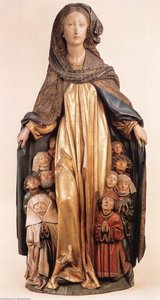
Ravensburg Madonna of Mercy (1480) 由 Michael Erhart

Ravensburg Madonna of Mercy

1480 · Wood · 柏林州立博物馆, 柏林

In the quiet presence of this 1480 sculpture, one feels the weight of late Gothic devotion. The Ravensburg Madonna of Mercy is a work of profound stillness, carved from wood and brought to life through the delicate application of polychromy. The central figure of the Virgin Mary rises with a verticality that draws the eye upward, her form draped in heavy, meticulously detailed clothing. She is surrounded by smaller figures,…

2
Altarpiece (central section) (1493) 由 Michael Erhart

Altarpiece (central section)

1493 · Tempera On Panel · Benedictine Abbey Church, Blaubeuren

Gold leaf clings to the carved wood, catching the light like a sudden sunbeam in a dim cathedral. In this central panel, the Virgin Mary stands upon a silvered sickle moon, her form a pillar of quiet grace. Beside her, the infant Jesus rests, a small weight of divinity held within the curve of her arm. The architecture behind them recedes into a structured, gilded depth, creating a space that…

3
The Libyan Sibyl (1469) 由 Michael Erhart

The Libyan Sibyl

1469 · Sculpture · Cathedral, Ulm

The Libyan Sibyl emerges from the shadows of history, a figure carved with profound intent by the hands of Michael Erhart. This work, titled The Libyan Sibyl, exists as a presence within the sacred space of the Ulm Cathedral in Ulm. It is a creation of oak, a material that holds the weight of the centuries within its grain. The wood carries the marks of a sculptor who understood how…

4
Altarpiece (1493) 由 Michael Erhart

Altarpiece

1493 · Wood · Benedictine Abbey Church, Blaubeuren

A silvered sickle moon supports the Virgin Mary, a pale crescent caught in the stillness of the carved wood. She holds the infant Jesus, a small weight of divinity resting against the curve of her arm. Around them, the architecture recedes into a structured, gilded depth, creating a space that feels both solid and celestial. The light catches the gold leaf, turning the background into a luminous, reflective void that…

令 Michael Erhart 驻足的创作主题

这些原作中反复出现的四个主题,各有一个最杰出的范例。

收藏有 Michael Erhart 原作的博物馆

收藏了本页中大部分画作的 3 家博物馆。

博物馆 城市 Michael Erhart 的作品 此列表中的画作
Benedictine Abbey Church, BlaubeurenBenedictine Abbey Church Blaubeuren 2 Altarpiece (central section), Altarpiece
柏林州立博物馆, 柏林柏林州立博物馆 柏林 1 Ravensburg Madonna of Mercy
Cathedral, UlmCathedral Ulm 1 The Libyan Sibyl

Michael Erhart 的年代演变:定义每个时代的原创之作

各年代作品数量

选择一个年代,探索定义该时代的原创杰作。

藏家关于 Michael Erhart 作品的常见问题

Michael Erhart 最著名的作品是哪一件?揭晓答案

Ravensburg Madonna of Mercy (1480),柏林州立博物馆, 柏林。紧随其后的是 Altarpiece (central section) (1493) 和 The Libyan Sibyl (1469)。

创作 Ravensburg Madonna of Mercy 时,Michael Erhart 是多少岁?揭晓答案

38岁:Ravensburg Madonna of Mercy创作于1480年,Michael Erhart出生于1442年。

Michael Erhart 留下了多少幅画作?揭晓答案

我们的目录收录了 4 件 Michael Erhart 的作品,创作年代从 1469 年至 1493 年。

Michael Erhart 的杰作收藏在哪些博物馆中?揭晓答案

多见于 Benedictine Abbey Church (Blaubeuren), 柏林州立博物馆 (柏林) 及 Cathedral (Ulm)。上方的博物馆列表列出了所有相关机构。

Michael Erhart 在哪些年份创作了最著名的作品?揭晓答案

在 1490s 期间:本页 4 件作品中有 2 件创作于该时期,其中包含 Altarpiece (central section) 件作品。

Michael Erhart 的首件与末件名作原件分别是哪几件?揭晓答案

在本页面中,最早的作品创作于 The Libyan Sibyl (1469),最晚的创作于 Altarpiece (central section) (1493)。

Michael Erhart 最常创作的主题是什么?揭晓答案

Woman (3), Child (2) 及 Architecture (2),共计 4 件作品。

Michael Erhart 最常用的技法是什么?揭晓答案

Wood,共计 2 件(本页共有 4 件作品)。

哪些 Michael Erhart 的作品在 Benedictine Abbey Church 展出?揭晓答案

Altarpiece (central section) 及 Altarpiece:Benedictine Abbey Church, Blaubeuren收藏了本页中 2 件作品。

Michael Erhart:生平与作品

The Sculptural Legacy of Michael Erhart

In the heart of the late Gothic era, within the bustling artistic hub of Ulm, Michael Erhart emerged as a master whose hands breathed life into wood and stone. Born around 1460, Erhart was not merely a craftsman but a pivotal figure in the transition between the medieval devotion of the Middle Ages and the burgeoning humanism of the Renaissance. His life’s work serves as a profound testament to the enduring power of regional German craftsmanship, standing alongside the giants of his age even as he carved a distinct path through the spiritual and aesthetic shifts of the 15th and 16th centuries.

Erhart's artistic journey was deeply rooted in the traditions of his predecessors. His formative years were shaped by the rigorous mentorship of Jörg Syrlin the Elder, a renowned sculptor whose workshop acted as a crucible for innovation. Under Syrlin’s guidance, Erhart mastered the intricate complexities of Gothic carving and the vibrant art of polychromy. This foundation allowed him to contribute significantly to the monumental decorations of the Ulm Cathedral, where his work on choir stalls and altars showcased an unparalleled ability to blend structural grandeur with delicate, emotive detail. His style was a sophisticated synthesis, drawing inspiration from the masterful techniques of Nikolaus Gerhaert while infusing them with a unique, expressive dynamism.

Mastery of Form and Spiritual Expression

The essence of Erhart’s oeuvre lies in its ability to evoke deep spiritual contemplation through physical form. Unlike the more static and rigid sculptures of earlier Gothic periods, Erhart’s figures possess a palpable sense of movement and emotional depth. His works often feature a remarkable interplay of light and shadow, achieved through masterful carving that captures the flowing drapery of robes and the subtle nuances of facial expressions. This expressive dynamism allowed his religious iconography to resonate with the faithful, transforming cold materials into vessels of divine narrative.

His technical prowess is perhaps most evident in works such as the Ravensburg Madonna of Mercy and his magnificent altarpieces. In these pieces, one can observe:

  • Intricate Detail: A meticulous approach to texture, from the delicate folds of fabric to the fine features of holy figures.
  • Symbolic Richness: The use of gold leaf and complex architectural settings to convey theological truths and celestial majesty.
  • Humanist Influence: An emerging focus on naturalism and human emotion that signaled the approaching Renaissance spirit.

A Lasting Impact on German Art

Beyond his individual masterpieces, Michael Erhart played a crucial role in fostering a vibrant artistic lineage. His workshop was more than a place of production; it was an educational sanctuary that attracted apprentices and disseminated his distinctive style throughout Bavaria and beyond. The Erhart name became synonymous with excellence, as his sons, Gregor and Bernhard Erhart, continued his legacy, further cementing the family's influence on German sculpture. Through this lineage, the techniques of Ulm were preserved and evolved, bridging the gap between the late medieval tradition and the new era of artistic exploration.

Today, Erhart is remembered not just as a sculptor of religious icons, but as a vital link in the evolution of European art. His ability to harmonize the rigid conventions of the Gothic style with the emerging warmth of humanism ensures his place in history. As we look upon his surviving works, we see more than mere relics of the past; we witness the moment when the spiritual intensity of the Middle Ages began to embrace the profound humanity of the Renaissance.