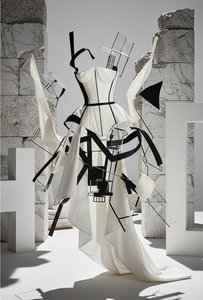
The Quiet Revolution: Maria Adélaïde Nielli, Pioneer of Feminine Elegance
Maria Adélaïde Nielli – or Nina Ricci as she became known to the world – was a figure often shrouded in the subtle elegance of her designs, yet whose life and career represent a quiet revolution within the Parisian fashion landscape. Born in Turin, Italy, in 1883, her journey from a young apprentice dressmaker to the founder of one of France’s most enduring luxury brands is a testament to her innate talent, astute business sense, and unwavering dedication to crafting garments that celebrated the feminine form. Her early years were marked by a swift relocation to France at the age of twelve, an experience that undoubtedly shaped her keen eye for detail and appreciation for European style. This move set the stage for a career defined by a sophisticated understanding of silhouette and a masterful ability to translate fleeting trends into timeless pieces.Early Years and the Rise of Raffin
Nielli’s apprenticeship provided a crucial foundation, immersing her in the practicalities of dressmaking and establishing a deep respect for quality materials and construction. It wasn't long before she ascended to the role of head designer at just twenty-two years old, demonstrating an exceptional aptitude for pattern making and garment creation. In 1904, she married Luigi Ricci, a composer and jeweler, forging a partnership that initially focused on creating bespoke jewelry alongside her burgeoning design work. This dual pursuit honed her eye for color, texture, and the interplay of materials – skills that would later become hallmarks of the Nina Ricci brand. Her time at the House of Raffin from 1908 to 1932 proved formative, exposing her to a wider range of clientele and allowing her to refine her aesthetic sensibilities within a more established fashion house. It was during this period she began to develop the signature style that would distinguish her work: an emphasis on graceful draping, subtle embellishments, and a focus on flattering the female figure.The Birth of Nina Ricci and Licensing Innovation
In 1932, at the age of fifty, Nielli boldly decided to break free from the constraints of working for another house and establish her own brand – Nina Ricci. This decision was driven by a desire to maintain complete creative control and to pursue a vision that prioritized elegance and femininity above all else. Initially operating from a small atelier on Boulevard de Capucines in Paris, the brand quickly gained recognition for its exquisitely crafted dresses, coats, and accessories. A key element of Nielli’s success lay in her pioneering approach to licensing – a strategy remarkably ahead of its time. As early as 1960, Nina Ricci began collaborating with upscale boutiques, allowing them to reproduce her patterns and designs, thereby expanding the brand's reach without sacrificing its unique identity. This innovative move established Nina Ricci as a leader in the burgeoning world of licensing and paved the way for other luxury brands to follow suit.A Style Defined by Grace and Refinement
The aesthetic of Nina Ricci’s designs is instantly recognizable: a delicate balance between classic elegance and modern sensibility. Her garments were characterized by flowing lines, subtle drapery, and an exquisite attention to detail. She possessed a remarkable ability to work with fabrics – transforming simple materials into breathtaking creations through masterful cutting and draping techniques. A particular strength was her skill in utilizing prints, creating visually stunning designs that celebrated the beauty of color and pattern. Her use of contrasting textures and luxurious embellishments added depth and richness to her collections, while maintaining a sense of understated sophistication. The influence of ancient Greek aesthetics is often cited as a key inspiration, reflected in the graceful silhouettes and flowing fabrics of her garments.Legacy and Enduring Influence
Nina Ricci passed away in Paris in 1970, leaving behind a legacy that continues to resonate within the fashion industry. The Nina Ricci brand, now owned by Puig, remains a symbol of French elegance and feminine style. Her pioneering approach to licensing, her commitment to quality craftsmanship, and her unwavering dedication to creating garments that celebrate the female form have cemented her place as a true innovator in the world of haute couture. Her designs are still sought after today, admired for their timeless beauty and enduring appeal – a testament to the quiet revolution she initiated over a century ago. The short-sleeved wool tweed coat from 1960, now part of OriginalUniqueArt’s collection, exemplifies this mid-century modern masterpiece, showcasing her ability to blend practicality with sophisticated design.问答详情
Maria Adélaïde Nielli 出生于哪个城市和国家?
Maria Adélaïde Nielli 出生于 Italy 的 Turin。
可以按心情浏览 Maria Adélaïde Nielli 的作品吗?
您可以在艺术家 Maria Adélaïde Nielli 的 心情空间 页面上按心情浏览其作品,该页面根据作品所传达的情绪进行了分类整理。
如何查看 Maria Adélaïde Nielli 的所有作品?
您可以在 Maria Adélaïde Nielli 的 全部作品 页面上浏览其在 本网站 上的所有作品。
Maria Adélaïde Nielli 的艺术风格是如何随时间演变的?
Maria Adélaïde Nielli 的艺术生涯在 艺术编年史 页面上按时期逐一展开:以横向时间轴的形式呈现作品,并按创作时期划分为不同的篇章。
Maria Adélaïde Nielli 的出生地和出生年份是?
Maria Adélaïde Nielli 于 1883 出生于 Turin。
Maria Adélaïde Nielli 出生于哪个国家?
Maria Adélaïde Nielli 出生于 Italy。
Maria Adélaïde Nielli 的哪些作品浏览量最高?
Maria Adélaïde Nielli 的 访问统计 页面展示了基于 本网站 上列出的艺术家作品所计算出的统计数据。