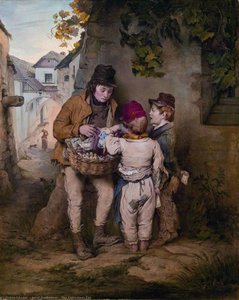
约瑟夫·丹豪瑟 肖像

42 幅最著名的 约瑟夫·丹豪瑟 作品,画廊精选

更新于 November 2026 · 基于我们的流行度评分排名(每件作品的搜索量、访问量及订单量) · 43 件 约瑟夫·丹豪瑟 作品收录于我们的目录中

简而言之

在 约瑟夫·丹豪瑟 留下的所有原作中,最著名的作品是 Liszt Fantasizing at the Piano。 紧随其后的是 The Scholars' Room (1842) 和 Portrait of the Piano-Manufcturer Konrad Graf (1840)。 我们的目录收录了 约瑟夫·丹豪瑟 的 43 件作品;画廊完整保留了 42 件享誉世界的杰作,并为每一件作品详细标注了创作日期、馆藏机构及其背后的故事。

1805 – 1845, 維也納 Biedermeier 藏品最多:奧匈藝廊貝爾維德宮

约瑟夫·丹豪瑟 的十大名画:画廊精选

1
Liszt Fantasizing at the Piano 由 约瑟夫·丹豪瑟

Liszt Fantasizing at the Piano

Oil On Panel

In the heart of 19th-century Vienna, where the air was often thick with the scent of coffee and the echoes of burgeoning Romanticism, Josef Franz Danhauser captured a moment of pure, unadulterated musical transcendence. His masterpiece, Liszt Fantasizing at the Piano, is far more than a mere depiction of a social gathering; it is a window into a vanished era of elegance and artistic fervor. As we gaze upon the…

2
The Scholars' Room (1842) 由 约瑟夫·丹豪瑟

The Scholars' Room

1842 · Painting · 奧匈藝廊貝爾維德宮, 维也纳

The scene captured in this evocative depiction, "The Scholars' Room," invites the viewer into an intimate moment suspended outside the rush of time. It is a tableau vivant of intellectual pursuit, where the weight of accumulated knowledge seems to mingle with the gentle murmur of conversation. One cannot help but feel the palpable atmosphere of deep contemplation emanating from the gathering. The composition centers around a table laden not just…

3
Portrait of the Piano-Manufcturer Konrad Graf (1840) 由 约瑟夫·丹豪瑟

Portrait of the Piano-Manufcturer Konrad Graf

1840 · 维也纳美术学院, 维也纳

The artwork is titled Portrait of the Piano-Manufcturer Konrad Graf. It was painted by the artist Josef Danhauser. The subject of this oil painting is Konrad Graf, a man who was one of Vienna's most outstanding piano-manufacturers during the early nineteenth century. This portrait was commissioned by Graf in 1840, a year when he acted as a patron to contemporary artists such as Josef Danhauser.

4
Wallstein's Grave (1828) 由 约瑟夫·丹豪瑟

Wallstein's Grave

1828 · Oil On Canvas

In Wallstein's Grave, Josef Danhauser captures a moment of profound stillness following the chaos of conflict. The scene unfolds in a pastoral landscape where the weight of tragedy hangs heavy in the air. A fallen soldier lies prone in the foreground, his white, shroud-like clothing stark against the earthy tones of the terrain. Over him, a chestnut horse stands in a posture of quiet mourning, nudging the fallen man in…

5
The Sleeping Painter in the Studio (1830) 由 约瑟夫·丹豪瑟

The Sleeping Painter in the Studio

1830 · Oil On Canvas

Created in 1830, this piece reflects the Biedermeier spirit through its focus on the beauty of the everyday and the quietude of domestic or private life. It moves away from the grandiosity of historical portraiture to find meaning in a simple, unposed moment. The painting avoids the theatrical, opting instead for a realistic approach that captures the subtle nuances of human existence. There is a certain gravity in this repose,…

6
Funny Scene in the Studio (1829) 由 约瑟夫·丹豪瑟

Funny Scene in the Studio

1829 · Oil On Canvas

The scene unfolds within the chaotic confines of an artist's workspace in Funny Scene in the Studio. Painted by Josef Danhauser, this oil on canvas captures a sudden, humorous mishap that disrupts the quiet order of the room. A person, a dog, and a large easel find themselves caught in a moment of unexpected disorder, freezing a split second of comedy in time. The energy of the accident ripples through…

7
Self-portrait (1830) 由 约瑟夫·丹豪瑟

Self-portrait

1830 · Oil On Canvas

A young man is captured in a three-quarter view, his gaze directed toward the viewer with a composed, steady expression. The portrait, rendered in a realistic academic style, emphasizes the quiet refinement of the Biedermeier era. Light enters from the upper left, casting soft shadows across the contours of the face and creating a sense of three-dimensional form through a controlled chiaroscuro effect. The subject is positioned against a dark,…

8
Portrait of a Young Woman (1830) 由 约瑟夫·丹豪瑟

Portrait of a Young Woman

1830 · Oil On Canvas

The portrait painting titled 'Portrait of a Young Woman' was created by the artist Josef Danhauser. This work dates to 1830. The subject is presented in a bust-length composition, positioned centrally within the frame. The figure faces slightly toward the viewer's left, while the gaze is directed forward toward the observer.

9
Poor (young) Painter in a Cottage Studio (1831) 由 约瑟夫·丹豪瑟

Poor (young) Painter in a Cottage Studio

1831 · Oil

In Poor (young) Painter in a Cottage Studio, Josef Danhauser presents a melancholic and intimate monochrome scene set within a cluttered, dimly lit attic studio. The composition centers on the seated figure of the painter, positioned slightly off-center amidst the remnants of his craft. A grayscale palette defines the space, utilizing a wide range of tones from deep blacks in the shadows to bright whites where light enters through a…

10
Portrait of a Woman (1836) 由 约瑟夫·丹豪瑟

Portrait of a Woman

1836 · Oil On Canvas

This oil on canvas painting, titled Portrait of a Woman, was executed by the Austrian artist Josef Danhauser in 1836. It is a quiet study of a female subject, presented in a profile view that emphasizes the stillness of the moment. The work belongs to the genre of portraiture, capturing a specific presence through the careful application of pigment on the canvas.

约瑟夫·丹豪瑟 系列持续更新,第 11 至 42 项

约瑟夫·丹豪瑟 的传世名作,按时期分类

令 约瑟夫·丹豪瑟 驻足的创作主题

这些原作中反复出现的四个主题,各有一个最杰出的范例。

收藏有 约瑟夫·丹豪瑟 原作的博物馆

收藏了本页中大部分画作的 6 家博物馆。

博物馆 城市 约瑟夫·丹豪瑟 的作品 此列表中的画作
奧匈藝廊貝爾維德宮, 维也纳奧匈藝廊貝爾維德宮 维也纳 2 The Scholars' Room, Mother Love (also known as Mutterliebe)
波恩贝多芬故居, 波恩波恩贝多芬故居 波恩 2 Beethoven, Beethoven
维也纳美术学院, 维也纳维也纳美术学院 维也纳 1 Portrait of the Piano-Manufcturer Konrad Graf
布达佩斯美术博物馆, 布达佩斯布达佩斯美术博物馆 布达佩斯 1 Siesta (The Sleepers)
Residenzgalerie, 萨尔茨堡Residenzgalerie 萨尔茨堡 1 The Widow's Offering
老国家美术馆, 柏林老国家美术馆 柏林 1 Liszt at the Piano

约瑟夫·丹豪瑟 的年代演变:定义每个时代的原创之作

各年代作品数量

选择一个年代,探索定义该时代的原创杰作。

藏家关于 约瑟夫·丹豪瑟 作品的常见问题

约瑟夫·丹豪瑟 最著名的作品是哪一件?揭晓答案

Liszt Fantasizing at the Piano。紧随其后的是 The Scholars' Room (1842) 和 Portrait of the Piano-Manufcturer Konrad Graf (1840)。

约瑟夫·丹豪瑟 最著名的十幅画作是什么?揭晓答案

Liszt Fantasizing at the Piano, The Scholars' Room, Portrait of the Piano-Manufcturer Konrad Graf, Wallstein's Grave, The Sleeping Painter in the Studio, Funny Scene in the Studio, Self-portrait, Portrait of a Young Woman, Poor (young) Painter in a Cottage Studio 及 Portrait of a Woman。上方排名显示了每件作品的创作年份及馆藏机构。

约瑟夫·丹豪瑟 留下了多少幅画作?揭晓答案

我们的目录收录了 43 件 约瑟夫·丹豪瑟 的作品,创作年代从 1827 年至 1844 年。

约瑟夫·丹豪瑟 的杰作收藏在哪些博物馆中?揭晓答案

多见于 奧匈藝廊貝爾維德宮 (维也纳), 波恩贝多芬故居 (波恩) 及 维也纳美术学院 (维也纳)。上方的博物馆列表列出了所有相关机构。

约瑟夫·丹豪瑟 在哪些年份创作了最著名的作品?揭晓答案

在 1830s 期间:本页 42 件作品中有 14 件创作于该时期,其中包含 The Sleeping Painter in the Studio 件作品。

约瑟夫·丹豪瑟 的首件与末件名作原件分别是哪几件?揭晓答案

在本页面中,最早的作品创作于 Beethoven (1827),最晚的创作于 Social Scene (1844)。

约瑟夫·丹豪瑟 最常创作的主题是什么?揭晓答案

Man (10), Woman (8) 及 People (6),共计 42 件作品。

约瑟夫·丹豪瑟 最常用的技法是什么?揭晓答案

Oil On Canvas,共计 10 件(本页共有 42 件作品)。

约瑟夫·丹豪瑟 属于哪种艺术流派?揭晓答案

根据本页面的原作,Biedermeier

哪些 约瑟夫·丹豪瑟 的作品在 奧匈藝廊貝爾維德宮 展出?揭晓答案

The Scholars' Room 及 Mother Love (also known as Mutterliebe):奧匈藝廊貝爾維德宮, 维也纳收藏了本页中 2 件作品。

约瑟夫·丹豪瑟:生平与作品

在比德迈式精神中捕捉生命

出生于维也纳,约瑟夫·丹豪瑟 逐渐成为奥地利帝国时期的一位杰出人物,他留下的艺术遗产深刻地反映了比德迈时期(Biedermeier period)的时代特征。作为雕塑家兼家具制造商约瑟夫·乌尔里希·丹豪瑟之子,他的艺术天赋在父亲的悉心教导下萌芽。这种在工艺与设计方面的深厚根基,很可能赋予了他后期作品中那种严谨而细腻的精准感。在维也纳美术学院的学习生涯,让他得以在约翰·彼得·克拉夫特等大师的指导下精进技艺,为他日后在静谧温馨的家庭生活场景与庄重深沉的历史肖像画之间游走的艺术生涯奠定了基础。

他的生活并非仅仅是孤独的创作,还与那个时代的勤勉精神紧密交织。在父亲去世后,约瑟夫·丹豪瑟与兄弟们一起经营着家族家具厂。这段投身于现代设计的经历虽然成为了他绘画生涯中的一段短暂插曲,但无疑塑造了他后来定义其风俗画风格的美学感官。他在威尼斯和布拉格的旅行进一步丰富了他的视觉语言,使他能够吸收意大利大师的影响,并将更广阔的欧洲视野融入到他的奥地利艺术根基之中。

风俗画与情感的精妙掌控

约瑟夫·丹豪瑟的艺术造诣或许最令人称道的,在于他捕捉人类生存细微差别的能力。他擅长创作风俗画,经常在平凡的日常场景中注入寓意深刻的道德底蕴,并展现出一种令人联想起威廉·霍加斯式的叙事深度。他的画作常常将观者引入宁静且富有沉思性的空间——无论是学者书房中那份智慧的避风港,还是午睡(睡眠者)中那份宁静、阳光洒满的祥和。在这些作品中,他运用柔和的色调和精湛的明暗对比,唤起一种温暖、陪伴以及时光静静流逝的感触。

除了对家庭生活的描绘,约瑟夫·丹豪瑟还拥有一种捕捉伟大灵魂本质的非凡能力。他的贝多芬肖像画是其浪漫主义印象派技巧的见证,他超越了单纯的形似,传达出了这位传奇作曲家内在的心理强度与庄严尊严。通过对光影的精妙运用,他雕琢出形体与情感,创作出带有内省气息的作品。无论是描绘李斯特在钢琴前遐想时的音乐超脱感,还是描绘临终前的沉重现实,约瑟夫·丹豪瑟的画笔都精准地捕捉到了19世纪浪漫主义的脉动。

艺术遗产与历史意义

尽管他的许多作品在生前并未得到广泛认可,但约瑟夫·丹豪瑟的历史意义在于他作为那个时代典型记录者的角色。他对比德迈运动的贡献,帮助定义了一个以低调优雅和关注日常之美为特征的时代。他的成就,包括凭借被驱逐的哈嘉获得维也纳美术学院奖,以及担任美术学院副院长,都彰显了他在维也纳艺术界的崇高地位。

他作品中经久不衰的魅力可以归纳为以下几个核心要素:

  • 叙事深度: 他有能力将道德主题巧妙地编织进看似简单的家庭生活场景中。
  • 技术多样性: 从风景画中细腻的粉彩色调,到肖像画中强烈且富有戏剧性的明暗对照法,他展现了极高的艺术掌控力。
  • 文化纽带: 他处于纯艺术、家具设计与蓬勃发展的浪漫主义运动交汇点的独特地位。