

1

Lady Godiva - John Collier
Don't miss out on owning a masterpiece! Visit WahooArt.com today to explore framing options and bring this stunning artwork into your home.

更新于 November 2026 · 基于我们的流行度评分排名(每件作品的搜索量、访问量及订单量) · 15 件 John Jones 作品收录于我们的目录中
简而言之
在 John Jones 留下的所有原作中,最著名的作品是 Lady Godiva - John Collier (2026)。 紧随其后的是 Serena (1790) 和 Portrait Of John Baker-holroyd, 1st Earl Of Sheffield。 我们的目录收录了 John Jones 的 15 件作品;画廊完整保留了 15 件享誉世界的杰作,并为每一件作品详细标注了创作日期、馆藏机构及其背后的故事。
Don't miss out on owning a masterpiece! Visit WahooArt.com today to explore framing options and bring this stunning artwork into your home.

This monochrome portrait, dated 1790, depicts a woman named Serena in a seated position. She is positioned slightly off-center to the right, gazing downward at an open book held in her lap. The scene is illuminated by a lit candle resting on a small table beside her, which serves as a secondary focal point and casts shadows across her face and body. She is seated in a decorative chair featuring…


这些原作中反复出现的四个主题,各有一个最杰出的范例。
收藏了本页中大部分画作的 1 家博物馆。
| 博物馆 | 城市 | John Jones 的作品 | 此列表中的画作 |
|---|---|---|---|
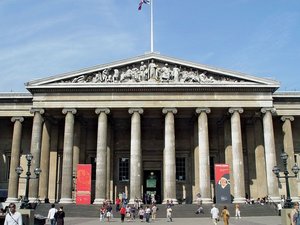 大英博物馆 |
伦敦 | 1 | Serena |
Lady Godiva - John Collier (2026)。紧随其后的是 Serena (1790) 和 Portrait Of John Baker-holroyd, 1st Earl Of Sheffield。
Lady Godiva - John Collier, Serena, Portrait Of John Baker-holroyd, 1st Earl Of Sheffield, Waiting Burro, Moose, Red, White And Blue, Fall Creek, Adobe Moon, Mrs. Jordan In The Character Of Hypolita 及 Fall Music。上方排名显示了每件作品的创作年份及馆藏机构。
我们的目录中收录了 15 件 John Jones 的作品。
多见于 大英博物馆 (伦敦)。上方的博物馆列表列出了所有相关机构。
Landscape (2), Animals (2) 及 Women (2),共计 15 件作品。
根据本页面的原作,Contemporary realism
Thomas Jones (1742-1803) stands as a remarkably prescient figure in British art, often overlooked yet undeniably influential. His journey from the bustling studios of Naples to the quiet fields of Wales reveals a fascinating evolution, culminating in landscapes that foreshadowed the Barbizon School and offered a strikingly modern approach to capturing atmospheric depth and light. Jones’s career wasn't marked by immediate fame; instead, it unfolded through decades of diligent observation, meticulous sketching, and a gradual accumulation of recognition within a relatively small circle of discerning patrons.
Born in Wrexham, North Wales, into a family of modest means, Jones received only rudimentary artistic training. His early life was shaped by the rugged beauty of his surroundings – the rolling hills, dramatic skies, and ever-changing light of the Welsh countryside. This intimate connection to nature would profoundly inform his later work. Around 1768, he began traveling extensively throughout Europe, initially to London, then to Italy. It was in Naples during the late 1770s and early 1780s that Jones’s artistic sensibilities underwent a transformative shift. He immersed himself in the vibrant art scene of the Neapolitan school, particularly influenced by the work of Giuseppe Camillo Michetti and Francesco Solimena – masters renowned for their atmospheric landscapes depicting the dramatic light and shadow effects of the Bay of Naples.
Jones’s time in Italy was crucial. He meticulously studied the techniques employed by these Italian artists, focusing on their ability to render the subtle shifts in color and value that conveyed the passage of time and the mood of a scene. Unlike the often-idealized depictions favored by his contemporaries, Jones embraced the darker, more dramatic tones characteristic of the Neapolitan style. He was particularly captivated by Michetti’s use of chiaroscuro – the strong contrast between light and shadow – to create a sense of depth and drama. His sketches from this period are characterized by loose brushwork, rapid execution, and an emphasis on capturing fleeting moments of atmospheric effect. These early works demonstrate a growing mastery of color and composition, laying the groundwork for his later achievements.
Returning to Wales in 1786, Jones initially struggled to find acceptance within the established artistic circles. His Neapolitan-influenced style was considered too dark and unconventional for the prevailing taste, which favored brighter, more picturesque landscapes. However, he persevered, establishing himself as a portrait painter and landscape artist, primarily catering to wealthy patrons in North Wales. Crucially, Jones didn’t simply replicate the Italian techniques he had learned; instead, he adapted them to his own unique vision, infused with the specific qualities of the Welsh landscape.
A key element of Jones's distinctive style was his deliberate use of atmospheric perspective – a technique borrowed from the Old Masters but employed with remarkable subtlety and effectiveness. He skillfully manipulated color and value to create a sense of distance, conveying the impression that objects recede into the background as they become less distinct and lighter in tone. This approach, combined with his loose brushwork and emphasis on capturing fleeting atmospheric effects, resulted in landscapes that possessed a remarkable sense of immediacy and realism. His work moved beyond mere representation; he sought to evoke the feeling of being present within the scene, experiencing its light, air, and mood.
Among Jones’s most significant contributions to art history are his extensive series of sketches made during his time in Naples. These drawings, numbering over 300, represent a pivotal moment in his artistic development. They reveal a radical shift towards capturing the essence of light and atmosphere – a departure from traditional landscape painting that anticipated the principles of the Barbizon School, which would emerge decades later.
Unlike the carefully composed and idealized landscapes produced by many of his contemporaries, Jones’s Naples sketches are characterized by spontaneity, directness, and an almost obsessive attention to detail. He meticulously documented the changing light conditions throughout the day, capturing the subtle shifts in color and value that transformed the landscape with each passing hour. These sketches demonstrate a profound understanding of atmospheric perspective and a remarkable ability to convey the feeling of being immersed in a dynamic natural environment. The influence of Michetti is undeniable, but Jones’s work possesses a distinct Welsh sensibility – a ruggedness and a sense of melancholy that reflects the character of his homeland.
While Thomas Jones did not achieve widespread fame during his lifetime, his legacy has been increasingly recognized in recent decades. His Naples sketches are now considered to be among the most important examples of 18th-century landscape drawing, offering a unique insight into the artistic processes of one of Britain’s most innovative painters. His work exerted a subtle but significant influence on subsequent generations of British artists, particularly those associated with the Barbizon School – a movement that championed direct observation and atmospheric effects in landscape painting.
Jones's emphasis on capturing the fleeting qualities of light and atmosphere, combined with his loose brushwork and expressive use of color, paved the way for a more modern approach to landscape painting. He demonstrated that it was possible to create powerful and evocative landscapes without resorting to idealized forms or artificial colors. Thomas Jones remains a testament to the power of observation, dedication, and a deep connection to one’s artistic surroundings – a true pioneer of atmospheric landscape.


