John D. Batten 肖像

9 幅最著名的 John D. Batten 作品,画廊精选

更新于 November 2026 · 基于我们的流行度评分排名(每件作品的搜索量、访问量及订单量) · 10 件 John D. Batten 作品收录于我们的目录中

简而言之

在 John D. Batten 留下的所有原作中,最著名的作品是 Eve and the Serpent (1895)。 紧随其后的是 Pandora (1913) 和 Snowdrop and the seven little men (1897)。 我们的目录收录了 John D. Batten 的 10 件作品;画廊完整保留了 9 件享誉世界的杰作,并为每一件作品详细标注了创作日期、馆藏机构及其背后的故事。

1865 – 1932, Plymouth 藏品最多:The University of Reading

John D. Batten 的十大名画:画廊精选

1
Eve and the Serpent (1895) 由 John D. Batten

Eve and the Serpent

1895 · Tempera

John D. Batten’s Eve and the Serpent, created about 1895, captures a pivotal moment of theological narrative within the Garden of Eden. The work focuses on the encounter between Eve and the serpent, a scene central to the biblical story of temptation. Batten utilizes the subject to explore the intersection of myth and human emotion through a structured, detailed lens.

2
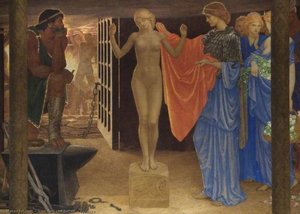
Pandora (1913) 由 John D. Batten

Pandora

1913 · Tempera · The University of Reading, Reading

In this 1913 work, the artist John D. Batten presents a depiction of the mythological figure Pandora. The scene captures the pivotal moment in which she opens the box, an act that releases all the evils into the world. It is a composition that focuses on the weight of this singular, transformative action.

3
Snowdrop and the seven little men (1897) 由 John D. Batten

Snowdrop and the seven little men

1897 · Tempera On Panel · 新南威爾士藝術畫廊, 悉尼

Snowdrop and the seven little men by John D. Batten presents a narrative scene from folklore within a horizontal composition. The central focus is a woman resting in a large, canopy bed. Surrounding her are several small, gnome-like figures, creating a scene of interaction between a sleeping figure and industrious, miniature creatures. The arrangement utilizes a shallow, stage-like perspective, where depth is established through the overlapping of figures and the…

4
Beauty and the Beast (1904) 由 John D. Batten

Beauty and the Beast

1904 · Oil On Canvas · 伯明翰博物馆与美术馆, 伯明翰

In this work, Beauty and the Beast, John D. Batten constructs a scene of profound emotional tension within the quiet confines of an enclosed garden. The composition relies on a deliberate imbalance; on the left, the verticality of a woman in a long, flowing blue gown draws the eye upward, her face turned toward the sky with an expression of either anguish or ecstasy. This movement is countered on the…

令 John D. Batten 驻足的创作主题

这些原作中反复出现的四个主题,各有一个最杰出的范例。

收藏有 John D. Batten 原作的博物馆

收藏了本页中大部分画作的 3 家博物馆。

博物馆 城市 John D. Batten 的作品 此列表中的画作
The University of Reading, ReadingThe University of Reading Reading 1 Pandora
新南威爾士藝術畫廊, 悉尼新南威爾士藝術畫廊 悉尼 1 Snowdrop and the seven little men
伯明翰博物馆与美术馆, 伯明翰伯明翰博物馆与美术馆 伯明翰 1 Beauty and the Beast

John D. Batten 的年代演变:定义每个时代的原创之作

各年代作品数量

选择一个年代,探索定义该时代的原创杰作。

藏家关于 John D. Batten 作品的常见问题

John D. Batten 最著名的作品是哪一件?揭晓答案

Eve and the Serpent (1895)。紧随其后的是 Pandora (1913) 和 Snowdrop and the seven little men (1897)。

创作 Eve and the Serpent 时,John D. Batten 是多少岁?揭晓答案

30岁:Eve and the Serpent创作于1895年,John D. Batten出生于1865年。

John D. Batten 留下了多少幅画作?揭晓答案

我们的目录收录了 10 件 John D. Batten 的作品,创作年代从 1886 年至 1922 年。

John D. Batten 的杰作收藏在哪些博物馆中?揭晓答案

多见于 The University of Reading (Reading), 新南威爾士藝術畫廊 (悉尼) 及 伯明翰博物馆与美术馆 (伯明翰)。上方的博物馆列表列出了所有相关机构。

John D. Batten 在哪些年份创作了最著名的作品?揭晓答案

在 1880s 期间:本页 9 件作品中有 2 件创作于该时期,其中包含 The Family 件作品。

John D. Batten 的首件与末件名作原件分别是哪几件?揭晓答案

在本页面中,最早的作品创作于 The Family (1886),最晚的创作于 Atlanta and Milanion (detail for the fresco painting 'Atlanta's Race') (1922)。

John D. Batten 最常创作的主题是什么?揭晓答案

Woman (4) 及 Garden (2),共计 9 件作品。

John D. Batten 最常用的技法是什么?揭晓答案

Tempera,共计 2 件(本页共有 9 件作品)。

John D. Batten:生平与作品

The Tempera Revivalist

To understand the impact of John Dickson Batten, one must look at the specific technical vacuum he helped fill during the Edwardian era. He did not merely paint; he revived a dying language. By turning to egg tempera, Batten moved away from the heavy, oily textures common in his time, opting instead for a medium that demanded precision and a certain luminous austerity. His work is defined by this discipline. He was a man of dualities, beginning his professional life reading law at Trinity College, Cambridge, before abandoning the legal career of a barrister to study at the Slade School of Fine Arts. This transition from the rigid logic of law to the meticulous observation of art shaped a style that was both intellectually structured and visually detailed.

His early fascination with ornithology and the mechanics of animal flight provided a scientific foundation for his later, more imaginative works. This wasn't mere whimsy. There is a structural accuracy in his depictions of movement that separates his illustrations from the purely decorative. He brought a researcher's eye to the mythological and the allegorical, ensuring that even his most fantastical subjects possessed a tangible, physical presence.

Narrative and Myth

Batten’s output was vast, ranging from small-scale book illustrations to large-scale frescoes. He possessed a specific ability to translate complex folklore into visual narratives. His work often focused on the intersection of myth and human emotion, utilizing the delicate qualities of tempera to bring light to ancient stories. His repertoire included:

His involvement with the Society of Painters in Tempera was not a side interest; it was a central part of his professional identity. Alongside figures like Arthur Gaskin, he helped establish a renewed appreciation for the medium's expressive potential. His 1913 work, Pandora, which was presented to Reading University, remains a primary example of his ability to handle large-scale narrative depth through the tempera technique.

A Legacy of Precision

The significance of Batten lies in his refusal to settle for the easy or the ephemeral. While many of his contemporaries were moving toward more fluid or abstract expressions, he doubled down on the technical rigors of the past. He was a prolific writer as well, producing volumes of poetry and an article on the practice of tempera painting, proving that his interest in art was as much academic as it was creative. He understood the mechanics of his craft from the inside out.

His work remains a vital point of reference for anyone studying the revival of traditional painting methods in Britain. He did not just illustrate stories; he gave them a specific, luminous weight. From the detailed rendering of a bird's flight to the somber emotion of a religious portrait, Batten’s career was a sustained argument for the power of meticulous, disciplined art.