Llyfrgell Genedlaethol Cymru / The National Library of Wales
伍尔弗汉普顿美术馆
New Cross Hospital
Works on this site: 15
Born: 1863
Lifespan: 72 years
Art period: 19th Century
Early Life and Artistic Beginnings
George Phoenix, born George Phoenix Edwards in Wolverhampton in 1863, emerged from a modest background – his father was a hairdresser. From an early age, he demonstrated a clear inclination towards art, studying at the Birmingham School of Art during the late 1870s and early 1880s. The 1881 census records him as a seventeen-year-old “artist (photo),” hinting at an initial exploration of photography before fully committing to painting. A pivotal moment in his artistic development came with a walking tour through Wales, an experience he later credited as sparking his passion for landscape art and setting the course for his future career. This early exposure to the natural world would become a defining characteristic of his work. He soon adopted “Phoenix” – his mother’s maiden name – as his professional moniker, a symbolic shedding of familial constraints and embrace of artistic identity.
A Flourishing Career: London Exhibitions and Wolverhampton Roots
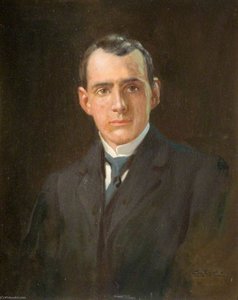
The late 1880s saw Phoenix establish himself in London, where he began exhibiting regularly at prestigious venues like the Royal Academy, the Royal Birmingham Society of Artists, and the Walker Art Gallery in Liverpool. His paintings quickly garnered attention for their realism and sensitivity to light and atmosphere. Around 1890, however, a significant shift occurred as Phoenix returned to his hometown of Wolverhampton. This move marked not only a geographical relocation but also a deepening engagement with local society. In 1891, he married Julia Critchlow, and the couple settled permanently in Wolverhampton, where Phoenix maintained studios first on Merridale Road and later on Clarendon Street. He specialized increasingly in portraiture, becoming highly sought after for his depictions of prominent citizens – mayors, town clerks, doctors, and other figures of local importance.
Portraiture, Landscapes, and a Diverse Artistic Output
Phoenix’s artistic output was remarkably diverse, encompassing both oils and watercolours. While he became renowned for his portraits, capturing the character and dignity of his sitters with meticulous detail, he never abandoned his love of landscape painting. His landscapes often depicted the English countryside – Bridgnorth, Ludlow, Lincoln – reflecting a clear influence from artists like Henry Mark Anthony. He also ventured further afield, creating scenes of Normandy and Holland, as well as nostalgic depictions of “old Wolverhampton.” Beyond portraiture and landscape, Phoenix explored religious themes, with works such as ‘The Spirit of Christ’ and ‘The Prodigal Son’ demonstrating his ability to tackle complex narratives with emotional depth. His contributions extended beyond painting; he also worked as an illustrator, creating drawings and cartoons for the satirical magazine *Punch*.
Patronage, Community Engagement, and Lasting Legacy
Phoenix benefited from the support of local patrons like Philip Horsman, a Wolverhampton builder who commissioned his portrait in 1900. He actively participated in community life, playing a key role in organizing the Wolverhampton Art and Industrial Exhibition in 1902 and creating a large-scale pictorial panorama for the event. His commitment to the town was further demonstrated by his generous donation of six paintings to Wolverhampton Art Gallery in 1922 as a tribute to those who had survived World War I, including “The Grandmother”. Phoenix’s solo exhibition in 1927, featuring over one hundred works, solidified his reputation as a leading artist in the Midlands. His paintings are now held in numerous public collections, including Wolverhampton Art Gallery and the National Portrait Gallery, ensuring that his artistic legacy continues to inspire and captivate audiences today. He died in 1935 leaving behind a rich body of work reflecting Victorian and Edwardian life, portraiture, landscapes, and religious themes.
Phoenix's style is characterized by a blend of realism, sensitivity, and technical skill. His portraits are notable for their psychological depth, while his landscapes capture the beauty and tranquility of the English countryside with remarkable fidelity. He was a versatile artist who successfully navigated diverse genres, leaving behind a body of work that offers a fascinating glimpse into Victorian and Edwardian society and artistic sensibilities.
由 OriginalUniqueArt.com 编辑团队撰写
趣味测试
每道题只有一个正确答案。
题目 1:
In what city did George Phoenix regularly exhibit his works and maintain a studio?
题目 2:
What artistic name did George Phoenix adopt, and why?
题目 3:
Which galleries were known to exhibit George Phoenix's work?
题目 4:
What type of artwork is 'The Prodigal Son' described as?
题目 5:
What did George Phoenix contribute to the 'Punch' magazine?
Explore the life & art of George Romney, leading portraitist of Georgian England. Discover his style, famous patrons like Emma Hamilton, and legacy in British society. Expert insights for collectors.