The Call of the Spirit
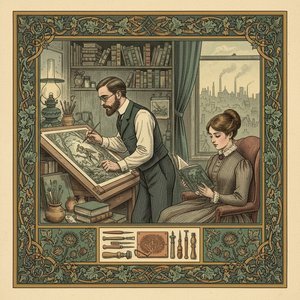
Born into the opulence of a wealthy British family, Florence Nightingale’s early years were defined by a profound tension between the gilded expectations of Victorian high society and an internal, divine mandate. In the quietude of Embley Park, beneath the sweeping shadows of Lebanon cedar trees, she experienced a transformative spiritual awakening—a vision that would steer her away from a life of leisure toward the gritty, demanding reality of medical reform. This transition was far more than a change in vocation; it was a revolutionary act of intellect and will. She utilized her formidable training in mathematics and statistics to prepare for a life of unprecedented service, turning the analytical precision of a scholar into a weapon against the chaos of neglect.The Shadow of Scutari
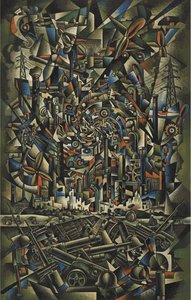
The Crimean War served as the crucible in which the legend of the Lady with the Lamp was forged. Upon arriving at the Scutari Barracks, Nightingale encountered a landscape of profound devastation, where disease and inadequate sanitation claimed more lives than the battlefield itself. With a resolute determination, she implemented sweeping changes to hygiene and patient care, moving through the darkened, harrowing wards like a steady beacon of hope. Her presence in these grim settings has been immortalized in the annals of history and art, capturing the dramatic tension between the visceral chaos of war and the unwavering light of her compassion. Through her tireless work, she did not merely tend to wounds; she reimagined the very essence of nursing as a disciplined, scientific profession.The Architecture of Truth
Perhaps her most enduring, yet often overlooked, contribution lies in her mastery of statistical visualization. Nightingale understood that to influence the halls of power, one had to make the invisible visible. She pioneered the use of complex statistical graphics, such as the polar area diagram, to present the harrowing truths of mortality rates to Parliament and the public. By transforming raw, cold data into compelling visual narratives, she bridged the gap between mathematical rigor and human suffering, ensuring that her crusade for public health reform was backed by an undeniable, empirical truth. This masterful marriage of analytical precision and humanitarian empathy remains her most profound gift to the modern world, cementing her legacy as both a pioneer of science and a champion of the human spirit.问答详情
Florence Nightingale 的创作时期属于哪个历史阶段?
Florence Nightingale 的创作活跃于 19th Century 时期,这一时期确立了艺术家在艺术史上的地位。
Florence Nightingale 的作品受欢迎程度如何?
有关 Florence Nightingale 作品的统计数据,请参阅艺术家的 统计数据 页面。
在哪里可以按氛围浏览 Florence Nightingale 的作品?
Florence Nightingale 的 情境空间 汇集了该艺术家的多件作品,并按心情分类呈现。