


1


更新于 November 2026 · 基于我们的流行度评分排名(每件作品的搜索量、访问量及订单量) · 24 件 Edward Calvert 作品收录于我们的目录中
简而言之
在 Edward Calvert 留下的所有原作中,最著名的作品是 Nude Study (1830)。 紧随其后的是 Classical Landscape with a Goatherd (1827) 和 In the Aegean Sea (1844)。 我们的目录收录了 Edward Calvert 的 24 件作品;画廊完整保留了 24 件享誉世界的杰作,并为每一件作品详细标注了创作日期、馆藏机构及其背后的故事。


 Nymphs and Shepherds利兹美术馆
12
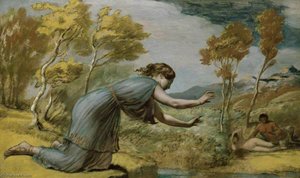 Psyche at the Stream阿什莫利博物馆
13
 Mars and Venus阿什莫利博物馆
14
 Pan Playing His Pipes (Pastoral Subject)
15
 Hesperides, 'Dance around the Golden Tree'Fitzwilliam 学院
16
 Psyche阿什莫利博物馆
17
 The Return HomeFitzwilliam 学院
18
 The Garden of Culture阿什莫利博物馆
19
 A Pastoral Idyll, 'The Other Shore'Fitzwilliam 学院
20
 Votive Offerings, Classical Scene布里斯托博物馆与美术馆
21
 A Woodland Glade
22
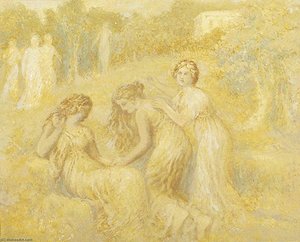 Dwellers in Elysian Fields利兹美术馆
23
 The Grove of Artemis1850 · 伯明翰博物馆与美术馆
24
 Oak Trees in Summer阿什莫利博物馆
收藏了本页中大部分画作的 5 家博物馆。
| 博物馆 | 城市 | Edward Calvert 的作品 | 此列表中的画作 |
|---|---|---|---|
 阿什莫利博物馆 |
牛津 | 9 | Classical Landscape with a Goatherd, In the Aegean Sea, Sleeping Nymph |
 伯明翰博物馆与美术馆 |
伯明翰 | 3 | Ulysses and the Sirens, Pan and Pithys, The Grove of Artemis |
 Fitzwilliam 学院 |
Cambridge | 3 | Hesperides, 'Dance around the Golden Tree', The Return Home, A Pastoral Idyll, 'The Other Shore' |
 利兹美术馆 |
利兹 | 2 | Nymphs and Shepherds, Dwellers in Elysian Fields |
 布里斯托博物馆与美术馆 |
布里斯托 | 1 | Votive Offerings, Classical Scene |
选择一个年代,探索定义该时代的原创杰作。
Nude Study (1830)。紧随其后的是 Classical Landscape with a Goatherd (1827) 和 In the Aegean Sea (1844)。
31岁:Nude Study创作于1830年,Edward Calvert出生于1799年。
Nude Study, Classical Landscape with a Goatherd, In the Aegean Sea, Ulysses and the Sirens, Pan and Pithys, A Dryad, Alexander Monro 'Secundus' (1733–1817), Elemental Life, Sleeping Nymph 及 Mythological Scene。上方排名显示了每件作品的创作年份及馆藏机构。
我们的目录收录了 24 件 Edward Calvert 的作品,创作年代从 1827 年至 1866 年。
多见于 阿什莫利博物馆 (牛津), 伯明翰博物馆与美术馆 (伯明翰) 及 Fitzwilliam 学院 (Cambridge)。上方的博物馆列表列出了所有相关机构。
在 1850s 期间:本页 24 件作品中有 3 件创作于该时期,其中包含 Ulysses and the Sirens 件作品。
在本页面中,最早的作品创作于 Classical Landscape with a Goatherd (1827),最晚的创作于 A Dryad (1866)。
Classical Landscape with a Goatherd, In the Aegean Sea 及 Sleeping Nymph:阿什莫利博物馆, 牛津收藏了本页中 9 件作品。
In the tapestry of nineteenth-century British art, few threads are as intricately woven with mysticism and precision as those left by Edward Calvert. Born in 1799 in the coastal beauty of Appledore, Devon, Calvert was an artist whose soul seemed to reside at the intersection of the tangible world and the ethereal realm. While many of his contemporaries sought to capture the mere surface of reality, Calvert embarked on a lifelong quest to etch the very essence of the sublime onto paper and canvas. His journey, which took him from the naval life of his youth to the prestigious halls of the Royal Academy Schools in 1824, was defined by an unwavering devotion to the spiritual and the symbolic.
Calvert’s artistic identity was profoundly shaped by his immersion in the vibrant, almost mystical, atmosphere of the Shoreham Circle. This group, centered around the influential Samuel Palmer, breathed the radical air of William Blake. For Calvert, Blake was more than a predecessor; he was a philosophical North Star. The influence of Blake’s exploration of myth, subconscious imagery, and spiritual symbolism became the bedrock of Calvert's compositions. Through his mastery of engraving, Calvert translated these complex, visionary ideas into delicate, tangible forms, most notably in works like ‘The Chamber Idyll’ (1831), where the boundaries between dream and reality begin to blur.
The true brilliance of Calvert lies in his technical virtuosity, particularly within the demanding medium of miniature wood engravings. He possessed an almost supernatural ability to manipulate light and shadow, using fine lines to create a sense of atmosphere that felt both ancient and immediate. His work often oscillates between the pastoral and the classical, finding profound beauty in the quietude of the English landscape and the structured elegance of Greek motifs. Whether he was rendering the textured bark of ‘Oak Trees in Summer’ or the serene, mythological stillness of ‘The Grove of Artemis’, his hand remained remarkably precise yet deeply emotive.
His technique allowed for a unique duality: a meticulous attention to detail that satisfied the eye, paired with an impressionistic sensitivity that captured fleeting moments of tranquility. In his oil paintings, one can observe a burgeoning use of bold lines and vibrant colors that hint at a connection to the Symbolist movement, emphasizing psychological depth over mere topographical accuracy. This ability to imbue even the smallest woodcut with a sense of "quiet grandeur" ensured that his work resonated far beyond the borders of simple illustration.
Though Calvert may not have achieved the widespread, flamboyant fame of some of his more boisterous Victorian peers, his historical significance remains undiminished among scholars of the Romantic and Visionary traditions. He was a master of the intimate, an artist who found the infinite within the miniature. His legacy is carried forward not only through his surviving prints and paintings but also through the lineage of talent he inspired; his son, Samuel Calvert, would go on to become a distinguished engraver in his own right, continuing the family's devotion to the craft.
Today, the works of Edward Calvert serve as a window into a period of intense artistic experimentation, where the boundaries of printmaking were pushed to accommodate the weight of human imagination. To look upon a Calvert engraving is to participate in a silent dialogue with the past—a moment of contemplation that honors the enduring power of beauty, nature, and the unseen spirit.