Cornelis van Spaendonck 肖像

Cornelis van Spaendonck 作品:画廊视角下的 14 幅名作

更新于 November 2026 · 基于我们的流行度评分排名(每件作品的搜索量、访问量及订单量) · 16 件 Cornelis van Spaendonck 作品收录于我们的目录中

简而言之

在画廊看来,Cornelis van Spaendonck 最著名的作品是 Still Life of Flowers (1793),其原作现收藏于 伊萨卡 的 Herbert F. Johnson Museum of Art。 Still-Life with Fruit on Table (1798) 与 Vase of Roses (1806) 共同构成了那组令人过目不忘的艺术三部曲。 在我们的目录中,Cornelis van Spaendonck 共有 16 件作品,画廊为您精选了以下 14 件最著名的原作,并详细列出了每件作品的创作年份、馆藏机构及其独特之处。

1756 – 1839, Tilburg 藏品最多:Fitzwilliam Museum

画廊中 Cornelis van Spaendonck 的十大名画

1
Still Life of Flowers (1793) 由 Cornelis van Spaendonck

Still Life of Flowers

1793 · Oil · Herbert F. Johnson Museum of Art, 伊萨卡

In this 1793 composition, we find ourselves in the presence of a lush, pyramidal arrangement that speaks to the quiet intensity of the late Baroque tradition. A large, cream-colored vase sits at the center, its ornate surface catching the light as it overflows with a dense collection of blossoms. The arrangement is not merely a display of flora but a carefully constructed study of form and shadow. Soft pink peonies…

2
Still-Life with Fruit on Table (1798) 由 Cornelis van Spaendonck

Still-Life with Fruit on Table

1798 · Oil On Canvas · 卢浮宫, 巴黎

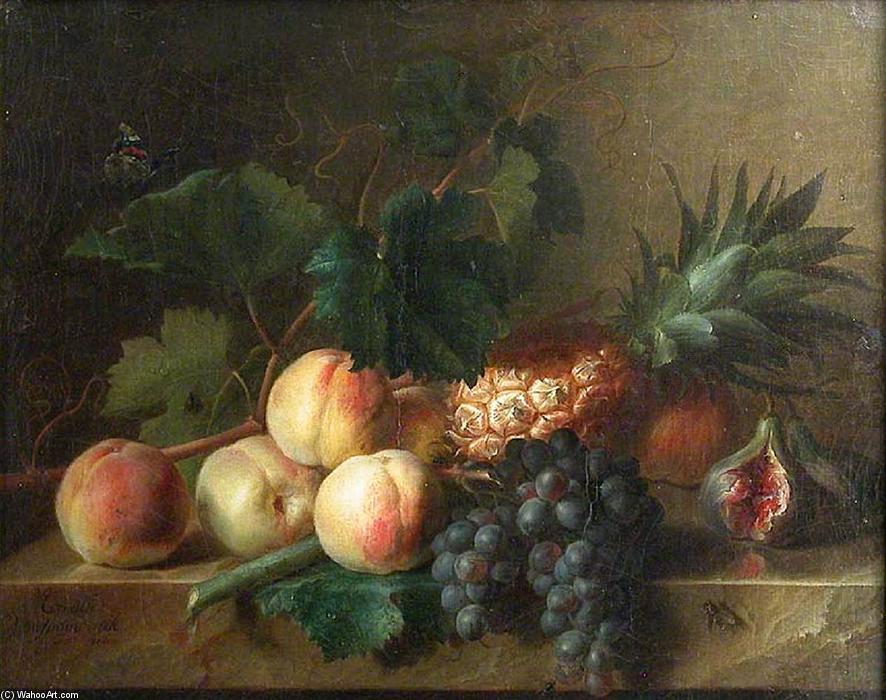
Gaze upon this exquisite vision of abundance, a moment captured in time that speaks volumes through its vibrant arrangement of nature's bounty. This still life, featuring an array of ripe fruit—luscious apples nestled in the foreground, stately pears positioned just behind them, and clusters of deep purple grapes alongside bright oranges—is more than mere depiction; it is a celebration of harvest and earthly pleasure. The composition is further enriched by…

3
Vase of Roses (1806) 由 Cornelis van Spaendonck

Vase of Roses

1806 · Oil · 里昂美术馆, 里昂

The air in the room feels heavy with the scent of damp earth and velvet petals. A dark-stone vase, heavy and grounded upon a cool marble base, holds a gathering of roses that seems to pulse with life. Crimson and vermilion blooms circle the arrangement, their deep hues pulling the eye into the center of the composition. Amidst this sea of red, a single white rose and a pale centifolia…

4
Still Life with Fruit Basket (1781) 由 Cornelis van Spaendonck

Still Life with Fruit Basket

1781 · Oil On Canvas

The composition presents a dense, vertical arrangement of flora emerging from a woven basket. Resting upon a dark, polished marble pedestal, the bouquet features a variety of blossoms, including roses and peonies, interspersed with smaller wildflowers. The arrangement is characterized by a complex interplay of organic shapes, from the soft, layered petals of the large blooms to the delicate, translucent quality of butterfly wings. A sense of abundance is achieved…

5
Vase of Flowers on a Stone Table, with a Nest and a Male Greenfinch (1789) 由 Cornelis van Spaendonck

Vase of Flowers on a Stone Table, with a Nest and a Male Greenfinch

1789 · Oil On Canvas

A large, ornate vase sits upon a heavy stone table, its surface marked by a granular, rough texture. This vessel holds a dense arrangement of flowers, including roses, tulips, and daisies. The petals exhibit a range of colors, from pale pinks and whites to deep reds and oranges. Light enters from the upper left, casting soft shadows that define the volume of the blossoms and the solid form of the…

6
Cornelis Van Spaendonck - Vase de fleurs avec nid (1787) 由 Cornelis van Spaendonck

Cornelis Van Spaendonck - Vase de fleurs avec nid

1787 · Oil On Canvas · 卡尔卡松美术馆, 卡尔卡松

In this 1787 oil on canvas, Cornelis van Spaendonck invites us into a private, intimate moment of the natural world. The composition centers on a glass vase, its surface catching the light to reveal a lush, pyramidal arrangement of blossoms. Soft pastels—whites, pale pinks, and light blues—drift through the arrangement, punctuated by the deep reds and warm oranges of more mature blooms. It is a scene of quiet abundance, set…

7
Still Life with Flowers in a Vase (1830) 由 Cornelis van Spaendonck

Still Life with Flowers in a Vase

1830 · Oil · Noordbrabants Museum, 斯海尔托根博斯

Still Life with Flowers in a Vase is an oil painting by Cornelis van Spaendonck. Created in 1830, the work reflects the artist's long-standing engagement with botanical subjects. Van Spaendonck was born in Tilburg, Netherlands, in 1756 and continued to produce works until his death in 1839.

Cornelis van Spaendonck 的画作,排名第 11 至 14

令 Cornelis van Spaendonck 驻足的创作主题

这些原作中反复出现的四个主题,各有一个最杰出的范例。

收藏有 Cornelis van Spaendonck 原作的博物馆

收藏了本页中大部分画作的 7 家博物馆。

博物馆 城市 Cornelis van Spaendonck 的作品 此列表中的画作
Fitzwilliam MuseumFitzwilliam Museum 3 Open Wicker Basket Of Mixed Flowers, Including Tulip, Roses, Harebell, Hollyhock, Poppy, Larkspur And Auricula On A Marble Ledge, Vase Of Flowers, Open wicker basket of mixed flowers, including iris, roses, poppies, hollyhock, marigold, larkspur and convolvulus on a marble ledge
Herbert F. Johnson Museum of Art, 伊萨卡Herbert F. Johnson Museum of Art 伊萨卡 1 Still Life of Flowers
卢浮宫, 巴黎卢浮宫 巴黎 1 Still-Life with Fruit on Table
里昂美术馆, 里昂里昂美术馆 里昂 1 Vase of Roses
卡尔卡松美术馆, 卡尔卡松卡尔卡松美术馆 卡尔卡松 1 Cornelis Van Spaendonck - Vase de fleurs avec nid
Noordbrabants Museum, 斯海尔托根博斯Noordbrabants Museum 斯海尔托根博斯 1 Still Life with Flowers in a Vase
阿什莫林博物馆, 牛津阿什莫林博物馆 牛津 1 Basket of Flowers

Cornelis van Spaendonck,每十年一件代表作

各年代作品数量

选择一个年代,探索定义该时代的原创杰作。

Cornelis van Spaendonck 的画作:画廊解答

哪幅 Cornelis van Spaendonck 的画作最为闻名?揭晓答案

Still Life of Flowers (1793),Herbert F. Johnson Museum of Art, 伊萨卡。紧随其后的是 Still-Life with Fruit on Table (1798) 和 Vase of Roses (1806)。

Cornelis van Spaendonck 完成 Still Life of Flowers 时多大年纪?揭晓答案

37岁:Still Life of Flowers创作于1793年,Cornelis van Spaendonck出生于1756年。

Cornelis van Spaendonck 最受欢迎的 10 幅画作是哪些?揭晓答案

Still Life of Flowers, Still-Life with Fruit on Table, Vase of Roses, Still Life with Fruit Basket, Vase of Flowers on a Stone Table, with a Nest and a Male Greenfinch, Cornelis Van Spaendonck - Vase de fleurs avec nid, Still Life with Flowers in a Vase, Open Wicker Basket Of Mixed Flowers, Including Tulip, Roses, Harebell, Hollyhock, Poppy, Larkspur And Auricula On A Marble Ledge, Basket and Vase of Flowers 及 Double hyacinth。上方排名显示了每件作品的创作年份及馆藏机构。

Cornelis van Spaendonck 创作了多少件作品?揭晓答案

我们的目录收录了 16 件 Cornelis van Spaendonck 的作品,创作年代从 1781 年至 1830 年。

Cornelis van Spaendonck 最著名的原作收藏于何处?揭晓答案

多见于 Fitzwilliam Museum, Herbert F. Johnson Museum of Art (伊萨卡) 及 卢浮宫 (巴黎)。上方的博物馆列表列出了所有相关机构。

Cornelis van Spaendonck 是在什么时候创作出最著名的画作的?揭晓答案

在 1780s 期间:本页 14 件作品中有 3 件创作于该时期,其中包含 Still Life with Fruit Basket 件作品。

Cornelis van Spaendonck 最早和最晚的代表作有哪些?揭晓答案

在本页面中,最早的作品创作于 Still Life with Fruit Basket (1781),最晚的创作于 Still Life with Flowers in a Vase (1830)。

Cornelis van Spaendonck 最常创作的主题是什么?揭晓答案

Flowers (9), Vase (6) 及 Roses (4),共计 14 件作品。

Cornelis van Spaendonck 最常用的创作媒介是什么?揭晓答案

Oil On Canvas,共计 4 件(本页共有 14 件作品)。

Fitzwilliam Museum收藏了哪些Cornelis van Spaendonck的原作?揭晓答案

Open Wicker Basket Of Mixed Flowers, Including Tulip, Roses, Harebell, Hollyhock, Poppy, Larkspur And Auricula On A Marble Ledge, Vase Of Flowers 及 Open wicker basket of mixed flowers, including iris, roses, poppies, hollyhock, marigold, larkspur and convolvulus on a marble ledge:Fitzwilliam Museum收藏了本页中 3 件作品。

Cornelis van Spaendonck:艺术家

The Delicate Mastery of Cornelis van Spaendonck

In the grand tapestry of European art history, few threads possess the delicate, luminous quality found in the works of Cornelis van Spaendonck. Born in the Dutch city of Tilburg in 1756, Van Spaendonck emerged from a lineage of profound artistic dedication, beginning his journey under the tutelage of Willem Jacob Herreyns in Antwerp. This early training laid the foundation for a career that would eventually bridge the gap between the meticulous traditions of the Dutch Golden Age and the refined elegance of the French Neoclassical era. In 1773, a pivotal year that redirected the course of his life, he moved to Paris, where he joined his older brother, Gérard van Spaendonck. Together, they became central figures in the Parisian art scene, weaving a legacy of botanical precision and decorative splendor that would captivate the French Academy for decades.

The essence of Van Spaendonck’s artistry lies in his ability to transform the ephemeral into the eternal. While many artists of his era sought the drama of historical epic or the grandeur of portraiture, Cornelis found his muse in the quiet, intimate corners of the natural world. His mastery of oils and gouache allowed him to capture the translucent petals of a rose, the velvety texture of a tulip, and the subtle, dewy moisture on a leaf with an almost scientific accuracy. His compositions often transcend mere botanical documentation; they are poetic meditations on life and decay. In works such as "Open Wicker Basket Of Mixed Flowers," one can sense the artist's profound reverence for each individual bloom, from the sturdy hollyhock to the delicate harebell, all arranged with a grace that feels both spontaneous and perfectly balanced.

A Legacy of Porcelain and Prestige

Van Spaendonck’s influence extended far beyond the canvas, reaching into the very fabric of decorative arts that defined 18th-century luxury. His tenure as the director of the prestigious Sèvres porcelain factory from 1785 to 1800 represents a remarkable intersection of fine art and industrial design. During this period, his botanical sensibilities were translated into exquisite motifs for porcelain, bringing the beauty of the natural world to the tables of the European aristocracy. Even after his administrative departure from Sèvres in 1800, his creative spirit remained tethered to the manufactory, as he continued to design decorative elements that would become hallmarks of French elegance until 1808.

His professional stature was further solidified by his membership in the Académie des Beaux Arts, a distinction he earned in 1789. This prestigious affiliation provided him with a continuous platform to showcase his botanical wonders to the most discerning eyes in Europe. His work often featured more than just flora; he possessed a singular talent for integrating small, living details that breathed life into his still lifes. A wandering bee, a shimmering dragonfly, or a tiny bird's nest tucked among the stems served as subtle reminders of the interconnectedness of nature, adding layers of narrative depth to his compositions.

The historical significance of Cornelis van Spaendonck is found not only in his individual achievements but also in the lineage of talent he helped cultivate. As a mentor to artists like Frédéric Bouchardy, he ensured that the tradition of meticulous botanical illustration would endure into the next century. His life’s work remains a testament to the power of observation and the enduring allure of the natural world, offering a window into an era where beauty was captured with unparalleled precision and profound affection.