Birgit Jürgenssen: A Pioneer of Feminist Body Art
Birgit Jürgenssen (1949 – 2003) was an Austrian photographer, painter, graphic artist, curator and teacher who specialized in feminine body art with self-portraits and photo series. She emerged from the Viennese avant-garde scene of the late 1960s and early 1970s, a period marked by intense debates surrounding gender roles and artistic expression. Her work stands apart for its uncompromising exploration of female subjectivity and its critique of societal constraints—themes that continue to resonate with contemporary artists and scholars alike.
- Early Life and Education:
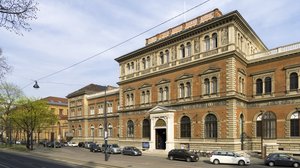
Born in Vienna, Austria in 1949, Jürgenssen pursued her artistic education at the University of Applied Arts Vienna between 1968 and 1971. This formative period exposed her to influential figures within Viennese art discourse and instilled a commitment to challenging conventional perspectives.
- The Magna Feminismus Exhibition:
Her breakthrough came in 1975 with participation in the *MAGNA-Feminismus: Kunst und Kreativität* exhibition, organized by Valie Export. This landmark event showcased a diverse range of feminist artworks, and Jürgenssen’s photograph *Housewives’ Kitchen Apron*, featuring a sculpture of an apron in the shape of an oven—a deliberate inversion of domestic iconography—immediately established her reputation as a bold innovator.
Artistic Style and Recurring Themes
Jürgenssen's artistic style was characterized by
meticulous detail and
psychological depth. She employed photography extensively, often combining it with drawing and sculpture to create multi-layered artworks that interrogated the complexities of female experience. Her recurring motifs—the female body transformed through various mediums—served as a vehicle for confronting issues of identity, vulnerability, and resistance. Notably, her self-portraits frequently depicted women adorned in furs or masks, symbolizing an attempt to escape oppressive societal codes and embrace primal instincts. The image *I Want Out Of Here!*, captured in 1976, powerfully conveyed the feeling of entrapment—a central preoccupation throughout her oeuvre.
- Notable Works:
Among her most celebrated pieces are *10 Days – 100 Photos* (1980), a series documenting the daily life of women in Vienna, and *Untitled (Self with Little Fur)* (1974–77), which exemplifies her fascination with exploring feminine vulnerability through symbolic imagery. Her sculptures, such as *Nest* (1979/2002)—a meticulously crafted piece featuring a nest filled with two eggs—further underscored her commitment to confronting societal expectations regarding motherhood and femininity.
Teaching and Curatorial Contributions
Jürgenssen’s influence extended beyond her own artistic practice. She served as lecturer and curator at the University of Applied Arts Vienna and the Academy of Fine Arts Vienna, nurturing a new generation of artists interested in feminist perspectives. Her estate—managed by Hubert Winter—included a vast collection of drawings,
watercolor paintings, photogrammes, screens, solar graphics, and objects from various collections—a testament to her prolific creativity and intellectual curiosity.
Legacy and Recognition
Birgit Jürgenssen’s photographic works numbered 250 and were exhibited in a retrospective held by the Sammlung Verbund and the Bank Austria Art Forum. Her contribution to feminist art was recognized as “outstanding international representatives of the feminist avant-garde,” cementing her place within the history of
contemporary art. Her legacy continues to inspire artists and scholars who grapple with questions of gender, identity, and artistic expression—a testament to the enduring power of her uncompromising vision.