


1

德累斯顿旧十字教堂的废墟
贝尔纳多·贝洛托的这幅引人入胜的城市风光,为我们呈现了二战后德累斯顿的一幕,时间大约在1765年。它不仅仅是对破坏的描绘,更是一曲关于失落、复苏和人类坚韧精神的深刻冥想。画面中,残破的旧十字教堂与依然屹立不倒的建筑并列,捕捉了这座城市历史上的一个关键时刻。贝洛托以其精湛的技艺,将这场灾难后的景象定格在画布上,为后人留下了宝贵的视觉记录。

更新于 November 2026 · 基于我们的流行度评分排名(每件作品的搜索量、访问量及订单量) · 230 件 贝纳多·贝洛托 作品收录于我们的目录中
简而言之
在 贝纳多·贝洛托 留下的所有原作中,最著名的当属收藏于 德累斯顿 Gemäldegalerie 的《德累斯顿旧十字教堂的废墟 (1765)》。 紧随其后的是 Dresden, the Frauenkirche and the Rampische Gasse (1749) 和 The Moat of the Zwinger in Dresden (1749)。 我们的目录收录了 贝纳多·贝洛托 的 230 件作品;画廊完整保留了 100 件享誉世界的杰作,并为每一件作品详细标注了创作日期、馆藏机构及其背后的故事。
贝尔纳多·贝洛托的这幅引人入胜的城市风光,为我们呈现了二战后德累斯顿的一幕,时间大约在1765年。它不仅仅是对破坏的描绘,更是一曲关于失落、复苏和人类坚韧精神的深刻冥想。画面中,残破的旧十字教堂与依然屹立不倒的建筑并列,捕捉了这座城市历史上的一个关键时刻。贝洛托以其精湛的技艺,将这场灾难后的景象定格在画布上,为后人留下了宝贵的视觉记录。

In the quiet, luminous depths of Bernardo Bellotto’s 1749 masterpiece, Dresden, the Frauenkirche and the Rampische Gasse, we are invited to step through a portal into the eighteenth century. This breathtaking oil on canvas is far more than a mere topographical record; it is a soulful meditation on a city at its zenith. As the eye wanders across the panoramic vista, one is immediately struck by the imposing presence of…

To look upon The Moat of the Zwinger in Dresden is to witness a moment of profound stillness from 1749. This canvas captures the Zwinger complex not as a mere fortification, but as a serene reflection of royal life during the reign of Augustus III. The water in the moat acts as a liquid mirror, its surface broken only by the gentle movement of small boats and the soft ripples…

In the heart of 18th-century Saxony, amidst the burgeoning prosperity of the Enlightenment, Bernardo Bellotto captured a moment of profound serenity and architectural splendor. His masterpiece, The Moat of the Zwinger in Dresden, is far more than a mere topographical record; it is a luminous window into a vanished world. Painted in 1749, this work invites the viewer to step onto the banks of the Zwinger Palace’s moat, where the…
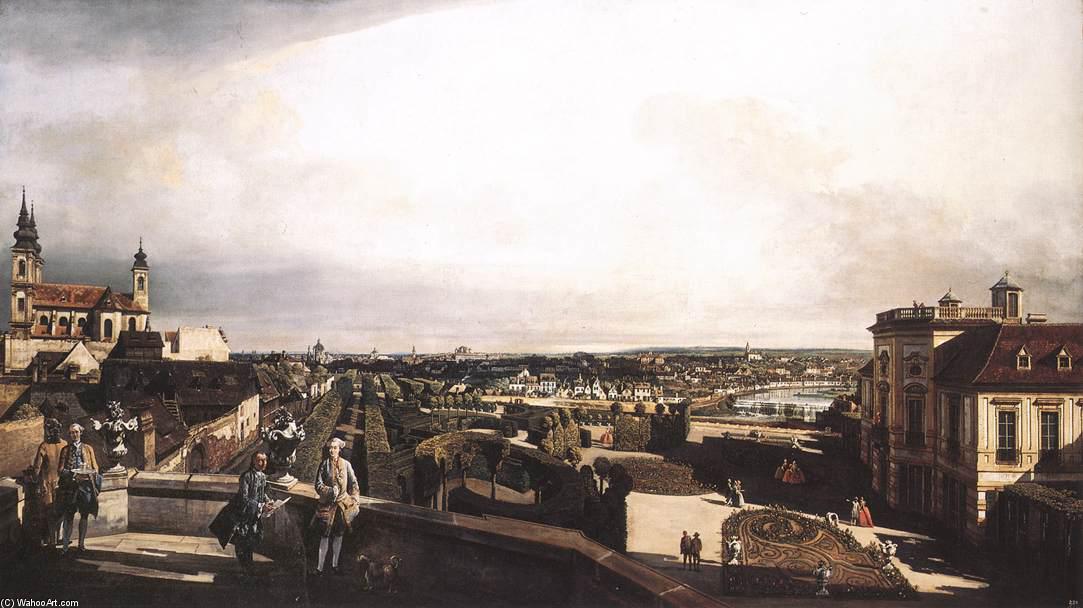
Completed in 1759, this panoramic view captures Vienna at a moment of imperial expansion under Maria Theresa. The composition utilizes a wide format to document the city's topographical layout, guiding the eye from the immediate foreground toward the distant skyline. St Stephen’s Cathedral and the Hofburg Palace emerge as central anchors within the urban sprawl, their silhouettes defined by the specific quality of light characteristic of the era. The work…

In this work, titled Grand canal, view from north, the artist Bernardo Bellotto captures a specific moment within the Venetian cityscape. Painted about 1738, the scene focuses on the activity along the water, where several boats float upon the river. Some vessels occupy the foreground, while others drift toward the distance, creating a sense of depth across the waterway.

The painting titled The Fortress of Konigstein was executed by the Italian artist Bernardo Bellotto in 1758. Bellotto was an urban landscape painter and printmaker who specialized in the veduta style. He was the nephew and pupil of Giovanni Antonio Canal. This specific work was part of a series of views commissioned by the Elector of Saxony, Augustus III.

The scene unfolds within the allegorical realm of Allegory Inclinata Resurgit, a painting that captures a moment of profound symbolic weight. Created by the hand of Bernardo Bellotto, this work invites the viewer into a staged, theatrical space where figures and architecture converge. The piece emerges from about 1762, a time when the artist was deeply engaged with the visual language of his era. Every element within the frame works…

In this work, titled Venetian Capriccio, View of Santa Maria dei Miracoli, the artist Bernardo Bellotto presents a detailed cityscape of Venice. Painted about 1740, the scene focuses on the architecture of the Santa Maria dei Miracoli church. It is a capriccio, a composition that uses a fanciful or imagined arrangement of real-world elements to create a specific atmosphere.

The river flows with a quiet, steady purpose, its surface catching the soft, diffused light of a hazy sky. Along the sandy banks, life unfolds in small, unhurried movements. Children play near the water's edge, their laughter seemingly carried away by the gentle breeze, while adults find repose on boats that bob softly upon the current. In the distance, the skyline of Pirna rises against the horizon, a silhouette of…
 A Capriccio River Landscape with a Church to the Left1765
12
 Allegory Ex Arduis Immortalitas1762 · 德累斯顿国家艺术收藏馆
13
 Fantastic architecture with portrait of Franciszek Salezy Potocki and his son Stanisław Szczęsny1763 · El Paso Museum of Art
14
 The Fortress of Königstein: Courtyard with the Magdalenenburg1758 · 国家美术馆
15
 The Fortress of Königstein1756
16
 The Election of the King Stanislaus Augustus1764
17
 View of Wilanów meadows1775 · 华沙皇家城堡
18
 Groom leading a horse1773 · 华沙国家博物馆
19
 The Elbe between Pirna and Pillnitz1766 · 德累斯顿国家艺术收藏馆
20
 Dresden, the Ruins of the Pirnaische Vorstadt1766
21
 View of Ujazdów from the Royal Baths1776 · 华沙国家博物馆
22
 Stable boy leading a horse1773 · 华沙国家博物馆
23
 Rio dei Mendicanti with the Scuola di San Marco (detail)1738 · 威尼斯学院美术馆
24
 The Imperial Palace Schönbrunn, Garden Side1758 · 维也纳艺术史博物馆
25
 View of Pirna from the Sonnenstein Castle1750 · 冬宫博物馆
26
 View of Pirna from the Right Bank of the Elba above the Town1753 · 冬宫博物馆
27
 The Kreuzkirche in Dresden1747 · Gemäldegalerie
28
 Stairs Leading to the Colonnade of a Palace1762 · 德累斯顿国家艺术收藏馆
29
 Lagoon landscape1741
30
 Venice (Marriage of the Doge with the Sea)1727
31
 The Grand Canal from the Campo San Vio, Venice1727 · 苏格兰国家美术馆
32
 The Pantheon1742 · Dayton Art Institute
33
 View of the Tiber in Rome with the Castel Sant'Angelo1743 · 底特律艺术学院
34
 Piazza San Marco, Venice1740 · 克利夫兰艺术博物馆
35
 Piazza del Campidoglio with Santa Maria d'Aracoeli, Rome1742 · Petworth House
36
 A View at the Entrance of the Grand Canal, Venice1741 · Fitzwilliam Museum
37
 The Piazza San Martino, Lucca1742 · 约克美术馆
38
 Painting of the Church of Santa Maria Formosa, Venice1742
39
 The Campo di SS. Giovanni e Paolo, Venice1743 · 国家美术馆
40
 View of Via di Ripetta in Rome1742 · Museum Kunstpalast
41
 View of the Grand Canal: Santa Maria della Salute and the Dogana from Campo Santa Maria Zobenigo1743 · J·保罗·盖蒂博物馆
42
 View of Grand Canal with the Palazzi Foscari and Moro Lin1734 · 国家博物馆
43
 The harbor basin of San Marco on Ascension Day, Venice1739
44
 Colosseum and Arch of Constantine (Rome)1742
45
 The Arch of Constantine1742 · 皇家收藏馆
46
 Signoria Square in Florence1741
47
 View of the Grand Canal at San Stae1738
48
 Arno in Florence1742
49
 Capriccio Padovano1740 · 提森·博爾涅米薩博物館
50
 Pirna with the Dohna Gate1754 · 德累斯顿国家艺术收藏馆
51
 The Arno in Florence with the Ponte Vecchio1745 · Fitzwilliam Museum
52
 The Arno in Florence with the Ponte Alla Carraia1745 · Fitzwilliam Museum
53
 Capriccio with the Dolo lock1748 · 德累斯顿国家艺术收藏馆
54
 The Lock at Dolo1745 · 耶鲁大学艺术馆
55
 The Grand Canal: Santa Lucia and the Church of the Scalzi, Venice1750 · 苏格兰国家美术馆
56
 View of Pirna from the West, from the Corner of Wide Street1755 · 冬宫博物馆
57
 View of Pirna, from Sonnestein Castle1753 · 普希金国家美术馆
58
 View of Verona with the Castelvecchio and Ponte Scaligero1745 · 费城艺术博物馆
59
 Dresden from the Right Bank of the Elbe, below the Augustus Bridge1750 · 爱尔兰国家美术馆
60
 Dresden from the Right Bank of the Elbe above the Augustus Bridge1750 · 爱尔兰国家美术馆
61
 View of Pirna from the Right Bank of the Elba1753 · 冬宫博物馆
62
 The Moat of Zwinger in Dresden1750 · 冬宫博物馆
63
 Old Fortifications of Dresden1749 · 冬宫博物馆
64
 Market-Place of the Neustadt in Dresden1751 · 冬宫博物馆
65
 View of Pirna, from Sonnenstein Castle1755 · 德累斯顿国家艺术收藏馆
66
 Pirna from Kopitz1753 · 德累斯顿国家艺术收藏馆
67
 The Zwinger in Dresden1751 · 德累斯顿国家艺术收藏馆
68
 The Old Ponte delle Navi in Verona1746 · 德累斯顿国家艺术收藏馆
69
 The Old Market in Dresden from Schlossgasse1750 · 德累斯顿国家艺术收藏馆
70
 The Old Fortifications in Dresden1750 · 德累斯顿国家艺术收藏馆
71
 Pirna from Posta1753 · 德累斯顿国家艺术收藏馆
72
 Dresden from the left Bank of the Elbe above the Bridgehead of the Old Town1748 · 德累斯顿国家艺术收藏馆
73
 View from the Bridge of Dresden on the Elbe1749 · 旧金山美术馆
74
 Abbruch der Kreuzkirche, Dresden1746
75
 Piazza S. Marco, Venice1746
76
 The Old Market Square in Dresden1750 · 德累斯顿国家艺术收藏馆
77
 The New Market Square in Dresden1750
78
 Verona Veduta1746 · Powys Castle Museum
79
 View of Turin near the Royal Palace1745 · Galleria Sabauda
80
 New Market Square in Dresden1750 · Gemäldegalerie
81
 Dresden from the Left Bank of the Elbe, below the Fortifications1748 · Gemäldegalerie
82
 Pirna Seen from the Harbour Town1753 · Gemäldegalerie
83
 View of an Old Bridge Over the River Po, Turin1745 · Galleria Sabauda
84
 The Neuer Marktplatz in Dresden1747 · 冬宫博物馆
85
 Venice (Rio di S. Fosca and S. Maria dei Servil)1758
86
 View of München1758
87
 Saint Mark's Square, Venice1756 · 爱尔兰国家美术馆
88
 Campo San Stin, Venice1760
89
 Old town of Dresden1765 · 卡尔斯鲁厄州立美术馆
90
 Pirna seen from the right bank of the Elbe1756 · 圣地亚哥艺术博物馆
91
 Architectural Capriccio1765 · 圣地亚哥艺术博物馆
92
 Nymphenburg Castle1761
93
 Architectural Caprice with a Palace1765 · 毕尔巴鄂美术馆
94
 Venice: Canale Grande1758
95
 View of Vienna with St. Charles's Church1758 · Museum Kunstpalast
96
 Schloss Schonbrunn1760
97
 Freyung in Vienna, View from the southeast1758
98
 The ruins of Thebes on the River March1758 · 维也纳艺术史博物馆
99
 A view of the Lobkowicz Palace in Vienna1761
100
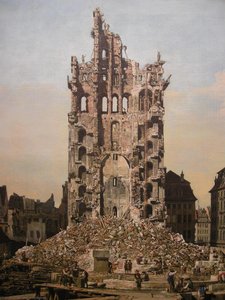 Ruins of Dresden's Kreuzkirche1765
这些原作中反复出现的四个主题,各有一个最杰出的范例。
收藏了本页中大部分画作的 8 家博物馆。
| 博物馆 | 城市 | 贝纳多·贝洛托 的作品 | 此列表中的画作 |
|---|---|---|---|
 德累斯顿国家艺术收藏馆 |
德累斯顿 | 19 | Allegory Inclinata Resurgit, Allegory Ex Arduis Immortalitas, The Elbe between Pirna and Pillnitz |
 Gemäldegalerie |
德累斯顿 | 12 | 德累斯顿旧十字教堂的废墟, Dresden, the Frauenkirche and the Rampische Gasse, The Moat of the Zwinger in Dresden |
 冬宫博物馆 |
圣彼得堡 | 11 | View of Pirna from the Sonnenstein Castle, View of Pirna from the Right Bank of the Elba above the Town, View of Pirna from the West, from the Corner of Wide Street |
 华沙国家博物馆 |
华沙 | 8 | Groom leading a horse, View of Ujazdów from the Royal Baths, Stable boy leading a horse |
 国家美术馆 |
华盛顿 | 5 | The Fortress of Konigstein, The Fortress of Königstein: Courtyard with the Magdalenenburg, The Campo di SS. Giovanni e Paolo, Venice |
 Fitzwilliam Museum |
3 | A View at the Entrance of the Grand Canal, Venice, The Arno in Florence with the Ponte Vecchio, The Arno in Florence with the Ponte Alla Carraia | |
 爱尔兰国家美术馆 |
都柏林 | 3 | Dresden from the Right Bank of the Elbe, below the Augustus Bridge, Dresden from the Right Bank of the Elbe above the Augustus Bridge, Saint Mark's Square, Venice |
 维也纳艺术史博物馆 |
维也纳 | 12 | The Imperial Palace Schönbrunn, Garden Side, The ruins of Thebes on the River March |
选择一个年代,探索定义该时代的原创杰作。
In this work, titled Grand canal, view from north, the artist Bernardo Bellotto captures a specific moment within the Venetian cityscape. Painted about 1738, the scene focuses on the activity along the water, where several boats float upon the river. Some vessels occupy the foreground, while others drift toward the distance, creating a sense of depth across the waterway.
In the quiet, luminous depths of Bernardo Bellotto’s 1749 masterpiece, Dresden, the Frauenkirche and the Rampische Gasse, we are invited to step through a portal into the eighteenth century. This breathtaking oil on canvas is far more than a mere topographical record; it is a soulful meditation on a city at its zenith. As the eye wanders across the panoramic vista, one is immediately struck by the imposing presence of…
Completed in 1759, this panoramic view captures Vienna at a moment of imperial expansion under Maria Theresa. The composition utilizes a wide format to document the city's topographical layout, guiding the eye from the immediate foreground toward the distant skyline. St Stephen’s Cathedral and the Hofburg Palace emerge as central anchors within the urban sprawl, their silhouettes defined by the specific quality of light characteristic of the era. The work…
贝尔纳多·贝洛托的这幅引人入胜的城市风光,为我们呈现了二战后德累斯顿的一幕,时间大约在1765年。它不仅仅是对破坏的描绘,更是一曲关于失落、复苏和人类坚韧精神的深刻冥想。画面中,残破的旧十字教堂与依然屹立不倒的建筑并列,捕捉了这座城市历史上的一个关键时刻。贝洛托以其精湛的技艺,将这场灾难后的景象定格在画布上,为后人留下了宝贵的视觉记录。

The composition of this oil on canvas is defined by a strong horizontal emphasis, with the horizon line positioned near the vertical midpoint. This arrangement creates a sense of immense scale across the landscape. The perspective is elevated, offering a bird's-eye view that recedes into a distant, hazy background, establishing significant depth. The color palette relies on naturalistic tones, specifically earthy browns and greens in the foreground and middle ground.…
德累斯顿旧十字教堂的废墟 (1765),Gemäldegalerie, 德累斯顿。紧随其后的是 Dresden, the Frauenkirche and the Rampische Gasse (1749) 和 The Moat of the Zwinger in Dresden (1749)。
43岁:德累斯顿旧十字教堂的废墟创作于1765年,贝纳多·贝洛托出生于1722年。
德累斯顿旧十字教堂的废墟, Dresden, the Frauenkirche and the Rampische Gasse, The Moat of the Zwinger in Dresden, The Moat of the Zwinger in Dresden (detail), Vienna, Panorama from Palais Kaunitz, Grand canal, view from north, The Fortress of Konigstein, Allegory Inclinata Resurgit, Venetian Capriccio, View of Santa Maria dei Miracoli 及 Pirna Seen from the Right Bank of the Elbe。上方排名显示了每件作品的创作年份及馆藏机构。
我们的目录收录了 230 件 贝纳多·贝洛托 的作品,创作年代从 1734 年至 1776 年。
多见于 德累斯顿国家艺术收藏馆 (德累斯顿), Gemäldegalerie (德累斯顿) 及 冬宫博物馆 (圣彼得堡)。上方的博物馆列表列出了所有相关机构。
在 1740s 期间:本页 100 件作品中有 37 件创作于该时期,其中包含 Dresden, the Frauenkirche and the Rampische Gasse 件作品。
在本页面中,最早的作品创作于 View of Grand Canal with the Palazzi Foscari and Moro Lin (1734),最晚的创作于 View of Ujazdów from the Royal Baths (1776)。
Sky (69), Architecture (67) 及 Water (42),共计 100 件作品。
Oil On Canvas,共计 80 件(本页共有 100 件作品)。
根据本页面的原作,Rococo
Allegory Inclinata Resurgit, Allegory Ex Arduis Immortalitas 及 The Elbe between Pirna and Pillnitz:德累斯顿国家艺术收藏馆, 德累斯顿收藏了本页中 15 件作品。
贝尔纳多·贝洛托于1721年或1722年间出生在意大利威尼斯,部分文献将其确切出生日期定为1721年1月30日。他诞生于一个艺术气息浓厚的家庭,是洛伦佐·安东尼奥·贝洛托与菲奥伦扎·卡纳莱之子。通过母亲,他得以承袭显赫的艺术血脉,因为他的母亲正是那位享誉世界的艺术大师卡纳莱托的姐妹。这种血缘纽带意味着,从他呱呱坠地的那一刻起,家庭的氛围便早已浸润在威尼斯绘画传统的洗礼之中。
他的正式艺术训练是在舅舅乔瓦尼·安东尼奥·卡纳莱的工作室中完成的。作为这位被称为“卡纳莱托”的大师的门生,贝尔纳多·贝洛托不仅习得了透视法的精妙奥义,更掌握了捕捉城市灵魂所需的细致入微的刻画技巧。这段学徒生涯绝非简单的技艺传授,而是一场对特定观察世界的深刻沉浸。他不仅是在舅舅门下求学,更是成为了家族传承的一部分,这份荣耀最终将他的名字传遍了整个欧洲。在德国和波兰等地区,他常被尊称为“贝尔纳多·卡纳莱托”,这个名字无声地诉说着他与导师及亲人之间那份深厚而紧密的纽带。
在威尼斯的岁月为他日后记录无数城市建筑与光影的职业生涯奠定了坚实基础。虽然早期的作品显示出他正追随舅舅所开辟的艺术路径,但他开始通过对光影独特的处理方式,逐渐觉醒出属于自己的艺术人格。在威尼斯画派的熏陶下,他的技术功底深深扎根于对城市景观的深刻理解,以及对光线与石材、水面之间微妙互动关系的敏锐捕捉之中。
贝尔纳多·贝洛托对城市的观察视角,既有着近乎严苛的精确,又蕴含着深邃的氛围感。虽然他在叔父的画室里打下了透视与构图的坚实基础,但他个人的笔触却逐渐演化出一种更为内敛的视觉语言。他并未盲目追随威尼斯画派中常见的明亮、高对比度的色调,而是选择了一种更为克制的色彩体系。在他的画布上,大地色系的棕褐、沉稳的灰色、赭石色以及褪色的深红交织在一起,构建出宏大的景象。这种色彩的选择使他能够将注意力集中在定义特定地域的光影质感上,精准地捕捉阳光与阴影如何在石材与砖块间流转、沉淀。
他的天空呈现出一种独特的厚重感。在处理云层与阴影时,他展现出了明显的荷兰绘画影响,使画面从单纯的装饰性转向了更加写实且自然的表达。他拥有一种描绘宏伟建筑与自然景观的天赋,确保每一座建筑和每一条水道在画面中都显得坚实而真实。为了达到如此极致的细节程度,他很可能使用了暗箱(camera obscura)或光学描绘仪(camera lucida)等工具,这帮助他在城市景观的创作中保持了极高的准确性。
贝尔纳多·贝洛托的艺术征途远不止于他出生地那熟悉的威尼斯运河。1742年,他移居罗马,开始创作这座永恒之城的城市景观画。在1744年至1745年间,他的足迹遍布意大利北部,并在萨伏依公爵查理·埃曼纽莱三世的赞助下展开创作。这段流动的岁月让他得以敏锐地捕捉不同地域特有的光影韵律与建筑肌理,也让他作为城市空间画家的声望在欧洲范围内不断攀升。
随着艺术造诣的精进,他的职业生涯开始与欧洲各大宫廷紧密交织。应波兰国王奥古斯特三世之命,贝尔纳多·贝洛托于1747年至1758年间定居德累斯顿,在萨克森宫廷中获得了稳定的创作机会。随后,他再次受到女皇玛丽亚·特蕾莎的盛情邀请,于1758年前往维也纳工作。他那能够精准还原城市神韵的卓越才华,使他成为了各国君主眼中不可多得的艺术家,因为这些统治者都渴望通过他的画笔,为自己的首都留下永恒的视觉记录。
1764年,随着波兰国王斯坦尼斯瓦夫·奥古斯特·波尼亚托夫斯基的邀请,贝尔纳多·贝洛托在华沙开启了人生新的篇章。他在这座波兰首都驻留多年,用画笔细致地记录着这座城市及其周边的壮丽景象。这份最后的重大委任让他得以在华沙安顿下来,并全身心地投入到这份将伴随他余生大部分时光的艺术使命之中。
贝尔纳多·贝洛托的画笔捕捉到了他所居住之城的独特光影,将冰冷的石材与流动的河水转化为永恒的视觉记录。在1738年,他创作了《圣玛利亚德拉萨卢特与狗馆从圣玛利亚广场看去(细节)》(注:此处对应原文Rio dei Mendicanti with the Scuola di San Marco (detail)),这件作品展现了他早期处理威尼斯建筑复杂细节的卓越能力。随着他在意大利各地的游历,他的创作视角逐渐转向更为宏大的城市生活尺度。1747年,他创作了从新桥看维罗纳与阿迪杰河的景观,生动地捕捉了河流穿行于城市间的灵动姿态。无论是在描绘大都市喧嚣的街道,还是在刻画外省小镇静谧的角落,这种精准记录地理空间的非凡能力,始终是他艺术生涯中最为鲜明的印记。
他在德累斯顿与维也纳的岁月,让他得以记录下欧洲建筑艺术的核心。1748年,他创作了从易北河右岸看德累斯顿及奥古斯都桥的景观,以惊人的清晰度记录了这座城市的空间布局。随后,他在维也纳的作品包括1758年的多明尼克教堂,以及1759年的《从考尼茨宫看维也纳全景》。这些画作绝非简单的风景写生,它们是对那个时代定义帝国气派的纪念性建筑与宫殿的精准观察与深刻凝视。
在晚年时期,贝尔纳多·贝洛托在波兰找到了归宿,他的作品也在此获得了全新的历史维度。1773年,他完成了从皇家宫殿看华沙(细节),为这座波兰首都提供了极其详尽的视觉呈现。这些关于华沙的景观图景,在多年后建筑本身毁于战火之后,最终成为了那些致力于重建城市历史中心的建设者们手中不可或缺的珍贵蓝图。
贝尔纳多·贝洛托的画作,往往化作了那些曾遭遇毁灭性打击的城市中,一份静默而深情的视觉记忆。在德累斯顿,他那些细致入微的景观图景,完整地保存了这座城市战前的绝代风华,捕捉到了那些在随后的战火中化为乌有的建筑细节。他对于街道布局与纪念性建筑精准的记录能力,赋予了这些画布超越艺术本身的生命力;它们不再仅仅是画布上的色彩,而是成为了那些肩负重建重任的人们手中至关重要的蓝图。
这种艺术的实用价值在华沙得到了最为显著的体现。在第二次世界大战期间,这座城市遭受了毁灭性的破坏,而贝尔纳多·贝洛托笔下关于波兰首都的三十幅景观图,为战后的重建工作提供了不可或缺的指引。建筑师们通过研读他的作品,试图还原城市的昔日容貌,从而在废墟之上重新唤回城市景观的灵魂。正是凭借这种极其严谨且细致的修复努力,华沙的历史中心最终在1980年被联合国教科文组织列入世界遗产名录,向世人昭示着艺术与历史重生的力量。
若想追寻贝尔纳多·贝洛托笔下的细腻痕迹,人们必须踏上旅程,穿梭于他曾以如此精准的笔触记录过的城市之间。在德累斯顿,画廊收藏了他大量的作品,其中包括那些在战争蹂躏前捕捉了城市建筑灵魂的壮丽景观。通过这些对城市生活的详尽记录,以及他所钟爱的、那种静谧而略显忧郁的光影,他的艺术生命在德国这座城市中依然清晰可感。
他与故土的血脉联系在威尼斯依然清晰可见,威尼斯美术学院便珍藏着他早期的透视视角。这些作品往往映射出威尼斯泻湖那波光粼粼的水道与独特的感官氛围。除了意大利,他的影响力更延伸至东欧与中欧的伟大馆藏之中。圣彼得堡的冬宫博物馆与布达佩斯的美术馆均收藏有他的画作,为人们提供了窥见他在欧洲大陆游历期间所描绘的自然与城市景观的窗口。
在维也纳,利希滕斯坦博物馆保存着足以展现他捕捉帝国建筑宏伟气势之能力的杰作。他那描绘石材厚重感与云层流动感的卓越技艺,使得他在这些博物馆中的存在,成为了连接现代与18世纪的重要纽带。收藏家与历史学家可以在这些地方找到他精湛技艺的具体体现:


