Andreas Vesalius 肖像

9 幅最著名的 Andreas Vesalius 作品,画廊精选

更新于 November 2026 · 基于我们的流行度评分排名(每件作品的搜索量、访问量及订单量) · 9 件 Andreas Vesalius 作品收录于我们的目录中

简而言之

在 Andreas Vesalius 留下的所有原作中,最著名的当属收藏于 巴黎 法国国家图书馆 (Bibliothèque Nationale) 的《Anatomy (1543)》。 紧随其后的是 Dissected human body (1543) 和 Title page (1543)。 我们的目录收录了 Andreas Vesalius 的 9 件作品;画廊完整保留了 9 件享誉世界的杰作,并为每一件作品详细标注了创作日期、馆藏机构及其背后的故事。

1514 – 1564, Brussels 藏品最多:法国国家图书馆 (Bibliothèque Nationale)

Andreas Vesalius 的十大名画:画廊精选

1
Anatomy (1543) 由 Andreas Vesalius

Anatomy

The image presents a detailed anatomical study of the human male figure, rendered in black and white through precise linework. The composition centers on the muscular anatomy, displaying the intricate arrangement of muscles, tendons, and bones. A frontal view is utilized, with the perspective appearing somewhat flattened, though depth is indicated through the layering of tissues and subtle shading. The lines are predominantly linear and precise, forming complex patterns to…

2
Dissected human body (1543) 由 Andreas Vesalius

Dissected human body

In the 1543 engraving titled Dissected human body by Andreas Vesalius, the internal architecture of man is laid bare. The central figure is a skeleton, stripped of its skin to reveal the intricate layering of muscles and the placement of internal organs. This anatomical study presents a body in a state of profound exposure. The figure remains upright, tethered to a vertical pole or post that anchors the composition. It…

3
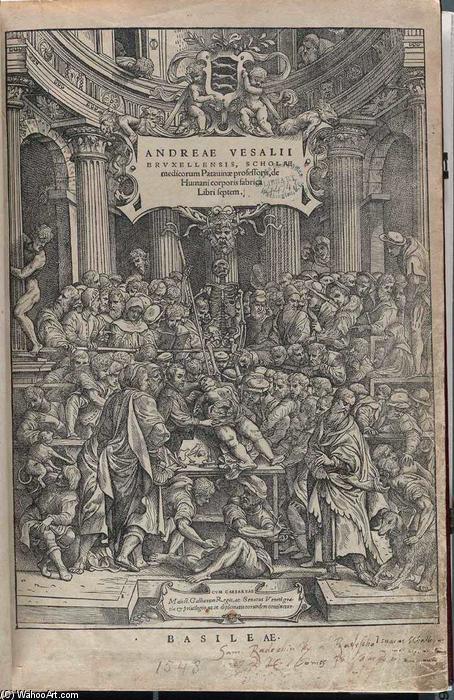
Title page (1543) 由 Andreas Vesalius

Title page

1543 · Woodcut · 美国国家医学图书馆, 华盛顿特区

This work is the Title page by Andreas Vesalius. It functions as the introductory element for the 1543 first edition of the publication titled De Humani Corporis Fabrica Libri Septem. The page serves as the formal entry point to this specific anatomical volume, establishing the identity of the author and the subject matter through its printed text and accompanying imagery.

4
De humani corporis fabrica libri septem, N*.1.1(A) (1555) 由 Andreas Vesalius

De humani corporis fabrica libri septem, N*.1.1(A)

1555 · Woodcut · 剑桥大学图书馆, 剑桥

The work titled De humani corporis fabrica libri septem, N*.1.1(A) by Andreas Vesalius emerged from a period of intense anatomical study. The artist, Andreas Vesalius, was born in Brussels, Belgium, in 1514. His professional focus centered on the direct observation of human structures through dissection. This specific edition of the work dates to 1555. It follows the earlier 1543 publication of the same title. The production of these anatomical records…

5
Skeleton (1600) 由 Andreas Vesalius

Skeleton

1600 · Engraving · Vilnius University Library, Vilnius

We are looking at Skeleton, a work attributed to Andreas Vesalius. This piece is dated about 1600. It offers a quiet, structural view of the human form, captured through the precise hand of an artist who fundamentally changed how we perceive the internal architecture of the body.

6
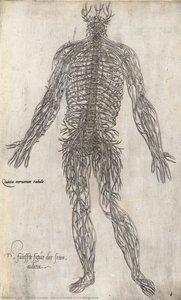
Nervous system of the human body (1600) 由 Andreas Vesalius

Nervous system of the human body

1600 · Ink On Paper · Vilnius University Library, Vilnius

Nervous system of the human body by Andreas Vesalius offers a detailed anatomical illustration of the human nervous system. Created about 1600, the work focuses on the intricate network of nerves, blood vessels, and skeletal structures. The subject matter is purely scientific, prioritizing the exploration of human anatomy through a meticulous rendering of biological systems. It depicts a nude male figure with an exaggeratedly large head and limbs, overlaid with…

令 Andreas Vesalius 驻足的创作主题

这些原作中反复出现的四个主题,各有一个最杰出的范例。

收藏有 Andreas Vesalius 原作的博物馆

收藏了本页中大部分画作的 4 家博物馆。

博物馆 城市 Andreas Vesalius 的作品 此列表中的画作
法国国家图书馆 (Bibliothèque Nationale), 巴黎法国国家图书馆 (Bibliothèque Nationale) 巴黎 2 Anatomy, Dissected human body
Vilnius University Library, VilniusVilnius University Library Vilnius 2 Skeleton, Nervous system of the human body
美国国家医学图书馆, 华盛顿特区美国国家医学图书馆 华盛顿特区 1 Title page
剑桥大学图书馆, 剑桥剑桥大学图书馆 剑桥 1 De humani corporis fabrica libri septem, N*.1.1(A)

Andreas Vesalius 的年度历程:定义其艺术风格的原创之作

精选涵盖了 Andreas Vesalius 逾 13 年的作品,从 1543 年至 1555 年,汇集了每年的传世佳作。

年度作品数量

选择年份以查看原作。

藏家关于 Andreas Vesalius 作品的常见问题

Andreas Vesalius 最著名的作品是哪一件?揭晓答案

Anatomy (1543),法国国家图书馆 (Bibliothèque Nationale), 巴黎。紧随其后的是 Dissected human body (1543) 和 Title page (1543)。

创作 Anatomy 时,Andreas Vesalius 是多少岁?揭晓答案

29岁:Anatomy创作于1543年,Andreas Vesalius出生于1514年。

Andreas Vesalius 留下了多少幅画作?揭晓答案

我们的目录收录了 9 件 Andreas Vesalius 的作品,创作年代从 1543 年至 1555 年。

Andreas Vesalius 的杰作收藏在哪些博物馆中?揭晓答案

多见于 法国国家图书馆 (Bibliothèque Nationale) (巴黎), Vilnius University Library (Vilnius) 及 美国国家医学图书馆 (华盛顿特区)。上方的博物馆列表列出了所有相关机构。

Andreas Vesalius 在哪些年份创作了最著名的作品?揭晓答案

在 1543 期间:本页 9 件作品中有 3 件创作于该时期,其中包含 Anatomy 件作品。

Andreas Vesalius 的首件与末件名作原件分别是哪几件?揭晓答案

在本页面中,最早的作品创作于 Anatomy (1543),最晚的创作于 De humani corporis fabrica libri septem, N*.1.1(A) (1555)。

Andreas Vesalius 最常创作的主题是什么?揭晓答案

Anatomy (4), Human body (3) 及 Renaissance art (2),共计 9 件作品。

Andreas Vesalius 最常用的技法是什么?揭晓答案

Engraving,共计 3 件(本页共有 9 件作品)。

哪些 Andreas Vesalius 的作品在 法国国家图书馆 (Bibliothèque Nationale) 展出?揭晓答案

Anatomy 及 Dissected human body:法国国家图书馆 (Bibliothèque Nationale), 巴黎收藏了本页中 2 件作品。

Andreas Vesalius:生平与作品

Andreas Vesalius: The Father of Modern Anatomy

Andreas Vesalius (1514 – 1564) stands as a monumental figure in the history of science and art, irrevocably altering our understanding of human anatomy and establishing a new paradigm for medical illustration. Born in Brussels, Belgium, Vesalius’s early life was marked by intellectual curiosity and a fascination with dissection—activities that would ultimately define his groundbreaking career. His father, Gerard Vesalius, was a physician who instilled in him a passion for observation and meticulous anatomical study, shaping the trajectory of Vesalius's scholarly pursuits.
  • Early Life & Education:
  • Academic Pursuits at Padua:
  • De Humani Corporis Fabrica: A Revolution in Illustration
  • Influence and Legacy
Padua University became Vesalius’s academic home, where he excelled as a student of medicine under Alessandro Vesalius (his uncle), furthering his commitment to anatomical investigation. It was during this time that he began to challenge the prevailing Galenic dogma—the dominant medical theory of his era—which relied heavily on speculation and lacked empirical evidence. Vesalius recognized the necessity for direct observation and dissection to accurately depict the human body, a conviction that fueled his determination to overturn established beliefs.

De Humani Corporis Fabrica: A Revolution in Illustration

Vesalius’s magnum opus, *De Humani Corporis Fabrica* ("On the Fabric of Human Body"), published in 1543, represents a watershed moment in anatomical history. This monumental atlas meticulously documented human anatomy through detailed drawings—the first truly accurate representations based on dissection—challenging centuries of inaccurate depictions propagated by Galen and Aristotle. Vesalius’s artistic skill was unparalleled; he painstakingly recreated cadavers with astonishing precision, capturing subtle muscular movements and skeletal structures with unprecedented realism. The illustrations themselves are considered masterpieces of Renaissance art, demonstrating a mastery of perspective, shading, and anatomical detail that surpassed anything seen before.
  • Detailed Anatomical Drawings:
  • Innovative Artistic Techniques:
  • Impact on Medical Knowledge:
Vesalius’s artistic techniques were revolutionary for their time, utilizing a combination of meticulous observation and innovative drawing methods. He employed the humanist perspective—a focus on human form and proportion—to elevate anatomical study to an art form itself. Vesalius's drawings weren't merely representations; they were expressions of intellectual curiosity and a profound respect for the complexity of human anatomy. The atlas swiftly gained acclaim among physicians and scholars across Europe, sparking debate and ultimately contributing to the gradual acceptance of empirical observation as a cornerstone of medical science.

Influence and Legacy

The impact of Vesalius’s work extended far beyond the immediate scientific community. *De Humani Corporis Fabrica* fundamentally reshaped anatomical education and spurred advancements in surgical techniques. Vesalius's insistence on dissection as a method of study established a precedent that endured for centuries, influencing generations of anatomists and physicians. Furthermore, his artistic legacy continues to inspire artists today—his drawings serve as enduring models of anatomical accuracy and aesthetic beauty. Vesalius’s contribution to both art and science cemented his place as “The Father of Modern Anatomy,” ensuring his name would forever be synonymous with the pursuit of knowledge through observation and artistic excellence.