The Architect of the Unconscious: A Life in Surrealism
André Robert Breton, born February 18, 1896, in Tinchebray, Normandy, was more than just a writer and poet; he was an intellectual revolutionary who fundamentally altered the landscape of twentieth-century art and literature. His name is inextricably linked with the birth and evolution of
Surrealism, a movement that sought to unlock the boundless potential of the unconscious mind. Breton’s early life offered little indication of the seismic impact he would have on the cultural world. Raised in a modest household—his father a policeman, his mother a former seamstress—he initially pursued medical studies, an endeavor that proved pivotal in shaping his later artistic vision. His fascination with mental illness and the workings of the human psyche laid the groundwork for his exploration of dreams, automatism, and the irrational. The interruption of his education by World War I proved to be another crucial turning point, exposing him to the horrors of conflict and introducing him to Jacques Vaché, a figure whose rebellious spirit and rejection of conventional norms deeply influenced Breton’s developing worldview.
From Dada Disillusionment to the Birth of a Movement
The war years were formative, but it was in the aftermath that Breton truly began to forge his path. He found himself drawn to the anti-establishment fervor of
Dadaism, a movement born out of disillusionment with the rational order that had led to such widespread devastation. However, Breton soon grew dissatisfied with what he perceived as
Dada’s nihilistic tendencies and its lack of constructive purpose. He yearned for something more than mere negation; he sought a positive force capable of transforming both art and life. In 1919, alongside Louis Aragon and Philippe Soupault, he launched the review *Littérature*, a platform for experimentation with new forms of writing. This collaboration culminated in *Les Champs Magnétiques* (The Magnetic Fields), a groundbreaking work that employed automatic writing—a technique designed to bypass conscious control and tap directly into the subconscious—as a means of artistic expression. This marked a decisive break from traditional literary conventions and laid the foundation for
Surrealism. The publication of Breton’s *Manifeste du Surréalisme* in 1924 formally announced the movement, defining
Surrealism as “pure psychic automatism,” a way to express the “real process of thought” free from reason or aesthetic considerations.
The Core Tenets and Evolution of Surrealist Thought
Breton’s vision for
Surrealism was ambitious and multifaceted. He envisioned it not merely as an artistic style but as a complete re-evaluation of human existence, encompassing literature, painting, sculpture, film, and even political action. He drew heavily from the psychoanalytic theories of Sigmund Freud, particularly his exploration of dreams, the unconscious, and the power of
symbolism. Breton believed that by accessing these hidden realms of the psyche, artists could unlock a deeper understanding of reality and challenge the constraints of logic and reason. The movement attracted a diverse group of talented individuals—including Paul Éluard, René Crevel, Michel Leiris, Benjamin Péret, and Antonin Artaud—who shared Breton’s passion for exploring the irrational and challenging societal norms. He actively sought to merge the personal transformation championed by
Arthur Rimbaud with the political ideals of Karl Marx, leading to a brief but significant involvement with the French Communist Party in 1927. This period saw
Surrealism engage with broader social and political issues, though Breton’s eventual expulsion from the party in 1933 underscored the inherent tensions between artistic freedom and ideological conformity.
Major Works and Lasting Legacy
Breton's literary output is rich and varied, but certain works stand out as particularly emblematic of his
Surrealist vision. *Nadja* (1928), a semi-autobiographical novel, recounts his enigmatic encounter with a woman who embodies the spirit of spontaneity and irrationality. *L’Amour Fou* (Mad Love) (1937), co-authored with Éluard, delves into the complexities of desire, obsession, and the power of unconscious forces. Beyond these novels, Breton's prolific essays, manifestos, and critical writings served as guiding principles for the
Surrealist movement, shaping its aesthetic direction and intellectual foundations. He was a tireless advocate for his ideas, organizing exhibitions, publishing journals like *La Révolution surréaliste*, and fostering international collaborations that spread
Surrealism’s influence across Europe and beyond. While Breton's own art collection faced economic pressures during the Depression years, he remained committed to preserving its legacy. His impact extends far beyond the confines of the art world.
Surrealism profoundly influenced subsequent artistic movements—including
Abstract Expressionism,
Pop Art, and
Conceptual Art—and continues to resonate in contemporary literature, film, and visual culture.
A Revolutionary Spirit Enduring
André Breton died on September 28, 1966, leaving behind a body of work that continues to inspire and provoke. He was not simply an artist; he was an architect of the unconscious, a visionary who dared to challenge the boundaries of reason and explore the hidden depths of the human psyche. His legacy lies in his unwavering belief in the power of imagination, the importance of personal liberation, and the transformative potential of art.
His insistence on “pure psychic automatism” remains a potent reminder that true creativity often resides beyond the reach of conscious control, in the realm of dreams, intuition, and the irrational.
Breton’s influence is still felt today, as artists continue to grapple with the questions he raised about the nature of reality, the power of
symbolism, and the enduring quest for a more authentic and meaningful existence.


 Röhsska Museum
 泰特不列顛美术馆
 以色列博物馆
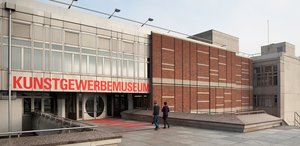 Kunstgewerbemuseum


