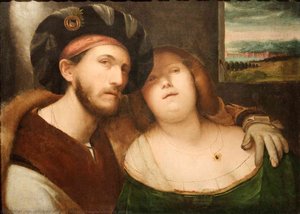
Altobello Melone 肖像

Altobello Melone 作品:画廊视角下的 12 幅名作

更新于 November 2026 · 基于我们的流行度评分排名(每件作品的搜索量、访问量及订单量) · 13 件 Altobello Melone 作品收录于我们的目录中

简而言之

在画廊看来,Altobello Melone 最著名的作品是 Portrait of Alda Gambara (1515),其原作现收藏于 米蘭 的 布雷拉畫廊。 Tobias and the Angel (1521) 与 Saint Jerome (1512) 共同构成了那组令人过目不忘的艺术三部曲。 在我们的目录中,Altobello Melone 共有 13 件作品,画廊为您精选了以下 12 件最著名的原作,并详细列出了每件作品的创作年份、馆藏机构及其独特之处。

1485 – 1543, Cremona Renaissance 藏品最多:大教堂

画廊中 Altobello Melone 的十大名画

1
Portrait of Alda Gambara (1515) 由 Altobello Melone

Portrait of Alda Gambara

1515 · Oil On Canvas · 布雷拉畫廊, 米蘭

To stand before this portrait is to step directly into the opulent, yet intensely private world of the early sixteenth century Italian aristocracy. Altobello Melone’s depiction of Alda Gambara is far more than a mere likeness; it is a carefully constructed tableau vivant, rich with the textures of wealth and the weight of societal expectation. The subject herself commands attention with her direct, serious gaze—an arresting look that seems to…

2
Tobias and the Angel (1521) 由 Altobello Melone

Tobias and the Angel

1521 · Oil On Panel · 阿什莫林博物馆, 牛津

Altobello Melone's “Tobias and the Angel,” painted in 1521, is a captivating testament to the flourishing artistic spirit of the Italian Renaissance. This exquisite oil-on-panel painting, now residing within the Ashmolean Museum’s collection in Oxford, offers a profound meditation on faith, protection, and innocence through its meticulously rendered figures and evocative use of color and light. Measuring 112 x 48 cm, the artwork immediately draws the viewer into a scene…

3
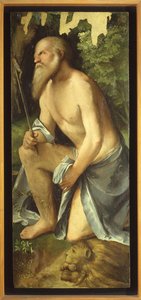
Saint Jerome (1512) 由 Altobello Melone

Saint Jerome

1512 · Oil On Panel · 卡斯特韦基奥博物馆, 维罗纳

In the quiet intensity of Altobello Melone’s Saint Jerome, we are invited into a moment of profound spiritual introspection. Painted around 1512, this evocative panel serves as a window into the soul of one of Christianity's most revered scholars. The saint is depicted not in the grandeur of a cathedral, but grounded in the raw, natural world, his nakedness symbolizing a stripping away of worldly vanity to reveal the pure…

4
Massacre of the Innocents (1517) 由 Altobello Melone

Massacre of the Innocents

1517 · Fresco · 大教堂, 克雷莫纳

The Massacre of the Innocents is a significant fresco executed by Altobello Melone. This work is situated within the Cremona Cathedral, where it forms part of a larger, cohesive decorative program. It is one of seven scenes realized by the artist to illustrate the Life of Mary and Christ. Through this specific narrative, Melone contributes to the sacred storytelling that lines the walls of the cathedral's nave.

5
Flight to Egypt (1517) 由 Altobello Melone

Flight to Egypt

1517 · 大教堂, 克雷莫纳

The painting Flight to Egypt by Altobello Melone is a remarkable work of art that showcases the artist's skill and attention to detail. Created in 1517, this fresco painting is located in the Cathedral of Cremona, Italy and depicts a scene from Christian art history, where Mary, Joseph, and baby Jesus are on their journey into Egypt to escape Herod's slaughter of infants. Composition and Symbolism The painting is rich…

6
Christ Carrying the Cross (1515) 由 Altobello Melone

Christ Carrying the Cross

1515 · Fresco · 国家美术馆, 伦敦

In the quiet corridors of The National Gallery in London, there exists a window into the turbulent soul of the High Renaissance—Altobello Melone’s Christ Carrying the Cross. Painted around 1515, this masterpiece is far more than a mere religious illustration; it is a profound psychological drama captured in pigment. As the viewer approaches, they are immediately struck by the sheer emotional weight of the scene. Christ, bearing the heavy timber…

10
The Road to Emmaus 由 Altobello Melone

The Road to Emmaus

Oil · 国家美术馆, 伦敦

The Road to Emmaus is a captivating painting by the Italian artist Altobello Melone, showcasing his exceptional skill in depicting biblical scenes. This artwork, available as a handmade oil painting reproduction on AllPaintingsStore.com, offers a unique opportunity to appreciate the beauty and significance of this masterpiece. Composition and Symbolism The painting features three men walking together, each dressed in distinct attire, with one wearing a blue robe, another in red,…

Altobello Melone 的画作,排名第 11 至 12

Altobello Melone 的传世名作,按时期分类

令 Altobello Melone 驻足的创作主题

这些原作中反复出现的四个主题,各有一个最杰出的范例。

收藏有 Altobello Melone 原作的博物馆

收藏了本页中大部分画作的 8 家博物馆。

博物馆 城市 Altobello Melone 的作品 此列表中的画作
大教堂, 克雷莫纳大教堂 克雷莫纳 2 Massacre of the Innocents, Flight to Egypt
国家美术馆, 伦敦国家美术馆 伦敦 2 Christ Carrying the Cross, The Road to Emmaus
布雷拉畫廊, 米蘭布雷拉畫廊 米蘭 1 Portrait of Alda Gambara
阿什莫林博物馆, 牛津阿什莫林博物馆 牛津 1 Tobias and the Angel
卡斯特韦基奥博物馆, 维罗纳卡斯特韦基奥博物馆 维罗纳 1 Saint Jerome
哈佛艺术博物馆, 剑桥哈佛艺术博物馆 剑桥 1 Portrait of a young Man
施泰德美术馆, 法兰克福施泰德美术馆 法兰克福 1 Narcissus at the Fountain
Accademia Carrara, 贝尔加莫Accademia Carrara 贝尔加莫 1 Portrait of Gentleman aka Cesare Borgia

Altobello Melone,年度代表作

十载春秋,从 1512 到 1521,对 Altobello Melone 而言已足够:画廊将这些岁月逐年呈现,一幅又一幅传世名作接踵而至。

年度作品数量

选择年份以查看原作。

Altobello Melone 的画作:画廊解答

哪幅 Altobello Melone 的画作最为闻名?揭晓答案

Portrait of Alda Gambara (1515),布雷拉畫廊, 米蘭。紧随其后的是 Tobias and the Angel (1521) 和 Saint Jerome (1512)。

Altobello Melone 完成 Portrait of Alda Gambara 时多大年纪?揭晓答案

30岁:Portrait of Alda Gambara创作于1515年,Altobello Melone出生于1485年。

Altobello Melone 最受欢迎的 10 幅画作是哪些?揭晓答案

Portrait of Alda Gambara, Tobias and the Angel, Saint Jerome, Massacre of the Innocents, Flight to Egypt, Christ Carrying the Cross, Portrait of a young Man, Narcissus at the Fountain, The Journey of Saint Helen to Jerusalem in Search of the True Cross. 及 The Road to Emmaus。上方排名显示了每件作品的创作年份及馆藏机构。

Altobello Melone 创作了多少件作品?揭晓答案

我们的目录收录了 13 件 Altobello Melone 的作品,创作年代从 1512 年至 1521 年。

Altobello Melone 最著名的原作收藏于何处?揭晓答案

多见于 大教堂 (克雷莫纳), 国家美术馆 (伦敦) 及 布雷拉畫廊 (米蘭)。上方的博物馆列表列出了所有相关机构。

Altobello Melone 是在什么时候创作出最著名的画作的?揭晓答案

在 1515 期间:本页 12 件作品中有 2 件创作于该时期,其中包含 Portrait of Alda Gambara 件作品。

Altobello Melone 最早和最晚的代表作有哪些?揭晓答案

在本页面中,最早的作品创作于 Saint Jerome (1512),最晚的创作于 Tobias and the Angel (1521)。

Altobello Melone 最常创作的主题是什么?揭晓答案

Men (3), Religious art (2) 及 Man (2),共计 12 件作品。

Altobello Melone 最常用的创作媒介是什么?揭晓答案

Oil On Panel,共计 2 件(本页共有 12 件作品)。

Altobello Melone 属于哪种艺术流派?揭晓答案

根据本页面的原作,Renaissance

大教堂收藏了哪些Altobello Melone的原作?揭晓答案

Massacre of the Innocents 及 Flight to Egypt:大教堂, 克雷莫纳收藏了本页中 2 件作品。

Altobello Melone:艺术家

The Renaissance Visionary of Cremona

In the heart of the Italian Renaissance, amidst the vibrant cultural resurgence of Cremona, the name Altobello Melone emerges as a profound bridge between the harmonious traditions of Lombardy and the burgeoning complexity of Mannerism. Born around 1491, Melone’s early life was shaped by the intellectual currents of his era, particularly the humanist ideals flowing from Ferrara under the influence of Cesare Borgia. This exposure to classical aesthetics provided the foundational bedrock upon which he would build a career defined by both meticulous detail and an expressive, almost restless, grandeur. His artistic journey was not merely a solitary pursuit but a deep immersion into the stylistic evolution of Northern Italy, where the grace of the High Renaissance began to yield to the more dramatic and elongated forms of the later sixteenth century.

The development of Melone’s unique hand is inextricably linked to the mentorship of Girolamo Romanino. It was through this connection that Melone absorbed a sense of monumental scale and an ability to imbue frescoes with a palpable, living energy. While his early training focused on the precision and balanced compositions characteristic of the Lombard school, he gradually moved toward a more sophisticated use of light and shadow. This transition is nowhere more evident than in his mastery of chiaroscuro, a technique that allowed him to sculpt figures out of darkness, lending his religious narratives a sense of profound psychological depth and physical presence.

Masterworks and Monumental Commissions

The true measure of Melone’s legacy lies in the monumental scale of his public works, most notably his ambitious contributions to the Cremona Cathedral. Beginning in December 1516, Melone undertook a massive fresco cycle that sought to surpass the established greatness of Boccaccio Bicentino. This endeavor was more than a mere commission; it was a bold artistic statement that solidified his reputation as a master of large-scale narrative painting. Within these sacred walls, works such as Flight to Egypt (1517) showcase his ability to weave complex symbolism with the tender, humanized depictions of Mary and Joseph, creating scenes that are as much about divine grace as they are about earthly journeying.

Beyond the cathedral, Melone’s oeuvre is scattered across the Lombardy region, leaving behind a trail of masterpieces that continue to captivate the modern eye. His ability to navigate different artistic modes allowed him to produce works of varying emotional intensities:

  • The Lamentation: Housed in the prestigious Brera Art Gallery, this work exemplifies his capacity for profound sorrow and dramatic composition.
  • Christ Carrying the Cross: A striking example of his 1515 period, where the use of light creates a hauntingly dramatic atmosphere.
  • The Road to Emmaus: A vibrant display of his Mannerist tendencies, capturing movement and interaction through a more fluid, expressive lens.
  • The Seven Scenes: Adorning the chapel of Saint Lorenzo in Brescia, these frescoes demonstrate his skill in large-scale storytelling and architectural integration.

Legacy and Historical Significance

Altobello Melone did not exist in a vacuum; he was a central node in a dynamic creative network that shaped the Cremonese art scene. Through collaborations with artists like Giovanni Francesco Bembo and Paolo da Drizzona, he helped foster an environment where stylistic innovation could flourish. His influence extended to the next generation of painters, most notably Francesco Prata, who absorbed Melone’s vision of expressive gestures and classical themes. This lineage ensured that the specific nuances of the Cremonese style—a blend of Lombard precision and Mannerist drama—would persist through the sixteenth century.

Today, Melone is remembered not just as a painter of religious devotion, but as a pivotal figure who navigated the transition between two great eras of Italian art. His work remains a testament to a period of intense experimentation, where the stability of the Renaissance was beginning to fracture into the beautiful, distorted, and emotionally charged world of Mannerism. To study Melone is to witness the very moment when the classical ideal met the human impulse for drama, leaving an indelible mark on the history of European painting.