Alfio Giuffrida 肖像

Alfio Giuffrida 作品:画廊视角下的 36 幅名作

更新于 November 2026 · 基于我们的流行度评分排名(每件作品的搜索量、访问量及订单量) · 36 件 Alfio Giuffrida 作品收录于我们的目录中

简而言之

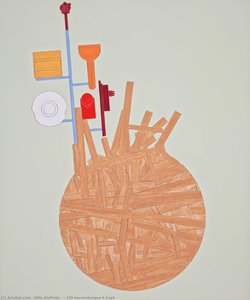
在画廊看来,Alfio Giuffrida 最著名的作品是 URBAN SCREENS Exp43 (2017)。 Überwindungen A Exp3 (2018) 与 Natura Exp24 (2018) 共同构成了那组令人过目不忘的艺术三部曲。 在我们的目录中,Alfio Giuffrida 共有 36 件作品,画廊为您精选了以下 36 件最著名的原作,并详细列出了每件作品的创作年份、馆藏机构及其独特之处。

Conceptual art 藏品最多:斯泰恩斯博物馆艺术馆

画廊中 Alfio Giuffrida 的十大名画

Alfio Giuffrida 的画作,排名第 11 至 36

令 Alfio Giuffrida 驻足的创作主题

这些原作中反复出现的四个主题,各有一个最杰出的范例。

收藏有 Alfio Giuffrida 原作的博物馆

收藏了本页中大部分画作的 1 家博物馆。

博物馆 城市 Alfio Giuffrida 的作品 此列表中的画作
斯泰恩斯博物馆艺术馆, 哥本哈根斯泰恩斯博物馆艺术馆 哥本哈根 1 TORE Exp1

Alfio Giuffrida,年度代表作

此页面中 Alfio Giuffrida 的原作创作于 2 年间,即 2017 年至 2018 年:画廊展示了各时期的代表之作。

Alfio Giuffrida 的画作:画廊解答

哪幅 Alfio Giuffrida 的画作最为闻名?揭晓答案

URBAN SCREENS Exp43 (2017)。紧随其后的是 Überwindungen A Exp3 (2018) 和 Natura Exp24 (2018)。

Alfio Giuffrida 最受欢迎的 10 幅画作是哪些?揭晓答案

URBAN SCREENS Exp43, Überwindungen A Exp3, Natura Exp24, Exponate Exp15, Eingangstore Exp7, Eingangstore Exp1, Eingangstore Exp4, Exponate Exp9, URBAN SCREENS Exp45 及 Exponate Exp11。上方排名显示了每件作品的创作年份及馆藏机构。

Alfio Giuffrida 创作了多少件作品?揭晓答案

我们的目录收录了 36 件 Alfio Giuffrida 的作品,创作年代从 2017 年至 2018 年。

Alfio Giuffrida 最著名的原作收藏于何处?揭晓答案

多见于 斯泰恩斯博物馆艺术馆 (哥本哈根)。上方的博物馆列表列出了所有相关机构。

Alfio Giuffrida 是在什么时候创作出最著名的画作的?揭晓答案

在 2017 期间:本页 36 件作品中有 21 件创作于该时期,其中包含 URBAN SCREENS Exp43 件作品。

Alfio Giuffrida 最早和最晚的代表作有哪些?揭晓答案

在本页面中,最早的作品创作于 URBAN SCREENS Exp43 (2017),最晚的创作于 Überwindungen A Exp3 (2018)。

Alfio Giuffrida 最常创作的主题是什么?揭晓答案

Geometric shapes (2) 及 Abstract composition (2),共计 36 件作品。

Alfio Giuffrida 属于哪种艺术流派?揭晓答案

根据本页面的原作,Conceptual art

Alfio Giuffrida:艺术家

A Sculptor of Systems: The World of Alfio Giuffrida

Alfio Giuffrida, born in Italy in 1953, is an artist whose work defies easy categorization. He’s simultaneously a sculptor, installation artist, painter, and set designer—a polymath who explores the boundaries between art, design, and everyday life with a unique blend of Pop Art sensibilities and conceptual rigor. Giuffrida's journey began with a return to non-figurative representation in 1975, marked by his participation in the X Rome Quadriennale. This early foray into abstract forms laid the groundwork for a career dedicated to dissecting and reassembling the visual language of modernity. For much of the 1970s and 80s, he worked as a freelance painter and set designer in Rome, honing his skills in spatial composition and color theory before relocating to Cologne in 1986—a pivotal move that would significantly influence his artistic trajectory.

The A.G. Sinnwerke® Project: Art as Production

The founding of the fictitious factory A.G. Sinnwerke® in 2003 represents a turning point in Giuffrida’s oeuvre. This self-created entity wasn't merely a branding exercise; it was a deliberate exploration of art’s relationship to production, consumption, and authorship. Initially focused on CDs, CD-Sets, and “Selbstbau-Sets” (Do-It-Yourself Kits), A.G. Sinnwerke® challenged the traditional notion of the artist as sole creator. The factory offered components—Ovali, Kugeln, Irrigatoren, Mona Lisa sets—packaged in blister packs, inviting viewers to actively participate in the creation process. This wasn’t about mass production for its own sake; it was a conceptual gesture questioning the value and meaning of art objects in a consumer-driven society. The adjustable sculptures that followed, presented as models in corset form, further emphasized this theme—the idea of structure, support, and the potential for individual interpretation. Parallel to these object cycles, Giuffrida continued painting, extending the factory’s visual vocabulary onto canvas with works like Irrigatoren-Sätze, CD-Homes, and Kathedralen. He essentially provided the raw materials, allowing buyers to construct their own unique images—a radical act of decentralizing artistic control.

Stage Design & Spatial Narratives

Giuffrida’s work as a set designer, spanning from 1995 to 2003 and beyond, is inextricably linked to his sculptural practice. His collaborations with opera houses and theaters—including Oper der Stadt Köln, Schlosserei Schauspiel Köln, Internationales Tanzfestival Wien, Tiroler Landestheater Innsbruck, and Deutsche Oper am Rhein—allowed him to translate his spatial concepts into immersive environments. Productions like *Notebook*, *Die Verlobung in St. Domingo*, *Goya-Danzas negras*, and *Caravaggio* demonstrate a keen understanding of how form, color, and light can shape narrative and evoke emotion. These stage designs weren’t simply backdrops; they were extensions of Giuffrida's sculptural language—complex arrangements that challenged conventional perspectives and invited viewers to question the boundaries between reality and illusion. The influence of his painting is also visible in these works, with vibrant color palettes and dynamic compositions creating a visually arresting experience.

Exhibitions & Critical Reception

Throughout his career, Giuffrida’s work has been showcased in numerous exhibitions across Germany and beyond. Early shows at Bahnwärterhaus Villa Merkel – Galerie der Stadt Esslingen (1989) established his presence within the contemporary art scene. Later exhibitions at institutions like Suermondt-Ludwig-Museum Aachen (2001), Stadtmuseum Siegburg (2001), Mannheimer Kunstverein (2004), and Märkisches Museum Witten (2006) solidified his reputation as a thought-provoking and innovative artist. His exhibitions often featured a combination of sculptures, paintings, and installations, creating a holistic experience that highlighted the interconnectedness of his various artistic pursuits. While Giuffrida’s work doesn't adhere to any single stylistic movement, it resonates with Pop Art’s embrace of consumer culture, Minimalism’s emphasis on form and structure, and Conceptual art’s questioning of traditional artistic values.

Legacy & Historical Significance

Alfio Giuffrida stands as a significant figure in contemporary Italian sculpture, not for adhering to established norms but for actively dismantling them. His A.G. Sinnwerke® project remains a compelling example of art’s potential to critique and subvert the systems that govern its own creation and reception. By blurring the lines between artist, producer, and consumer, Giuffrida challenges us to reconsider our understanding of authorship, originality, and value. His work is a testament to the power of artistic experimentation—a continuous exploration of form, space, and the complex relationship between art and life. He doesn’t offer easy answers but instead invites viewers to engage in a dialogue with his creations, prompting them to question their own perceptions and assumptions about the world around them. Giuffrida's influence can be seen in contemporary artists who explore similar themes of production, consumption, and participation—artists who recognize that art is not merely an object but a dynamic process.