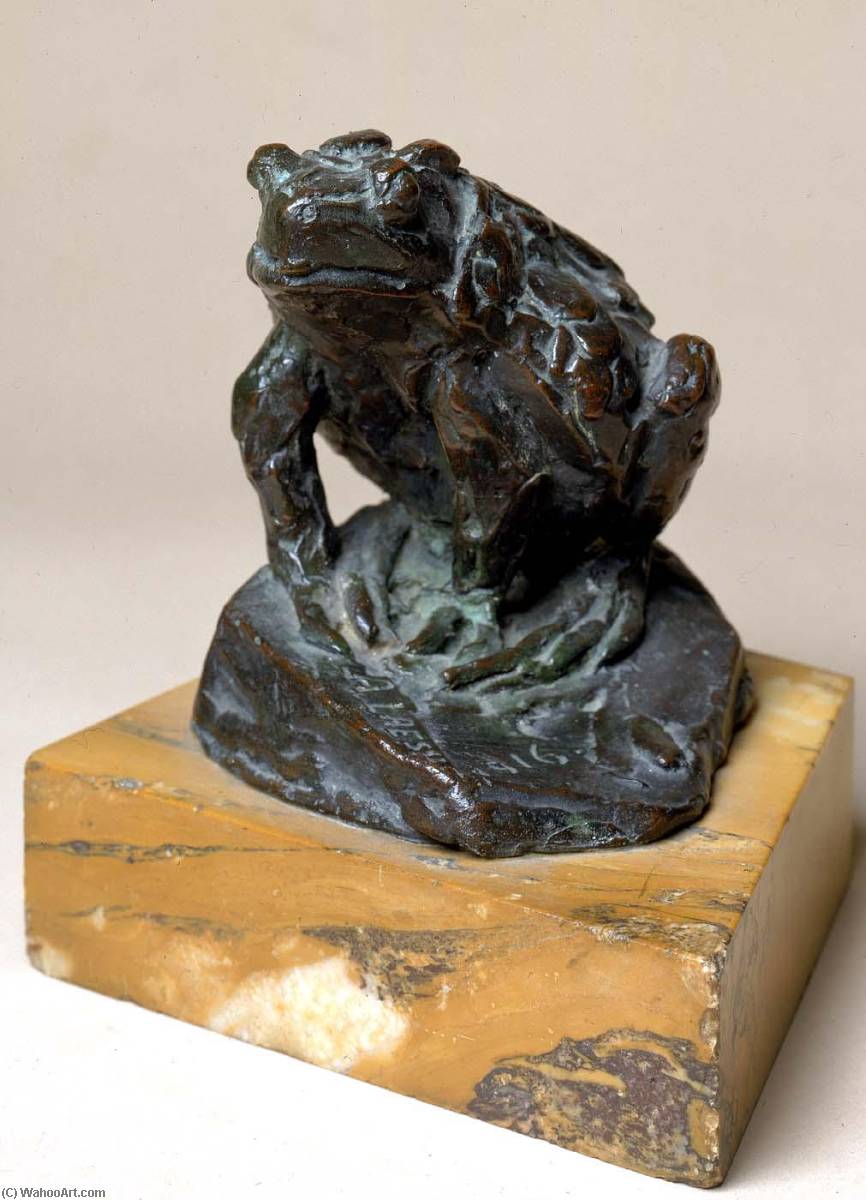
Albert Laessle: The Gentle Sculptor of Animals and Humanity
Born in Philadelphia, Pennsylvania, in 1877, Albert Laessle emerged as a distinctive voice within the American art landscape of the late 19th and early 20th centuries. His journey, shaped by familial encouragement alongside parental reservations about an artistic career, led him through rigorous training at institutions like the Spring Garden Institute, Drexel University under Thomas Eakins, and the prestigious Pennsylvania Academy of the Fine Arts where he studied with masters such as Thomas Anshutz and Charles Grafly. A formative period spent in Paris from 1904 to 1907, working alongside Michel Beguine, honed his skills and broadened his artistic perspective, imbuing his later work with a refined sensibility.
The Animalier's Touch: Capturing Life’s Essence
Laessle is primarily remembered as an “animalier,” a sculptor specializing in animal subjects. However, to categorize him solely within this genre would be to diminish the breadth of his talent. While celebrated for his remarkably lifelike depictions of creatures—penguins, goats like his beloved "Billy" gracing Rittenhouse Square, and countless others—Laessle’s skill extended beyond mere representation. He possessed an uncanny ability to capture not just the physical form but also the essence, the spirit, of his subjects. This was evident in the controversy surrounding his early plaster sculpture, “Turtle and Crab.” Accusations of casting rather than modeling stemmed from the astonishing realism of the turtle, a testament to Laessle’s meticulous observation and technical prowess. His subsequent creation of a wax version, impossible to cast, definitively silenced his critics and solidified his reputation as a master craftsman.
A Career Forged in Recognition and Collaboration
Laessle's artistic achievements were widely recognized throughout his career. He garnered medals at international expositions in Buenos Aires and San Francisco, demonstrating the global appeal of his work. His talent was further acknowledged through prestigious awards like the Widener Gold Medal in 1918 and the J. Sanford Saltus Award in 1951. Beyond individual accolades, Laessle’s career involved significant collaborative efforts. Notably, he completed Charles Grafly's unfinished masterpiece, the General Galusha Pennypacker Memorial, a monumental project showcasing his ability to seamlessly integrate into and expand upon another artist’s vision. This collaboration highlights not only his technical skill but also his respect for artistic legacy.
Legacy: A Sculptor of Enduring Charm
Albert Laessle passed away in 1954, leaving behind a body of work that continues to resonate with audiences today. His sculptures reside in esteemed institutions like the Carnegie Institute and the Metropolitan Museum of Art, testament to their enduring artistic merit. Perhaps most poignantly, his bronze "Billy" remains a beloved fixture in Philadelphia's Rittenhouse Square, a playful symbol of childhood joy and a lasting tribute to Laessle’s ability to capture the simple pleasures of life. His influence extends beyond the art world; he taught generations of aspiring sculptors at the Pennsylvania Academy, ensuring that his dedication to craftsmanship and artistic integrity would continue to inspire future artists. Laessle's work stands as a gentle reminder of the beauty found in the natural world and the power of art to evoke emotion and connection.