阿道福·霍恩施泰因 肖像

24 幅最著名的 阿道福·霍恩施泰因 作品,每一件都独一无二

更新于 November 2026 · 基于我们的流行度评分排名(每件作品的搜索量、访问量及订单量) · 25 件 阿道福·霍恩施泰因 作品收录于我们的目录中

简而言之

Gnà Lola (mezzo soprano) (1890) 是阿道福·霍恩施泰因最受瞩目的画作。 随后,目光会移向 Mimi's Costume For Act I Of La Boheme For The Premiere Performance 和 Set Design For Act 2 Of Puccini's Opera Tosca。 在 阿道福·霍恩施泰因 的 25 件作品中,这 24 件最为闻名;每一件都是独一无二的原作,并附有创作年份、馆藏机构及其经久不衰的原因。

1854 – 1928, 聖彼得堡 Art nouveau 藏品最多:罗马歌剧院

画廊视角下的 阿道福·霍恩施泰因 十大名作

1
Gnà Lola (mezzo soprano) (1890) 由 阿道福·霍恩施泰因

Gnà Lola (mezzo soprano)

1890 · Watercolor

Gnà Lola (mezzo soprano) is a costume design sketch by Adolfo Hohenstein. Created about 1890, the work functions as a visual blueprint for the character of the same name, a mezzo soprano. The sketch provides a detailed study of the attire intended for the stage, specifically tailored to the requirements of theatrical performance.

2
Mimi's Costume For Act I Of La Boheme For The Premiere Performance 由 阿道福·霍恩施泰因

Mimi's Costume For Act I Of La Boheme For The Premiere Performance

Painting

The scene unfolds through Mimi's Costume For Act I Of La Boheme For The Premiere Performance, a work that captures a specific moment of theatrical history. This piece is the creation of Adolfo Hohenstein, an artist whose life began in Saint Petersburg, Russia, in 1854. His creative spirit traveled through the cultural landscapes of Vienna and Milan, eventually leading him to become a central figure in the visual language of…

3
Set Design For Act 2 Of Puccini's Opera Tosca 由 阿道福·霍恩施泰因

Set Design For Act 2 Of Puccini's Opera Tosca

Watercolor

Set Design For Act 2 Of Puccini's Opera Tosca is a watercolor illustration by Adolfo Hohenstein. The work functions as a visual blueprint for the theatrical environment, focusing on purely architectural and decorative elements. It establishes the physical parameters of the stage through a detailed rendering of an opulent interior space.

4
Tosca - Sketch of Act III (1899) 由 阿道福·霍恩施泰因

Tosca - Sketch of Act III

1899 · Drawing · 罗马歌剧院, 罗马

In the delicate, evocative strokes of Adolf Hohenstein’s 1899 sketch for Act III of Tosca, we are transported to a moment where theatrical drama meets the timeless majesty of the Eternal City. This piece is far more than a mere preparatory study; it is a window into the soul of Puccini’s operatic masterpiece. Hohenstein, a master of capturing the intersection between human emotion and architectural scale, presents a panoramic view…

阿道福·霍恩施泰因 的名画,第 11 至 24 幅

阿道福·霍恩施泰因 的传世名作,按时期分类

令 阿道福·霍恩施泰因 驻足的创作主题

这些原作中反复出现的四个主题,各有一个最杰出的范例。

收藏有 阿道福·霍恩施泰因 原作的博物馆

收藏了本页中大部分画作的 1 家博物馆。

博物馆 城市 阿道福·霍恩施泰因 的作品 此列表中的画作
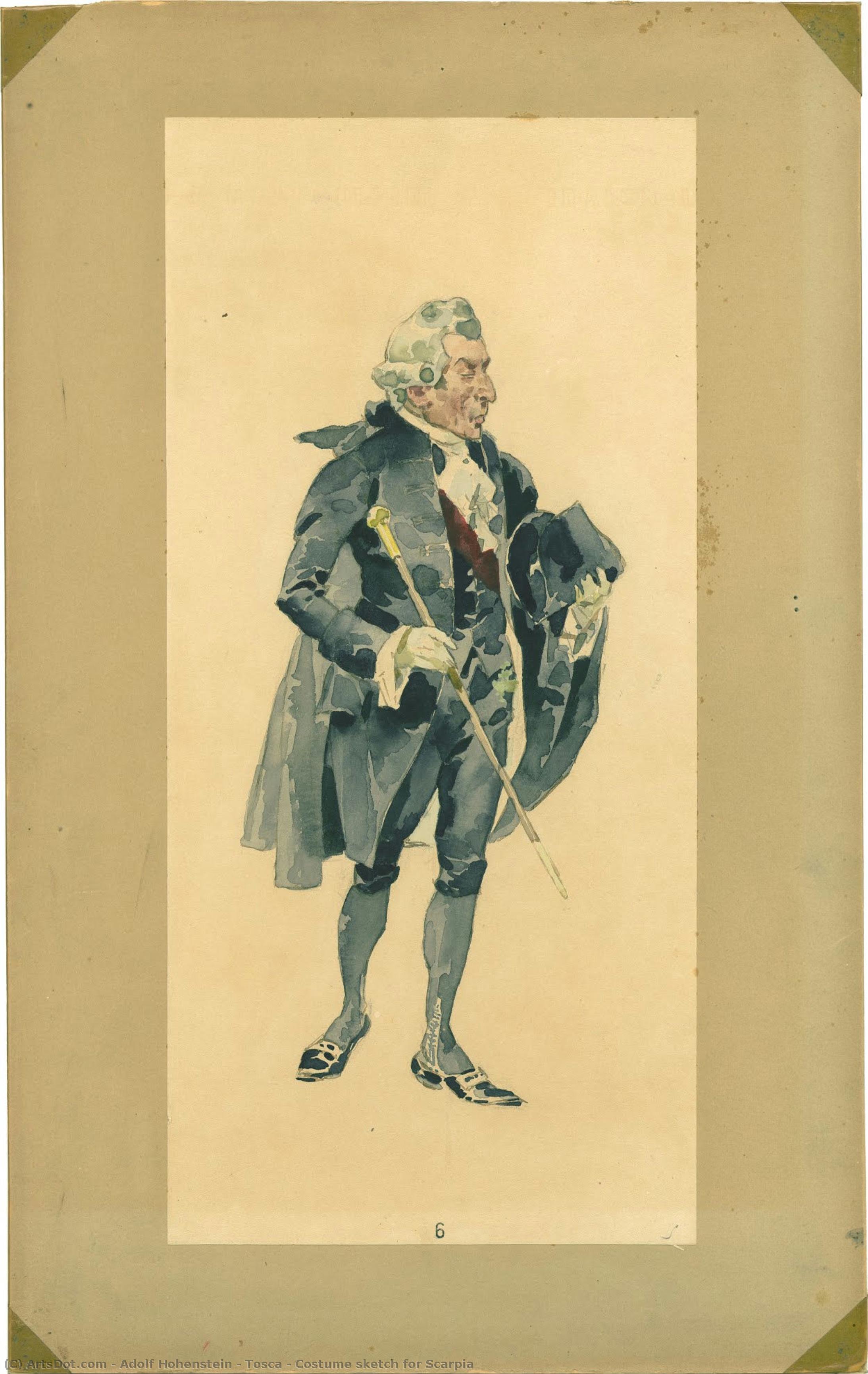
罗马歌剧院, 罗马罗马歌剧院 罗马 3 Tosca - Sketch of Act III, Tosca - Costume sketch for Scarpia, Tosca - Costume sketch for Floria Tosca

阿道福·霍恩施泰因 历年佳作:每一件都是独一无二的原作

此处展示的 阿道福·霍恩施泰因 的原作涵盖了大约十年的时间,从 1890 年到 1899 年:目光随之逐年流转。

年度作品数量

选择年份以查看原作。

阿道福·霍恩施泰因 的画作:画廊常见问题

阿道福·霍恩施泰因 最著名的代表作是什么?揭晓答案

Gnà Lola (mezzo soprano) (1890)。紧随其后的是 Mimi's Costume For Act I Of La Boheme For The Premiere Performance 和 Set Design For Act 2 Of Puccini's Opera Tosca。

阿道福·霍恩施泰因 是在多少岁时创作了 Gnà Lola (mezzo soprano)?揭晓答案

36岁:Gnà Lola (mezzo soprano)创作于1890年,阿道福·霍恩施泰因出生于1854年。

阿道福·霍恩施泰因 最著名的十幅画作是哪些?揭晓答案

Gnà Lola (mezzo soprano), Mimi's Costume For Act I Of La Boheme For The Premiere Performance, Set Design For Act 2 Of Puccini's Opera Tosca, Tosca - Sketch of Act III, A Square, on the right the exterior of Osteria della Giarrettiera, Tosca - Costume sketch for Scarpia, Tosca - Costume sketch for Floria Tosca, Costume design for a servant girl from the Opera, The Image Describe A Poster Drawn By Adolf Hohenstein 及 Le Villi Act Ii。上方排名显示了每件作品的创作年份及馆藏机构。

已知 阿道福·霍恩施泰因 有多少件作品?揭晓答案

我们的目录收录了 25 件 阿道福·霍恩施泰因 的作品,创作年代从 1890 年至 1899 年。

在哪里可以欣赏到最著名的 阿道福·霍恩施泰因 原作?揭晓答案

多见于 罗马歌剧院 (罗马)。上方的博物馆列表列出了所有相关机构。

阿道福·霍恩施泰因 的代表作创作于哪个时期?揭晓答案

在 1899 期间:本页 24 件作品中有 3 件创作于该时期,其中包含 Tosca - Sketch of Act III 件作品。

哪幅 阿道福·霍恩施泰因 的名作创作年代最早,哪幅最晚?揭晓答案

在本页面中,最早的作品创作于 Gnà Lola (mezzo soprano) (1890),最晚的创作于 Tosca - Sketch of Act III (1899)。

阿道福·霍恩施泰因 偏好哪些题材?揭晓答案

Poster (4), Urban landscape (2) 及 Clothing (2),共计 24 件作品。

阿道福·霍恩施泰因 最常使用哪些材料进行创作?揭晓答案

Watercolor,共计 2 件(本页共有 24 件作品)。

阿道福·霍恩施泰因 的作品属于哪种艺术流派?揭晓答案

根据本页面的原作,Art nouveau

在 罗马歌剧院 可以看到哪些 阿道福·霍恩施泰因 的原作?揭晓答案

Tosca - Sketch of Act III, Tosca - Costume sketch for Scarpia 及 Tosca - Costume sketch for Floria Tosca:罗马歌剧院, 罗马收藏了本页中 3 件作品。

阿道福·霍恩施泰因:艺术家肖像

The Architect of Italian Elegance

Born in Saint Petersburg, Russia, to German parents, Adolf Hohenstein emerged as a transformative figure whose creative reach extended far beyond the boundaries of a single medium. Though his roots were in the Russian Empire, his artistic soul was forged in the vibrant cultural landscapes of Vienna and Milan. As a painter, illustrator, advertiser, and set designer, he possessed a rare ability to weave together the theatrical and the graphic, ultimately earning him the prestigious title of the father of Italian poster art. His journey from the imperial atmosphere of his birthplace to the heart of the Italian Stile Liberty—the local expression of Art Nouveau—is a testament to a life lived at the intersection of diverse European traditions.

Hohenstein’s career was defined by an extraordinary versatility that allowed him to command both the grand stage and the intimate printed page. His early years in Vienna provided a foundation of classical training, while his travels through India offered him unique perspectives on decoration and ornamentation. However, it was his move to Milan in 1879 that would forever alter the course of graphic design history. Settling in this burgeoning metropolis, he became an essential collaborator for the legendary musical publisher Giulio Ricordi. Within the Ricordi Graphical Workshops, Hohenstein acted as a visionary, translating the soaring emotions of opera into striking visual narratives. His hand was instrumental in creating the iconic posters for masterpieces such as Puccini’s Tosca and Madama Butterfly, works that required a delicate balance of dramatic tension and aesthetic grace.

A Legacy of Line and Light

The artistry of Hohenstein is characterized by a profound command over atmosphere and the evocative power of the line. Whether he was designing elaborate costumes and sets for La Scala or crafting advertisements for brands like Campari, his work breathed with a rhythmic vitality. In his poster designs, one finds a masterful use of flowing, organic shapes and a vibrant color palette that could capture the public's imagination instantly. He had a singular talent for world-building; even in a single sketch or a promotional print, he could evoke the heavy, cloud-swept skies of Rome or the glamorous allure of a modern cityscape.

His contributions to the visual language of his era cannot be overstated. Beyond the realm of fine art, his work as an advertiser and illustrator helped define the commercial aesthetic of the early 20th century. His achievements include:

  • Pioneering Graphic Design: Establishing the foundations of the Italian poster movement through highly decorative and emotionally resonant illustrations.
  • Theatrical Mastery: Creating immersive environments for opera through meticulous set and costume designs that complemented the musical drama of composers like Verdi and Puccini.
  • Art Nouveau Exponent: Serving as a leading figure of the Stile Liberty, integrating classical revivalism with the modern, flowing aesthetics of the period.

Ultimately, Adolf Hohenstein remains a seminal figure whose influence resonated through the evolution of graphic design in Italy and beyond. His ability to bridge the gap between high culture—the opera house and the theater—and the everyday experience of the public through posters and postcards ensures his place in the pantheon of great illustrators. He did not merely decorate the world; he redesigned how it was seen, leaving behind a legacy of elegance, drama, and enduring beauty.