The Dawn of High Renaissance: A Rebirth of Classical Ideals
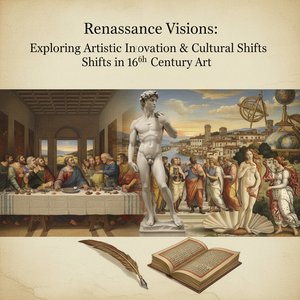
The Italian Renaissance, a period spanning roughly from the 14th to the 16th centuries, wasn’t merely a revival of classical art; it was a profound cultural blossoming fueled by an insatiable curiosity about the world and humanity's place within it. Following the proto-renaissance explorations of artists like Giotto, the High Renaissance – peaking between approximately 1490 and 1527 – represented the zenith of this movement. A renewed focus on nature, coupled with a rediscovery of Greek and Roman philosophy and aesthetics, ignited an artistic revolution that continues to captivate audiences today. This wasn’t simply about copying ancient forms; it was about building upon them, infusing them with a newfound understanding of human anatomy, perspective, and emotional depth. The societal shifts – the secularization of daily life, increased social mobility, and the rise of rational economic systems – created an environment where artistic patronage flourished, allowing for unprecedented experimentation and innovation.
Humanism's Impact on Artistic Representation
 Wikipedia: High Renaissance
In art history, the High Renaissance was a short period of the most exceptional artistic production in the Italian states, particularly Rome, capital of the Papal States, and in Florence, during the Italian Renaissance. Most art historians state that...
Central to understanding the High Renaissance is the concept of Humanism. This philosophical stance emphasized human potential and achievement, shifting focus from solely divine subjects to a celebration of earthly life and individual experience. Artists began portraying religious figures with greater realism and emotional nuance, imbuing them with relatable qualities. Consider Raphael’s *Academy of Athens*, a masterful depiction of classical philosophers – not as distant icons, but as thoughtful individuals engaged in intellectual discourse. This wasn't to diminish religious devotion; rather, it was an attempt to connect the divine with the human experience on a more intimate level. The study of classical literature and anatomy became paramount, informing artists’ understanding of proportion, balance, and the ideal form. The result was a move away from the stylized representations of the medieval period towards a more naturalistic and emotionally resonant aesthetic. This focus extended beyond portraiture; even in depictions of biblical scenes, artists sought to convey psychological depth and human drama.
Mastering Technique: Oil Painting, Perspective & Anatomical Precision
Oil painting is a painting method involving the procedure of painting with pigments combined with a drying oil as the binder. It has been the most common technique for artistic painting on canvas, wood panel, or copper for several centuries. The adva...
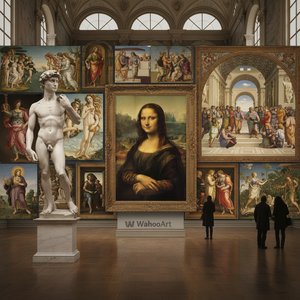
The High Renaissance witnessed significant advancements in artistic techniques that enabled these new levels of realism and emotional expression. Oil painting, though known earlier, became the dominant medium during this period, offering greater flexibility, richer color palettes, and the ability to create subtle gradations of tone – exemplified by Leonardo da Vinci’s *sfumato* technique in works like the *Mona Lisa*. This glazing effect created a soft, almost ethereal quality, blurring lines and adding depth. Linear perspective, perfected during the Early Renaissance, was further refined, allowing artists to create convincingly three-dimensional spaces within their compositions. Bramante's architectural designs showcased this mastery of spatial illusion. Crucially, artists dedicated themselves to the meticulous study of human anatomy, often through dissection – a practice that allowed them to accurately represent the musculature and skeletal structure of the body. This pursuit of anatomical accuracy wasn’t merely about technical skill; it was seen as essential for conveying the beauty and dignity of the human form.
Mannerism: A Stylish Departure from Renaissance Harmony
Mannerism is a style in European art that emerged in the later years of the Italian High Renaissance around 1520, spreading by about 1530 and lasting until about the end of the 16th century in Italy, when the Baroque style largely replaced it. Northe...
As the High Renaissance reached its peak, a new style began to emerge – Mannerism. Arising around 1520, Mannerism represented a deliberate departure from the harmonious balance and naturalistic representation of the earlier period. Artists like Parmigianino deliberately exaggerated proportions, elongated figures, and employed asymmetrical compositions, often creating a sense of elegance and artificiality. Where High Renaissance art sought to emulate nature, Mannerism embraced stylization and subjective interpretation. Notable for its sophisticated use of color and dramatic poses, Mannerism can be seen as a reaction against the perceived perfection of the High Renaissance masters. Figures appear poised and graceful, but often in unnatural or strained positions. This wasn’t necessarily a rejection of artistic skill; rather, it was an exploration of different aesthetic possibilities – a move towards greater expressiveness and individual style. Sebastiano del Piombo exemplifies this shift with his unique blend of Venetian colorism and Roman grandeur.
Iconic Works and Their Enduring Symbolism
The High Renaissance produced a wealth of iconic artworks that continue to resonate with audiences centuries later. Raphael’s *Crucifixion* (1502) exemplifies the period's balance, symbolism, and rich detail. Michelangelo’s sculptures, such as *David*, embody the ideal human form and demonstrate his unparalleled mastery of anatomy. Leonardo da Vinci’s *Last Supper* is a testament to his innovative use of perspective and psychological realism. These works are not merely beautiful objects; they are imbued with layers of meaning – religious allegory, philosophical ideas, and humanist values. Lorenzo Lotto's *Allegory*, for example, presents a captivating narrative rich with symbolic imagery, inviting viewers to decipher its enigmatic message. St Michael and the Dragon by Raphael is another powerful work that showcases the period’s dramatic flair and theological depth. The enduring appeal of these masterpieces lies in their ability to connect with us on both an intellectual and emotional level.
The Legacy of the Renaissance: Influence and Modern Interpretations
The influence of the Renaissance extends far beyond the 16th century, shaping Western art for generations to come. The emphasis on humanism, realism, and technical skill laid the foundation for subsequent artistic movements. Artists continued to draw inspiration from the techniques and themes developed during this period, adapting them to their own styles and contexts. Even today, Renaissance masterpieces are studied and admired for their beauty, innovation, and enduring relevance. At OriginalUniqueArt.com, we strive to make these timeless works accessible to everyone through high-quality reproductions and custom art services. Whether you’re seeking a museum-quality oil painting or a personalized portrait in the style of a Renaissance master, our skilled artists can bring your vision to life. We offer a range of customization options, ensuring that each artwork is tailored to your specific preferences. Explore our collection today and discover the enduring power of Renaissance art.