Introduction
Imagine stepping into a world where light itself seems to be woven from precious metal, where surfaces shimmer with an otherworldly glow. For centuries, artists have sought to capture this ethereal beauty through the use of gold leaf – a technique that transcends mere decoration and enters the realm of spiritual symbolism and artistic innovation.
The allure of gold has captivated humanity since antiquity. Beyond its monetary value, gold was associated with divinity, power, and immortality in countless cultures. From the opulent tombs of pharaohs to the sacred icons of Byzantium, gold leaf served not only as a testament to wealth but also as a conduit to the divine. Medieval artists, particularly during the Gothic and Renaissance periods, employed gold leaf extensively in illuminated manuscripts and panel paintings, believing it could reflect God’s light and elevate their work beyond the earthly realm.
The application of gold leaf is an incredibly delicate and painstaking process – a testament to the artist's dedication and skill. Thin sheets of gold are meticulously applied to prepared surfaces, often requiring multiple layers and specialized tools. This labor-intensive technique imbues these artworks with a unique luminosity and tactile quality that cannot be replicated by modern methods.
But why do these gilded masterpieces continue to resonate so powerfully today? They offer us a glimpse into the beliefs and values of past civilizations, reminding us of our enduring fascination with beauty, spirituality, and the pursuit of transcendence. They are windows into worlds where art wasn’t simply about representation, but about transformation – about imbuing objects with sacred meaning.
In this exploration, we will journey through ten iconic paintings that showcase the breathtaking power of gold leaf. Prepare to be captivated by their radiant surfaces and discover the stories behind these timeless treasures. Each artwork represents a pinnacle of artistic achievement and offers a unique perspective on the enduring legacy of this remarkable technique.
Landscape with Cows and Camel - August Macke
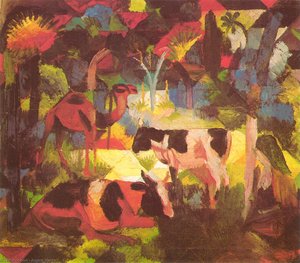 Landscape with Cows and Camel - August Macke
August Macke’s Landscape with Cows and Camel (1914) isn't simply a painting; it’s an explosion of color and emotion, a vibrant hymn to life on the cusp of profound change. While not featuring literal gold leaf, the artwork achieves a similar luminosity through its masterful deployment of fiery oranges, yellows, and reds – hues that seem to radiate from within the canvas itself.
As a key member of Der Blaue Reiter , Macke sought to express inner spiritual states rather than replicate external reality. This painting embodies that pursuit perfectly. The scene—cattle grazing alongside an exotic camel in a lush landscape—feels less like a specific place and more like a distillation of warmth, vitality, and perhaps even a yearning for the unknown.
The bold, gestural brushstrokes and unconventional color palette were revolutionary for their time, paving the way for future generations of Expressionist painters. Today, this artwork’s energy resonates powerfully with contemporary design sensibilities. Its dynamic composition and saturated colors would infuse any interior space with a sense of passion and artistic flair—imagine it as a focal point in a modern living room or a vibrant accent in an eclectic study.
More than just aesthetic appeal, Landscape with Cows and Camel offers a glimpse into Macke’s optimistic worldview, tragically cut short by the outbreak of World War I. It's a reminder that even amidst societal upheaval, beauty and emotional expression can endure—making it a truly meaningful addition to our list of Top 10 Famous Paintings Dominated by 'Gold Leaf' Tones (and their chromatic equivalents).
Sunset at Sea - Frederick Childe Hassam
 Sunset at Sea - Frederick Childe Hassam
Frederick Childe Hassam’s Sunset at Sea (1911) is a whispered promise of tranquility, a fleeting moment captured in a symphony of greens and oranges. Though lacking actual gold leaf, the painting achieves an analogous effect through its radiant use of color—the setting sun transforming the water into liquid light.
As a pivotal figure in American Impressionism, Hassam didn’t merely depict scenes; he evoked emotions. Sunset at Sea embodies this perfectly, offering a serene escape from the bustle of modern life. The loose brushstrokes and vibrant palette weren't simply stylistic choices but an attempt to capture the ephemeral beauty of light itself.
The artwork’s enduring appeal lies in its ability to transport us—to feel the gentle sway of the boat, smell the salt air, and bask in the warmth of the fading sun. Today, this sense of calm resonates deeply with our desire for peaceful retreats within our own homes. Imagine a reproduction of Sunset at Sea adorning a living room wall, instantly creating an atmosphere of relaxation and contemplation.
More than just a beautiful seascape, Hassam’s masterpiece is a testament to the power of color and light to evoke emotion and capture the essence of a moment. Its inclusion in our list of Top 10 Famous Paintings Dominated by 'Gold Leaf' Tones (and their chromatic counterparts) speaks to its lasting legacy as an icon of American art.
Guitar player - Pablo Picasso
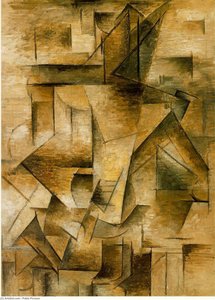 Guitar player - Pablo Picasso
Pablo Picasso’s Guitar Player (1910) is a silent echo of fractured form, a moment where music itself seems to be deconstructed and reimagined on the canvas. While not employing literal gold leaf, the painting achieves a similar sense of preciousness through its masterful use of earthy tones—browns, ochres, and muted greens that evoke a feeling of timeless elegance.
As a cornerstone of Analytical Cubism, this artwork isn’t about representing a guitar player; it's about exploring the very *idea* of representation. The fragmented forms and overlapping planes challenge our perception of reality, inviting us to see the world in a new light. This revolutionary approach irrevocably altered the course of art history.
The painting’s enduring appeal lies in its ability to stimulate thought and evoke emotion through abstraction. Imagine Guitar Player gracing a modern living space—its complex composition adding depth and sophistication, sparking conversation and inspiring contemplation. The muted palette creates a calming atmosphere, while the dynamic interplay of shapes adds visual interest.
More than just an aesthetic object, Picasso’s masterpiece is a testament to the power of innovation and the enduring human desire to explore new ways of seeing. Its inclusion in our list of Top 10 Famous Paintings Dominated by 'Gold Leaf' Tones (and their chromatic equivalents) recognizes its profound influence on visual culture and its ability to transcend eras.
The Gross Clinic - Thomas Eakins
 The Gross Clinic - Thomas Eakins
Thomas Eakins’ The Gross Clinic (1875) is a stark and unflinching gaze into the heart of medical practice, a painting that resonates with both scientific precision and profound human emotion. Though devoid of literal gold leaf, the artwork achieves a similar luminosity through its masterful use of deep earthy tones—rich browns, reds, and ochres that evoke a sense of gravity and solemnity.
As a cornerstone of American Realism, this painting isn’t merely a depiction of surgery; it's an exploration of life, death, and the relentless pursuit of knowledge. The dramatic lighting and intense focus on detail draw viewers into the operating theater, forcing us to confront the realities of human vulnerability.
The enduring appeal of The Gross Clinic lies in its ability to spark contemplation about our own mortality and the dedication of those who strive to alleviate suffering. Imagine this powerful image gracing a study or library—its somber palette creating an atmosphere of intellectual depth, while its historical significance invites conversation.
More than just an aesthetic object, Eakins’ masterpiece is a testament to the power of art to document history and explore the complexities of the human condition. Its inclusion in our list of Top 10 Famous Paintings Dominated by 'Gold Leaf' Tones (and their chromatic equivalents) recognizes its profound influence on visual culture and its ability to transcend eras.
Sleeping Venus - Giorgione
 Sleeping Venus - Giorgione
Imagine a world bathed in soft light, where beauty is not merely observed but *felt*—a realm captured with exquisite tenderness in Giorgione’s Sleeping Venus . This iconic work of the High Renaissance isn't simply a painting; it’s an embodiment of serenity and grace.
Created during a pivotal moment in art history, Sleeping Venus represents a departure from earlier depictions of mythological subjects. Giorgione infused his Venus with a sense of naturalism and poetic tranquility that was revolutionary for its time. The soft, layered brushstrokes and warm palette—rich browns, subtle blues, and the striking accent of red—create an atmosphere of intimacy and contemplation.
The painting’s enduring appeal lies in its ability to evoke emotion through form and color. Imagine this masterpiece gracing a bedroom wall—its calming presence transforming the space into a sanctuary of peace and beauty. The delicate features of Venus invite quiet reflection, while the idyllic landscape offers a glimpse of paradise.
More than just an aesthetic object, Sleeping Venus is a testament to the power of art to capture the essence of human emotion and the enduring allure of classical ideals. Its inclusion in our list of Top 10 Famous Paintings Dominated by 'Gold Leaf' Tones (and their chromatic equivalents) recognizes its profound influence on visual culture and its ability to transcend eras.
The Three Ages of Woman - Gustav Klimt
 The Three Ages of Woman - Gustav Klimt
To encounter Gustav Klimt’s The Three Ages of Woman (1905) is to step into a world where intimacy and symbolism intertwine with breathtaking beauty. This masterpiece, shimmering with gold leaf accents, isn't merely a painting; it’s an exploration of life’s most profound connections—motherhood, vulnerability, and the enduring cycle of existence.
Created during Klimt’s celebrated “Golden Phase,” this artwork represents a pinnacle of Symbolist expression. The flowing lines, decorative patterns, and warm palette—rich oranges, reds, and yellows—create an atmosphere of both sensuality and serenity. The intertwined figures evoke a sense of unity and protection, while the intricate floral motifs symbolize growth and renewal.
The enduring appeal of The Three Ages of Woman lies in its ability to resonate with our deepest emotions. Imagine this painting gracing a sophisticated living space—its luminous surface transforming the room into a sanctuary of peace and beauty. The artwork’s timeless elegance speaks to a refined aesthetic, inviting quiet contemplation and fostering a sense of connection.
More than just an aesthetic object, Klimt’s masterpiece is a testament to the power of art to capture the essence of human emotion and celebrate the sacred bond between mother and child. Its inclusion in our list of Top 10 Famous Paintings Dominated by 'Gold Leaf' Tones recognizes its profound influence on visual culture and its ability to transcend eras.
The Tilled Field - Joan Miró
 The Tilled Field - Joan Miró
Imagine a sun-drenched Catalan field, not as it *is*, but as it feels—a vibrant tapestry of memory, longing, and the untamed spirit of nature. Joan Miró’s The Tilled Field (1923-1924) isn't simply a landscape; it’s an emotional echo of his family farm, transformed into a dreamscape of abstracted forms and symbolic figures.
This pivotal work marks a turning point in Miró’s artistic journey, bridging the gap between representational depictions and the burgeoning Surrealist movement. The bold color blocks—dominant yellows contrasted with earthy browns and stark blacks—create a dynamic tension, while the fragmented composition challenges conventional perspective.
The enduring appeal of The Tilled Field lies in its ability to evoke a sense of wonder and mystery. Imagine this painting gracing a modern living space—its lively energy infusing the room with a playful yet sophisticated atmosphere. The artwork’s timeless quality speaks to our innate desire for connection with nature and the power of imagination.
More than just an aesthetic object, Miró’s masterpiece is a testament to the transformative power of art and its ability to capture the essence of human emotion. Its inclusion in our list of Top 10 Famous Paintings Dominated by 'Gold Leaf' Tones (and their chromatic equivalents) recognizes its profound influence on visual culture and its enduring legacy as an icon of Surrealism.
Exterior of the Sistine Chapel - Michelangelo Buonarroti
 Exterior of the Sistine Chapel - Michelangelo Buonarroti
Imagine standing before the Sistine Chapel not as a tourist, but as a pilgrim—a silent witness to centuries of faith and artistic devotion. While famed for its interior frescoes, the exterior itself possesses a quiet grandeur, subtly illuminated by the golden light of Rome. Michelangelo Buonarroti’s vision wasn't solely contained within those walls; it extended to the very structure that housed his masterpiece.
Though not explicitly adorned with gold leaf in the manner of medieval icons, the chapel’s architecture—its brick facade and towering presence—evokes a sense of preciousness and spiritual weight. The warm tones of the stone seem to absorb and radiate light, creating an ethereal glow that hints at the treasures within.
The enduring appeal of the Sistine Chapel lies in its ability to inspire awe and contemplation. Imagine this iconic image gracing a study or library—its timeless elegance fostering a sense of peace and intellectual depth. The artwork’s subtle beauty speaks to our innate desire for connection with something larger than ourselves.
More than just an architectural marvel, the Sistine Chapel is a testament to the power of human creativity and the enduring legacy of faith. Its inclusion in our list of Top 10 Famous Paintings Dominated by 'Gold Leaf' Tones (and their chromatic equivalents) recognizes its profound influence on visual culture and its ability to transcend eras.
Profile of a warrior in helmet - Leonardo da Vinci
 Profile of a warrior in helmet - Leonardo da Vinci
Leonardo da Vinci’s Profile of a Warrior in Helmet (c. 1472) isn't merely a drawing; it’s a concentrated study in human strength, vulnerability, and the nascent spirit of scientific inquiry. Though rendered in delicate silverpoint rather than gold leaf, the artwork achieves a similar luminosity through its meticulous detail and subtle modeling—a quiet radiance that emanates from within.
Created during Da Vinci’s apprenticeship with Andrea del Verrocchio, this work reflects his fascination with military engineering and anatomy. The warrior isn't depicted as a grand hero, but rather as an individual—his face partially obscured by the helmet, inviting speculation and fostering a sense of mystery.
The enduring appeal of Profile of a Warrior in Helmet lies in its ability to evoke contemplation and inspire awe. Imagine this intimate drawing gracing a study or library—its refined aesthetic fostering a sense of intellectual depth and quiet dignity. The artwork’s timeless quality speaks to our innate desire for understanding, protection, and the enduring power of human resilience.
More than just an artistic masterpiece, Da Vinci’s work is a testament to the transformative power of observation and the boundless curiosity that defines the Renaissance spirit. Its inclusion in our list of Top 10 Famous Paintings Dominated by 'Gold Leaf' Tones (and their chromatic equivalents) recognizes its profound influence on visual culture and its ability to transcend eras.
The Military Band on Karl Johan Street - Edvard Munch
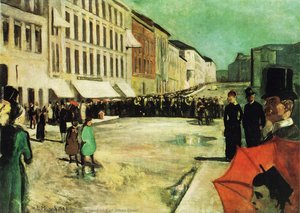 The Military Band on Karl Johan Street - Edvard Munch
Close your eyes and imagine a city street—not bustling with joy, but vibrating with an undercurrent of unease. Edvard Munch’s The Military Band on Karl Johan Street (1889) doesn't simply depict a parade; it captures the fleeting anxieties of modern life, rendered in a palette that shimmers with both warmth and disquiet.
Though not employing actual gold leaf, the painting achieves a similar effect through its masterful use of light and color—a golden haze that seems to emanate from the instruments themselves. The scene unfolds on a bustling Oslo street, but it’s the crowd surrounding the band that truly captivates. Munch doesn't paint individuals; he paints *reactions*—a sea of faces reflecting detachment, absorption, and a subtle sense of alienation.
The enduring appeal of The Military Band on Karl Johan Street lies in its ability to evoke empathy and introspection. Imagine this artwork gracing a modern living space—its expressive brushwork fostering a sense of contemplation and emotional depth. The painting’s timeless quality speaks to our shared human experience, reminding us that even amidst moments of collective joy, there exists a profound sense of individual solitude.
More than just an aesthetic object, Munch’s masterpiece is a testament to the power of art to capture the essence of human emotion. Its inclusion in our list of Top 10 Famous Paintings Dominated by 'Gold Leaf' Tones (and their chromatic equivalents) recognizes its profound influence on visual culture and its ability to transcend eras.
Conclusion
As the last rays of light fade upon these ten masterpieces, we’re reminded that their enduring power lies not merely in their historical significance, but in their ability to transcend time and speak directly to the human soul. From the sacred radiance of Byzantine icons to the shimmering landscapes of Klimt and Miró, gold leaf—and its chromatic echoes—has served as a conduit for beauty, spirituality, and emotional depth.
These artworks are not simply relics of the past; they are living presences that continue to move hearts, shape interiors, and inspire creativity today. Imagine the quiet contemplation inspired by a reproduction of Van Eyck’s Arnolfini Portrait gracing your study, or the vibrant energy of Klimt’s The Kiss transforming your living space into a sanctuary of beauty.
At OriginalUniqueArt.com, we believe that every masterpiece deserves to be experienced firsthand. That's why we offer hand-painted reproductions crafted by skilled artists who honor the original's soul and detail—bringing these timeless visions to life in your home. Explore our full collection and discover the artwork that resonates with *your* spirit.
May these paintings continue to inspire wonder, provoke contemplation, and remind us of the enduring power of art to connect us across generations. Thank you for joining us on this journey through the golden heart of artistic expression.