Art Deco · 1925
Model (塔瑪拉·德·藍碧嘉, 1925)
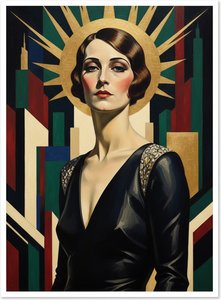
塔瑪拉·德·藍碧嘉 (1898–1980) 创作了《Model》。 创作于 1925 年。 它属于 Art Deco 运动。 由 Oil On Canvas 创作。
- 1925
- Oil On Canvas

 实景预览

 手工油画复制品
 分享
 分享
 详情页


 下载作品
 相似作品
 X射线
 幻灯片播放
 问答

 统计数据
Model简介
Model 描绘了什么内容?
The Form and Composition of Model
The painting presents a nude female figure positioned centrally, though her body is angled diagonally across the canvas. This orientation creates a sense of movement within the frame. A draped cloth covers the lower portion of her body, introducing a layer of white fabric that contrasts with the skin tones. The figure's anatomy is defined by sharp, clean lines and a focus on the curves of the torso and limbs. The background consists of geometric planes and muted tones, including earthy browns, beiges, and hints of green and red. Lighting is directional, casting shadows that define the volume of the body and create depth through overlapping planes rather than traditional atmospheric perspective.
Technical Execution and Style
The work is executed in a style characterized by the geometric precision of the Art Deco movement. The surface appears smooth and polished, suggesting the use of oil on canvas or panel. The artist employs a technique of precise brushwork to achieve tonal variations and a sculptural quality in the rendering of the human form. The interaction between organic shapes, such as the curves of the model, and the rigid geometric shapes of the background defines the visual structure. The following elements characterize the technical approach:
- Use of streamlined forms and polished textures.
- A palette dominated by muted, earthy tones with localized color accents.
- A flattened perspective typical of early 20th-century modernism.
- Strong, clean outlines that emphasize anatomical contours.
Historical Context and Artistic Intent
Created in 1925, this work emerged during a period of significant stylistic shifts in Paris. The piece reflects the aesthetic of the 1925 International Exhibition of Modern Decorative and Industrial Arts, a period that emphasized luxury and machine-age precision. The composition blends elements of neoclassical precision with the fragmented language of Cubism. This approach results in a depiction of the female form that is both stylized and architectural. The subject matter reflects a modern sensibility, moving away from traditional academic rendering toward a more controlled and polished representation of the human figure.
Model 的高分辨率图像
Protected by copyright: these files are for personal reference, not a licence to republish.
塔瑪拉·德·藍碧嘉, Model (1925).
关于 Model 的常见问题解答
塔瑪拉·德·藍碧嘉 的《Model》 中呈现了哪些主题?
为什么“Model”目前的版权状态是这样的?
"Model" 的版权状态 —— 仍受版权保护 —— 取决于艺术家于 1980 年逝世这一事实。
关于艺术家 塔瑪拉·德·藍碧嘉

1898–1980, 波蘭
塔瑪拉·德·藍碧嘉
爵士时代的贵族 塔玛拉·德·伦皮卡出生于波兰华沙,原名玛丽亚·特蕾莎·古尔斯卡。她的生命轨迹宛如她笔下那些棱角分明、光洁如镜的画布一般,充满了戏剧性与张力。早年的她生活在富裕波兰犹太家庭的精致圈层中,穿梭于欧洲疗养胜地与上流社会之间,这种环境在她心中植入了对优雅永恒的追求。然而,俄罗斯革命的剧烈动荡打破了这份安逸,迫使她与丈夫塔德乌什·伦皮卡奔向充满机遇的巴黎。在这座光之城,她开始重塑自我,选择了一个带有贵族气息的名字,并完成了从社交名媛向职业艺术家的华丽蜕变。 她的艺术造诣并非源于漫长的学院式苦读,而是在莫里斯·德尼和安德烈·洛特的指导下,通过专注的自我探索而获得的。她拥有一种非凡的天赋,既能汲取导师的精髓,又能开辟出完全属于自己的艺术路径。她从让-多米尼克·安格尔的精确中学习如何驾驭形式,同时又拥抱立体主义那种碎片化、几何化的语言来定义现代感。这种融合创造出一种既带有古典底蕴又令人惊叹地前卫的风格,其标志性的流畅线条与刻意雕塑般的质感,将她的模特们塑造成了现代时代的纪念碑。 现代性与魅力的愿景 塔玛拉·德·伦皮卡不仅仅是在创作肖像,她更是在构建20世纪20年代“解放女性”的视觉图腾。她的模特——通常是富有的精英或贵族——被赋予了一种冷静、自信且充满高级感的特质,精准地捕捉到了那个时代的精神内核。在她的绿色的布加迪自画像中,她将自己描绘成一个象征独立与速度的形象,展现了一位完全掌控时代技术奇迹的现代女性。这种将古典美学与当代感完美融合的能力,使她成为了装饰艺术运动的核心人物,这一运动颂扬奢华、机器时代的精准感以及一种精致的疏离感。 1925年在巴黎举办的国际装饰艺术及工业展览会奠定了她的成功地位,这场盛会将装饰艺术推向了主流审美。到了20世纪20年代末和30年代,她成为了那些渴望永恒化自身地位与魅力的名流们梦寐以求的肖像画家。她的作品经常探索人体形态与工业景观之间的张力,这在她的神话主题创作或对女性裸体的研究中表现得尤为明显。从巴黎的社交名流圈到后来美国的名人社交圈,她始终保持着一种克制而具有建筑美感的优雅姿态。 遗产与终章 历史的洪流最终将她从欧洲华丽的沙龙中带走。第二次世界大战的爆发迫使她在1939年迁居美国,在那里,她那与战前欧洲美学紧密相连的风格,在不断演变的艺术格局中显得有些格格不入。尽管她的风格与随后的艺术运动渐行渐远,她仍坚持创作,并最终在墨西哥开启了生命的全新篇章。直到生命的尽头,她始终保持着那份强烈的独立精神,在墨西哥城去世后,她选择将骨灰撒在波波卡特佩特火山之上。 随着20世纪60和70年代装饰艺术的复兴,塔玛拉·德·伦皮卡的作品重新回到了大众视野,证明了她对现代性的诠释具有持久的生命力。今天,人们铭记她是一位在男性主导的艺术领域中,凭借卓越才华和清晰使命感开疆拓土的女性。她的绘画作品依然是通往那个已逝去的优雅时代的窗口,其特征包括: 对人体形态进行抛光且具有雕塑感的处理。 新古典主义精确性与立体主义抽象感的独特融合。 对女性赋权与社会独立精神的颂扬。 对光影的精妙掌控,强调几何结构的清晰度。
塔瑪拉·德·藍碧嘉 的其他作品
 在绿色布加迪中
 绿色布加迪的自画像1925
 玛丽·费里肖像1932
 亚当和夏娃1932
关于 Model 的论文集
 Tamara de Lempicka: Art Deco Iconoclasm & the Construction of Modern FemininityExplore the captivating world of Tamara de Lempicka, Art Deco icon. Discover her life, groundbreaking paintings, and lasting influence on m…
 20th century Polish painters20th-century Polish painters like Tamara de Lempicka, Sigmar Polke, and Aleksandra Ekster define an era. Find museum-quality reproductions …
 Art Nouveau vs. Art Deco: How to Distinguish These Two Iconic StylesMaster the differences between Art Nouveau and Art Deco with our expert guide. Learn to identify these iconic styles today.