

 效果预览
效果预览
 切换至印刷版
 分享
分享 分享
分享
 详情
详情

 下载
下载
 相似作品
相似作品 X射线
X射线 幻灯片播放
幻灯片播放Study of Two Sheep
 Oil On Canvas
- WallArt
- Impressionism
 1910
1910- 19th Century
 51.0 x 64.0 cm
 Walker Art Gallery
 展开详情
展开详情




P118B $10

P118H $10

P118W $10

P438Z $10

P508JH $12

P508YH $12

P805H $10

P805Z $10

P919BZ $10

P919G $10

P919XJ $10

P959ZH $10

P968JZ $12

W106C $8

W218G $10

W218JH $8

W218Y $10

W307PJ $10

W316G $10

W316PJ $8

W316Y $10

W398PJ $8

W4111J $10

W500HY $15

W500JH $15

W692G $12

W849H $8

W940BG $15

W953PJ $8




从与原作比例一致的预设尺寸中进行选择。

您可以输入自定义尺寸,以适配特定的画框或空间。如果所选尺寸与原图比例不符,我们将通过裁剪作品或添加手绘元素来扩展画面。数字样稿将在制作开始前发送给您确认。
请注意,屏幕预览无法准确反映实际的裁剪或扩展效果,只有样稿才能真实呈现最终的构图。
虽然我们提供定制尺寸服务,但为了保留原作比例,建议您从预设列表中选择尺寸。
下单后,OriginalUniqueArt.com 团队将通过电子邮件联系客户获取具体要求,并提供效果预览图。


 玻璃选项仅适用于110厘米以下的尺寸。

Study of Two Sheep
复制材质
复制品尺寸
-


最终总价
$ 300
作品详情
A Peaceful Scene
The scene depicted in "Study of Two Sheep" is one of peace and serenity. One sheep lies down while the other stands up, creating an impression of companionship between them. The artist has skillfully captured the essence of these animals in their natural habitat, highlighting their gentle nature. This painting is a testament to Maxwell Gordon Lightfoot's ability to convey the beauty of rural life through his art.Artist and Style
Maxwell Gordon Lightfoot was a talented artist known for his landscape and animal paintings. His style is characterized by attention to detail and a deep understanding of light and color. In "Study of Two Sheep," he uses soft brushstrokes and muted colors to create a sense of calmness, drawing the viewer into the peaceful world of the sheep.- Other notable works by Maxwell Gordon Lightfoot include View of Conway from Above Gyffin and Cwmyoy Brest from Llanthony Valley.
- The Walker Art Gallery is also home to works by other notable artists, such as Christopher Williams and Richard Wilson.
The Walker Art Gallery is a must-visit destination for art enthusiasts, with its impressive collection of fine and decorative arts.
艺术家简介
A Fleeting Brilliance: The Tragic Artistry of Maxwell Gordon Lightfoot
The history of British art is often written in the long, enduring strokes of masters who lived to see their legacies cemented by time. Yet, there exists a more poignant, haunting chapter found in the brief, luminous career of Maxwell Gordon Lightfoot. Born on July 19, 1886, in the Granby Street district of Liverpool, Lightfoot was a figure of immense promise whose life was tragically extinguished at the age of twenty-five. To look upon his work is to witness a soul caught in the transition between the meticulous traditions of the nineteenth century and the burgeoning, experimental spirit of early twentieth-century modernism. His story is not merely one of technical skill, but of a profound, atmospheric sensitivity that captured the ephemeral beauty of the English landscape and the quiet dignity of the human form.
Lightfoot’s artistic lineage was shaped by both familial circumstance and rigorous academic discipline. The unusual name he bore—a tribute from his mother to a father lost at sea—served as a constant, subtle reminder of the fragility of life, perhaps an element that would later manifest in the melancholic undertones of his compositions. His formal education began at the Chester Art School in 1901, providing him with a foundational mastery of draftsmanship. This was further refined during his time in Liverpool, where he attended evening classes at the Sandon Terrace Studios under the guidance of Gerald Chowne and J. Herbert McNair. These mentors, steeped in the delicate traditions of flower painting and the innovative aesthetics of the Glasgow Four, instilled in him an appreciation for subtle color palettes and structural harmony.
From Chromolithography to the Avant-Garde
Before he was recognized as a rising star of the London art scene, Lightfoot honed his observational precision through a practical apprenticeship. Working as a chromolithographer for Turner and Dunnett, a firm specializing in seed catalogues, he learned the intricate dance of color layering and design. This period of commercial printmaking was far from a detour; rather, it provided him with an invaluable understanding of tonal depth and the graphic power of sepia and earth tones—elements that would become hallmarks of his later paintings. The precision required for botanical illustration undoubtedly informed the meticulous detail found in his more complex figure studies.
The true metamorphosis of his style occurred when he moved to London to study at the prestigious Slade School of Fine Art between 1907 and 1909. At the Slade, Lightfoot emerged as a formidable talent, earning accolades in figure painting, head painting, and composition from the cast. It was during this era that he found himself orbiting the Camden Town Group, a collective known for its gritty, Impressionistic approach to urban and domestic life. While his association with the group was relatively brief, his presence alongside contemporaries such as C.R.W. Nevinson and Mark Gertler placed him at the very heart of Britain's avant-garde movement. His work began to bridge the gap between the pastoral and the modern, utilizing muted browns, deep greens, and evocative sepia tones to create scenes that felt both timeless and intensely atmospheric.
A Legacy Written in Shadows and Light
Despite the immense talent that led critics to predict a "most distinguished career in the highest rank of painting," Lightfoot’s journey ended abruptly with his death in September 1911. The loss of such a vibrant talent left a void in the British art world, leaving behind a body of work that serves as a poignant "what if" in art history. His paintings, characterized by their soft, atmospheric light and soulful depictions of figures, remain a testament to a mastery that was never fully realized but was nonetheless deeply felt.
The historical significance of Lightfoot lies in his ability to capture the quiet, often overlooked moments of existence through a lens of refined Impressionism. His contributions can be summarized by several key artistic pillars:
- Atmospheric Pastoralism: A unique ability to render the English landscape not just as scenery, but as an emotional space filled with mist, shadow, and light.
- Technical Versatility: The seamless integration of his printmaking background into fine art, resulting in highly textured and tonally rich compositions.
- Humanity in Form: A profound sensitivity in his figure studies, where the subjects possess a quiet, introspective dignity.
- Modernist Connection: His role as a bridge between traditional academic training and the experimental energy of the Camden Town Group.
Today, the works of Maxwell Gordon Lightfoot continue to resonate with those drawn to the beauty of the ephemeral. He remains a symbol of the fleeting nature of genius, an artist whose brief time in the sun left behind shadows of immense beauty and enduring grace.

Maxwell Gordon Lightfoot
1886 - 1911
艺术家简介
- Artistic Movement Or Style: Impressionism
- Artists Or Movements Influenced By This Artist: ['Camden Town Group']
- Artists Who Influenced This Artist: ['Gerald Chowne']
- Date Of Birth: 1886
- Date Of Death: 1911
- Full Name: Maxwell Gordon Lightfoot
- Nationality: British
- Notable Artworks:
- View of Conway from Above Gyffin
- Study of Two Sheep
- Landscape, Abergavenny
- Place Of Birth: Liverpool, England
相关文章

康斯塔布尔大师之作:25幅传世风景画赏析 | OriginalUniqueArt
探索康斯塔布尔的25幅传世杰作!沉浸于英国田园风光,感受浪漫主义绘画大师的光影与色彩。高清油画复制、艺术品购买尽在OriginalUniqueArt.com,为您的家居增添经典之美。立即在线探索完整系列!

Idyllic Visions: Exploring the Pastoral Scene in Art History – From Arcadia to Modern Interpretations
Explore the captivating history of pastoral art from classical Arcadia to modern masterpieces. Discover key artists like Millet & Cole at OriginalUniqueArt. Find serene landscape paintings for your home.
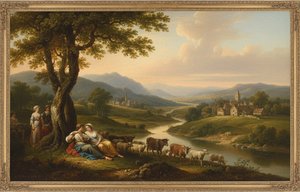
Idyllic Visions: Exploring the Pastoral Tradition in Western Art – Themes, Techniques & Enduring Appeal
Explore the rich history of pastoral art from classical Arcadia to contemporary interpretations. Discover key artists, themes & collecting tips at OriginalUniqueArt.
Beyond the Horizon: 10 Landscape Masterpieces for Your Home Decor
Journey through 10 breathtaking landscape paintings by Monet, Van Gogh & more! Explore iconic artworks, artistic techniques & find inspiration for your home decor. Museum-quality reproductions at OriginalUniqueArt.com. Discover all masterpieces on OriginalUniqueArt.com

Cultivating Visions: A Historical Journey Through Rural Landscapes in Art
Explore the rich history of rural landscape painting with OriginalUniqueArt. Discover Impressionist masterpieces, key artists & movements. Find your perfect serene artwork and bring nature's beauty home.

