

 效果预览
效果预览
 购买印刷品
购买印刷品 分享
分享 分享
分享
 详情
详情

 下载
下载
 相似作品
相似作品 X射线
X射线 幻灯片播放
幻灯片播放狄安娜沐浴


 展开详情
展开详情




P118B $10

P118H $10

P118W $10

P438Z $10

P508JH $12

P508YH $12

P805H $10

P805Z $10

P919BZ $10

P919G $10

P919XJ $10

P959ZH $10

P968JZ $12

W106C $8

W218G $10

W218JH $8

W218Y $10

W307PJ $10

W316G $10

W316PJ $8

W316Y $10

W398PJ $8

W4111J $10

W500HY $15

W500JH $15

W692G $12

W849H $8

W940BG $15

W953PJ $8




从与原作比例一致的预设尺寸中进行选择。

您可以输入自定义尺寸,以适配特定的画框或空间。如果所选尺寸与原图比例不符,我们将通过裁剪作品或添加手绘元素来扩展画面。数字样稿将在制作开始前发送给您确认。
请注意,屏幕预览无法准确反映实际的裁剪或扩展效果,只有样稿才能真实呈现最终的构图。
虽然我们提供定制尺寸服务,但为了保留原作比例,建议您从预设列表中选择尺寸。
下单后,OriginalUniqueArt.com 团队将通过电子邮件联系客户获取具体要求,并提供效果预览图。


 玻璃选项仅适用于110厘米以下的尺寸。

狄安娜沐浴
复制材质
复制品尺寸
-


最终总价
$ 300
《狄安娜沐浴》:巴勃罗·韦伯伦的意大利风情与神话意境
《狄安娜沐浴》(Diana Bathing)是荷兰巴勃罗·韦伯伦(Abraham van Cuylenborch,1620-1658)创作于1634年的杰作,现藏于罗马博尔盖塞美术馆。这幅油画作品以其对意大利文艺复兴风格的巧妙运用和对古希腊神话故事的生动诠释,成为了韦伯伦艺术生涯中的巅峰之作,也是巴洛克时期艺术创作的重要代表之一。 韦伯伦在乌特勒斯出生于荷兰,虽然生命短暂却为艺术史留下了宝贵的遗产。他早年接受了康尼利斯·范·波尔恩巴赫的影响,这位乌特勒斯著名画家以其优雅的风景画和对古典元素的精湛表现而闻名。范·波尔恩巴赫的风格深深地塑造了韦伯伦的艺术发展轨迹,使他能够熟练掌握空气透视法、平衡构图以及细腻的绘画技巧。这种早期影响在作品中尤为明显,尤其是在人物造型和皮肤色彩的处理上,展现出对古典艺术的深刻理解与尊重。 这幅画作描绘了狄安娜女神沐浴于溪流中的场景,同时还融入了众多神话生物和动物形象。韦伯伦运用了传统的绘画手法,通过对光影的处理以及对色彩的丰富运用,营造出一种宁静而神秘的氛围,仿佛将观众带入了一个充满诗意的神圣空间。画面中央的狄安娜女神与她的侍女们构成了一组动态的人物关系,展现了古典艺术中人物形象塑造的精妙技巧。此外,韦伯伦还巧妙地运用了象征主义手法,通过对动物和植物的选择以及色彩搭配,表达了艺术家对于生命、自然和美德的赞颂之情。这种作品不仅具有极高的艺术价值,也蕴含着丰富的文化意义,为我们了解巴洛克时期艺术思想提供了重要的视角。 韦伯伦的作品在当时享有盛名,并受到许多收藏家和艺术家的追捧。他的画作风格独特而富有活力,展现了荷兰艺术家的创新精神与审美能力。如今,《狄安娜沐浴》作为艺术史上的经典之作,仍然吸引着无数观众的目光,激发人们对于艺术创作的热情与灵感。它不仅是一幅美丽的绘画作品,更是一份对古典文化和艺术美学的传承与弘扬。艺术家简介
Abraham van Cuylenborch: A Master of Dutch Grotto Landscapes
Born in Utrecht around 1620 and tragically passing away in the same city in 1658, Abraham van Cuylenborch remains a captivating figure within the rich tapestry of 17th-century Dutch painting. While his life was relatively short, his artistic output—primarily characterized by idyllic landscapes populated with mythological figures and evocative grotto scenes—left an indelible mark on the genre, establishing him as a key interpreter of Italianate influences within the burgeoning Dutch art scene.
Cuylenborch’s early training unfolded under the tutelage of Cornelis van Poelenburgh, a prominent Utrecht painter known for his elegant landscapes and skillful rendering of classical motifs. Van Poelenburgh's style profoundly shaped Cuylenborch’s artistic development, imbuing him with a deep appreciation for atmospheric perspective, balanced compositions, and a refined sense of detail. This foundational influence is readily apparent in Cuylenborch’s early works, which often feature meticulously rendered foliage, distant horizons, and figures engaged in pastoral activities.
The Grotto Motif: A Defining Characteristic
Cuylenborch's most distinctive contribution to the Dutch landscape tradition lies in his fascination with grottoes—small, enclosed caves or grottos—and their inhabitants. These scenes, frequently depicted as idyllic retreats where nymphs and mythological figures frolic amidst lush vegetation, became a hallmark of his oeuvre. The grotto itself served not merely as a setting but as a symbolic space, often imbued with an atmosphere of mystery, tranquility, and sensual delight. He wasn't simply painting landscapes; he was constructing miniature worlds brimming with allegorical meaning.
The depiction of these grottos is remarkably detailed, showcasing Cuylenborch’s skill in capturing the textures of stone, moss, and water. He frequently employed a technique known as ‘chiaroscuro,’ utilizing dramatic contrasts between light and shadow to heighten the sense of depth and create a captivating visual drama. The figures within these scenes—often inspired by classical mythology or biblical narratives—were rendered with a delicate grace and an awareness of their surroundings, contributing to the overall atmosphere of enchantment.
Influences and Artistic Style
Cuylenborch’s artistic style is often described as ‘Italianate,’ reflecting the profound influence of Italian Renaissance landscape painting. He drew inspiration from artists such as Claude Lorrain and Andrea Pozzo, adopting their techniques for creating atmospheric perspective, balanced compositions, and dramatic lighting effects. However, Cuylenborch skillfully adapted these influences to suit the specific conventions of Dutch art, resulting in a unique synthesis of styles.
Beyond Italianate traditions, Cuylenborch’s work also demonstrates an awareness of contemporary trends within the Dutch landscape genre. He shared with his contemporaries a fascination with depicting natural beauty and exploring the relationship between humanity and nature. His compositions often feature elements of ‘arcadianism,’ a popular trend in 17th-century art that idealized rural life and celebrated the virtues of simplicity and harmony.
Notable Works and Legacy
Among Cuylenborch’s most celebrated works are “A Tomb in a Grotto,” currently housed at the Glasgow Museums, and “Landscape with Bacchus and the Nymphs,” held by The Metropolitan Museum of Art. These paintings exemplify his mastery of composition, color, and detail, capturing the essence of his distinctive artistic vision.
Despite his relatively short career, Abraham van Cuylenborch left a significant legacy on Dutch art. His innovative depictions of grotto landscapes influenced generations of artists and helped to establish the genre as a prominent feature of the Dutch Golden Age. His work continues to be admired for its beauty, elegance, and evocative power, offering viewers a glimpse into a world of mythic enchantment and serene natural splendor.

abraham van cuylenborch
1620 - 1658 , Netherlands
艺术家简介
- Artistic Movement Or Style: Dutch Baroque Landscape
- Artists Or Movements Influenced By This Artist: ['Flemish Landscape Painting']
- Artists Who Influenced This Artist: ['Cornelis van Poelenburgh']
- Date Of Birth: ca. 1620, Utrecht
- Date Of Death: 1658, Utrecht
- Full Name: Abraham van Cuylenborch
- Nationality: Dutch
- Notable Artworks:
- Bacchus and Nymphs
- Grotto with figures
- Place Of Birth: Utrecht, Netherlands
相关文章
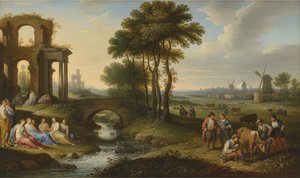
Cornelis van Poelenburch: Bridging Mannerism & the Dutch Baroque Landscape
Discover Cornelis van Poelenburch, a pivotal Dutch Baroque landscape painter bridging Mannerism & Italianate styles. Explore his life, key works, and lasting influence on 17th-century art with OriginalUniqueArt.

Dutch Baroque Masters: 10 Paintings That Shaped an Era | OriginalUniqueArt
Journey through the Golden Age with our guide to the Top 10 Dutch Baroque masterpieces! Explore iconic paintings by Rembrandt, Vermeer & Frans Hals. Find museum-quality art reproductions and elevate your home decor at OriginalUniqueArt.com.

Jan van Goyen: Master of Dutch Landscape & Atmospheric Perspective
Discover Jan van Goyen, the master of Dutch landscape painting. Explore his subtle technique, atmospheric realism & lasting influence on art history. Learn about this 17th-century pioneer at OriginalUniqueArt.

伦勃朗25幅杰作:光影大师的艺术传奇与家居臻选
探索伦勃朗25幅杰作,领略荷兰黄金时代光影大师的艺术传奇!从《夜巡》到自画像,深入了解巴洛克艺术、历史绘画与人物肖像背后的故事。OriginalUniqueArt.com提供高清艺术复制品及家居装饰灵感。立即探索完整系列!
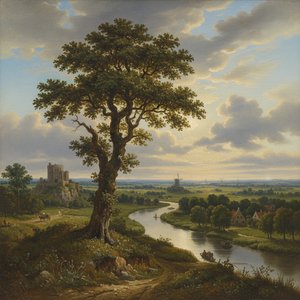
Jacob van Ruisdael: Master of Dutch Landscape & the Evocation of National Identity
Explore the life & work of Jacob van Ruisdael, the preeminent Dutch landscape painter. Discover his technical brilliance, symbolic depth, and lasting influence on art history. Learn about collecting Ruisdael's masterpieces.


