Symbolism · 1910
Memory (谢尔盖·索洛姆科, 1910)
谢尔盖·索洛姆科 (1867–1928) 创作了《Memory》。 创作于 1910 年。 它属于 Symbolism 运动。 由 Watercolor 创作。
- 1910
- Watercolor

 实景预览

 手工油画复制品
 分享
 分享
 详情页


 下载作品
 相似作品
 X射线
 幻灯片播放
 问答

 统计数据
Memory简介
- 标题
- Memory
- 艺术家
- 谢尔盖·索洛姆科 (1867–1928)
- 艺术家出生于
- 圣彼得堡, 俄罗斯
- 日期
- 1910
- 媒介
- Watercolor
- 主题
- ethereal figure, spectral woman, old man wisdom, glowing sun symbol, folklore imagery, romantic landscape
Memory 描绘了什么内容?
Identification of Memory by Sergey Solomko
The scene unfolds within the work titled Memory, a creation by the artist Sergey Solomko. This piece emerges from 1910, a moment when the artist's hand captures a sense of ethereal presence. The image holds a quiet weight, as if a single breath has been suspended in time. It invites a sense of wonder regarding the figures that inhabit its soft, dreamlike space.
Sergey Solomko brings his unique vision to this composition, drawing from a life that began in 1867 in Saint Petersburg, Russia. His origins in this city shape the very essence of his perspective. The work exists as a window into a world of soft light and subtle shadows. It carries the unmistakable touch of a creator who understands the delicate balance between the seen and the unseen.
Visual Composition and Subject Matter
A seated elderly man, his long white beard catching the light, anchors the scene. Beside him, a young woman appears almost translucent, a spectral presence drifting near the edge of a quiet body of water. The vertical composition draws the eye upward from the figures toward a backdrop of trees and a vast sky. A large, glowing sun hangs in the distance, casting a bright reflection across the surface of the water that seems to bridge the gap between the physical and the ethereal.
The encounter between the old man and this ghostly figure suggests a quiet moment of supernatural visitation. One wonders if she is a spirit guide or a manifestation of the past. This meeting hints at deep themes of mortality and the weight of wisdom. The stillness of the water and the soft light create a sense of intimacy, as if the viewer has stumbled upon a private moment between the living and the remembered.
Artistic Style and Visual Qualities
The scene unfolds through a style that leans toward Romanticism or Symbolism, where the atmosphere carries more weight than strict realism. Every line flows in gentle, organic curves, tracing the edges of the trees and the soft contours of the figures. This rhythmic movement creates a dreamlike quality that pulls the viewer into a quiet, suspended moment. The technique appears to be watercolor or gouache on paper, lending a delicate, painted texture to the entire composition. It feels as though the image is a fragment of a half-remembered dream, preserved through soft brushstrokes and a gentle blending of forms.
Light behaves with a soft, diffused quality in this work. It emanates from the large, glowing sun, casting a warm and even radiance across the landscape. This light does not create harsh shadows but instead bathes the figures and the water in a subtle, pearlescent glow. The colors remain muted and carefully blended, working together to maintain a harmonious and slightly melancholic mood. There is a sense of stillness here, as if the air itself is heavy with the weight of the encounter.
A faded quality permeates the surface, consistent with the age of the piece. This patina adds a layer of nostalgic charm, as if the colors have softened through decades of quiet observation. The shallow perspective keeps the focus intimate, drawing the eye toward the interaction between the elderly man and the spectral woman. Every element, from the organic shapes of the background to the translucent quality of the female figure, contributes to a sense of profound mystery and quietude.
Memory 的高分辨率图像
谢尔盖·索洛姆科, Memory (1910). 公有领域
关于 Memory 的常见问题解答
“Memory”的主题是什么?
为什么“Memory”目前的版权状态是这样的?
"Memory" 的版权状态 —— 属于公有领域 —— 其版权已过期 —— 取决于艺术家于 1928 年逝世这一事实。
关于艺术家 谢尔盖·索洛姆科
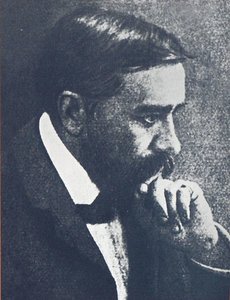
1867–1928, 俄罗斯
谢尔盖·索洛姆科
谢尔盖·索洛姆科:生平与传承 早年生活与教育 出生: 1867年8月22日,于俄罗斯圣彼得堡。 谢尔盖·谢尔盖耶维奇·索洛姆科是列将(后升为少将)谢尔盖·索洛姆科的儿子,其父曾在大公根里金尼奥列维奇麾下服役。他成长于康斯坦丁诺夫斯基宫内,从小便接触到贵族的生活和文化气息。 教育: 从1883年到1887年间,他曾就读于莫斯科绘画、雕塑和建筑学院。之后,他还旁听了皇家艺术学院的一年课程。 早期插画生涯 索洛姆科大约在1888年开始其职业生涯,担任杂志插画家,为《北方》(Север)等周刊文学期刊撰稿和创作插图。 重要出版物: 他很快获得了当时俄罗斯最受欢迎的杂志之一《尼瓦》(Нива)的工作机会。他还曾为《艺术世界》(Мир искусства)和讽刺杂志《傻瓜》(Шут)工作过。 他为普希金、契诃夫和列尔蒙托夫等著名的俄国作家描绘了作品插图。 艺术发展与多元项目 插画作品: 1901年,索洛姆科为阿道夫·马克斯出版的哥戈理《死魂》特刊绘制了插图。 设计多样性: 1900年后,他的设计工作扩展到了剧院海报和一系列描绘“旧俄罗斯”风貌的热门明信片系列,这些明信片由巴黎的拉平之家(Maison Lapine)出版。 皇家委托: 他为皇家瓷器厂制作了模型,并与法伯格瓷器厂合作。1903年,他为在冬宫举行的著名舞会设计了华丽的历史服装,其中一些甚至装饰着真珠宝。 巴黎时期与第一次世界大战 移居巴黎: 1910年,索洛姆科搬到了巴黎,但仍持续在俄罗斯展出作品并为俄国杂志贡献图稿。 战时工作: 在第一次世界大战期间,他受一个致力于收集战争战利品的政府委员会委托,为法国的俄国远征军军官绘制了肖像画。 革命后的生活与流亡 政治转变: 俄国革命后,索洛姆科失去了新苏维埃政府的青睐,并成为了一名自我放逐者。 持续艺术创作: 他为著名的舞者玛蒂尔德·克谢辛斯卡和安娜·帕夫洛娃设计了戏服。他还为埃米尔·热巴尔、欧内斯特·雷南和阿尔伯特·萨曼等法国作家的书籍绘制插图。 流亡活动: 1921年,他参加了前皇家艺术学院流亡艺术家们举办的一次展览。后来,他还帮助建立了“俄罗斯艺术工业研究所”。 逝世与遗产 晚年岁月: 索洛姆科于1928年2月2日,在巴黎附近为白俄流亡者设立的养老院“俄罗斯之家”(Maison Russe)休养期间去世。 历史意义: 在苏联时期,他的作品曾被批评为颓废和资产阶级化。然而,人们对索洛姆科艺术的兴趣在20世纪90年代重新燃起。他对旧俄罗斯文化的细致而准确的描绘,至今备受珍视。 他的遗产在于他以非凡的细节和艺术性捕捉了一个正在消逝的世界。
谢尔盖·索洛姆科 的其他作品
 Sketch of the poster. Pillory.1916
 Priestess1915
 Blarney
 Find
关于 Memory 的论文集
 Russian artworks of the 1900sRussian art from the 1900s features the brilliance of Wassily Kandinsky, Konstantin Korovin, and Boris Kustodiev. Shop museum-quality print…
 Dreams on Canvas: Understanding Automatist and Veristic SurrealismMaster the differences between Automatist and Veristic Surrealism. Explore the works of Dali and Miro to decode the dreamscape today.
 Russian artworks of the 1910sRussian Avant-Garde masterpieces from the 1910s by Wassily Kandinsky, Boris Kustodiev, and Kuzma Petrov-Vodkin. View the collection at Orig…