

 发送
发送 分享
分享
 详情
详情 指南
指南

 下载图片
下载图片
 相似作品
相似作品 幻灯片播放
幻灯片播放 统计数据
统计数据Abigail Adams
 Giclée Print
- Digital
- Neoclassicism
 1804
1804 7.0 x 10.0 cm
 国家肖像画廊
 阅读全文
阅读全文
艺术微喷/版画
博物馆级艺术微喷或帆布版画,制作高效,并提供多种饰面选择。 ( 订购此收藏品的纯手工复刻画作 切换至数字图像销售渠道)




































您可以从与原作比例一致的预设尺寸中进行选择。

请输入您所需的宽度和高度,以适配您的画框或墙面。由于印刷品只能进行裁剪,无法超出原图尺寸,因此若比例不一致,画面的一部分将会被裁切。在正式印刷之前,我们会为您发送一份数字效果图供您确认。本页面显示的图片并非最终裁剪后的效果——只有效果图才能展示真实的裁剪情况。


 玻璃选项仅适用于110厘米以下的尺寸。

Abigail Adams
艺术微喷/版画
复刻品尺寸说明
-


总计金额
¥ 538
A Portrait of Early American Grace: Abigail Adams After John Adams by Raphaelle Peale
This exquisite hand-painted reproduction captures the essence of Abigail Adams, a pivotal figure in early American history, as immortalized by the pioneering still life painter, Raphaelle Peale. Executed in meticulous detail and presented within a classic 7 x 10 cm frame, this artwork offers a poignant glimpse into the domestic sphere of the nation’s first lady during her tenure (1804-1809). The original painting, “Abigail Adams,” created in 1804, served as a testament to Peale's innovative approach to portraiture – moving beyond mere likeness to capture character and presence. Peale’s work was revolutionary for its time, reflecting his dedication to scientific observation and artistic precision.
The Artist: Raphaelle Peale - A Pioneer of Still Life
- Born in Annapolis, 1774: Raphaelle Peale’s life was inextricably linked to the burgeoning world of American art and science. His father, Charles Willson Peale, a renowned portrait painter and naturalist, profoundly influenced his son's artistic development.
- Innovation in Portraiture: Unlike many of his contemporaries who focused solely on formal portraits, Peale sought to represent subjects with an unprecedented level of detail and realism, often incorporating elements of natural history into his compositions. This approach was remarkably forward-thinking for the early 19th century.
- A Legacy of Observation: Peale’s meticulous observation skills, honed through years of studying nature and art, are vividly evident in this reproduction of Abigail Adams. The careful rendering of her clothing, the subtle expression on her face, and the overall composition demonstrate his commitment to capturing not just a physical likeness but also the spirit of his subject.
Style & Technique: Neoclassical Influence with American Realism
Peale’s style is firmly rooted in the neoclassical tradition, evident in the formal arrangement and dignified pose of Abigail Adams. However, he infused this European influence with a distinctly American realism, prioritizing accuracy and detail over idealized beauty. The painting employs smooth brushwork and subtle tonal variations to create a sense of depth and volume, particularly in the rendering of her dress and bonnet. The use of black and white photography further enhances the piece's timeless quality, echoing the aesthetic sensibilities of the era.
Symbolism & Historical Context
Painted during a period of significant political and social change in the United States, this portrait reflects the growing importance of women in public life. Abigail Adams was known for her intelligence, wit, and outspoken opinions – she famously urged her husband, John Adams, to “remember the ladies” when drafting the new nation’s laws. The bonnet worn by Abigail Adams was a fashionable accessory during this period, signifying status and refinement. The image offers a tangible connection to a formative moment in American history, allowing us to contemplate the role of women in shaping the nation's identity.
Emotional Impact & Collector’s Appeal
This hand-painted reproduction transcends mere decoration; it is a window into the past. The serene expression of Abigail Adams invites contemplation and evokes a sense of quiet dignity. Its timeless appeal makes it an ideal addition to any art collection or interior design scheme, bringing a touch of historical elegance and intellectual curiosity to your space. A testament to Raphaelle Peale’s artistic vision, this piece is more than just a portrait – it's a celebration of American heritage.
问答详情
"Abigail Adams" 的创作年份 1804 对应于 拉斐尔·皮尔 艺术生涯中的哪个阶段?
1804 年的创作日期将《Abigail Adams》置于 拉斐尔·皮尔 艺术发展的 Mature Period 时期。
在哪里可以找到关于拉斐尔·皮尔 的《Abigail Adams》的数据统计?
关于 拉斐尔·皮尔 的《Abigail Adams》 的统计数据可在该作品的 统计数据 页面查看:包括作品的每月访问量、艺术家作品的访问量,以及近期访客的国家和语言分布情况。
拉斐尔·皮尔 的《Abigail Adams》 的色彩是鲜艳还是柔和?
拉斐尔·皮尔 的《Abigail Adams》 的色彩呈现出 Subtle Color 的饱和度与 Balanced 的强度。
艺术家简介
美国静物画的先驱
在19世纪初期美国艺术蓬勃发展的版图中,肖像画曾作为彰显地位与传承遗产的主要手段而占据统治地位,然而,拉斐尔·皮尔却敢于将目光转向那些寂静、且往往被忽视的无生命之物的美感。1774年出生于安纳波利斯的皮尔不仅是一位画家,更是一位开拓者,他在那个年轻国家的艺术版图中开辟出了一个此前一直被忽视的专业领域。作为传奇人物查尔斯·威尔逊·皮尔之子,他的生命轨迹本身就与美国科学与艺术发现的脉动紧密相连。在美洲最具影响力的艺术家族之一的熏陶下成长,拉斐尔沉浸在一种将细致入微的观察视为精湛艺术与科学必然要求的环境之中。
他的早期训练深深植根于自然主义与匠心工艺的双重传统。在父亲严谨的注视下,皮尔学会了透过极其细腻的视角去审视世界,这种技能后来成为了他成熟风格的标志。尽管他的兄弟姐妹们大多投身于医学或自然史领域,拉斐尔却将这种继承而来的记录热情注入到了布面油画之中。他并不满足于仅仅表现物体,而是力求升华它们。通过聚焦于水果的质感、瓷器的光泽以及有机物质微妙的腐朽过程,他为转瞬即逝的事物赋予了一种永恒感,将简单的厨房器皿转化为了高雅艺术的主题。
纹理与错视画的精妙掌控
皮尔作品真正的卓越之处在于他对光影与表面的技术驾驭。他成为了错视画(trompe l'oeil)的大师——这种旨在“欺骗眼睛”的技法,创造出了如此令人信服的幻象,以至于观众常常忍不住想要伸手去触摸画面中的物体。他的构图,例如那些描绘桃子、葡萄干或鱼类的作品,是对触觉现实的深刻研究。通过对透明色层与阴影的高超运用,人们几乎可以透过画布感受到成熟桃子那如天鹅绒般的表皮,或是陶瓷水壶那冰凉而光滑的表面。
皮尔风格的发展深受欧洲传统的影响,尤其是那些早已臻于化境的西班牙静物画大师。通过将这种旧世界的精致感与独特的美国感性相结合,他创作出了既具有全球视野又扎根于本土情怀的作品。他的绘画作品通常具备以下特征:
- 极致的细节:一种对捕捉自然界微小瑕疵的坚定追求,从苹果上细小的斑点到叶片中纤细的脉络,无一遗漏。
- 戏剧性的光影:运用明暗对照法将主体从深邃、富有氛围感的背景中拉向前方,赋予每个物体一种雕塑般的立体感。
- 构图的平衡:通过对元素的精心排列,引导观众的视线穿梭于一场关于丰饶与死亡的无声且沉思的叙事之中。
美国艺术史上的持久遗产
尽管他的艺术生涯相对短暂,止于1825年的逝世,但拉斐尔·皮尔对美国艺术发展轨迹的影响绝不容小觑。他打破了肖像画的垄断,证明了日常事物与自然主义题材同样值得最高水平的艺术奉献。通过这种方式,他为后世一代又一代追随其足迹、探索丰饶、衰败与平凡之美的美国静物画家奠定了基石。
时至今日,皮尔不仅作为名门之后被铭记,更作为一个拥有在微小事物中发现伟大的勇气的独特天才而被传颂。他的作品依然是美国历史上那段国家仍在定义其视觉身份时期的重要见证。通过他的画笔,篮子里简单的物品或桌面上的朴素陈设,都成为了一个新兴文化能够观察、欣赏并使周围世界永恒化的持久象征。

拉斐尔·皮尔
1774 - 1825 , 美国
快速概览
- Artistic Movement Or Style: 静物画
- Artists Or Movements Influenced By This Artist: ['西班牙大师']
- Artists Who Influenced This Artist: ['查尔斯·威尔逊·皮尔']
- Date Of Birth: 1774年2月17日
- Date Of Death: 1825年3月4日
- Full Name: 拉斐尔·皮尔
- Nationality: 美国
- Notable Artworks:
- 带有葡萄、黄苹果和红苹果的瓷篮静物画
- 带有水罐和鱼的静物画
- Place Of Birth: 美国,安纳波利斯
相关文章

John Ottis Adams: Capturing Rural Indiana's Luminist Spirit
Explore the serene landscapes of John Ottis Adams, a key American Impressionist of the Hoosier Group. Discover his Luminist style & forgotten legacy with OriginalUniqueArt.

Charles Willson Peale: Portraiture, Enlightenment Ideals & Shaping American Identity
Explore the life & art of Charles Willson Peale – Revolutionary portraitist, scientist, and founder of America’s first museum. Discover his iconic paintings of Washington & the Enlightenment ideals that shaped a nation.

Grant Wood & American Regionalism: Identity, Myth & the Rural Landscape
Explore the world of Grant Wood & American Regionalism with OriginalUniqueArt. Discover the symbolism behind 'American Gothic', recurring themes, and the movement's lasting impact on art history. High-quality reproductions available.

Titian Ramsay Peale II: A Legacy of Botanical Precision & Artistic Innovation
Explore the life & art of Titian Ramsay Peale II, a master of botanical precision and wildlife painting. Discover his legacy bridging art & natural history at OriginalUniqueArt.
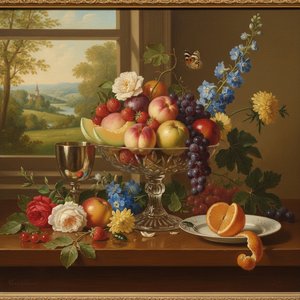
Severin Roesen: Evoking National Identity Through American Still Life Painting
Explore the captivating world of Severin Roesen, a major American still life painter influenced by Dutch masters. Discover his lush compositions and the symbolism within his art – a window into 19th-century America.