Expressionist Orientalism
Chinoiseries (詹姆斯·恩索爾)
詹姆斯·恩索爾 (1860–1949) 创作了《Chinoiseries》。 它属于 Expressionist Orientalism 运动。 由 Acrylic On Canvas 创作。
- Acrylic On Canvas

 实景预览

 手工油画复制品
 分享
 分享
 详情页


 下载作品
 相似作品
 X射线
 幻灯片播放
 问答

 统计数据
Chinoiseries简介
- 标题
- Chinoiseries
- 艺术家
- 詹姆斯·恩索爾 (1860–1949)
- 艺术家出生于
- 奥斯坦德, 比利時
- 媒介
- Acrylic On Canvas
- 主题
- chinoiseries, james ensor, masks, figures, exoticism, belgium
Chinoiseries 描绘了什么内容?
A World Within Walls: Unpacking James Ensor’s “Chinoiseries”
James Ensor's "Chinoiseries," painted in 1880, isn’t merely a depiction of an interior scene; it’s a carefully constructed psychological landscape. This captivating work, residing within the Royal Museums of Fine Arts of Belgium in Brussels, offers a glimpse into the artist’s uniquely unsettling and intensely personal vision. Ensor, born in Ostend to an English father and Belgian mother, possessed a sensibility deeply shaped by his upbringing amidst the vibrant chaos of a seaside resort town – a place saturated with masks, curiosities, and a potent sense of theatricality. This early exposure profoundly influenced his artistic trajectory, leading him away from conventional academic training and toward a fiercely independent style that would forever challenge the established norms of art.
The Dance of Form and Feeling: Style and Technique
“Chinoiseries” is a masterclass in Expressionist technique, subtly blended with elements of Orientalism. Ensor’s brushstrokes are not delicate or refined; they are bold, assertive, and often deliberately rough, conveying an underlying sense of unease and emotional intensity. The color palette—dominated by deep blues and greens—creates a claustrophobic atmosphere, intensifying the feeling of being trapped within the confines of the room. Notice how he utilizes contrasting colors – the vibrant reds and yellows of the decorative objects against the somber background – to draw the eye and heighten the drama. The composition itself is deliberately unbalanced, with the figures positioned in ways that disrupt any sense of harmony or stability. This deliberate distortion reflects Ensor’s interest in exploring the darker aspects of human experience.
- Oil on Canvas: The medium lends itself perfectly to Ensor's expressive style, allowing for rich textures and a dynamic application of paint.
- Bold Brushwork: Visible brushstrokes contribute significantly to the painting’s emotional impact.
- Color Palette: Deep blues and greens create an atmosphere of mystery and introspection.
Decoding the Symbols: Orientalism, Masks, and Human Connection
The title itself, “Chinoiseries,” immediately signals Ensor’s fascination with the exotic – specifically, Chinese-inspired motifs. The table laden with porcelain vases, bowls, and cups isn't simply decorative; it represents a deliberate attempt to introduce an element of the ‘other’ into a European setting. This reflects a broader trend in 19th-century art, where artists sought to explore and interpret foreign cultures through visual representation. However, Ensor doesn’t offer a romanticized view of the Orient. Instead, he presents these objects within a context that is unsettling and ambiguous. The two figures present – one standing, the other seated – are deliberately undefined, their faces obscured or averted, suggesting a lack of genuine connection. The cat, perched on the floor, adds another layer of intrigue, embodying mystery and perhaps even a touch of foreboding.
A Portrait of an Artist’s Mind: Context and Legacy
“Chinoiseries” is often compared to the work of Clyfford Still, a pioneer of Abstract Expressionism, due to their shared emphasis on emotional intensity and non-representational forms. However, Ensor's approach is far more rooted in psychological observation than pure abstraction. His paintings are not simply about depicting objects; they’re about conveying feelings – anxiety, isolation, and the unsettling nature of human relationships. The painting’s creation coincided with a period of significant social and artistic change, mirroring the growing anxieties of modern life. It's a testament to Ensor’s ability to capture the complexities of the human condition through a uniquely personal and often disturbing lens. Reproductions of “Chinoiseries” offer a remarkable opportunity to experience this powerful work firsthand, bringing its enigmatic atmosphere into any space.
Explore more captivating works by James Ensor and discover high-quality reproductions at OriginalUniqueArt.com. For deeper insights into the artist’s life and oeuvre, visit his Wikipedia profile: https://en.wikipedia.org/wiki/James_Ensor.
Chinoiseries 的高分辨率图像

詹姆斯·恩索爾, Chinoiseries. 公有领域
关于 Chinoiseries 的常见问题解答
詹姆斯·恩索爾 的《Chinoiseries》 采用了什么技法?
詹姆斯·恩索爾 在作品《Chinoiseries》中运用了 Acrylic On Canvas 技法。该技法界定了原作的材质特性。
詹姆斯·恩索爾 的《Chinoiseries》 描绘了什么内容?
詹姆斯·恩索爾 的《Chinoiseries》 中呈现的主题包括 chinoiseries, james ensor, masks, figures, exoticism, belgium, carnival, symbolism,这些主题共同构成了该艺术作品的主旨。
詹姆斯·恩索爾 的《Chinoiseries》 是否属于公有领域?
詹姆斯·恩索爾 的《Chinoiseries》 属于 属于公有领域 —— 其版权已过期。此版权状态决定了该作品图像的复制方式。
"Chinoiseries" 的作者是谁?
"Chinoiseries" 的创作者是 詹姆斯·恩索爾。该作品以 詹姆斯·恩索爾 的名义编入目录。
詹姆斯·恩索爾 的《Chinoiseries》 属于哪种艺术流派?
詹姆斯·恩索爾 的《Chinoiseries》 所属的艺术流派为 Expressionist Orientalism。这一分类将该作品置于相关艺术家及艺术作品的语境之中。
《Chinoiseries》属于 詹姆斯·恩索爾 艺术生涯中的哪个时期?
在詹姆斯·恩索爾的艺术生涯中,"Chinoiseries"创作于Mature Period时期。这一阶段有助于将其与艺术家的其他作品进行比较。
为什么“Chinoiseries”目前的版权状态是这样的?
"Chinoiseries" 的版权状态 —— 属于公有领域 —— 其版权已过期 —— 取决于艺术家于 1949 年逝世这一事实。
在詹姆斯·恩索爾的创作生涯中,"Chinoiseries"处于怎样的地位?
"Chinoiseries" 是 詹姆斯·恩索爾 Expressionist Orientalism 时期的代表作,其创作主题涵盖了 expressionist distortion, oriental motifs, belgian identity, cultural fusion, masks, hidden emotions, satire, ensor’s unique visual language。
在詹姆斯·恩索爾反复探讨的主题中,"Chinoiseries"处于怎样的地位?
"Chinoiseries" 描绘了 chinoiseries, james ensor, masks, figures, exoticism, belgium, carnival, symbolism,而 詹姆斯·恩索爾 的创作主题则以 expressionist distortion, oriental motifs, belgian identity, cultural fusion, masks, hidden emotions, satire, ensor’s unique visual language 见长。通过两者的对比,可以发现此作与艺术家惯用题材之间的内在联系。
关于艺术家 詹姆斯·恩索爾

1860–1949, 比利時
詹姆斯·恩索爾
早年生活、家庭背景与艺术启蒙 1860年4月13日,詹姆斯·恩索出生于比利时奥斯坦德。他的身份认同植根于一种独特的文化交汇之中:他的父亲詹姆斯·弗雷德里克·恩索出生于布鲁塞尔,拥有英国血统,而他的母亲玛丽亚·卡瑟琳娜·海格曼则是地道的比利时人。这种双重文化遗产为他奠定了独特的视角,使他的艺术视野往往能够跳脱出当地传统的狭隘束缚。在成长的岁月中,这位艺术家生活在父母于奥斯坦德经营的一家纪念品店里。这个环境不仅仅是他的居所,更是一个充斥着奇异与装饰之物的宝库。店内堆满了贝壳、狂欢节面具以及各种奇形怪状的物件,这些视觉元素为他日后艺术创作的语言提供了极其丰富的养分。 他的艺术正式教育是一个不断摸索与尝试的过程。在进入学院体制化的学习环境之前,他首先在两位当地画家的指导下开始了艺术启蒙。这些早期的训练为他提供了扎实的技术基础,而他后来正是利用这些技巧进行大胆的解构与扭曲。从1877年到1880年,他就读于布鲁塞尔的皇家美术学院。即便是在这些严谨的学院围墙之内,他的兴趣点也始终与学院刻板的教条格格不入。他从未想过成为平庸现状的追随者,他真正的老师,其实是那些环绕在他身边的奥斯坦德奇珍异宝。艺术风格的演变 詹姆斯·恩索早期的创作尚未展现出其成熟时期那种标志性的心理张力。在《俄罗斯音乐》(1881年)和《醉酒者》》(1883年)等作品中,他仍是在一种忧郁且写实的框架内进行创作。这些构图依赖于沉稳的色调和对日常生活的传统描绘,展现了一位艺术家在视觉语言发生剧变之前,如何被现实主义的沉重感所束缚。然而,随着题材变得愈发怪诞,他最终抛弃了这种克制,转而拥抱一种色彩极其鲜艳的调色板。 这种向怪诞风格的转向,源于他对面具的一种特殊痴迷。他被家族纪念品店里那些狂欢节面具的造型感与浓烈色彩深深吸引。这些物件并非单纯的道具,而是成为了他美学核心的一部分。他将面具融入静物画中,为画面引入了一种戏剧性的特质,利用它们来打破场景的日常平庸。这种向非理性领域的迈进,使他得以超越简单的写实表现,进入一个充满心理张力的精神空间。 《被激怒的面具》(1883年) 《食蚝者》(1882/1883年) 《忧伤之子》(1891年) 核心作品与主要主题 詹姆斯·恩索对面具与怪诞事物的痴迷,为我们提供了一扇窥视现代主义时代心理张力的窗口。在《被激怒的面具》(1883年)中,他展现了对伪装力量的早期探索,通过狂欢节这一母题,剥离了社会虚伪的表象。这种对戏剧性与不安感的迷恋,并非仅仅是一种风格上的选择,而是一种探索身份认同的手段。而在他1882年的作品《食蚝者》中,则展现了他处理光影与色彩的另一重维度,画中描绘了他的妹妹米切,其呈现出的场景在当时挑战了安特卫普沙龙保守的审美趣味。这幅画作遭到主流艺术界的排斥,恰恰凸显了他的艺术愿景与那个时代僵化规范之间的剧烈摩擦。 随着艺术风格向更具侵略性、更具表现力的形式转变,这种演变在他在宏大构图中的表现尤为显著。《基督进入布鲁塞尔》(1888-1889年)堪称20世纪表现主义的先驱,他利用一场混乱且色彩鲜艳的怪诞人物游行,对现代社会进行了辛辣的讽刺。这种对存在主义挣扎的探讨,在《忧伤之子》(1891年)中得到了进一步升华;这幅油画将基督的受难与日本能剧面具那令人震撼的视觉意象结合在一起。这些作品揭示了艺术家如何利用宗教与寓言主题,来表达对人类行为及社会冷漠的深层愤懑。 死亡的必然性与存在的荒诞感始终贯穿于他的创作核心。《为吊死者争斗的骷髅》(1891年)通过骷髅形象,直面观众关于腐朽与死亡的残酷现实。这些关于罪孽、诱惑以及表象脆弱性的反复探讨,确保了他的作品始终是极具研究价值的课题。詹姆斯·恩索能够将这些黑暗且往往令人不安的真相,转化为一种连贯且具有冲击力的视觉语言,这正是他在向现代主义转型过程中所做出的卓越贡献。今日何处寻觅他的足迹 詹姆斯·恩索在国际各大艺术收藏机构中的身影,无不印证着他对现代主义发展所产生的深远影响。在安特卫普,皇家美术馆珍藏着两件具有里程碑意义的作品:忧伤之子与食蚝者。这两件杰作展现了这位艺术家惊人的技术跨度,他能游刃有成地在宗教性的紧张感与平凡的家庭生活场景之间自由切换。他的影响力跨越了大西洋,在纽约市的现代艺术博物馆中,人们依然可以瞻仰圣安东尼的苦难。这件作品始终是其艺术风格转向怪诞与心理深度探索的典型范例。 恩索笔下的意象具有一种全球性的穿透力。位于洛杉矶的盖蒂中心收藏有基督进入布鲁塞尔,这是一幅宏大的构图,捕捉到了他最为激进的社会批判精神。与此同时,在沃斯堡的金贝尔美术馆,则保存着取暖的骷髅。这些散布于世界各地的艺术瑰宝,确保了他那拒绝墨守成规、打破学院派传统的视觉语言,能够持续触动全球学者与艺术观察者的心灵。 忧伤之子 食蚝者 圣安东尼的苦难 基督进入布鲁塞尔 取暖的骷髅
詹姆斯·恩索爾 的其他作品
 基督进入布鲁塞尔1888
 面具自画像1899
 奥斯坦德的浴场
 取暖的骷髅1889

关于 Chinoiseries 的论文集
 Raw Emotion & Bold Strokes: Top 10 Neo-Expressionism MasterpiecesExplore iconic Neo-Expressionist works by Basquiat and Baselitz. Discover museum-quality art at OriginalUniqueArt.com.
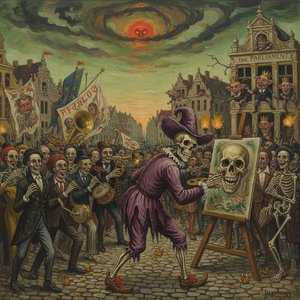 James Ensor's Grotesque Visions: Social Commentary & Artistic InnovationExplore the unsettling yet captivating world of James Ensor, a pioneer of Expressionism. Discover his satirical masterpieces, symbolic imag…
 Capturing the Exotic: A Journey Through the Allure and Complex Legacy of Orientalist ArtExplore the mesmerizing world of Orientalist art. From Napoleon's influence to Renoir's exotic textures, discover the history, beauty, and …