 切换至版画销售渠道
 展开全文
展开全文







































 对于任何边长超过 105 厘米(约 41 英寸)的艺术品或复制品,画框将以拆解后的组件形式发货。此方法可确保安全送达并防止运输过程中的损坏。


Fernand Léger’s “Walking Flower”: A Symphony of Color and Form Against Industrial Backdrop
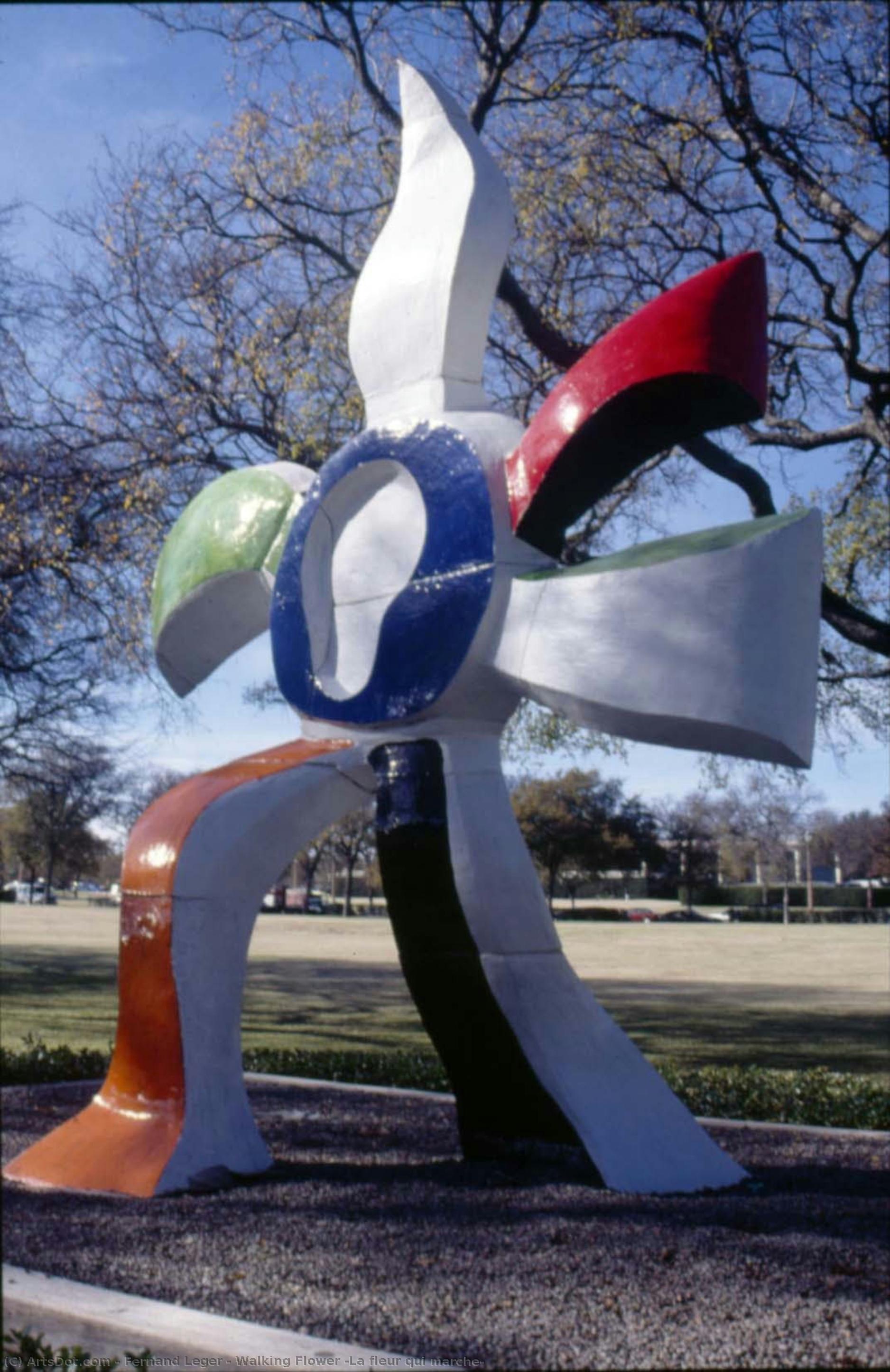
The ceramic sculpture "Walking Flower (La fleur qui marche)" by Fernand Léger, completed in 1952, stands as a remarkable testament to the artist's enduring fascination with reconciling nature’s beauty with the burgeoning influence of industrial modernity. More than just an aesthetically pleasing object—though undeniably striking—it embodies Léger’s philosophical quest to capture the dynamism and spirit of his time, transforming organic forms into expressions of technological progress. This piece exemplifies Léger’s signature style: a bold departure from purely abstract explorations that nonetheless retains a palpable connection to the natural world.- Subject Matter & Style: Léger deliberately juxtaposes the delicate curve of a flower—a symbol of resilience and rebirth—with the angularity of industrial machinery, represented subtly in the sculpture’s base and surrounding environment. This duality isn't merely decorative; it reflects Léger’s belief that art could illuminate the complexities of the 20th century without abandoning its fundamental appreciation for organic life.
- Technique: Crafted from ceramic material, the sculpture utilizes a technique rooted in Léger’s earlier experimentation with low-relief murals and later embraced fully rounded sculptural forms. The artist employed a masterful blend of color and texture—primarily vibrant hues of red, green, yellow, and blue—applied to one face of the sculpture while maintaining a monochrome palette on the other. This dual approach underscores Léger's desire to convey both visual richness and conceptual depth.
Historical Context: Embracing Modernity Amidst Wartime Uncertainty
Created in 1952, “Walking Flower” emerged from a period of significant artistic upheaval following World War II. Léger’s return to France coincided with an expanding interest in public art and new mediums—mosaic, textiles, and stained glass—reflecting the broader cultural optimism of the postwar era. However, Léger's work also carries echoes of the anxieties surrounding the Cold War and the pervasive influence of industrialization on daily life. The sculpture serves as a visual counterpoint to these concerns, asserting the enduring power of natural beauty and symbolizing hope for a harmonious coexistence between humanity and technology.Symbolism & Emotional Impact: Humor, Joyfulness, and the Spirit of Play
Léger’s artistic vision extended beyond mere representation; he sought to infuse his sculptures with emotion. The “Walking Flower” embodies Léger's characteristic playful spirit—a deliberate rejection of solemn seriousness—expressed through its bold colors and simplified forms. Critics have noted that Léger aimed to evoke feelings of joyfulness and humor, mirroring the optimism prevalent in post-war France. He believed art should inspire contemplation and delight, reminding viewers of the fundamental beauty inherent in the natural world.Conclusion: A Legacy of Innovation
“Walking Flower” remains a captivating example of Léger’s artistic legacy—a fusion of abstraction and organic form that continues to resonate with audiences today. Its striking visual impact, coupled with its profound philosophical underpinning, cements Léger's place as one of the most influential artists of his generation. Reproductions of this masterpiece offer an opportunity to appreciate not only Léger’s technical prowess but also his enduring belief in art’s capacity to illuminate the human spirit and celebrate the wonders of both nature and progress.常见问题与解答
在“行走的鲜花 (La fleur qui marche)”中,媒介与笔触是如何交融的?
费尔南·莱热 的《行走的鲜花 (La fleur qui marche)》 将 陶瓷 技法与 立体主义 流派风格完美融合。技法与流派分别描述了作品的创作手法及其艺术风格。
“行走的鲜花 (La fleur qui marche)”在艺术史上的地位如何?
费尔南·莱热 的《行走的鲜花 (La fleur qui marche)》 属于 现代主义 时期的 立体主义 流派。两者共同确立了该作品在艺术史上的地位。
“行走的鲜花 (La fleur qui marche)”代表了费尔南·莱热艺术生涯的哪个阶段?
在费尔南·莱热的艺术生涯中,"行走的鲜花 (La fleur qui marche)"创作于晚期时期。这一阶段有助于将其与艺术家的其他作品进行比较。
 分享
分享 分享
分享
 详情
详情 指南
指南

 下载作品
下载作品
 相似作品
相似作品 幻灯片播放
幻灯片播放 Q&A
Q&A 统计数据
统计数据








