
 切换至版画销售渠道
 发送
发送 分享
分享
 指南
指南

 下载图片
下载图片
 相似作品
相似作品 幻灯片播放
幻灯片播放 统计数据
统计数据Salt Cellar
 Gold Leaf
- Sculpture
- Mannerist Renaissance
 1540
1540 26.0 x 33.0 cm
 Kunsthistorisches Museum
A Gilded Echo of Antiquity
Benvenuto Cellini's Salt Cellar, a shimmering testament to the heights of Renaissance goldsmithing, isn’t merely a container for salt; it’s a miniature cosmos, a meticulously crafted allegory brimming with symbolism and technical brilliance. Completed in 1543 for King Francis I of France, this extraordinary object transcends its functional purpose, becoming a profound meditation on the relationship between earth and sea, divinity and humanity. It's a piece that whispers tales of ambition, artistry, and the intoxicating allure of the Italian Renaissance—a world where beauty was paramount and skill elevated to an almost religious pursuit.
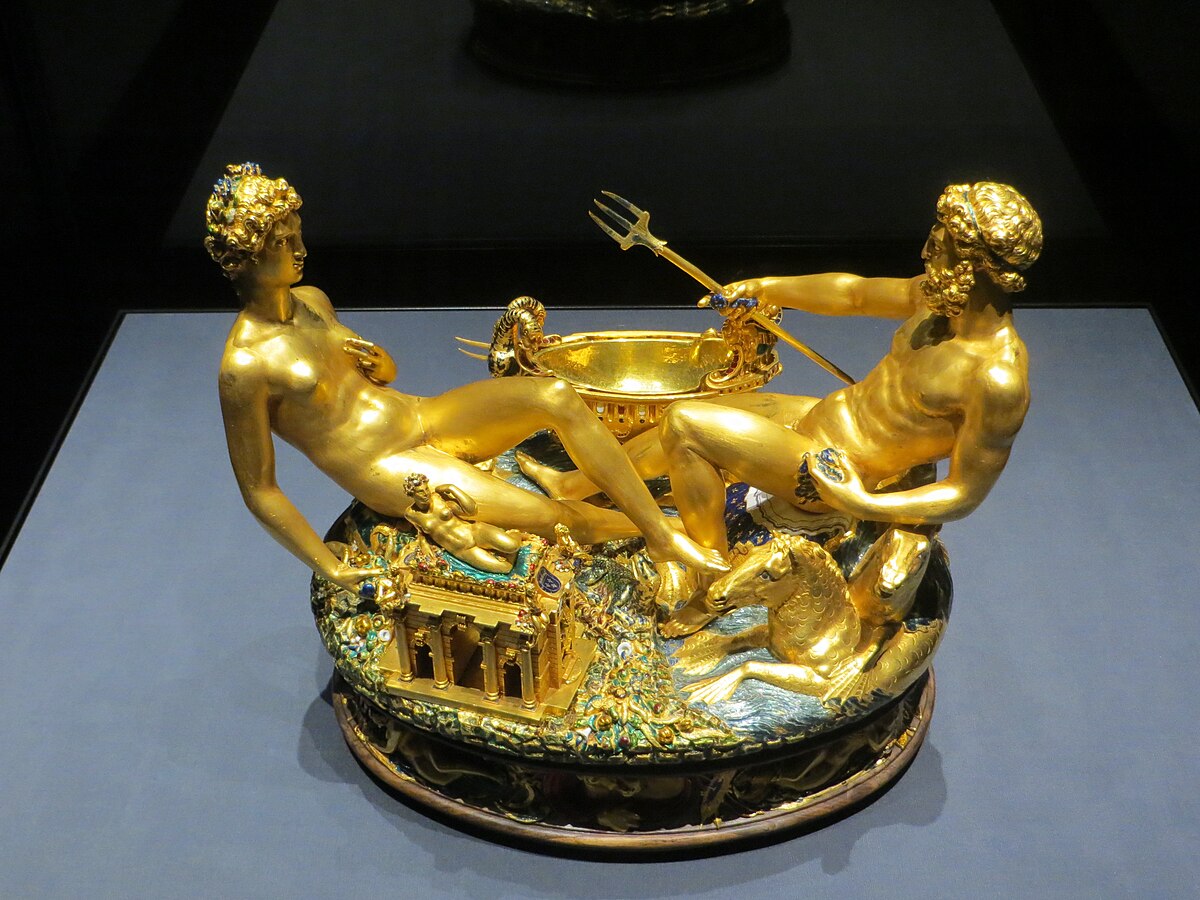
Image of Benvenuto Cellini’s Salt Cellar
The Anatomy of a Masterpiece
Crafted primarily from gold, the Salt Cellar is an astonishing feat of technical mastery. Cellini, renowned for his flamboyant personality and equally impressive skill, eschewed traditional casting methods, instead meticulously hammering the gold into its delicate, flowing form by hand. The base is elegantly fashioned from ebony, providing a striking contrast to the radiant gold, while ivory bearings allow the sculpture to gracefully roll across a banquet table – a deliberate feature designed for display and conversation. But it’s the enameling that truly elevates the piece; intricate scenes depicting figures representing the four seasons and the four winds are painstakingly applied, adding layers of visual complexity and narrative depth. The sheer scale of detail—from the meticulously rendered folds of clothing to the lifelike expressions on the faces of Neptune and Tellus – speaks volumes about Cellini’s dedication and unparalleled skill.
- Material: Gold, Ebony, Ivory, Enamel
- Dimensions: Approximately 10.5 inches (267 mm) tall, 13.1 inches (333 mm) wide
- Technique: Hand-hammered gold, intricate enamel work
A Dialogue with the Divine
The Salt Cellar’s symbolism is as captivating as its aesthetic beauty. At its heart lies a potent allegory of Terra e Mare – Earth and Sea – embodied by the figures of Neptune, god of the ocean, and Tellus, goddess of the earth. These two powerful deities are depicted in an intimate embrace, their legs intertwined, suggesting a harmonious connection between the terrestrial and aquatic realms. The sculpture is further enriched with symbolic details: a small boat carries the salt, representing the flow of commerce and sustenance; a temple dedicated to peppercorns stands alongside Tellus, signifying the pleasures of earthly life. The inclusion of animals—horses, dogs, dolphins—adds another layer of meaning, drawing upon classical iconography and reinforcing the sculpture’s connection to mythology and antiquity.
A Legacy Forged in Ambition
Cellini's autobiography, *Vita*, offers invaluable insight into the creation of this extraordinary piece. He recounts his initial reluctance to accept the commission from Cardinal Ippolito d’Este, dismissing the cardinal’s suggestions with characteristic arrogance and asserting sole credit for the design. The story is rife with anecdotes about Cellini’s daring exploits—including a dramatic escape from bandits while transporting the gold—further cementing his image as a larger-than-life figure of Renaissance Italy. The Salt Cellar, therefore, isn't just an artistic achievement; it’s a reflection of Cellini’s own complex and often contradictory personality – a testament to ambition, skill, and a profound appreciation for beauty. It remains one of the most celebrated examples of Renaissance goldsmithing, captivating viewers with its exquisite detail and enduring symbolism.
问答详情
如何将 本韦努托·切利尼 的《Salt Cellar》 应用于家居装饰中?
本韦努托·切利尼 的《Salt Cellar》 推荐用于 Statement,理想的摆放空间为 Living Room。通过结合使用场景与空间布局,可以更好地确定复制品的陈列位置。
本韦努托·切利尼 的《Salt Cellar》 描绘了怎样的场景,又传达了怎样的意境?
"Salt Cellar" 展示了 gold, salt cellar, renaissance, sculpture, mythology, allegory, cellini,其传达的情绪为 Elegant。
在哪里可以购买到 本韦努托·切利尼 的《Salt Cellar》 的数字图像?
您可以在 数字图像 页面直接购买 “Salt Cellar” 的 高分辨率数字图像下载。
本韦努托·切利尼(1500 – 1571)
贝努托·切利尼(1500-1571):文艺复兴时期杰出的金匠和雕塑家,风格属于矫饰主义。以《美杜莎之首》和精美的切利尼盐罐而闻名。探索他的艺术生涯与生活!
Kunsthistorisches Museum (Vienna, Austria)
探索维也纳的艺术灵魂!쿤스히스토리스체博物馆收藏了拉斐尔、伦勃朗和维米尔等大师的作品,以及来自埃及到罗马的古代珍宝。沉浸在哈布斯堡王朝的辉煌艺术世界中! Kunsthistorisches Museum Austria Vienna Kunsthistorisches Museum Egyptian Collection Over 500,000 objects Art and history museum 1891 Gothic 2 What is the primary architectural style of the Kunsthistorisches Museum?
作品详情
- 标题: Salt Cellar
- 艺术家: 本韦努托·切利尼
- 年份: 1540
- 原始尺寸: 26.0 x 33.0 cm
- 格式: Landscape
- 版权状态: 公有领域
- 观赏地点: Kunsthistorisches Museum
- 动态感: Mannerist Renaissance
- 主色调: Gray
- 用途: Statement
基本信息
- Notable elements: Neptune & Tellus figures
- Medium: Gold, enamel, ebony, ivory
- Title: Salt Cellar
- Artistic style: Mannerism
- Year: 1543
- Dimensions: 26 x 33 cm