

1


更新于 November 2026 · 基于我们的流行度评分排名(每件作品的搜索量、访问量及订单量) · 10 件 Philips Augustijn Immenraet 作品收录于我们的目录中
简而言之
Wooded Landscape (1650) 是 Philips Augustijn Immenraet 最受瞩目的画作;原作收藏于 伦敦 的 达尔威奇画廊。 随后,目光会移向 Landscape with Herders and Ruins (II) (1650) 和 The Repudiation of Hagar (1659)。 在 Philips Augustijn Immenraet 的 10 件作品中,这 10 件最为闻名;每一件都是独一无二的原作,并附有创作年份、馆藏机构及其经久不衰的原因。


The Repudiation of Hagar is a religious art painting by the Flemish artist Philips Augustijn Immenraet. Created before 1659, this work belongs to the tradition of Flemish culture. The composition focuses on a biblical narrative set within a landscape of monumental classical ruins. Large, crumbling Corinthian columns and broken stone fragments occupy the right side of the frame, while a large tree with twisting branches stands to the left. The…


收藏了本页中大部分画作的 4 家博物馆。
| 博物馆 | 城市 | Philips Augustijn Immenraet 的作品 | 此列表中的画作 |
|---|---|---|---|
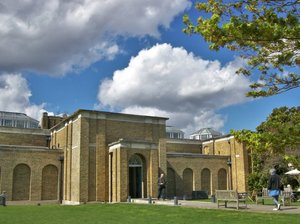 达尔威奇画廊 |
伦敦 | 1 | Wooded Landscape |
 维也纳艺术史博物馆 |
维也纳 | 1 | The Repudiation of Hagar |
 Musée Sainte-Croix |
Poitiers | 1 | Landscape |
 国家博物馆 |
斯德哥尔摩 | 1 | Landscape with High Trees near a Ravine |
选择一个年代,探索定义该时代的原创杰作。
Wooded Landscape (1650),达尔威奇画廊, 伦敦。紧随其后的是 Landscape with Herders and Ruins (II) (1650) 和 The Repudiation of Hagar (1659)。
23岁:Wooded Landscape创作于1650年,Philips Augustijn Immenraet出生于1627年。
Wooded Landscape, Landscape with Herders and Ruins (II), The Repudiation of Hagar, A wooded landscape with a herder by a stream, Cartouche with floral decoration and two parrots around a landscape, Landscape with Herders and Ruins, Landscape with figures, Landscape, Landscape with a company on a bridge crossing a water fall, 1678 及 Landscape with High Trees near a Ravine。上方排名显示了每件作品的创作年份及馆藏机构。
我们的目录收录了 10 件 Philips Augustijn Immenraet 的作品,创作年代从 1650 年至 1678 年。
多见于 达尔威奇画廊 (伦敦), 维也纳艺术史博物馆 (维也纳) 及 Musée Sainte-Croix (Poitiers)。上方的博物馆列表列出了所有相关机构。
在 1650s 期间:本页 10 件作品中有 6 件创作于该时期,其中包含 Wooded Landscape 件作品。
在本页面中,最早的作品创作于 Wooded Landscape (1650),最晚的创作于 Landscape with a company on a bridge crossing a water fall, 1678 (1678)。
In the vibrant heart of the seventeenth-century Flemish Baroque, a period defined by dramatic movement and rich textures, Philips Augustijn Immenraet emerged as a painter of singular vision. Born in Antwerp in 1627 to a German immigrant piano builder, Immenraet was destined for a life steeped in the artistic traditions of his homeland. While many of his contemporaries remained tethered to the heavy, receding planes of traditional landscape composition, Immenlaret sought a different path—one marked by an infusion of light and a burgeoning sense of atmospheric depth. His early training under the landscape specialist Lucas van Uden provided him with a robust foundation in the Flemish style, yet his spirit was far too restless to be confined by established boundaries.
The trajectory of Immenraet’s career suggests a profound engagement with the wider European art scene. It is widely believed that during his formative years, he traveled through Italy, perhaps residing there between 1645 and 1655. This sojourn likely acted as a transformative catalyst, introducing him to the Italianate style characterized by sun-drenched vistas and classical clarity. Upon his return to Antwerp, he did not merely replicate what he had seen; instead, he synthesized these Mediterranean influences with the lush, wooded traditions of the North. His work began to exhibit a remarkable brightness, breaking away from the darker, more somber palettes of his predecessors and hinting at a pre-Romantic sensibility that would not fully bloom in art for decades to come.
One of the most fascinating aspects of Immenraet’s professional life was his mastery of the collaborative spirit, a hallmark of the Antwerp Guild of Saint Luke. In an era where large-scale commissions often required specialized talents, Immenraet frequently acted as the architect of the landscape, providing the sweeping vistas and atmospheric settings that served as the stage for other artists' brilliance. He would meticulously paint the terrain, while specialists were brought in to breathe life into the staffage—the small, vital figures that populate his worlds.
His compositions often featured a delicate interplay of elements:
Immenraet’s contribution to the Flemish Baroque extends beyond mere technical skill; he was a bridge between eras. By introducing a new luminosity and moving away from the rigid, oblique recession of planes, he helped pave the way for a more naturalistic and emotionally resonant approach to landscape painting. His work shares a stylistic kinship with the Sonian Forest Painters and masters like Cornelis Huysmans, yet his unique ability to capture light gives his oeuvre a distinct, almost ethereal quality.
Though he passed away in Antwerp in 1679, leaving behind a legacy of breathtaking vistas and innovative techniques, his influence endured through his pupils, including his son Andries Immenraet. Today, the works of Philips Augustijn Immenraet stand as a testament to a period of profound transition, where the structured grandeur of the Baroque began to yield to the soft, emotive light of a new, approaching era in European art.