A Witness in Print: The Life and Legacy of Nan Lurie
Nan Lurie, born in 1906 and passing away in 1985, was a pivotal figure in the American printmaking landscape, though her name remains surprisingly absent from many mainstream art historical narratives. Her work wasn’t about aesthetic beauty in isolation; it was a deliberate act of
social commentary, a visual cry for justice born from the heart of the Great Depression and fueled by a deep empathy for the marginalized. Lurie's artistic journey unfolded against a backdrop of profound economic hardship and burgeoning civil rights awareness, shaping her into a powerful chronicler of
African American life in the 1930s. While biographical details remain somewhat sparse, the potency of her prints speaks volumes about her character and commitment to using art as a vehicle for change. She wasn’t merely *depicting* scenes; she was bearing witness, offering a platform to voices often silenced by societal structures.
The Federal Art Project and Early Artistic Development
Lurie's formal artistic training took place within the context of the Works Progress Administration’s Federal Art Project (FAP) in
New York City during the 1930s. This government-sponsored initiative provided employment for artists, but more importantly, it fostered a climate where socially conscious art flourished. The FAP wasn't simply about keeping artists afloat; it actively encouraged them to engage with contemporary issues and document
American life. It was here that Lurie honed her skills in linocut – a medium she would master and make uniquely her own. Linocut, with its bold contrasts and graphic simplicity, proved perfectly suited to her subject matter. The directness of the carving process lent itself to an immediacy and rawness that resonated with the urgency of the times. She wasn’t interested in subtle nuances; she wanted to deliver a clear, impactful message. Her early work often focused on scenes of
everyday life within Harlem, capturing the resilience and dignity of its residents amidst poverty and discrimination.
Subway Bootblacks: A Portrait of Resilience
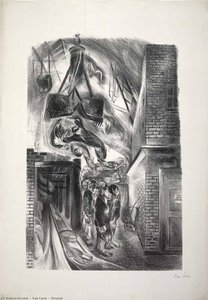
Perhaps Lurie’s most iconic series is her “Subway Bootblacks” (1936-1937). These prints offer a poignant glimpse into the lives of young
African American boys who earned a meager living shining shoes in the bustling
New York City subway stations. What sets these works apart isn't just their subject matter, but Lurie’s sensitive portrayal of her subjects. She avoids sensationalism or pity; instead, she presents them as individuals with agency and pride. The prints are imbued with a quiet dignity, highlighting their hard work and determination in the face of adversity.
Each image is a testament to their spirit, capturing not just their labor but also their personalities – a sense of camaraderie, youthful energy, and unwavering hope. Lurie’s deliberate choice to focus on these young men challenged prevailing stereotypes and brought attention to their often-invisible struggles. The series wasn't simply documentation; it was an act of humanization, forcing viewers to confront the realities of racial inequality.
Themes of Social Justice and Artistic Technique
Throughout her career, Lurie consistently addressed themes of
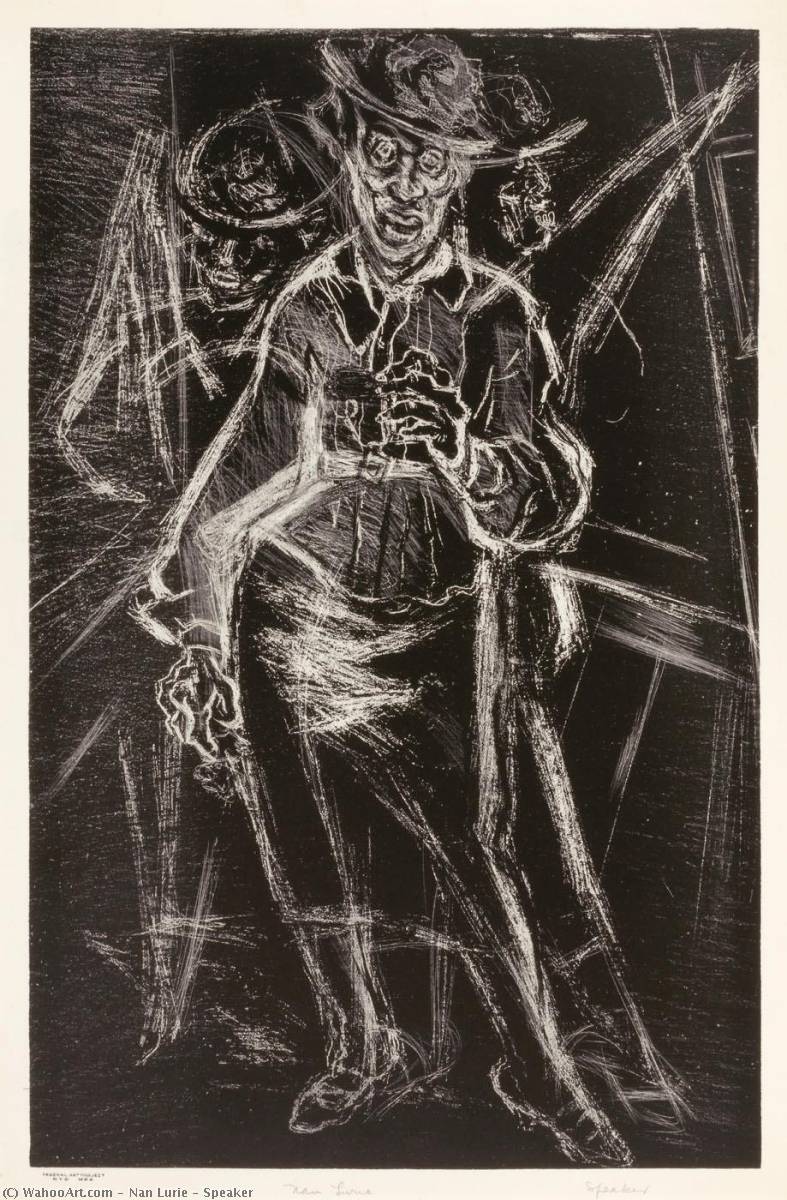
social justice, economic disparity, and racial prejudice in her work. Beyond the “Subway Bootblacks,” she created prints depicting sharecroppers, laborers, and scenes of protest, always with a focus on the
African American experience. Her artistic technique played a crucial role in conveying these messages. The stark
black-and-white contrasts of linocut amplified the emotional impact of her images, creating a sense of urgency and immediacy.
She skillfully used composition to draw the viewer’s eye to key details, emphasizing the humanity of her subjects and the injustices they faced. Lurie wasn't afraid to experiment with form and perspective, often employing dynamic angles and bold lines to create a sense of movement and energy. Her prints weren’t meant to be passive observations; they were calls to action, urging viewers to confront uncomfortable truths and advocate for change.
Historical Significance and Lasting Impact
Nan Lurie's work stands as a powerful example of socially engaged art during the Depression era. While she didn’t achieve widespread fame during her lifetime, her prints have gained increasing recognition in recent years as scholars and curators re-evaluate the role of art in social movements. Her commitment to documenting
African American life with sensitivity and dignity makes her a significant figure in the history of American printmaking.
- Her work provides valuable insight into the realities of racial inequality during the 1930s.
- She challenged prevailing stereotypes and humanized marginalized communities.
- Lurie’s prints continue to inspire artists and activists today, demonstrating the enduring power of art as a tool for social change.
Her legacy lies not just in the beauty and technical skill of her prints, but also in her unwavering dedication to using her art as a voice for the voiceless. She reminds us that art can be more than just decoration; it can be a catalyst for empathy, understanding, and ultimately, justice.