A Life Illuminated by Wit and Innovation
Laurence Sterne, born in the Irish town of Clonmel in 1713, was a figure destined to disrupt the literary landscape of eighteenth-century England. His life, marked by both ecclesiastical duty and a restless spirit, provided fertile ground for the development of a uniquely innovative voice—one that would forever alter the course of the novel. Sterne’s early years were characterized by constant movement, shadowing his father's military career across Ireland and brief periods in England. This itinerant upbringing instilled within him a keen observational skill and perhaps contributed to the fragmented, digressive nature that would become so central to his writing style. He received a classical education at Jesus College, Cambridge, laying the foundation for his intellectual pursuits, before taking holy orders and becoming an Anglican priest. Serving as vicar of Sutton-on-the-Forest provided him with financial stability but more importantly, offered a rich tapestry of human experience that would later populate his fictional worlds. It was a life seemingly destined for quiet respectability, yet beneath the surface simmered a creative energy waiting to explode onto the literary scene.
The Birth of *Tristram Shandy* and Literary Revolution
Sterne’s breakthrough arrived with the publication of *The Life and Opinions of Tristram Shandy, Gentleman*, beginning in 1759. This was not merely a novel; it was an audacious experiment, a playful dismantling of narrative conventions that shocked and delighted readers in equal measure. The story itself—the meandering account of Tristram’s life from conception to adulthood—often became secondary to the digressions, philosophical musings, and metafictional flourishes that punctuated its pages. Sterne broke free from the constraints of linear storytelling, embracing tangents, blank pages, marbled illustrations, and unconventional punctuation as integral parts of his narrative strategy. He challenged the very notion of what a novel could be, inviting readers not just to consume a story but to actively participate in its creation. The work’s success was immediate and profound, catapulting Sterne into literary celebrity. It wasn't simply *what* he wrote, but *how* he wrote it that captivated audiences—a self-aware narrative voice constantly commenting on the act of writing itself.
Sentimentality, Travel, and Final Reflections
Following the immense success of *Tristram Shandy*, Sterne embarked on a journey through France and Italy, seeking both respite from illness and inspiration for his next work. This travelogue, *A Sentimental Journey Through France and Italy* (1768), published shortly before his death, offered a more accessible—though no less insightful—exploration of human nature. While lacking the radical experimentation of its predecessor, it delved into themes of sentimentality, compassion, and the complexities of cross-cultural encounters. The work reflects Sterne’s observations on the kindness and cruelty he encountered during his travels, presenting a nuanced portrait of European society through the eyes of Yorick, a fictionalized version of himself. *A Sentimental Journey* contributed significantly to the rise of sentimentalism in literature, emphasizing emotional responsiveness and empathy as essential human qualities. It was a fitting coda to a career dedicated to exploring the intricacies of the human heart and mind.
Influences, Legacy, and Enduring Significance
Sterne’s literary development was shaped by a diverse range of influences. His classical education exposed him to the playful narratives of Rabelais and Cervantes, whose works undoubtedly informed his own penchant for satire and unconventional storytelling. The tenets of latitudinarianism—a more tolerant form of Anglicanism—fostered an intellectual openness that allowed him to question established norms and embrace diverse perspectives. However, perhaps the most potent influence was simply life itself: the instability of his early years, the complexities of marriage, and the constant observation of human behavior all contributed to the richness and depth of his writing. Sterne’s legacy is immense. He is widely regarded as a precursor to modern literature, paving the way for writers like James Joyce, Virginia Woolf, and Samuel Beckett who would further push the boundaries of narrative form and explore the inner workings of consciousness. His innovative techniques—digression, metafiction, stream-of-consciousness—became hallmarks of modernist fiction, forever changing the landscape of English literature. Even today, Sterne’s work continues to resonate with readers and scholars alike, solidifying his place as a truly original and enduring voice in literary history.
Shandy Hall, his former home, now stands as a testament to his life and work, offering visitors a glimpse into the world of this remarkable author.
His influence can be seen even today.
Exploring Sterne’s World Through Art
Beyond his literary achievements, Laurence Sterne is also immortalized through
visual art.
Sir Joshua Reynolds' portrait of Sterne (1760), captures the intellectual and somewhat mischievous spirit of the author. The painting depicts Sterne in a contemplative pose, embodying the “Grand Style” with rich textures and
dramatic lighting. It’s a powerful representation of a man who dared to challenge conventions and redefine the boundaries of storytelling. Furthermore, reproductions of his works, such as editions of
A Sentimental Journey, offer a tangible connection to the past, allowing us to appreciate not only Sterne's words but also the artistry of bookmaking in earlier centuries. These visual representations serve as valuable complements to his literary legacy, providing further insight into the life and times of this extraordinary figure.
- Major Works: *The Life and Opinions of Tristram Shandy, Gentleman*, *A Sentimental Journey Through France and Italy*
- Literary Style: Digressive, humorous, metafictional, satirical
- Influences: Rabelais, Cervantes, latitudinarianism


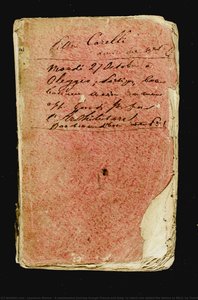 1. A sentimental Journey trough France and Italy: to which are added the letters to Eliza, by Yorick. Stereotype edition, according to the process of Firmin Didot
 2. A sentimental Journey trough France and Italy: to which are added the letters to Eliza, by Yorick. Stereotype edition, according to the process of Firmin Didot

 Biblioteca Sormani