


1

屠杀无辜者
完成于1611年的圭多·雷尼之作《屠杀无辜者》,绝不仅仅是对一场圣经悲剧的描绘;它更是一场关于苦难、纯真丧失以及权力失控所带来的寒冷后果的深刻冥想。这幅作品创作于博洛尼亚画派宗教狂热与艺术创新交织的时期,它超越了其历史背景,与永恒的情感真理产生共鸣。作品尺寸为268 x 170 厘米,宏大的规模瞬间将观者拉入场景的核心,放大了叙事中内在的恐怖与悲怆。

更新于 November 2026 · 基于我们的流行度评分排名(每件作品的搜索量、访问量及订单量) · 357 件 圭多·雷尼 作品收录于我们的目录中
简而言之
屠杀无辜者 (1611) 是 圭多·雷尼 最受瞩目的画作;原作收藏于 博洛尼亚 的 博洛尼亚国立美术馆。 随后,目光会移向 何人,我儿 (1639) 和 St Filippo Neri in Ecstasy (1614)。 在 圭多·雷尼 的 357 件作品中,这 100 件最为闻名;每一件都是独一无二的原作,并附有创作年份、馆藏机构及其经久不衰的原因。
完成于1611年的圭多·雷尼之作《屠杀无辜者》,绝不仅仅是对一场圣经悲剧的描绘;它更是一场关于苦难、纯真丧失以及权力失控所带来的寒冷后果的深刻冥想。这幅作品创作于博洛尼亚画派宗教狂热与艺术创新交织的时期,它超越了其历史背景,与永恒的情感真理产生共鸣。作品尺寸为268 x 170 厘米,宏大的规模瞬间将观者拉入场景的核心,放大了叙事中内在的恐怖与悲怆。

圭多·雷尼(Guido Reni)于1640年完成的《万福临恩》(Ecce Homo),是巴洛克艺术成就的缩影——这幅宏伟的画布超越了单纯的描绘,升华为对深刻精神沉思的体现。它创作于罗马教皇赞助鼎盛时期,捕捉了一个基督教图像学中的关键瞬间:耶稣基督在庞提乌·彼拉多面前,身上烙印着即将遭受钉十字架的痕迹。

Guido Reni’s “St. Filippo Neri in Ecstasy,” painted in 1614, is more than just a depiction of a religious scene; it's a profound meditation on faith, humility, and the transformative power of divine grace. Executed during the height of the Baroque period, this work exemplifies Reni’s signature style – a masterful blend of classical restraint and deeply felt emotion. Measuring 180 x 110 cm, the painting invites viewers into a…

To gaze upon this magnificent Baroque canvas is to step directly into a moment suspended between earthly suffering and heavenly grace. Depicting the saint, Saint Roch, the scene unfolds with an almost palpable sense of quietude, yet it pulses with profound spiritual energy. The central figure lies reclined, his posture suggesting both vulnerability and ultimate repose. His head, gently supported by his hand, directs our gaze outward, inviting contemplation on…

In the grand tapestry of the Baroque era, few images capture the profound intersection of human devotion and divine glory as exquisitely as Guido Reni’s Assumption. Painted in 1617, this monumental oil on canvas serves as a breathtaking window into the heavens, transporting the viewer from the earthly realm to a state of spiritual transcendence. The composition centers on the Virgin Mary, caught in the miraculous moment of her ascent.…

A single beam of light strikes from the upper left, carving an elderly man out of the heavy shadows. This is Saint Jerome, caught in a moment of intense religious penitence. His weathered face and long, flowing white beard emerge from the dark, illuminated by a directional glow that highlights the muscular tension in his shoulder. A deep, crimson-red cloak wraps around his torso, providing a sharp contrast to the…

The composition is defined by a violent, diagonal movement that pulls the viewer into the immediate struggle between Judith and Holofernes. Light emerges from the upper left, casting deep shadows across the scene and highlighting the pale skin of the protagonists against an indistinct, dark background. This chiaroscuro effect emphasizes the physical strain in the figures, particularly the musculature of the bodies caught in the act of decapitation. The brushstrokes…

is an oil painting by the Italian artist Guido Reni. Executed about 1608, the work captures a pivotal moment from biblical history. The composition focuses on the figure of David, who is depicted holding the severed head of Goliath.

Guido Reni's "St. Jerome," painted around 1635, is more than just a depiction of a revered biblical figure; it’s an immersive experience in solemnity and profound introspection. Rendered with the meticulous detail characteristic of the Baroque period, this oil on canvas work transports the viewer into the heart of St. Jerome's solitary existence – a life dedicated to prayer, translation, and wrestling with the weighty questions of faith and mortality.…

Ecce Homo is an oil on canvas painting by the artist Guido Reni. The work is dated 1639 and focuses on religious iconography. The composition centers on the Christ figure, presenting a depiction of the crucifixion of Jesus. This specific subject matter places the work within the tradition of biblical narrative painting.
 The Four Seasons1617 · 卡波迪蒙特博物馆
12
 St. Peter Penitent1600
13
 The circumcision of the Child Jesus1640
14
 Saint Paul1634 · 普拉多博物馆
15
 St Mary Magdalene1633 · 国家古美术馆
16
 Self Portrait1604
17
 David with the Head of Goliath1605 · 乌菲兹美术馆
18
 Moses with the Tables of the Law (detail)1624 · 博尔盖塞美术馆
19
 Salome with the Head of Saint John the Baptist1639 · 芝加哥艺术学院
20
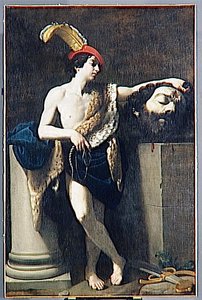 DAVID VAINQUEUR DE GOLIATH卢浮宫
21
 Assumption1600
22
 David with the head of Goliath1606
23
 Lucretia1626
24
 David with the Head of Goliath1605 · 卢浮宫
25
 The Glory of St Dominic1613 · 圣多米尼科大教堂 (Bologna)
26
 Martyrdom of Saint Catherine of Alexandria1607
27
 The Madonna Sewing1611 · 奎里纳尔宫
28
 Assumption of the Virgin1590 · 施泰德美术馆
29
 Atalanta and Hippomenes1612 · 普拉多博物馆
30
 The Sleeping Christ Child1700 · 巴伐利亚州绘画收藏馆
31
 Apollo Flays Marsyas1608 · 巴伐利亚州绘画收藏馆
32
 Venus and Cupid1626 · 托莱多艺术博物馆
33
 Saint Ursula1642 · Saltram House
34
 Saint Jerome1634 · 维也纳艺术史博物馆
35
 Aurora1614
36
 David1620 · 维也纳艺术史博物馆
37
 Maria Magdalena1637 · 维也纳艺术史博物馆
38
 Massacre of the Innocents in Bethlehem1608 · 巴伐利亚州绘画收藏馆
39
 Christ at the Column1604 · 施泰德美术馆
40
 Self-portrait1635 · 乌菲兹美术馆
41
 Saint John1621
42
 Saint Matthew1621
43
 Lucretia Killing Herself1601 · 普拉多博物馆
44
 Head of Christ Crowned with Thorns1620 · 底特律艺术学院
45
 Drinking Bacchus1623 · Gemäldegalerie
46
 Portrait of a Woman1638 · 伯明翰博物馆与美术馆
47
 The Coronation of the Virgin1607 · 国家美术馆
48
 Bust of a Woman Wearing a Turban1640 · 明尼阿波利斯艺术学院
49
 The death of Lucretia1638 · Galleria Sabauda
50
 Saint Jerome1608 · 巴伐利亚州绘画收藏馆
51
 Saint Jerome1608 · 巴伐利亚州绘画收藏馆
52
 Christ embracing Saint John the Baptist1600 · 国家美术馆
53
 The Union of Drawing and Color1620 · 施泰德美术馆
54
 Saint Jerome1636 · 德累斯顿国家艺术收藏馆
55
 The Madonna1616 · 斯泰恩斯博物馆艺术馆
56
 The Rape of Helen1631
57
 Madonna with St. Lucia and St. Mary Magdalene
58
 Mary with Child1608 · 巴伐利亚州绘画收藏馆
59
 Hercules as a Child1608 · 巴伐利亚州绘画收藏馆
60
 The Penitent Saint Peter1608 · 巴伐利亚州绘画收藏馆
61
 Flight into Egypt1608 · 巴伐利亚州绘画收藏馆
62
 Bacchus as Child1608 · 巴伐利亚州绘画收藏馆
63
 Sleeping Christ Child (oval)1608 · 巴伐利亚州绘画收藏馆
64
 Sorrowful Madonna1608 · 巴伐利亚州绘画收藏馆
65
 Child with Goldfinch1608 · 巴伐利亚州绘画收藏馆
66
 Saint Magdalene1608 · 巴伐利亚州绘画收藏馆
67
 Saint Margaret1606 · Westfälisches Landesmuseum
68
 The Separation of Night from Day1598 · Kingston Lacy
69
 Christ appearing to the Virgin1608 · Fitzwilliam Museum
70
 Madonna and Child with St. John the Baptist1606
71
 Medallions Depicting the Life and Passion of Jesus1597
72
 St. Margarete1600
73
 Death of Cleopatra1598
74
 St. Sebastian1615 · Rhode Island School of Design Museum of Art
75
 Madonna in Estasi1610
76
 The Penitent Mary Magdalene1616 · 斯泰恩斯博物馆艺术馆
77
 Troen. Allegorisk kvindefigur1616 · 斯泰恩斯博物馆艺术馆
78
 Portrait of Pope Gregory XV1622 · Corsham Court
79
 The hermits Paul and Antonius in the desert1620 · 柏林国家美术馆
80
 Crucifixion1619
81
 Jesus Christ Crucified between St. Catherine of Alexandria and St. Julius,1622
82
 Mary and angels1611
83
 Sibylle1636
84
 Ninus Delivers His Crown to Semiramis1625 · 德累斯顿国家艺术收藏馆
85
 Madonna and Child with angels1631 · 康德博物馆
86
 Lucretia1625 · Rhode Island School of Design Museum of Art
87
 The Penitent Magdalene1635 · 沃尔特斯艺术博物馆
88
 Dido and Aeneas1630
89
 The Coronation of the Virgin1626
90
 Self-portrait1635
91
 Portrait of Cardinal Bernardino Spada1631
92
 Crowned love and profane Love1623
93
 Adoration of the Magi1642 · 克利夫兰艺术博物馆
94
 Ecce Homo1639 · Fitzwilliam Museum
95
 Blessed Soul1640 · 卡皮托利尼博物馆
96
 The infant Jesus and St. John1640 · 卡皮托利尼博物馆
97
 Saint John the Baptist in the Desert1638 · 皇家收藏馆
98
 The Mourning Virgin1608 · 沃尔特斯艺术博物馆
99
 Judith1620 · 伯明翰艺术博物馆
100
 Mary Magdalene Between Two Angels1600 · Dayton Art Institute
这些原作中反复出现的四个主题,各有一个最杰出的范例。
收藏了本页中大部分画作的 8 家博物馆。
| 博物馆 | 城市 | 圭多·雷尼 的作品 | 此列表中的画作 |
|---|---|---|---|
 巴伐利亚州绘画收藏馆 |
慕尼黑 | 24 | Judith Beheads Holofernes, David, The Sleeping Christ Child |
 维也纳艺术史博物馆 |
维也纳 | 9 | St Jerome, Saint Jerome, David |
 施泰德美术馆 |
法兰克福 | 4 | Ecce Homo, Assumption of the Virgin, Christ at the Column |
 卢浮宫 |
巴黎 | 19 | 何人,我儿, DAVID VAINQUEUR DE GOLIATH, David with the Head of Goliath |
 普拉多博物馆 |
马德里 | 17 | Saint Paul, Atalanta and Hippomenes, Lucretia Killing Herself |
 国家美术馆 |
伦敦 | 8 | Saint Jerome, The Coronation of the Virgin, Christ embracing Saint John the Baptist |
 斯泰恩斯博物馆艺术馆 |
哥本哈根 | 6 | The Madonna, The Penitent Mary Magdalene, Troen. Allegorisk kvindefigur |
 卡皮托利尼博物馆 |
罗马 | 8 | Blessed Soul, The infant Jesus and St. John |
选择一个年代,探索定义该时代的原创杰作。

The Virgin Mary rises through a heavy architecture of clouds, her body caught in a slow, upward drift. She is framed by a pyramidal composition that directs the eye toward a singular, golden light at the zenith of the canvas. Around her, the air is thick with the presence of cherubs and putti, their small, soft forms supporting her movement or gazing upward in adoration. The palette relies on the…
The composition is defined by a violent, diagonal movement that pulls the viewer into the immediate struggle between Judith and Holofernes. Light emerges from the upper left, casting deep shadows across the scene and highlighting the pale skin of the protagonists against an indistinct, dark background. This chiaroscuro effect emphasizes the physical strain in the figures, particularly the musculature of the bodies caught in the act of decapitation. The brushstrokes…
A single beam of light strikes from the upper left, carving an elderly man out of the heavy shadows. This is Saint Jerome, caught in a moment of intense religious penitence. His weathered face and long, flowing white beard emerge from the dark, illuminated by a directional glow that highlights the muscular tension in his shoulder. A deep, crimson-red cloak wraps around his torso, providing a sharp contrast to the…

To stand before Guido Reni’s depiction of The Circumcision of the Child Jesus is to be enveloped in a moment suspended between sacred ritual and profound human emotion. Painted in 1640, this monumental oil on canvas transcends mere religious narrative; it is a vibrant testament to the height of the Baroque period. Reni captures not just an event, but an atmosphere—a charged confluence of devotion, solemnity, and divine promise. The…
屠杀无辜者 (1611),博洛尼亚国立美术馆, 博洛尼亚。紧随其后的是 何人,我儿 (1639) 和 St Filippo Neri in Ecstasy (1614)。
36岁:屠杀无辜者创作于1611年,圭多·雷尼出生于1575年。
屠杀无辜者, 何人,我儿, St Filippo Neri in Ecstasy, Saint Roch, Assumption, Saint Jerome, Judith Beheads Holofernes, David, St Jerome 及 Ecce Homo。上方排名显示了每件作品的创作年份及馆藏机构。
我们的目录收录了 357 件 圭多·雷尼 的作品,创作年代从 1590 年至 1642 年。
多见于 巴伐利亚州绘画收藏馆 (慕尼黑), 维也纳艺术史博物馆 (维也纳) 及 施泰德美术馆 (法兰克福)。上方的博物馆列表列出了所有相关机构。
在 1600s 期间:本页 100 件作品中有 32 件创作于该时期,其中包含 Judith Beheads Holofernes 件作品。
在本页面中,最早的作品创作于 Assumption of the Virgin (1590),最晚的创作于 Saint Ursula (1642)。
Woman (38), Man (32) 及 Drapery (28),共计 100 件作品。
Oil On Canvas,共计 70 件(本页共有 100 件作品)。
根据本页面的原作,巴洛克
Judith Beheads Holofernes, David 及 The Sleeping Christ Child:巴伐利亚州绘画收藏馆, 慕尼黑收藏了本页中 16 件作品。
在1575年,博洛尼亚这座城市迎来了圭多·雷尼(Le Guide)的降生。他出生在一个旋律与节奏如同空气般自然流淌的家庭,是致力于音乐事业的达尼埃莱·雷尼与吉内夫拉·波齐唯一的孩子。这种音乐血脉甚至可以追溯到他的祖辈,这意味着他的童年是在和谐的传统氛围中浸润而成的。人们可以从中窥见,这种早期对声音之结构美感的沉浸,是如何在日后转化为他笔触中那份超凡脱俗的优雅与韵律。
年仅九岁时,这个男孩的命运轨迹便转向了视觉艺术。他进入了佛兰德大师丹尼斯·卡尔瓦特的画室,这位大师将严谨的艺术技巧带到了意大利的土地上。在卡尔瓦特的悉心指导下,这位年轻的学徒开始掌握形体与光影交织的复杂奥秘。随着他步入卡拉奇学院,这段坚实的艺术根基显得尤为关键。在那里,他与阿尔巴尼、多梅尼科等同样充满抱负的艺术家并肩学习,在自然主义的写实与学院派所推崇的理想美之间,寻找着艺术表达的微妙平衡。
在完成早期的艺术启蒙后,艺术家的足迹逐渐离开了故乡博洛尼亚,向着意大利艺术的核心地带进发。1601年,他移居罗马,这座永恒之城在随后的十五年间始终占据着他思想的核心。在这段漫长的旅居岁月里,他深深沉醉于拉斐尔那优雅的构图,并被古典雕塑中那种静谧而庄严的力量所吸引。然而,他并未切断与家乡的纽带,而是频繁地往返于博洛尼亚,在那个孕育了他天赋的城市中始终保持着艺术存在感。
尽管罗马的魅力令人难以抗拒,但艺术生涯的潮汐最终还是将他推回了起点。大约在1614年,他重返博洛尼亚,此时正值当地画派发生重大转型的关键时期。随着安尼巴莱·卡拉奇的逝去,这位艺术家顺势走上了领导地位,成为了博洛尼亚画派的领军人物。他在这座城市的深耕,为博洛尼亚艺术传统在未来数十年的发展方向奠定了基调。
他的足迹并未止步于这两座城市,随着名声的远播,他也来到了那不勒斯。通过在博洛尼亚、罗马与那不勒斯之间的辗转游历,他确立了自己作为一位具有广泛影响力的画家的地位。他的作品随之跨越了这些地域的界限,在各地的宫廷与教堂中备受推崇,留下了无尽的艺术回响。
他的笔触带着一种独特的优雅,试图将古典主义的精准与巴洛克时期那突如其来、汹涌澎湃的情感完美融合。这种折衷主义的古典主义风格使他能够捕捉到一种理想化的美感,即便是在动态的瞬间,画中人物也仿佛拥有一种宁静而从容的气度。他追求一种既自然又高雅的形式和谐,常常赋予其创作的主题一种优雅、甚至近乎轻盈的质感。这种对理想之美的追求并非一成不变的;随着岁月的流逝和艺术视野的成熟,他的创作手法也随之发生了演变。
在17世纪20年代,他的笔触变得愈发细腻精妙,偏好使用明亮的色调,为画面构图注入了一种清澈的质感。他能以极其细致的笔触描绘出衣褶的纹理与肌肤的柔滑,引导观者的视线聚焦于人体形态的优雅之美。然而,到了1630年代中期,他的艺术风格经历了一场显著的蜕变。他逐渐远离了早期的明快色彩,转而拥抱更加沉稳、内敛的色调。他的构图也变得更加简约与克制,将青年时期那种奔放的生命力,转化为了一种更为含蓄、静谧的情感表达。
圭多·雷尼(Le Guide)的画笔以一种超凡脱俗的优雅,在多元的艺术领域中游走,无论是庄严的宗教场景、瑰丽的神话叙事,还是深邃的寓言表现,都能在其中找到他独特的表达。在他艺术生涯的早期,他曾试图捕捉人类挣扎的沉重感,这在约1605年创作的《大卫与歌利亚的首级》中体现得淋漓尽致。这件作品展现了他对戏剧性张力的初步掌控,而这种张力也成为了他后期艺术风格的基石。随着名声日盛,他的目光开始转向苍穹与远古神话,逐渐从青年时期那种厚重的阴影中蜕变,走向一种更加明亮、清澈的艺术境界。
他处理光影的能力,在为法尔内塞宫创作的宏伟壁画中得到了最完美的体现。在1613年至1614年间,他创作了《黎明》(Aurora),在这幅杰作中,黎明女神引领着阿波罗的金色战车穿梭于天际。这一神圣的场景展示了他如何将光线的流动转化为一种神圣秩序的律动。这类大规模的委约创作赋予了他驾驭宏大空间的能力,将冰冷的墙壁化作通往神界之窗,让观者在其中见证时间的流逝与神祇的优雅。
即便是在更为细腻私密的题材中,他的笔触依然独树一帜。在马德里的普拉多博物馆中,人们可以欣赏到《持玫瑰的少女》,这件作品凸显了他聚焦于单一、静谧主题的非凡能力。这种对优雅的追求同样存在于他的神话叙事中,例如现藏于那不勒斯卡波迪蒙特博物馆的《阿塔兰特与希波墨涅斯》中的人物形象。无论是描绘圣徒的狂热,还是神话英雄的从容,他始终在寻求一种平衡——一种将肉体形态与内在、静谧的尊严完美融合的和谐之美。
圭多·雷尼的影响力早已超越了他个人工作室的围墙,深深渗入意大利高巴洛克风格的肌理之中。他拥有一种罕见的天赋,能够塑造出属于那个时代的视觉语言,并留下了一道让后世画家竞相效仿的深刻印记。他的才华并非孤芳自赏的个人成就,而是通过一个规模宏大且极具生产力的艺术工坊得以传承与发扬;在其鼎盛时期,这个工坊曾汇聚了多达八十名学生。通过这一艺术殿堂,他的创作方法以及对优雅境界的追求,被广泛传播给那些即将定义下一个绘画时代的艺术家们。
许多艺术家都在他伟大的光芒下找到了属于自己的艺术之路。无论是被称为“小圭乔内”的乔瓦尼·弗朗切斯科·巴尔比耶里 Guercino,还是佛兰德斯画家 Anthony van Dyck,都曾从他精湛的技巧与古典理想的源泉中汲取养分。他在艺术版图中的存在是如此深远,以至于他的风格成为了那些试图在情感张力与秩序感之间寻求平衡的艺术家的典范。即便是在罗马与博洛尼亚这两大艺术中心之间辗转时,他的名望也愈发显赫,确保了他对人体形态的独特处理方式,能够被无数后继者深入研习。
1642年,当他在博洛尼亚溘然长逝时,留下了一系列至今仍令人肃然起敬的传世之作。他的一生是卓越成就的写照,凭借着驾驭时代最挑剔赞助人的非凡能力而著称。他所留下的遗产,不仅仅是无数幅完成的画布,更是一种通过理想化的美感与优雅视角来审视世界的系统性方式。


