Early Life and Artistic Foundations
Donald Judd, born in Excelsior Springs, Missouri, in 1928, embarked on a path that would fundamentally reshape the landscape of modern sculpture. His childhood was marked by frequent relocation due to his father’s work with Western Union Telegraph Company, an experience that perhaps fostered a sense of detachment and observation – qualities that would later permeate his artistic vision. Even from a young age, Judd demonstrated a keen interest in art, diligently copying works by Old Masters from books and portfolios. This early practice wasn't merely imitation; it was a foundational study of form, composition, and the history of visual representation. His formal education began with studies in philosophy at the College of William and Mary, then continued at Columbia University School of General Studies, where he earned a bachelor’s degree while simultaneously immersing himself in
art history under influential scholars like Rudolf Wittkower and Meyer Schapiro. These philosophical underpinnings would prove crucial to his later theoretical writings and rejection of traditional artistic conventions. A period of service in the United States Army as an engineer in Korea further shaped his perspective, instilling an appreciation for architecture, practical construction methods, and a certain austerity that resonated with his developing aesthetic sensibilities.
From Painting to ‘Specific Objects’
Judd's artistic journey began in the late 1940s with painting, initially exploring expressionist styles. However, he quickly grew restless with the limitations of traditional media and representation. This dissatisfaction led him to experiment with
woodcut prints in the mid-1950s, gradually moving away from figurative imagery towards abstraction. But it was in the early 1960s that a pivotal shift occurred – Judd abandoned painting altogether, turning his attention to three-dimensional work. These weren’t sculptures in the conventional sense; he termed them “specific objects.” This designation was deliberate, rejecting the historical baggage and illusionistic tendencies associated with sculpture. In 1964, he published his seminal essay, “Specific Objects,” a manifesto that articulated his rejection of
traditional art values like illusionism, compositional hierarchy, and the artist’s expressive hand. He argued for an art focused on materiality, industrial fabrication, and the object's inherent presence in space. This essay became foundational to understanding
Minimalism, establishing Judd as its leading theoretician and most important international exponent. His key forms – stacks, boxes, and progressions – emerged from this philosophy, utilizing industrial materials like metals, plywood, concrete, and plexiglas with a precision that emphasized their manufactured nature rather than any perceived artistic gesture.
Materiality, Space, and Permanent Installations
Judd’s work is defined by its uncompromising materiality and spatial awareness. The “floor boxes” he pioneered from the mid-1960s onward are prime examples – simple metal and plexiglas structures placed directly on the floor, establishing a direct relationship with the surrounding space. Similarly, his wall-mounted sculptures, often featuring curved progressions, challenged traditional notions of relief and pictorial depth. Perhaps most iconic are his “stacks,” arrangements of identical units extending from floor to ceiling, creating a rhythmic verticality that emphasizes volume and repetition. Crucially, Judd rejected the term "sculpture" for these works, insisting they were manufactured objects rather than sculpted forms – a distinction that underscored his commitment to industrial processes and objective presentation. This philosophy extended beyond the creation of individual artworks; Judd advocated for permanent installations, believing temporary exhibitions often diminished the integrity of the work. He exemplified this belief by purchasing 101 Spring Street in
New York City in 1968, transforming it into a living and working space where he gradually installed his own creations alongside those of other artists. His most ambitious realization of this vision took root in Marfa, Texas, starting in 1973, where he established a permanent presence, creating large-scale installations and purchasing ranchland that would eventually house the Chinati Foundation – dedicated to showcasing his work and that of contemporaries like Dan Flavin and
John Chamberlain.
Legacy and Enduring Influence
Donald Judd’s impact on art, architecture, and design is profound and enduring. He challenged fundamental assumptions about artistic creation, authorship, and the very definition of art itself. His emphasis on
geometric forms, industrial materials, and functional design principles resonated far beyond the confines of the art world, influencing a generation of architects and designers. The “Specific Objects” essay continues to be studied and debated by scholars, shaping discussions about materiality, space, and the nature of artistic experience. Judd’s commitment to permanent installations has also left an indelible mark on
contemporary art practices, encouraging artists to consider the site-specificity of their work and its long-term relationship with its environment. He died in
New York City in 1994, leaving behind a body of work that remains both intellectually rigorous and visually compelling – a testament to his unwavering commitment to clarity, precision, and the power of the object itself.
His legacy is not merely one of aesthetic innovation but also of philosophical inquiry, prompting us to reconsider our relationship with art and the spaces we inhabit.


 Untitled (12-R)1982
12
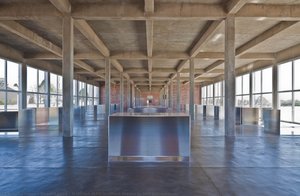 Untitled (100 Untitled Works in Mill Aluminium)1986
13
 Untitled (Cadmium Yellow Light)1990
14
 Untitled (S. - 199)1990
15
 Untitled (S.- 167-176)1988
16
 Untitled (Schellmann -187-192)1990
17
 Untitled (-207-210)1991
18
 Untitled (10)1992
19
 Artist's Against Torture1993
20
 Untitled1993
21
 Untitled (11)
 加拿大国家美术馆


