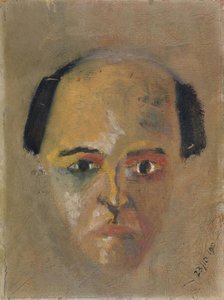
阿诺德·勋伯格 肖像

65 幅最著名的 阿诺德·勋伯格 作品,每一件都独一无二

更新于 October 2026 · 基于我们的流行度评分排名(每件作品的搜索量、访问量及订单量) · 65 件 阿诺德·勋伯格 作品收录于我们的目录中

简而言之

Pierrot lunaire, op. 21 - Night (1912) 是 阿诺德·勋伯格 最受瞩目的画作;原作收藏于 维也纳 的 Arnold Schönberg Center。 随后,目光会移向 Arnold Schönberg’s calendar (1935) 和 Suite, op. 29 - Bi-directional twelve-tone row chart (1924)。 在 阿诺德·勋伯格 的 65 件作品中,这 65 件最为闻名;每一件都是独一无二的原作,并附有创作年份、馆藏机构及其经久不衰的原因。

1874 – 1951, 維也納 Expressionism 藏品最多:Arnold Schönberg Center

画廊视角下的 阿诺德·勋伯格 十大名作

1
Pierrot lunaire, op. 21 - Night (1912) 由 阿诺德·勋伯格

Pierrot lunaire, op. 21 - Night

1912 · Acrylic On Canvas · Arnold Schönberg Center, 维也纳

Arnold Schönberg’s *Pierrot lunaire*, op. 21, stands as a monumental achievement in the evolution of modern music, a work born from the anxieties and aesthetic explorations of early 20th-century Europe. This particular rendition, “Night,” meticulously captured in this evocative photographic reproduction, offers a profound glimpse into Schönberg’s expressionistic vision – a world of fractured emotion, haunting beauty, and unsettling psychological depth. Composed in Berlin in 1912, the piece was commissioned…

2
Arnold Schönberg’s calendar (1935) 由 阿诺德·勋伯格

Arnold Schönberg’s calendar

1935 · Acrylic On Canvas · Arnold Schönberg Center, 维也纳

A Snapshot of Hollywood Harmony: Arnold Schönberg’s Calendar The image captures a moment frozen in time – a candid photograph depicting Arnold Schönberg alongside his wife, Gertrud Kolisch Schoenberg, seated in the backseat of a vintage automobile. Taken in 1935 during their relocation to Los Angeles, California, this seemingly simple tableau speaks volumes about the artist’s life and creative spirit amidst the burgeoning American landscape. The woman, dressed in a…

3
Suite, op. 29 - Bi-directional twelve-tone row chart (1924) 由 阿诺德·勋伯格

Suite, op. 29 - Bi-directional twelve-tone row chart

1924 · Acrylic On Canvas · Arnold Schönberg Center, 维也纳

Arnold Schönberg's "Suite, op. 29 – Bi-directional twelve-tone row chart" isn’t merely a musical score; it’s a visual manifestation of radical innovation, a testament to the composer’s relentless pursuit of sonic and artistic boundaries. Created in 1924, during a period of intense experimentation within his own compositional methods—specifically, his “Method of composing with twelve tones which are related only with one another”—this work represents a pivotal moment in 20th-century music…

4
Peace on Earth, op. 13 (1907) 由 阿诺德·勋伯格

Peace on Earth, op. 13

1907 · Black and White Photography · Arnold Schönberg Center, 维也纳

To gaze upon this depiction of Arnold Schoenberg's "Peace on Earth, op. 13" is not merely to look at an aged sheet of music; it is to encounter a preserved echo of profound human yearning. This composition, born from the charged atmosphere of early twentieth-century Europe, transcends its musical notation to become a tangible artifact of hope. The visual evidence—the sepia tones, the delicate creases, the faint patina of time…

5
Phantasy for Violin with Piano Accompaniment, op. 47 (1949) 由 阿诺德·勋伯格

Phantasy for Violin with Piano Accompaniment, op. 47

1949 · Acrylic On Canvas · Arnold Schönberg Center, 维也纳

This meticulously crafted hand-painted reproduction captures a pivotal moment in the oeuvre of Arnold Schoenberg, a composer who irrevocably altered the landscape of 20th-century music. The piece, “Phantasy for Violin with Piano Accompaniment,” op. 47, born from a commission in 1949, represents more than just a musical composition; it’s a tangible link to a brilliant mind grappling with radical innovation and profound personal transformation. The photograph itself – a stark…

6
电影配乐:十二音阶图 (1929) 由 阿诺德·勋伯格

电影配乐:十二音阶图

1929 · 布面丙烯 · Arnold Schönberg Center, 维也纳

作品概述:伴隨電影場景,作品第34號——十二音階圖譜 這幅黑白照片記錄了阿爾諾德·斯庫奧恩伯格創作的音樂葉片「伴隨電影場景」,作品名稱於頁面頂部顯示。音樂語言可能為德語或其他歐洲語言,葉片上佈滿了音樂線條,其中數字似乎代表音樂音符。此外,葉片右上角貼著一張小紙條,或許包含更多關於音樂的資訊或指示。這幅音樂葉片本身充滿了複雜的藝術意涵和歷史背景,值得我們深入探討。 斯庫奧恩伯格於1929年受邀為德國馬格德堡出版社「海因萊希謝芬爾」創作電影配樂。這位作曲家——儘管他之後在好萊塢經歷了經濟困難,從未同意讓導演或製作人決定藝術的方向,甚至放棄對預製電影的藝術獨立性——卻無視了潛在的指導方針,專注於關鍵詞「威脅危險、恐懼、災難」。這種做法實際上將作品歸類為音樂劇作,但沒有描述具體的場景或人物群體。此外,配樂中缺乏重複的樂章主題,這暗示著斯庫奧恩伯格似乎從未打算讓這三個樂章與組成他的音樂聯繫起來。因此電影本身仍然是虛構的。斯庫奧恩伯格的作品第34號並非從線性呈現十二音階主題開始,而是以一段簡短的引導段落作為開端。音樂葉片的各個部分或樂章(引言、十二音階主題、變奏曲形式、節奏奧斯塔諾圖、四個對比樂章、將 tetrachords 分類、高潮、回顧引言)僅僅通過明顯的連接元素部分關聯起來。斯庫奧恩伯格從而將電影配樂的頂峰建立在一個連續序列較小組件的對抗之上,這些組件時而互相衝突。音樂葉片上記錄了作品所基於的十二音階主題及其轉調等級(T = 主題/主題、基本音階、U = 反轉)。 藝術風格:這幅作品代表了現代主義音樂的巔峰,是斯庫奧恩伯格與韋爾納和貝爾之間的第二維也納學派的核心人物之間的合作成果。他們與視覺藝術家共同參與了《藍色畫家》雜誌,並以表達主義音樂著稱,吸引了廣泛關注和爭議。 創作技術:斯庫奧恩伯格採用了十二音階作曲法,這種方法徹底改變了二十世紀古典音樂的聲音語言。他將所有十二個音符組成一個完整的音階,並巧妙地運用了各種音樂技巧來表達情感和思想。 歷史背景:這幅作品誕生於歐洲藝術文化轉變的關鍵時期,反映了當時人們對音樂和視覺藝術的探索與挑戰。它不僅是斯庫奧恩伯格個人藝術生涯的重要里程碑,也代表了整個時代的藝術精神。 藝術家簡介:阿爾諾德·斯庫奧恩伯格(1874年9月13日出生於維也納)是一位奧地利裔美國作曲家、音樂理論家和作家。他被認為是二十世紀古典音樂發展史上最重要的人物之一,他的音樂作品以其對音樂形式的創新和對情感表達的深刻而著稱。 建議用途: 這幅藝術品適合用於裝飾現代藝術畫廊、私人住宅以及設計師工作室,它能夠為空間增添獨特的藝術氣息和文化魅力。無論是作為收藏品還是作為藝術創作的靈感來源,這幅作品都將帶給觀看者無窮的欣賞與思考體驗。

7
Blue Gaze (1910) 由 阿诺德·勋伯格

Blue Gaze

1910 · Oil On Board · Arnold Schönberg Center, 维也纳

“Blue Gaze,” painted in 1910 by the titan of musical innovation, Arnold Schoenberg, is more than just a portrait; it's a visceral manifestation of artistic struggle and a testament to the burgeoning power of abstraction. Created during a pivotal period in Schoenberg’s life – a time when he was simultaneously wrestling with the radical new techniques of atonality in music and exploring the uncharted territories of visual expression – this…

8
Transfer ticket for public transport in Berlin (1927) 由 阿诺德·勋伯格

Transfer ticket for public transport in Berlin

1927 · Acrylic On Canvas · Arnold Schönberg Center, 维也纳

This meticulously crafted hand-painted reproduction captures a pivotal moment in design history – the 1927 transfer ticket for the Berlin tram system, conceived by the visionary composer Arnold Schönberg. Far more than simply a means of payment, this circular artifact represents a radical shift towards efficiency and user experience, anticipating modern transit systems by nearly a century. Schönberg’s design wasn't born from artistic indulgence; it stemmed from a pragmatic desire…

9
The Musical Idea - W. A. Mozart K 465 (1934) 由 阿诺德·勋伯格

The Musical Idea - W. A. Mozart K 465

1934 · Giclée Print · Arnold Schönberg Center, 维也纳

W.A. Mozart’s K. 465, “The Musical Idea,” takes on an entirely new dimension through the lens of Arnold Schönberg's profound inquiry into musical representation. This isn’t merely a reproduction of a classical score; it’s a visual echo of Schönberg’s seminal work, "Der Musikalische Gedanke," a treatise that fundamentally shifted our understanding of composition and its relationship to logic, technique, and artistic expression. The photograph itself – a meticulously annotated music…

10
Piano Piece, op. 19/6 (1911) 由 阿诺德·勋伯格

Piano Piece, op. 19/6

1911 · Acrylic On Canvas · Arnold Schönberg Center, 维也纳

This meticulously crafted hand-painted reproduction captures Arnold Schönberg’s poignant “Piano Piece, op. 19/6,” a deceptively simple work born from a moment of profound grief and artistic experimentation. Created in 1911, shortly after the death of Gustav Mahler – a figure Schönberg deeply revered as both mentor and friend – the piece offers a rare glimpse into the composer’s emotional landscape during a period of intense creative upheaval. The image presented…

阿诺德·勋伯格 的名画,第 11 至 65 幅

11Excerpt from Arnold Schönberg’s own handwritten library catalogue: Works of Richard Strauss (1914) 由 阿诺德·勋伯格Excerpt from Arnold Schönberg’s own handwritten library catalogue: Works of Richard Strauss1914 · Arnold Schönberg Center 12Self-Portrait (1910) 由 阿诺德·勋伯格Self-Portrait1910 · Arnold Schönberg Center 13The Biblical Way (Act I, Scene 2), Stadium (1927) 由 阿诺德·勋伯格The Biblical Way (Act I, Scene 2), Stadium1927 · Arnold Schönberg Center 14The Lucky Hand (scene 1) (1910) 由 阿诺德·勋伯格The Lucky Hand (scene 1)1910 · Arnold Schönberg Center 15Gertrud Schönberg (1930) 由 阿诺德·勋伯格Gertrud Schönberg1930 · Arnold Schönberg Center 16Tears (1910) 由 阿诺德·勋伯格Tears1910 · Arnold Schönberg Center 17Garden Scene (1907) 由 阿诺德·勋伯格Garden Scene1907 · Arnold Schönberg Center 18Playing Cards for Whist/Bridge - Jack of Spades (1910) 由 阿诺德·勋伯格Playing Cards for Whist/Bridge - Jack of Spades1910 · Arnold Schönberg Center 19Formation scheme for the Gurrelieder (1918) 由 阿诺德·勋伯格Formation scheme for the Gurrelieder1918 · Arnold Schönberg Center 20The Lucky Hand (scene 2) (1910) 由 阿诺德·勋伯格The Lucky Hand (scene 2)1910 · Arnold Schönberg Center 21Red Gaze (1910) 由 阿诺德·勋伯格Red Gaze1910 · Arnold Schönberg Center 22Piano Concerto, op. 42 - Programmatic keywords (1942) 由 阿诺德·勋伯格Piano Concerto, op. 42 - Programmatic keywords1942 · Arnold Schönberg Center 23Playing Cards for Whist/Bridge - King of Hearts (1910) 由 阿诺德·勋伯格Playing Cards for Whist/Bridge - King of Hearts1910 · Arnold Schönberg Center 24Structural Functions of Harmony - Chart of the Regions (1948) 由 阿诺德·勋伯格Structural Functions of Harmony - Chart of the Regions1948 · Arnold Schönberg Center 25Interior and Portrait of a Woman (1910) 由 阿诺德·勋伯格Interior and Portrait of a Woman1910 · Arnold Schönberg Center 26Blue Self-Portrait (1910) 由 阿诺德·勋伯格Blue Self-Portrait1910 · Arnold Schönberg Center 27Self-Portrait (1918) 由 阿诺德·勋伯格Self-Portrait1918 · Arnold Schönberg Center 28Mathilde Schönberg (1909) 由 阿诺德·勋伯格Mathilde Schönberg1909 · Arnold Schönberg Center 29Expectation (Scene 3) (1911) 由 阿诺德·勋伯格Expectation (Scene 3)1911 · Arnold Schönberg Center 30Handwriting samples (1923) 由 阿诺德·勋伯格Handwriting samples1923 · Arnold Schönberg Center 31Suite for Piano, op. 25 - Prelude (1921) 由 阿诺德·勋伯格Suite for Piano, op. 25 - Prelude1921 · Arnold Schönberg Center 32Landscape (1910) 由 阿诺德·勋伯格Landscape1910 · Arnold Schönberg Center 33Erwartung, op. 17 (1909) 由 阿诺德·勋伯格Erwartung, op. 171909 · Arnold Schönberg Center 34Exlibris (1910) 由 阿诺德·勋伯格Exlibris1910 · Arnold Schönberg Center 35Alliance (Hands) (1910) 由 阿诺德·勋伯格Alliance (Hands)1910 · Arnold Schönberg Center 36Portrait of a Woman (1910) 由 阿诺德·勋伯格Portrait of a Woman1910 · Arnold Schönberg Center 37聯盟象棋 (1925) 由 阿诺德·勋伯格聯盟象棋1925 · Arnold Schönberg Center 38Moses and Aron (1930) 由 阿诺德·勋伯格Moses and Aron1930 · Arnold Schönberg Center 39Playing Cards for Whist/Bridge - Queen of clubs (1909) 由 阿诺德·勋伯格Playing Cards for Whist/Bridge - Queen of clubs1909 · Arnold Schönberg Center 40Playing card design (1910) 由 阿诺德·勋伯格Playing card design1910 · Arnold Schönberg Center 41Brief to Wilhelm von Wymetal (1907) 由 阿诺德·勋伯格Brief to Wilhelm von Wymetal1907 · Arnold Schönberg Center 42Alexander Zemlinsky (1910) 由 阿诺德·勋伯格Alexander Zemlinsky1910 · Arnold Schönberg Center 43Green Self-Portrait (1910) 由 阿诺德·勋伯格Green Self-Portrait1910 · Arnold Schönberg Center 44Memory of Oskar Kokoschka (1910) 由 阿诺德·勋伯格Memory of Oskar Kokoschka1910 · Arnold Schönberg Center 45Mathilde Schönberg cooking (1912) 由 阿诺德·勋伯格Mathilde Schönberg cooking1912 · Arnold Schönberg Center 46Model of a set of dentures (1926) 由 阿诺德·勋伯格Model of a set of dentures1926 · Arnold Schönberg Center 47Coalition Chess - Plane (1925) 由 阿诺德·勋伯格Coalition Chess - Plane1925 · Arnold Schönberg Center 48Gaze (Karl Kraus – The Great Wall of China) (1910) 由 阿诺德·勋伯格Gaze (Karl Kraus – The Great Wall of China)1910 · Arnold Schönberg Center 49Furniture design (1931) 由 阿诺德·勋伯格Furniture design1931 · Arnold Schönberg Center 50Self-Portrait (1935) 由 阿诺德·勋伯格Self-Portrait1935 · Arnold Schönberg Center 51Self-Portrait (1922) 由 阿诺德·勋伯格Self-Portrait1922 · Arnold Schönberg Center 52The Musical Idea - Chart of the Regions (1934) 由 阿诺德·勋伯格The Musical Idea - Chart of the Regions1934 · Arnold Schönberg Center 53Schematic representation of European Jewry (1934) 由 阿诺德·勋伯格Schematic representation of European Jewry1934 · Arnold Schönberg Center 54Model of a chair / library ladder (1945) 由 阿诺德·勋伯格Model of a chair / library ladder1945 · Arnold Schönberg Center 55Five Pieces for Orchestra, op. 16/5 – First written copy (1909) 由 阿诺德·勋伯格Five Pieces for Orchestra, op. 16/5 – First written copy1909 · Arnold Schönberg Center 56Staffliner for drawing staves (1950) 由 阿诺德·勋伯格Staffliner for drawing staves1950 · Arnold Schönberg Center 57馬爾斯·扎姆肖像畫 (1935) 由 阿诺德·勋伯格馬爾斯·扎姆肖像畫1935 · Arnold Schönberg Center 58Critic I (1910) 由 阿诺德·勋伯格Critic I1910 · Arnold Schönberg Center 59Emil Hertzka (1910) 由 阿诺德·勋伯格Emil Hertzka1910 · Arnold Schönberg Center 60Speak not always of the leaves, op. 15/14 (說些話吧,作品第十五號) (1909) 由 阿诺德·勋伯格Speak not always of the leaves, op. 15/14 (說些話吧,作品第十五號)1909 · Arnold Schönberg Center 61Music Typewriter (1909) 由 阿诺德·勋伯格Music Typewriter1909 · Arnold Schönberg Center 62Piano Piece, op. 11/2 (1909) 由 阿诺德·勋伯格Piano Piece, op. 11/21909 · Arnold Schönberg Center 63Walking Self-Portrait (1911) 由 阿诺德·勋伯格Walking Self-Portrait1911 · Arnold Schönberg Center 64Chess Set 由 阿诺德·勋伯格Chess SetArnold Schönberg Center 65Tape Dispenser (1945) 由 阿诺德·勋伯格Tape Dispenser1945 · Arnold Schönberg Center

阿诺德·勋伯格 的传世名作,按时期分类

令 阿诺德·勋伯格 驻足的创作主题

这些原作中反复出现的四个主题,各有一个最杰出的范例。

收藏有 阿诺德·勋伯格 原作的博物馆

收藏了本页中大部分画作的 1 家博物馆。

博物馆 城市 阿诺德·勋伯格 的作品 此列表中的画作
Arnold Schönberg Center, 维也纳Arnold Schönberg Center 维也纳 65 Pierrot lunaire, op. 21 - Night, Arnold Schönberg’s calendar, Suite, op. 29 - Bi-directional twelve-tone row chart

跨越数十载的 阿诺德·勋伯格:每一件皆为独一无二的原作

各年代作品数量

选择一个年代,探索定义该时代的原创杰作。

阿诺德·勋伯格 的画作:画廊常见问题

阿诺德·勋伯格 最著名的代表作是什么?揭晓答案

Pierrot lunaire, op. 21 - Night (1912),Arnold Schönberg Center, 维也纳。紧随其后的是 Arnold Schönberg’s calendar (1935) 和 Suite, op. 29 - Bi-directional twelve-tone row chart (1924)。

阿诺德·勋伯格 是在多少岁时创作了 Pierrot lunaire, op. 21 - Night?揭晓答案

38岁:Pierrot lunaire, op. 21 - Night创作于1912年,阿诺德·勋伯格出生于1874年。

阿诺德·勋伯格 最著名的十幅画作是哪些?揭晓答案

Pierrot lunaire, op. 21 - Night, Arnold Schönberg’s calendar, Suite, op. 29 - Bi-directional twelve-tone row chart, Peace on Earth, op. 13, Phantasy for Violin with Piano Accompaniment, op. 47, 电影配乐:十二音阶图, Blue Gaze, Transfer ticket for public transport in Berlin, The Musical Idea - W. A. Mozart K 465 及 Piano Piece, op. 19/6。上方排名显示了每件作品的创作年份及馆藏机构。

已知 阿诺德·勋伯格 有多少件作品?揭晓答案

我们的目录收录了 65 件 阿诺德·勋伯格 的作品,创作年代从 1907 年至 1950 年。

在哪里可以欣赏到最著名的 阿诺德·勋伯格 原作?揭晓答案

多见于 Arnold Schönberg Center (维也纳)。上方的博物馆列表列出了所有相关机构。

阿诺德·勋伯格 的代表作创作于哪个时期?揭晓答案

在 1910s 期间:本页 65 件作品中有 29 件创作于该时期,其中包含 Pierrot lunaire, op. 21 - Night 件作品。

哪幅 阿诺德·勋伯格 的名作创作年代最早,哪幅最晚?揭晓答案

在本页面中,最早的作品创作于 Peace on Earth, op. 13 (1907),最晚的创作于 Staffliner for drawing staves (1950)。

阿诺德·勋伯格 偏好哪些题材?揭晓答案

Atonality (11), Arnold schoenberg (10) 及 Schoenberg (8),共计 65 件作品。

阿诺德·勋伯格 最常使用哪些材料进行创作?揭晓答案

Acrylic On Canvas,共计 18 件(本页共有 65 件作品)。

阿诺德·勋伯格 的作品属于哪种艺术流派?揭晓答案

根据本页面的原作,Expressionism 及 Expressionist modernism

在 Arnold Schönberg Center 可以看到哪些 阿诺德·勋伯格 的原作?揭晓答案

Pierrot lunaire, op. 21 - Night, Arnold Schönberg’s calendar 及 Suite, op. 29 - Bi-directional twelve-tone row chart:Arnold Schönberg Center, 维也纳收藏了本页中 65 件作品。

阿诺德·勋伯格:艺术家肖像

早年生活与音乐启蒙

阿诺德·勋伯格是一位奥地利裔美国作曲家,于1874年9月13日出生于奥地利维也纳。他的早年生活充满了平凡的色彩,父亲是一名鞋店店主。尽管出身并不显赫,但勋伯格对音乐那份与生俱来的热忱,促使他在这一领域进行了大量的自学,为日后的艺术变革奠定了基础。

音乐演进与代表作品

勋伯格早期的作品,例如 《情逝》(Verklärte Nacht, 1899),展现了勃拉姆斯与瓦格纳风格的融合。随着创作生涯的深入,他成为了第二维也纳乐派的核心人物,与 安东·韦伯恩 以及 阿尔班·贝尔格 并肩屹立。他的一系列杰作,包括 《第二弦乐四重奏》(1907–1908)、《期待》(Erwartung, 1909) 以及 《皮埃罗·路纳》(Pierrot Lunaire, 1912),都深刻体现了他对无调性音乐的创新探索。

教学、移民与晚年生活

1933年,随着纳粹势力的崛起,勋伯格因其音乐被贴上“堕落”的标签而被迫从普鲁士艺术学院辞职。随后,他移居美国并开始从事教学工作,任教于加州大学洛杉矶分校(1936–1944),如今该校仍有设施以他的名字命名。[https://OriginalUniqueArt.com/@/arnold-schoenberg](在 OriginalUniqueArt 进一步探索勋伯格的生平与作品)。

遗产与影响

当世界逐渐揭开大屠杀的残酷真相时,勋伯格在 《华沙幸存者》(1947) 中为受害者举行了音乐上的纪念。1951年,以色列音乐学院选举他为名誉校长。[https://OriginalUniqueArt.com/@@/a@d3bqc7-the-museum-destroyed-by-fire-(united-states)](在 OriginalUniqueArt 深入了解他的作品所带来的深远影响)。 关键要点:
  • 勋伯格的创新音乐是20世纪古典音乐中最具影响力且最具争议的作品之一。
  • 至少有三代作曲家延续并扩展了他那具有严谨形式感的创作原则。
  • 他的美学观与音乐史观点深刻影响了音乐学家西奥多·阿多诺和卡尔·达尔豪斯。
[https://OriginalUniqueArt.com/@@/a@d3cl2x--a-journey-through-art-history-with-OriginalUniqueArt-s-extensive-collection-](在 OriginalUniqueArt 探索跨越12至20世纪的宏大艺术收藏品)。