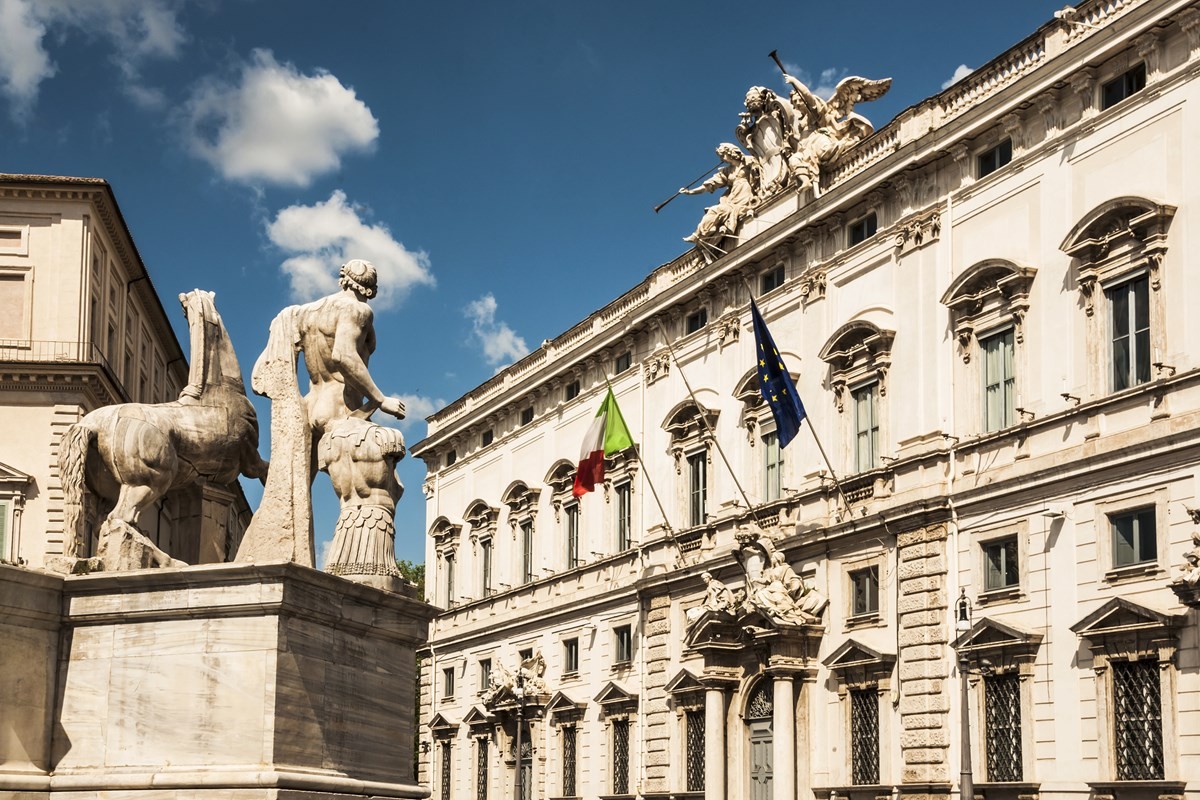
Palazzo Quirinale - A Palace Breathing with Italian History
The Palazzo Quirinale stands as a monumental testament to centuries of Italian artistic heritage—a building that embodies not only architectural grandeur but also the evolving narrative of the nation’s identity. Located on Monte Cavallo, Rome's highest hill, it dominates the cityscape and invites visitors into a journey through time, showcasing masterpieces spanning from the Renaissance to the Baroque eras and continuing into contemporary art. Its walls whisper tales of papal power, royal ambition, and republican resilience—a story meticulously preserved within its opulent interiors and expansive gardens.
### Origins and Early Construction
The Quirinal Hill has been inhabited since ancient Roman times, serving as a sacred site dedicated to deities like Flora and Quirinus. During the reign of Constantine the Great, the last complex of Roman baths was erected here, symbolizing Rome’s enduring legacy. Domenico Fontana spearheaded the initial construction in 1574 for Pope Gregory XIII, envisioning a summer retreat that would transcend mere practicality—a space designed to inspire contemplation and reflect the grandeur of papal authority. Fontana's masterful planning ensured harmonious proportions and incorporated classical elements, establishing a foundation for what would become an architectural marvel. Subsequent rulers continued to embellish the palace, adding layers of artistic expression that solidified its position as Rome’s premier royal residence.
### Architectural Grandeur: Renaissance Symmetry Meets Baroque Drama
Stepping into Palazzo Quirinale is akin to entering a living museum where architecture narrates a compelling story blending Renaissance symmetry with the dramatic flourishes of Baroque design. Vast halls unfold one after another, adorned with breathtaking frescoes and sculptures that chronicle Italy’s artistic evolution. Carlo Maderno and Gian Lorenzo Bernini—giants of the Baroque—transformed the palace into an emblem of papal magnificence, injecting dynamism and theatricality into its spaces. The Loggia delle Benedizioni, created by Bernini, exemplifies this stylistic fusion—a soaring colonnade bathed in sunlight that embodies spiritual aspiration and artistic innovation. The meticulous attention to detail—from gilded stuccoes to marble floors—reflects the wealth and prestige of the papal court and underscores the palace’s enduring architectural significance.
### Treasures Within: Art Collections and Exhibitions
The Palazzo Quirinale houses an extraordinary collection encompassing paintings, sculptures, decorative arts, and textiles spanning centuries of artistic achievement. Among its most celebrated treasures are masterpieces by Raphael, Michelangelo Buonarroti, Caravaggio, Titian, and Rembrandt—artists who shaped the course of European art history. The palace’s curators organize engaging exhibitions that illuminate these artworks' historical context and artistic innovations, inviting visitors to delve deeper into Italy’s cultural heritage. Furthermore, Palazzo Quirinale embraces contemporary art, fostering dialogue between past and present and demonstrating its commitment to preserving artistic excellence while embracing new creative voices.
### Gardens of Tranquility: A Panoramic Vista of Rome
Beyond the palace walls lies a sprawling garden—a verdant oasis offering respite from the bustling city below. Designed in the 16th century, these gardens embody Italian landscape aesthetics, featuring geometric flowerbeds, rare tree species, and enchanting pergolas. The Fontana dell'Organo—a remarkable fountain with a still-functioning mechanical organ—adds a touch of whimsical charm and symbolizes Rome’s artistic spirit. From various vantage points within the gardens, visitors can enjoy breathtaking panoramic views of iconic landmarks such as St. Peter’s Basilica and the Colosseum—a visual reminder of Rome’s enduring history and cultural grandeur. The changing of the guard ceremony performed by the Corazzieri—one of Italy's most prestigious armed escorts—further enhances the palace experience, embodying traditions rooted in Roman heritage.
### A Living Legacy: Palazzo Quirinale Today
Today, Palazzo Quirinale continues to serve as the official residence of the President of the Italian Republic—a symbol of continuity and stability amidst political change. Its walls resonate with echoes of papal grandeur, royal ambition, and republican resilience—a testament to Italy’s artistic heritage and its enduring fascination with architectural beauty. A visit to Palazzo Quirinale is an immersive experience—a journey through time that unveils the splendor of Italian art history and celebrates Rome's captivating legacy.