Renowned for her exquisite watercolour paintings of Venice, Clara Montalba achieved international acclaim with works like The Port of Amsterdam, inviting you to discover the luminous beauty of her maritime scenes.
Досліджуйте захопливі портрети Джун Мендоза, австралійської художниці, відомої своїми королівськими та політичними замовленнями. Відкрийте для себе її спадщину в британському мистецтві!
Explore captivating portraits by Alastair Christian Adams, renowned for his detailed realism & evocative depictions of figures like Sethna & Tomlinson. Discover his art.
A Legacy Forged in Red Brick: Discovering Girton College, Cambridge
Introduction
Pioneering Spirits and Artistic Echoes
Architectural Grandeur and Hidden Histories
Girton’s Alumni Legacy
Conclusion: A Beacon of Progress
Introduction
Girton College stands as more than just a constituent part of the University of Cambridge; it is a powerful testament to the relentless pursuit of educational equality and a striking example of Victorian architectural vision. Founded in 1869 by the pioneering Emily Davies and Barbara Bodichon, Girton began its life not within the hallowed grounds of the university itself, but at Benslow House in Hitchin – a deliberate choice reflecting the initial resistance to women’s access to higher education. This early act of defiance set the tone for the college's history, one marked by courageous challenges to convention and an unwavering commitment to inclusivity. The relocation to its present site near Cambridge in 1873, and the subsequent construction of the iconic red-brick buildings designed by Alfred Waterhouse between 1872 and 1887, solidified Girton’s physical presence and symbolic importance. These structures, with their elegant Victorian detailing, aren't merely beautiful; they represent a hard-won victory for generations of women seeking intellectual fulfillment.
Pioneering Spirits and Artistic Echoes
The story of Girton is inextricably linked to the broader feminist movement of the 19th century. The “Pioneers,” as the first students were known, bravely navigated uncharted territory, becoming among the first women to sit for the rigorous Tripos examinations at Cambridge – a feat that paved the way for full admission in 1948. This spirit of innovation continued into the late 20th century, with Girton breaking further ground by becoming the first Cambridge women’s college to admit male students in 1976, embracing a truly coeducational future. Within this environment of intellectual ferment and social change, art found a natural home. While not widely known as a major public gallery, Girton College possesses a carefully curated collection that reflects its history and values. Notably, the portrait *Marianne Frances Bernard* by Francis Dodd offers a serene glimpse into the lives of women from this era, inviting contemplation on themes of age, wisdom, and resilience. The presence of works connected to Barbara Leigh Smith Bodichon herself – an artist as well as a fervent advocate for women’s rights – further underscores the college's dedication to celebrating female creativity.
Architectural Grandeur and Hidden Histories
A stroll through Girton College is a journey through time, beginning with the Old Wing, completed in 1876, which embodies the quintessential Victorian aesthetic. The striking red brickwork, characteristic of Waterhouse’s style, exudes both solidity and grace. Beyond its visual appeal, the architecture speaks to the practical needs of a pioneering institution – providing spaces for study, accommodation, and communal life. Exploring further reveals hidden gems like Taylor's Knob and the Hospital Wing, each building whispering tales of the college’s early days and the challenges faced by its first students. These structures weren’t simply built; they were *created* as environments conducive to learning and fostering a sense of community amongst women who were breaking down barriers with every lecture attended and every exam passed. The expansive grounds themselves, spanning 33 acres (13 hectares), offer a tranquil escape from the bustle of Cambridge, providing space for reflection and connection with nature – an essential element in nurturing both intellectual and personal growth.
Girton’s Alumni Legacy
Today, Girton College continues to uphold its legacy of inclusivity and academic excellence. It stands as a vibrant community where students from all backgrounds come together to pursue their passions and shape the future. The college’s commitment extends beyond simply admitting diverse students; it actively fosters an environment where everyone feels valued, supported, and empowered to reach their full potential. This dedication is reflected in its modern facilities – including state-of-the-art accommodation, a well-equipped library, and excellent sporting amenities – seamlessly integrated with the historic architecture. Girton isn’t merely preserving the past; it's building upon it, creating a dynamic space where tradition and innovation coexist harmoniously. Among Girton’s notable alumni are Queen Margrethe II of Denmark, Lady Hale, Arianna Huffington, the comedian/author Sandi Toksvig, the economist Joan Robinson, and the anthropologist Marilyn Strathern, who also held the position of Mistress from 1998 to 2009.
Conclusion: A Beacon of Progress
Girton College is more than just an educational institution; it is a living monument to progress, a symbol of courage, and a hidden gem within the Cambridge landscape. Its remarkable alumni – including Queen Margrethe II, Lady Hale, Arianna Huffington, the comedian/author Sandi Toksvig, the economist Joan Robinson, and the anthropologist Marilyn Strathern – stand as testaments to the transformative power of education and the enduring impact of Girton’s pioneering spirit. Whether you are an art enthusiast drawn to its subtle artistic treasures or a history buff captivated by its compelling narrative, Girton College offers a unique and enriching experience that will resonate long after your visit. It is a place where the past informs the present, and where the future of education continues to be forged with boldness and vision.
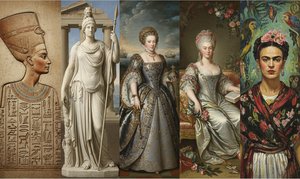
Explore the rich history of women in art – from iconic muses to groundbreaking artists. Discover feminist movements & reclaim female narratives with OriginalUniqueArt. Expert insights for discerning collectors.
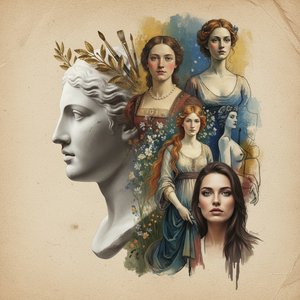
Explore the rich history of women in art – from archetypal representations to contemporary voices challenging norms. Discover iconic artists & movements, and learn about reclaiming female narratives through painting and beyond.
Explore the rich history of women in art – from iconic muses to groundbreaking artists. Discover feminist movements, global perspectives & reclaim female narratives with OriginalUniqueArt.