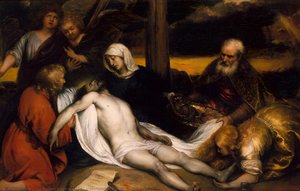
Jan Andrea Lievens: A Dutch Master Caught in Rembrandt’s Shadow
Jan Andrea Lievens, born on October 24th, 1607, in Leiden, Netherlands, stands as a fascinating and often overlooked figure of the Dutch Golden Age. His life's work, characterized by dramatic compositions, masterful use of light and shadow, and a distinctive style that blended Caravaggisti influences with a distinctly Dutch sensibility, reveals an artist deeply connected to his time yet tragically overshadowed by his more celebrated contemporary, Rembrandt van Rijn. Lievens’ story is one of remarkable talent, intense collaboration, and ultimately, a quiet decline into relative obscurity – a poignant reminder of the complexities of artistic recognition.Early Years and Artistic Training
Lievens' early life was steeped in craftsmanship. His father, Lieven Hendriksze, was an accomplished embroiderer, a profession that instilled in Jan a keen eye for detail and a deep appreciation for intricate design. Around the age of ten, young Jan began his formal artistic training under Joris van Schooten, a respected Leiden artist who provided him with the foundational principles of drawing and painting. This initial apprenticeship was followed by a crucial period spent studying with Pieter Lastman in Amsterdam – a pivotal experience that profoundly shaped Lievens’ artistic development. Lastman, a renowned history painter known for his dynamic compositions and dramatic use of light, exposed Lievens to a wider range of techniques and subject matter, fostering his ambition to create large-scale, emotionally charged works. It was during this time in Amsterdam that Lievens began to develop his own unique style, one characterized by a heightened sense of drama and an innovative approach to chiaroscuro – the skillful manipulation of light and dark to create depth and atmosphere.A Collaborative Partnership with Rembrandt
The early years of Jan Lievens’ career were inextricably linked to that of Rembrandt van Rijn. Beginning in 1626, they embarked on a remarkable collaborative partnership that produced over two dozen paintings, drawings, and etchings. This intense period of shared creation saw them working side-by-side in Leiden, exchanging ideas, techniques, and models. The relationship was both stimulating and competitive; the two artists pushed each other to greater heights while simultaneously vying for recognition. While the exact nature of their collaboration remains a subject of scholarly debate, it’s clear that Lievens benefited immensely from Rembrandt's guidance and experience, particularly in the realm of composition and dramatic lighting. However, this very closeness also created difficulties in attributing works from this period, as many remain uncertain about the precise contribution of each artist.A Journey Beyond Leiden: Antwerp and London
Following the dissolution of their partnership in 1631, Lievens embarked on a journey that took him through various European centers – Antwerp, The Hague, and eventually Berlin. During this period, he established himself as a sought-after portraitist and history painter, securing commissions from royalty, city officials, and wealthy patrons. His work during this time reflected the diverse influences of his travels, incorporating elements of Italian Mannerism, Flemish realism, and Baroque drama. Notably, Lievens’ style evolved, moving away from the more overtly Caravaggisti tendencies of his early years towards a greater emphasis on refined elegance and psychological depth. He became known for his ability to capture the nuances of human emotion with remarkable sensitivity, particularly in his portraits.Notable Works and Legacy
Jan Lievens' artistic legacy is marked by a collection of compelling works that continue to captivate viewers today. Among his most celebrated paintings are *Head of an Old Man* (held at the New Orleans Museum of Art), a poignant study of aging and wisdom; *Bearded Man with a Beret*, a striking portrait that exemplifies his mastery of composition and characterization; and *Boy in a Cape and Turban*, a charming depiction of Prince Rupert of the Palatinate. These works, along with numerous other paintings – including religious scenes, allegorical compositions, and landscapes – demonstrate Lievens’ versatility as an artist and his ability to seamlessly blend diverse artistic influences. Despite his considerable talent and prolific output, Lievens' work was often overshadowed by that of Rembrandt, a fact that contributed to his relative obscurity for centuries. Today, however, renewed scholarly interest and carefully curated exhibitions are helping to restore Jan Andrea Lievens’ rightful place among the great masters of the Dutch Golden Age. His art stands as a testament to a brilliant career tragically cut short, offering a unique perspective on the artistic landscape of 17th-century Europe.Запитання та відповіді
До якого історичного періоду належить творчість Ян Левенс?
Ян Левенс працював у період — Ранньомодерна епоха. Цей період визначає місце творчості митця в історії.
Скільки творів Ян Левенс доступно для перегляду?
Ви можете переглянути 142 творів мистецтва творів Ян Левенс на сторінці Усі витвори мистецтва.
Чи можу я переглянути роботи Ян Левенс за ключовими словами?
Сторінка За ключовими словами митця Ян Левенс групує роботи автора за ключовими словами.