A Scottish Visionary: The Life and Art of Charles Rennie Mackintosh
Charles Rennie Mackintosh, born in Glasgow on June 7, 1868, was more than an architect; he was a philosophical artist who sought to harmonize every aspect of the built environment. From the grandest structures to the smallest details of furniture and ornamentation, his vision aimed for a holistic aesthetic experience—a distinctly Scottish interpretation of the burgeoning Art Nouveau movement. Growing up as one of eleven children in a family where his father served as a police superintendent, Mackintosh’s early life offered little indication of the artistic revolution he would ignite. His education at Reid's Public School and Allan Glen's Institution revealed an aptitude for art but also hinted at challenges with traditional academic disciplines, possibly indicative of dyslexia. This divergence from conventional learning may have fostered his unique perspective, allowing him to approach design unbound by established norms. His formative years were significantly shaped by his apprenticeship under architect John Hutchison, coupled with evening classes at the Glasgow School of Art—a crucible where he forged crucial relationships with fellow students Herbert McNair, Margaret Macdonald, and Frances Macdonald, collectively known as “The Four.” These connections weren’t merely professional; they were deeply collaborative, influencing each other's artistic trajectories and forming the core of what would become the Glasgow Style.
Forging a New Aesthetic: The Glasgow Style and Architectural Masterpieces
By the 1890s, Mackintosh had emerged as a leading figure in the “Glasgow Style,” an Art Nouveau variant infused with Celtic symbolism, Japanese aesthetics, and the principles of the Arts and Crafts movement. This wasn’t simply about applying decorative motifs; it was about creating a total work of art—where architecture, furniture, interiors, and even textiles were conceived as interconnected elements of a unified design. His architectural masterpieces stand as monuments to this singular vision. The Glasgow School of Art (1896–1909), considered the first original example of Art Nouveau architecture in Great Britain, exemplifies his groundbreaking approach to spatial organization and material innovation. Large studio spaces bathed in natural light—a radical departure from prevailing pedagogical practices—were achieved through ingenious structural engineering, demonstrating Mackintosh’s unwavering commitment to functionality alongside aesthetic beauty. Beyond the School itself, projects like Windyhill (1899–1901), a country house nestled amidst rolling hills and landscaped gardens, showcase his masterful integration of architecture with its surroundings. Hill House (1902), renowned for its ethereal atmosphere and subtly expressive interiors—a testament to Mackintosh’s fascination with light and shadow—continues to inspire architects and designers today. Queen’s Cross Church (1907–1909) represents a triumph of ecclesiastical design, blending Gothic Revival elements with modernist principles in a harmonious composition that reflects Mackintosh's belief in the spiritual significance of space. Scotland Street School (1904–1906), arguably his most whimsical creation—a building designed to stimulate creativity and imagination—demonstrates his playful engagement with architectural form and ornamentation.
The Influence of Celtic Tradition & Japanese Aesthetics
Mackintosh’s artistic sensibilities were profoundly shaped by two distinct cultural influences: Celtic tradition and Japanese aesthetics. The intricate patterns and stylized motifs characteristic of Celtic art—particularly those found in illuminated manuscripts and Highland clan tartans—provided inspiration for decorative elements within his buildings and furniture designs. These motifs conveyed a sense of history, heritage, and symbolic resonance—values that underpinned Mackintosh’s broader artistic philosophy. Simultaneously, he embraced the principles of Japanese design—characterized by simplicity, asymmetry, and an emphasis on natural materials—drawing upon concepts such as *Ma* (negative space) to create spaces that fostered contemplation and tranquility. These influences are palpable in the interiors of Hill House and Windyhill, where carefully considered proportions and textures contribute to a profound sense of harmony.
Collaboration with “The Four” & The Glasgow Style’s Legacy
Mackintosh's artistic journey was inextricably linked to his collaboration with Herbert McNair, Margaret Macdonald, and Frances Macdonald—collectively known as “The Four.” These four students at the Glasgow School of Art shared a fervent belief in the transformative power of art and architecture. Their discussions and experiments fueled the development of the Glasgow Style, shaping its distinctive visual language and intellectual underpinning. Margaret Macdonald Mackintosh, his wife, became an indispensable partner in his creative endeavors—a fellow artist whose talent complemented his own, enriching the depth and complexity of their collaborative projects. Together they explored innovative materials and techniques, pushing the boundaries of Art Nouveau design while upholding a commitment to craftsmanship and ethical production. The Glasgow Style’s legacy extends far beyond its immediate architectural achievements. It established a precedent for holistic artistic expression—a paradigm that continues to inspire designers and artists today.
A Quiet Farewell & Enduring Recognition
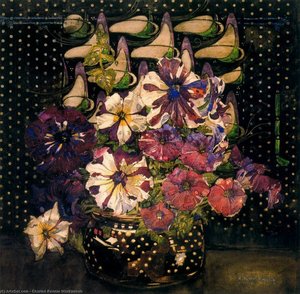
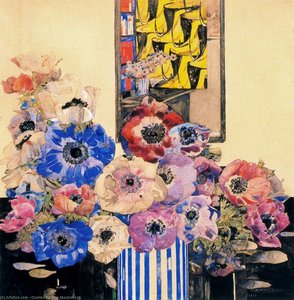
Despite facing financial difficulties in his later years, Mackintosh remained dedicated to honing his craft and pursuing artistic exploration until his death in London on December 10, 1928. His final paintings—primarily watercolors depicting flowers—offer a poignant glimpse into the artist’s inner world—a realm of serene beauty and contemplative reflection. Though largely forgotten for decades following his demise, Mackintosh experienced a resurgence of critical acclaim in the late 20th century as scholars rediscovered his groundbreaking contributions to Art Nouveau and modernist design. Today, Charles Rennie Mackintosh is celebrated as one of Scotland’s most influential architects and designers—a visionary artist whose enduring aesthetic principles continue to captivate audiences worldwide. His buildings stand as monuments to innovation and beauty, reminding us that true artistic greatness resides in the pursuit of a singular vision—a vision that transcends time and inspires generations to come.