Меню
БЕЗКОШТОВНА КОНСУЛЬТАЦІЯ З МИСТЕЦТВА

Девід Альфаро Сікерос

1896 - 1974

Короткі факти

  • Topics explored:
    • portraits
    • men
    • social commentary
    • designs and sketches
    • mexican art
  • Died: 1974
  • Room fit: вітальня
  • Corpus themes:
    • revolutionary spirit
    • mexican muralism influence
    • mexican muralism
    • social commentary
  • Creative periods: mature period
  • Typical colors:
    • землисті відтінки
    • темні відтінки
  • Art period: — Модерн
  • Top 3 works:
    • Серія пейзажів «Земное пространство» І
    • Дитина мати
  • Copyright status: Under copyright
  • Більше…
  • Top-ranked work: Серія пейзажів «Земное пространство» І
  • Lifespan: 78 years
  • Also known as: Хосе де Хесус Альфаро Сікерос
  • Born: 1896, Чihuahua, Мексика
  • Works on APS: 74
  • Color intensity: збалансований
  • Museums on APS:
    • colección-blaisten
    • Inter-American Development Bank
    • Pinacoteca Universidad de Colima
  • Nationality: Мексика
  • Movements:
    • expressionism
    • social realism

Квіз про мистецтво

У кожному запитанні лише одна правильна відповідь.

Запитання 1:
Який художній стиль характеризує творчість Давида Сікероса?
Запитання 2:
З ким разом Сікероса та Хорозко вважають засновниками сучасного мексиканського живопису монумента?
Запитання 3:
Яку політичну ідеологію Сікерос постійно використовував у своїй творчості?
Запитання 4:
Яку інноваційну техніку Сікерос часто застосовував у своїй муральної роботі для прискорення процесу?

David Alfaro Siqueiros (1896–1974) – A Life Forged in Revolution

David Alfaro Siqueiros, born José de Jesús Alfaro Siqueiros in 1896 – though later research pinpointed his birthplace as Chihuahua City rather than Camargo – was more than just a painter; he was a force of nature, an embodiment of the tumultuous spirit of post-revolutionary Mexico. His life wasn’t confined to the studio but exploded onto the public stage, interwoven with political struggle and a relentless pursuit of art as a tool for social transformation. Early experiences shaped his trajectory: orphaned young, raised by his grandparents in Irapuato, Guanajuato, he was exposed to anarcho-syndicalist ideas that would deeply influence his worldview. This nascent political awareness blossomed during his student days at the Academy of San Carlos, where a protest against rigid teaching methods led to the establishment of an “open-air academy” – a defiant act marking the beginning of his artistic journey and foreshadowing a lifetime of challenging convention. The Mexican Revolution itself was the crucible in which Siqueiros’s artistic and political convictions were forged. He didn't merely observe the upheaval; he actively participated, joining the constitutional army and witnessing firsthand the hardships endured by working people and rural communities – experiences that would forever inform his art.

Early Influences and Artistic Formation

Siqueiros’s formative years instilled in him a profound understanding of social injustice and fueled his desire to use art as a vehicle for change. His upbringing amidst anarchist circles exposed him to radical ideologies, shaping his worldview and propelling him toward artistic experimentation that prioritized political engagement. The Academy of San Carlos proved crucial in honing his technical skills while simultaneously fostering his rebellious spirit. The infamous “open-air academy” – a bold assertion against academic dogma – symbolized Siqueiros’s refusal to accept established norms and cemented his commitment to forging his own path as an artist. This spirit of defiance would characterize his entire artistic career, driving him to constantly push boundaries and challenge conventional approaches.

European Immersion: Cubism and Renaissance Fresco Techniques

Between 1919 and 1923, Siqueiros embarked on a transformative journey to Europe, immersing himself in the avant-garde currents reshaping the art world. He found inspiration in Cubism, particularly Cézanne’s groundbreaking exploration of form and color, recognizing its potential for conveying complex emotions and perspectives. Simultaneously, he studied Renaissance fresco techniques in Italy – a skill that would become indispensable to his monumental mural projects – mastering the meticulous process of applying pigment directly onto wet plaster. This dual engagement with artistic traditions underscored Siqueiros's intellectual curiosity and demonstrated his willingness to absorb lessons from masters across time periods.

The Mexican Revolution: Witnessing Suffering and Embracing Activism

The eruption of the Mexican Revolution irrevocably altered Siqueiros’s life and solidified his artistic convictions. He joined the constitutional army, experiencing firsthand the brutal realities faced by ordinary Mexicans – poverty, violence, and exploitation. These encounters profoundly impacted his art, informing his stylistic choices and fueling his unwavering dedication to depicting social struggles with unflinching honesty. The revolution wasn't simply a historical event; it was a catalyst for artistic innovation, prompting Siqueiros to develop groundbreaking techniques and explore new visual languages.

Monumental Murals: A Legacy of Social Realism

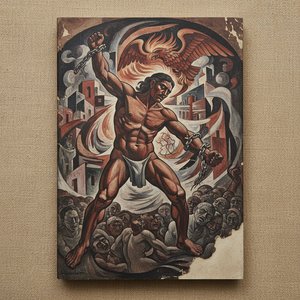
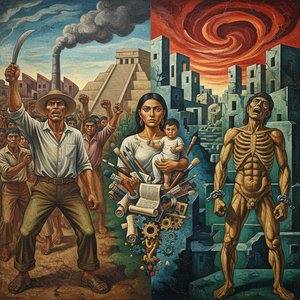
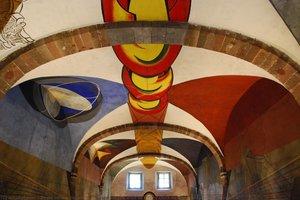
David Alfaro Siqueiros’s artistic legacy rests primarily on his monumental murals – ambitious projects that transformed public spaces into canvases for social commentary. Works like “The New Democracy,” “The Polished City,” and especially “The March of Humanity” exemplify his distinctive style, characterized by dynamic compositions, dramatic lighting, and the innovative use of industrial paints and spray guns. These murals weren’t merely decorative; they were deliberate interventions in the urban landscape, designed to provoke reflection and inspire action. Siqueiros's artistic vision was rooted in Marxism, believing that art could serve as a powerful instrument for advancing social justice and combating oppression. He sought to capture the essence of human experience – its triumphs and tribulations – portraying it with visceral intensity and unwavering conviction. His murals stand as enduring symbols of Mexican cultural heritage and continue to inspire artists worldwide.

Influence and Recognition

Siqueiros’s influence extended far beyond Mexico, shaping the trajectory of Chicano art movement in the United States during the Civil Rights era. He championed innovative techniques and explored themes of identity and resistance, providing a visual vocabulary for expressing marginalized voices. His unwavering commitment to artistic experimentation and political activism cemented his place as one of the most important figures in 20th-century Mexican art—a testament to the transformative power of creativity when driven by moral purpose.