Vivian Dorothy Maier: The Unseen Eye of a City
The story of Vivian Maier is, in many ways, the most remarkable rediscovery in the history of 20th-century photography. For decades, her extraordinary talent remained hidden, locked away in storage lockers and largely unknown to the world. Born in New York City in 1926, into a family with roots in France and Austria, Maier’s life unfolded as a quiet journey through America, punctuated by periods of movement and ultimately culminating in a vast archive of images that now challenge our understanding of artistic recognition and the power of observation. Her legacy isn't just about the photographs themselves; it’s about the mystery surrounding her existence – a woman who lived a remarkably private life while documenting the vibrant pulse of urban America with an unparalleled sensitivity.
Maier’s early years were marked by a constant shift between continents, shaped by her mother’s artistic connections. She spent part of her childhood in the idyllic alpine village of Saint-Bonnet-en-Champsaur near her maternal relatives, a period that instilled within her a keen eye for detail and a certain detachment – qualities that would later inform her photographic approach. Crucially, she was introduced to the art world through her mother’s acquaintance with Gertrude Vanderbilt Whitney, a prominent patron of American artists. This early exposure likely sparked an initial interest in visual culture, laying the groundwork for her future dedication to photography. The details of her father's absence during her childhood remain somewhat shrouded in mystery, adding another layer of intrigue to her story.
The Nanny’s Lens: Capturing Chicago’s Soul
Maier’s photographic career began unexpectedly, as a nanny for two families in Chicago. This role provided her with an extraordinary opportunity – access to the streets and people of the city, all while maintaining a low profile. She wasn't seeking fame or recognition; she simply observed, documented, and captured fleeting moments of everyday life. Her camera, a bulky Rolleiflex twin-lens reflex, became an extension of herself, allowing her to move almost unnoticed through the bustling streets of Chicago, New York City, and Los Angeles. It’s this quiet observation that distinguishes her work from more conventional street photography – she wasn't staging scenes or seeking dramatic moments; she was simply recording the world as it unfolded around her.
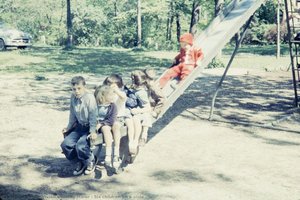
Her subjects were remarkably diverse: children playing in parks, elderly men sitting on benches, shopkeepers tending their stores, and countless anonymous faces reflecting the city’s multifaceted character. Maier possessed an uncanny ability to find beauty in the mundane – a reflection in a shop window, a fleeting expression of sadness or joy, the geometry of urban architecture. Her self-portraits, often captured in mirrors or reflections, offer poignant glimpses into her own personality and a sense of quiet introspection. These images reveal a woman grappling with identity, loneliness, and perhaps a yearning for connection – themes that resonate deeply within her photographs.
A Palette of Shadows: Black & White and Beyond
Maier’s photographic style is most powerfully expressed through black and white film. This choice lends her work a timeless quality, emphasizing the interplay of light and shadow, texture, and mood. The stark contrasts and subtle nuances create an atmosphere of intimacy and melancholy, drawing the viewer into the heart of each image. However, later in her career, Maier experimented with color photography, pushing beyond the traditional boundaries of her style. These color images are often more playful and experimental, showcasing a willingness to embrace new techniques and explore different perspectives. While the black and white photographs retain a sense of timelessness, the color images reveal a vibrant spirit and a desire to capture the beauty of the world in all its hues.
Rediscovery and Lasting Legacy
The story of Vivian Maier’s rediscovery is as remarkable as her photography itself. After her death in 2009, a storage locker containing over 150,000 negatives, prints, and film rolls was auctioned off due to unpaid fees. John Maloof, a Chicago-based writer and filmmaker, acquired a significant portion of these materials and began sharing them online in 2008. Initially, the photographs garnered little attention, but as more images were released, they quickly went viral, sparking widespread interest in Maier’s life and work. The documentary film *Finding Vivian Maier* (2013) further amplified her story, bringing her to international recognition and cementing her place among the most significant figures in American photography.
Today, Vivian Maier is celebrated not just for her extraordinary talent but also for her quiet defiance of conventional notions of artistic recognition. Her work challenges us to reconsider what constitutes art and who has the right to be recognized as an artist. Her legacy extends beyond the aesthetic qualities of her photographs; it lies in the story of a hidden talent, a life lived on her own terms, and the enduring power of observation – a reminder that beauty and meaning can be found in the most unexpected places.
Питання та відповіді
Де я можу переглянути роботи Вівьян Майер у хронологічному порядку?
Твори Вівьян Майер можна переглянути в хронологічному порядку на сторінці Хронологія творів митця.
Де можна знайти роботи Вівьян Майер, згруповані за кольоровою палітрою?
Сторінка За кольоровою палітрою групує роботи Вівьян Майер за їхніми колірними палітрами.
Де можна переглянути роботи Вівьян Майер, відсортовані за кольором?
Колірний спектр для Вівьян Майер — це сторінка, на якій роботи митця впорядковані за кольорами.