Портрет Wang Meng

Картини Wang Meng: 10 найвідоміших у погляді галереї

Оновлено Жовтень 2026 · за рейтингом нашої популярності (кількість пошукових запитів, переглядів та замовлень для кожної роботи) · 13 робіт Wang Meng у нашому каталозі

Коротко кажучи

На думку експертів галереї, найвідоміший витвір Wang Meng — це 元 王蒙 素庵圖 軸 The Simple Retreat (1370), оригінал якого експонується в Метрополітен-музей, Нью-Йорк. Writing Books under the Pine Trees (1323) та Ge Zhichuan Moving to the Mountains (1350) доповнюють тріо, яке впізнає кожне око. З 13 робіт Wang Meng у нашому каталозі галерея представляє 10 найвідоміших нижче — кожна з них є оригіналом із зазначенням року створення, музею та унікальних особливостей.

1308 – 1385, Huzhou Найбільше робіт: Метрополітен-музей

Топ 10 картин художника Wang Meng у галереї

1
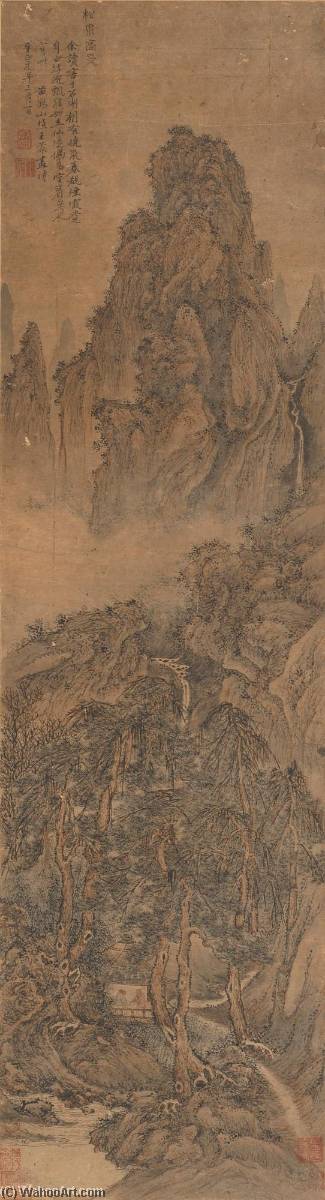
元 王蒙 素庵圖 軸 The Simple Retreat (1370) роботи Wang Meng

元 王蒙 素庵圖 軸 The Simple Retreat

1370 · Ink On Paper · Метрополітен-музей, Нью-Йорк

We are looking at 元 王蒙 素庵圖 軸 The Simple Retreat, a significant ink and paper drawing from the Yuan Dynasty. This work was created by the artist Wang Meng about 1370. It is a hanging scroll that captures a specific vision of the natural world, presented through the delicate medium of ink and color on paper.

2
Writing Books under the Pine Trees (1323) роботи Wang Meng

Writing Books under the Pine Trees

1323 · Ink On Paper · Клівлендський музей мистецтва, Клівленд

The ink on paper captures a quiet moment in 1323, titled Writing Books under the Pine Trees. This landscape emerges from the brush of Wang Meng, a man whose roots trace back to Huzhou, People's Republic of China. Within this scene, the stillness of the mountains meets the steady presence of the scholar, creating a space where the act of reading becomes part of the natural rhythm of the earth.

Теми, що привертали увагу Wang Meng

Чотири сюжети, які найчастіше зустрічаються в цих оригіналах, кожен із найкращим прикладом.

Музеї, у яких зберігаються оригінали Wang Meng

5 музеїв, у яких зберігається найбільша кількість картин із цього списку.

Музеї Місто Твори Wang Meng Картини з цього списку
Метрополітен-музей, Нью-ЙоркМетрополітен-музей Нью-Йорк 3 元 王蒙 素庵圖 軸 The Simple Retreat, 元 王蒙 丹崖翠壑圖 軸 Red Cliffs and Green Valleys, 元 王蒙 蕭林寂亭圖 團扇 Sparse Trees and Pavilion
Клівлендський музей мистецтва, КлівлендКлівлендський музей мистецтва Клівленд 1 Writing Books under the Pine Trees
The Palace Museum, BeijingThe Palace Museum Beijing 1 Ge Zhichuan Moving to the Mountains
Art Institute of Chicago, ЧикагоArt Institute of Chicago Чикаго 1 Quiet Life in a Wooded Glen
China Modern and Contemporary Art Document Research Center, ПекінChina Modern and Contemporary Art Document Research Center Пекін 1 Seclusion in Green Bian Mountain

Wang Meng, одна фірмова картина за десятиліття

Роботи за десятиліття

Оберіть десятиліття, щоб побачити оригінальний твір, який його визначає.

Картини Wang Meng: відповіді галереї

Яка картина Wang Meng є найвідомішою серед усіх?Дізнатися відповідь

元 王蒙 素庵圖 軸 The Simple Retreat (1370), Метрополітен-музей, Нью-Йорк. Далі йдуть Writing Books under the Pine Trees (1323) та Ge Zhichuan Moving to the Mountains (1350).

Скільки років було Wang Meng, коли він/вона завершив/завершила 元 王蒙 素庵圖 軸 The Simple Retreat?Дізнатися відповідь

62 років: 元 王蒙 素庵圖 軸 The Simple Retreat датована 1370 роком, а Wang Meng народився(-лася) у 1308.

Які 10 найкращих картин Wang Meng?Дізнатися відповідь

元 王蒙 素庵圖 軸 The Simple Retreat, Writing Books under the Pine Trees, Ge Zhichuan Moving to the Mountains, Quiet Life in a Wooded Glen, 元 王蒙 丹崖翠壑圖 軸 Red Cliffs and Green Valleys, 元 王蒙 蕭林寂亭圖 團扇 Sparse Trees and Pavilion, STUDIO SURROUNDED BY TEN THOUSAND PINE TREES, SECLUSION AMID PINES AND SPRINGS, LANDSCAPE та Seclusion in Green Bian Mountain. У рейтингу вище вказано рік створення та музей для кожної картини.

Скільки творів створив Wang Meng?Дізнатися відповідь

Наш каталог містить 13 робіт Wang Meng, датованих періодом з 1323 по 1370.

Де висять найвідоміші оригінали робіт Wang Meng?Дізнатися відповідь

Переважно в Метрополітен-музей (Нью-Йорк), Клівлендський музей мистецтва (Клівленд) та The Palace Museum (Beijing). У таблиці музеїв вище наведено їхній повний перелік.

Коли Wang Meng створив свої найвідоміші картини?Дізнатися відповідь

У 1360s: 3 із 10 робіт на цій сторінці були створені тоді, серед них Quiet Life in a Wooded Glen.

Які найранніші та найпізніші відомі роботи Wang Meng?Дізнатися відповідь

На цій сторінці найдавніша робота датована Writing Books under the Pine Trees (1323), а найновіша — 元 王蒙 素庵圖 軸 The Simple Retreat (1370).

До яких сюжетів Wang Meng звертався найчастіше?Дізнатися відповідь

Mountains (2), Landscape (2) та Rocks (2), у 10 роботах на цій сторінці.

У якій техніці найчастіше працював Wang Meng?Дізнатися відповідь

Ink On Paper, для 2 із 10 робіт на цій сторінці.

Які оригінальні роботи Wang Meng зберігаються в Метрополітен-музей?Дізнатися відповідь

元 王蒙 素庵圖 軸 The Simple Retreat, 元 王蒙 丹崖翠壑圖 軸 Red Cliffs and Green Valleys та 元 王蒙 蕭林寂亭圖 團扇 Sparse Trees and Pavilion: Метрополітен-музей, Нью-Йорк зберігає 3 робіт із цієї сторінки.

Чи можу я замовити ручну репродукцію картини Wang Meng?Дізнатися відповідь

Так, як репродукція: оригінал залишається в музеї, але будь-яку картину з цієї сторінки можна написати вручну спеціально для вас — індивідуальне замовлення можна оформити на сторінці самої картини.

Wang Meng: художник

Wang Meng: The Ropy Brush and the Silent Landscape

Born in Wuxing, Zhejiang province – now Huzhou – around 1308, Wang Meng stands as a pivotal figure within the artistic landscape of the Yuan Dynasty (1271-1368). His life was marked by both privilege and profound misfortune; he descended from Zhao Mengfu, a prominent Song Dynasty official and artist, inheriting a lineage steeped in cultural significance. However, his later years were tragically consumed by false accusations of treason against the Ming Emperor Taizu, resulting in five years spent imprisoned – an experience that profoundly shaped his artistic vision and ultimately contributed to his unique style.

Wang Meng’s place within art history is firmly secured as one of the “Four Masters” of the Yuan Dynasty alongside Huang Gongwang, Wu Zhen, and Ni Zan. This esteemed group distinguished themselves by rejecting the patronage of the Mongol rulers who had conquered China, choosing instead to remain independent artists working primarily on paper rather than the traditional silk canvases favored by previous generations. This decision reflected a deep conviction that landscapes held the key to unlocking deeper truths – a philosophy central to their artistic practice.

A Style Defined by Texture and Movement

Unlike the more restrained approaches of his contemporaries, Wang Meng’s paintings are characterized by an extraordinary density and dynamism. His brushstrokes—often described as “ropy” or “layered”—were meticulously applied in thick, overlapping patterns, creating a palpable sense of texture and movement. This technique wasn't simply decorative; it was a deliberate attempt to capture the essence of nature – its complexity, its energy, and its inherent instability. He eschewed the smooth, polished surfaces favored by earlier landscape painters, embracing instead a more tactile and expressive approach.

Wang Meng’s compositions are often densely populated with elements—trees, rocks, mountains, streams—creating an immersive experience for the viewer. He avoided clear focal points or dramatic perspectives, preferring to present a holistic view of the natural world, inviting contemplation rather than immediate recognition. This deliberate ambiguity is a hallmark of his style and reflects his belief in the interconnectedness of all things.

Key Works and Artistic Influences

Among Wang Meng’s most celebrated works are “Ge Zhichuan Relocating” (a depiction of a scholar moving to a new location), “Forest Grotto at Juqu,” “Writing Books Under the Pine Trees,” “The Simple Retreat,” and “Dwelling in the Qingbian Mountains.” These paintings, now housed in prestigious museums worldwide – including the Palace Museum, National Palace Museum, Shanghai Museum, Cleveland Museum of Art, and the Metropolitan Museum of Art – demonstrate his mastery of technique and his profound understanding of landscape painting. Notably, "Ge Zhichuan Relocating" sold for an astonishing $62.1 million at auction in 2011, a testament to its artistic merit and historical significance.

Wang Meng’s style was profoundly influenced by the landscape painters who preceded him – Wang Wei, Dong Yuan, and Juran – but he developed his own distinctive voice through his innovative use of brushwork and composition. He also drew inspiration from the literati tradition, a movement that emphasized personal expression and intellectual engagement with nature. His work stands as a bridge between these traditions, forging a new path for Chinese landscape painting.

Legacy and Historical Significance

Despite his relatively obscure status during his lifetime, Wang Meng’s influence on subsequent generations of Chinese painters is undeniable. Dong Qichang, a prominent scholar-artist of the Southern Song Dynasty, greatly admired Wang Meng's style and incorporated elements of it into his own work. Wang Meng’s ropy brushstrokes and dense compositions became a defining characteristic of landscape painting for centuries to come.

His decision to reject court patronage and remain an independent artist also holds significant historical importance. It reflects a growing sense of artistic autonomy and a desire to preserve traditional values in the face of foreign rule. Wang Meng’s life and work serve as a powerful reminder of the enduring power of art to transcend political boundaries and express profound human truths. He remains a vital figure in understanding the evolution of Chinese landscape painting and its continuing relevance today.

Усі 13 робіт Wang Meng →