Portrait of Рогір Ван Дер Вейден

The 100 Most Famous Рогір Ван Дер Вейден Paintings, Each One of a Kind

Updated Жовтень 2026 · ranked by our popularity score (searches, visits and orders for each work) · 314 works by Рогір Ван Дер Вейден in our catalogue

In short

Зняття з хреста (1435) is the Рогір Ван Дер Вейден painting that draws the most eyes; the original belongs to the Музей Прадо, Мадрид. After it, the eye goes to Portrait of a Lady (1455) and The Last Judgment. Among the 314 works of Рогір Ван Дер Вейден in our catalog, these 100 are the most famous, each a unique original presented with its year, its museum and the reason it endures.

1400 – 1464, Турне Ранній нідерландський живопис Most works: Державні музеї Берліна

Top 10 paintings by Рогір Ван Дер Вейден, through the gallery's eye

1
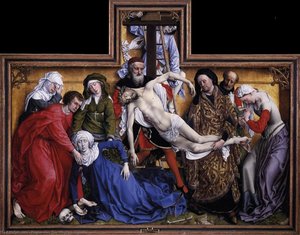
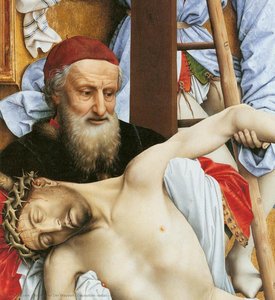
Зняття з хреста (1435) by Рогір Ван Дер Вейден

Зняття з хреста

1435 · Олія на панелі · Музей Прадо, Мадрид

Рогір ван дер Вейден, майстер епохи раннього нідерландського живопису, подарував нам не просто зображення біблійної події – він створив глибоко емоційний та духовно значущий твір мистецтва. Його "Зниження Христа з Креста", створене у 1435 році і що сьогодні зберігається в Музеї Прадо в Мадриді, виходить за межі своєї історичної рамки, звертаючись безпосередньо до почуттів глядача. Це не просто картина – це витончений танець скорботи, спокою та глибокої віри.

2
Portrait of a Lady (1455) by Рогір Ван Дер Вейден

Portrait of a Lady

1455 · Oil On Panel · Національна галерея мистецтв, Вашингтон

Rogier van der Weyden's Portrait of a Lady, created around 1455, is a captivating oil-on-panel painting that exemplifies the artist's mastery in capturing the essence of his subjects. This small yet powerful work, measuring 37 x 27 cm, is housed at the National Gallery of Art in Washington, D.C. Composition and Technique The composition of Portrait of a Lady is built from geometric shapes that form the lines of the…

3
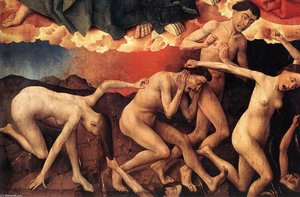
The Last Judgment by Рогір Ван Дер Вейден

The Last Judgment

Oil

Rogier van der Weyden's "The Last Judgment," painted around 1430-1435, isn’t merely a depiction of biblical narrative; it’s a visceral exploration of human mortality and the agonizing weight of divine judgment. This monumental work, likely intended for a private chapel or a significant civic commission, transcends simple religious illustration to become a profoundly moving meditation on sin, redemption, and the inescapable consequences of earthly actions. Van der Weyden, already recognized…

5
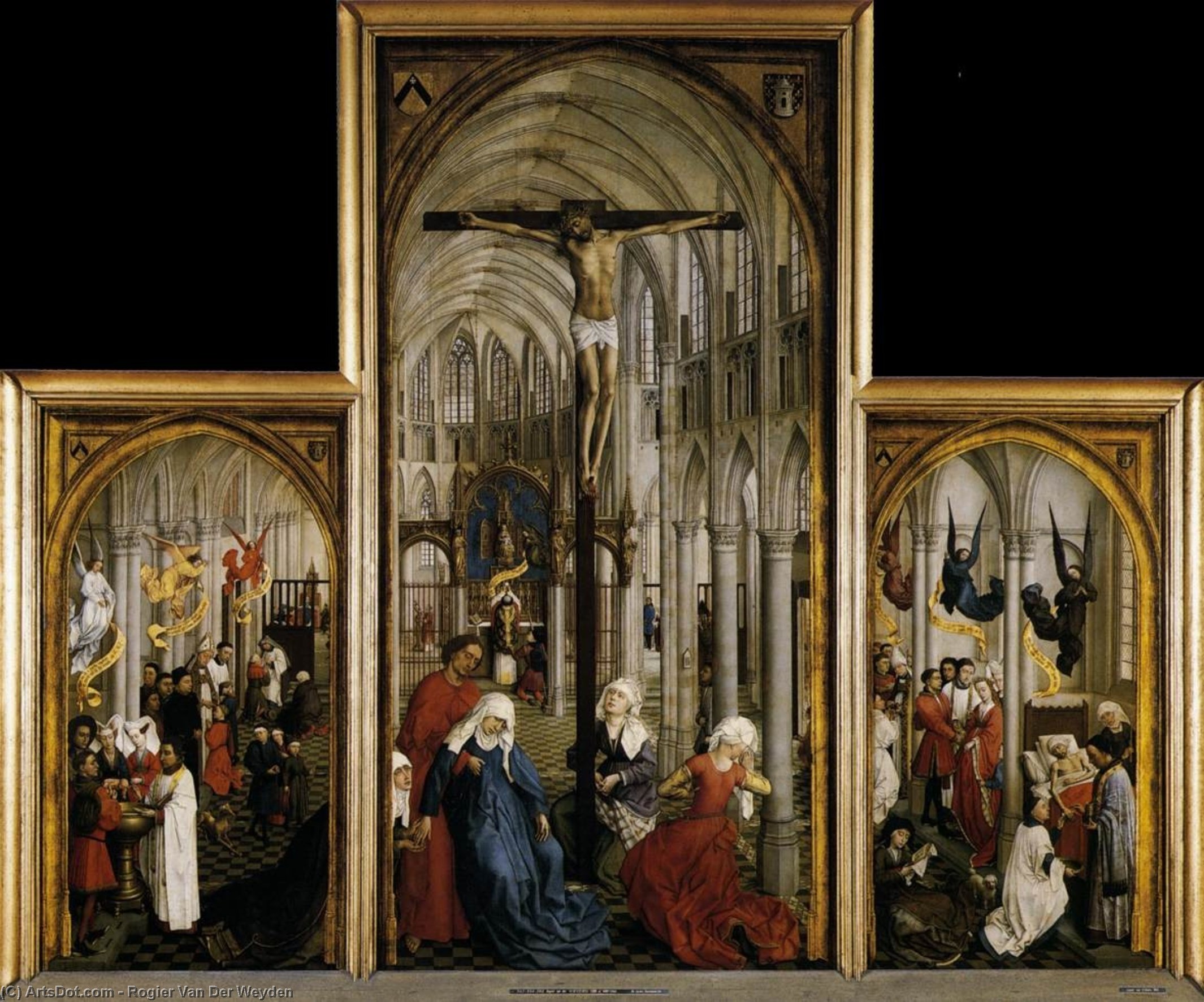
Вівтар із семи таїнств (1445) by Рогір Ван Дер Вейден

Вівтар із семи таїнств

1445 · Олія на панелі · Королівський музей мистецтв Антверпену, Антверпен

Вікно у середньовічну віру: Вівтар «Сім таїнств» Рогіра ван дер Вейдена «Вівтар Сім таїнств» Рогіра ван дер Вейдена, завершений у 1445 році, є ключовим твором ранньонідерландського періоду. Ця масштабне полотно (200 x 97 см), виконане олією на дереві та приховане в Королівському музеї образотворчого мистецтва в Антверпені, Бельгія, — це не просто картина; це теологічний трактат, втілений із захоплюючим артистизмом і глибокою емоційною глибиною. Він пропонує чарівний погляд на релігійне…

6
St Columba Altarpiece (1455) by Рогір Ван Дер Вейден

St Columba Altarpiece

1455 · Oil On Panel · Альте Пінакотека, Мюнхен

In the quiet corridors of the Alte Pinakothek in Munich, there exists a masterpiece that transcends the boundaries of mere paint and wood, inviting the viewer into a sacred, breathing reality. The St Columba Altarpiece, completed around 1455 by the Flemish virtuoso Rogier van der Weyden, is not simply an object of devotion but a profound psychological landscape. At its heart, the work captures the intersection of the earthly and…

7
wga. (1435) by Рогір Ван Дер Вейден

wga.

1435 · Олія на панелі · Музей Прадо, Мадрид

Картина "Покладення у гроб", створена геніальним художником Північного Відродження Рож’є ван дер Вейденом близько 1435 року, є не просто зображенням біблійної сцени, а й потужною емоційною драмою, що розкриває глибини людського горя та відданості. Ця композиція, виконана олійними фарбами на дерев’яній панелі розміром 220 x 262 см, вражає своєю деталізацією, реалізмом і майстерним поєднанням кольорів, що робить її одним із найвизначніших творів мистецтва XV століття. Замовлене гільдією лучників міста Левен…

8
Зняття з хреста (1449) by Рогір Ван Дер Вейден

Зняття з хреста

1449 · Олія на панелі · Детройтський інститут мистецтв, Детройт

Повітря здається важким, густим від запаху вологої деревини та тягаря невимовного втрати. У цьому неглибокому, стиснутому просторі безжиттєве, бліде тіло Христа починає свій повільний спуск із хреста. Кожен м'яз його торса відображає глибоке виснаження, фізичну покору смерті, що крає серця тих, хто зібрався навколо нього. Світло вихоплює хворобливу, напівпрозору плоть його шкіри, різко контрастуючи з глибоким, насиченим малиновим кольором чоловічої мантії та темним синьо-зеленим відтінком жіночого одягу. Тут немає місця…

9
Портрет дами (ван дер Вейден) (1446) by Рогір Ван Дер Вейден

Портрет дами (ван дер Вейден)

1446 · Олія на панелі · Musée de l'Hôtel Dieu, Бур-ан-Бресс

Описана сцена — це не спокійне небесне блаженство, а радше бурхливе та жахливе видіння Страшного суду. Попри те, що перед нами лише деталь, вона втілює в собі всю драму поліптиха — розмежування між спасенними та проклятими. Фігури застигли в моменти крайнього емоційного потрясіння: у відчаї, розпачі та несамовитих благаннях. Ця конкретна частина зосереджена на тих, хто постає перед Божим судом, коли їхні долі висять на волосині. Важливо пам'ятати, що це…

10
П'єта (1450) by Рогір Ван Дер Вейден

П'єта

1450 · Олія на панелі · Музей Прадо, Мадрид

У тихій безмежності середини XV століття в ландшафті північноєвропейського мистецтва відбулася глибока трансформація, відхід від стилізованих ікон до вісцеральної, живої реальності. У самому серці цього руху стоїть П'єта Рогіра ван дер Вейдена — шедевр, який не просто зображує біблійну подію, а запрошує глядача у священний простір спільного жалоби. Створена близько 1450 року, ця олія на дубовій панелі слугує монументальним свідченням людських страждань і божественного співчуття. Сцена закарбовує важкий, розриваючий серце…

Рогір Ван Дер Вейден's famous paintings, numbers 11 to 100

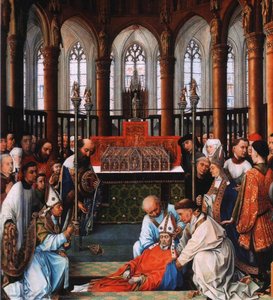
11Дама у марлевому головному уборі (1445) by Рогір Ван Дер ВейденДама у марлевому головному уборі1445 · Державні музеї Берліна 12Ексьюмація Святого Юберта (1437) by Рогір Ван Дер ВейденЕксьюмація Святого Юберта1437 · Національна галерея 13Святий Лук розмальовує портрет Богородиці (1435) by Рогір Ван Дер ВейденСвятий Лук розмальовує портрет Богородиці1435 · Музей образотв мистецтв 14Магдалина читає (деталь) (1445) by Рогір Ван Дер ВейденМагдалина читає (деталь)1445 · Національна галерея 15Триптих Бладеліна (1445) by Рогір Ван Дер ВейденТриптих Бладеліна1445 · Державні музеї Берліна 16Вівтар святої Колумби (права панель) (1455) by Рогір Ван Дер ВейденВівтар святої Колумби (права панель)1455 · Альте Пінакотека 17Тріптих Бладельін (праве крило) (1445) by Рогір Ван Дер ВейденТріптих Бладельін (праве крило)1445 · Державні музеї Берліна 18The Holy Trinity (1430) by Рогір Ван Дер ВейденThe Holy Trinity1430 19Триптих Бладеліна (ліва стулка) (1445) by Рогір Ван Дер ВейденТриптих Бладеліна (ліва стулка)1445 · Державні музеї Берліна 20Триптих П'єр Бладельен (деталь) (1445) by Рогір Ван Дер ВейденТриптих П'єр Бладельен (деталь)1445 · Державні музеї Берліна 21Диптих Розп'яття (права панель) (1460) by Рогір Ван Дер ВейденДиптих Розп'яття (права панель)1460 · Філадельфійський музей мистецтв 22The Last Judgment (detail) (21) (1446) by Рогір Ван Дер ВейденThe Last Judgment (detail) (21)1446 · Musée de l'Hôtel Dieu 23Зняття з хреста (деталь) (1435) by Рогір Ван Дер ВейденЗняття з хреста (деталь)1435 · Музей Прадо 24Благовіщення (деталь) (1440) by Рогір Ван Дер ВейденБлаговіщення (деталь)1440 · Лувр 25Вівтар святого Івана (деталь) (1455) by Рогір Ван Дер ВейденВівтар святого Івана (деталь)1455 · Державні музеї Берліна 26Діва з Младенцем (Мадонна Дюрана) (1440) by Рогір Ван Дер ВейденДіва з Младенцем (Мадонна Дюрана)1440 · Музей Прадо 27Святий Йосип (1445) by Рогір Ван Дер ВейденСвятий Йосип1445 · Calouste Gulbenkian Foundation 28Deposition (detail) (1435) by Рогір Ван Дер ВейденDeposition (detail)1435 · Музей Прадо 29Триптих П'єра Бладелена (деталь) (1445) by Рогір Ван Дер ВейденТриптих П'єра Бладелена (деталь)1445 · Державні музеї Берліна 30Зняття з хреста (1435) by Рогір Ван Дер ВейденЗняття з хреста1435 · Музей Прадо 31St Ivo (1450) by Рогір Ван Дер ВейденSt Ivo1450 · Національна галерея 32The Last Judgment (detail) (1446) by Рогір Ван Дер ВейденThe Last Judgment (detail)1446 · Musée de l'Hôtel Dieu 33Святий Лука пише портрет Мадонни by Рогір Ван Дер ВейденСвятий Лука пише портрет МадонниМузей Гроeninge 34Saint Luke Portraying the Virgin (1431) by Рогір Ван Дер ВейденSaint Luke Portraying the Virgin1431 · Національна галерея Ірландії 35Madonna and Child in a Landscape (1460) by Рогір Ван Дер ВейденMadonna and Child in a Landscape1460 36Триптих «Розп'яття» (ліва стулка) (1445) by Рогір Ван Дер ВейденТриптих «Розп'яття» (ліва стулка)1445 · Kunsthistorisches Museum 37Crucifixion Triptych (right wing) (1445) by Рогір Ван Дер ВейденCrucifixion Triptych (right wing)1445 · Kunsthistorisches Museum 38Зняття з хреста (деталь) (1435) by Рогір Ван Дер ВейденЗняття з хреста (деталь)1435 · Музей Прадо 39Сповіщення (деталь) (9) (1435) by Рогір Ван Дер ВейденСповіщення (деталь) (9)1435 · Музей Прадо 40Вівтар Мірафлорес (центральна панель) (1440) by Рогір Ван Дер ВейденВівтар Мірафлорес (центральна панель)1440 · Державні музеї Берліна 41Сон Папи Сергія (1437) by Рогір Ван Дер ВейденСон Папи Сергія1437 · Музей Дж. Пола Гетті 42Портрет чоловіка (Гільом Фільястр) (1440) by Рогір Ван Дер ВейденПортрет чоловіка (Гільом Фільястр)1440 · Галерея Куртолада 43Портрет чоловіка (1450) by Рогір Ван Дер ВейденПортрет чоловіка1450 · Королівський музей мистецтв Антверпену 44Deposition (detail) (1435) by Рогір Ван Дер ВейденDeposition (detail)1435 · Музей Прадо 45Святий Лука пише портрет Мадонни (1450) by Рогір Ван Дер ВейденСвятий Лука пише портрет Мадонни1450 · Альте Пінакотека 46Diptych (1440) by Рогір Ван Дер ВейденDiptych1440 · Kunsthistorisches Museum 47Благовіщення (деталь) (8) (1440) by Рогір Ван Дер ВейденБлаговіщення (деталь) (8)1440 · Лувр 48Святий Лука пише портрет Мадонни by Рогір Ван Дер ВейденСвятий Лука пише портрет МадонниДержавний музей-заповідник «Ермітаж» 49Braque Family Triptych (1450) by Рогір Ван Дер ВейденBraque Family Triptych1450 · Лувр 50Вівтар святого Івана (деталь) (1455) by Рогір Ван Дер ВейденВівтар святого Івана (деталь)1455 · Державні музеї Берліна 51The Last Judgment (detail) (13) (1446) by Рогір Ван Дер ВейденThe Last Judgment (detail) (13)1446 · Musée de l'Hôtel Dieu 52Читання Магдалини (1445) by Рогір Ван Дер ВейденЧитання Магдалини1445 · Національна галерея 53Portrait of Jean le Belliqueux (1451) by Рогір Ван Дер ВейденPortrait of Jean le Belliqueux1451 54Вівтарна скриня Святого Івана (центральна панель) (1455) by Рогір Ван Дер ВейденВівтарна скриня Святого Івана (центральна панель)1455 · Державні музеї Берліна 55Благовіщення by Рогір Ван Дер ВейденБлаговіщенняАльте Пінакотека 56The Middelburg Altar (1450) by Рогір Ван Дер ВейденThe Middelburg Altar1450 · Gemäldegalerie 57Bladelin Triptych (exterior) (1480) by Рогір Ван Дер ВейденBladelin Triptych (exterior)1480 · Державні музеї Берліна 58Покладання (деталь) (8) (1435) by Рогір Ван Дер ВейденПокладання (деталь) (8)1435 · Музей Прадо 59Зняття з хреста (деталь) (1435) by Рогір Ван Дер ВейденЗняття з хреста (деталь)1435 · Музей Прадо 60Crucifixion Triptych (central panel) (1445) by Рогір Ван Дер ВейденCrucifixion Triptych (central panel)1445 · Kunsthistorisches Museum 61Mary Altarpiece (1445) by Рогір Ван Дер ВейденMary Altarpiece1445 · Gemäldegalerie 62Braque Family Triptych (1450) by Рогір Ван Дер ВейденBraque Family Triptych1450 63St John Altarpiece (1455) by Рогір Ван Дер ВейденSt John Altarpiece1455 · Державні музеї Берліна 64Сьоми Святих Євхарістського Альтарп'єсу деталі (1445) by Рогір Ван Дер ВейденСьоми Святих Євхарістського Альтарп'єсу деталі1445 · Королівський музей мистецтв Антверпену 65Тріптих «Сім’я Брауке» (праве крило) (1450) by Рогір Ван Дер ВейденТріптих «Сім’я Брауке» (праве крило)1450 · Лувр 66Алтаріс Мірафлорес (деталь) (1440) by Рогір Ван Дер ВейденАлтаріс Мірафлорес (деталь)1440 · Державні музеї Берліна 67Exhumation of Saint Hubert (1440) by Рогір Ван Дер ВейденExhumation of Saint Hubert1440 · Національна галерея 68Мадонна з Дитям by Рогір Ван Дер ВейденМадонна з Дитям 69Деталь Розпису «Святий Колумба» (1455) by Рогір Ван Дер ВейденДеталь Розпису «Святий Колумба»1455 · Альте Пінакотека 70Благовіщення (1440) by Рогір Ван Дер ВейденБлаговіщення1440 · Лувр 71Вівтарна скриня Святого Колумба (деталь) (1455) by Рогір Ван Дер ВейденВівтарна скриня Святого Колумба (деталь)1455 · Альте Пінакотека 72З'явлення Христа перед Марією (1430) by Рогір Ван Дер ВейденЗ'явлення Христа перед Марією1430 73Three Kings Altar (Columba Altar) (1455) by Рогір Ван Дер ВейденThree Kings Altar (Columba Altar)1455 74The Last Judgment (detail) (38) (1446) by Рогір Ван Дер ВейденThe Last Judgment (detail) (38)1446 · Musée de l'Hôtel Dieu 75Портрет Антонія Бургундського (1461) by Рогір Ван Дер ВейденПортрет Антонія Бургундського1461 · Музеї Королівських витончених мистецтв Бельгії 76The Last Judgment (detail) (8) (1446) by Рогір Ван Дер ВейденThe Last Judgment (detail) (8)1446 · Musée de l'Hôtel Dieu 77Тріптих Сфорца (зовнішній) (1460) by Рогір Ван Дер ВейденТріптих Сфорца (зовнішній)1460 · Музеї Королівських витончених мистецтв Бельгії 78Seven Sacraments (central panel) (1445) by Рогір Ван Дер ВейденSeven Sacraments (central panel)1445 · Королівський музей мистецтв Антверпену 79Miraflores Altarpiece (right panel) (1440) by Рогір Ван Дер ВейденMiraflores Altarpiece (right panel)1440 · Державні музеї Берліна 80Sforza Triptych (1460) by Рогір Ван Дер ВейденSforza Triptych1460 · Музеї Королівських витончених мистецтв Бельгії 81Схождение Христа с Креста 1 (1435) by Рогір Ван Дер ВейденСхождение Христа с Креста 11435 · Музей Прадо 82Crucifixion Diptych (detail of the left panel) (1460) by Рогір Ван Дер ВейденCrucifixion Diptych (detail of the left panel)1460 · Філадельфійський музей мистецтв 83Virgin with the Blessing Child (1450) by Рогір Ван Дер ВейденVirgin with the Blessing Child1450 · Музей Бойманса-ван-Бёнінгена 84Портретний диптих Лорана Фруамона (ліва стулка) (1460) by Рогір Ван Дер ВейденПортретний диптих Лорана Фруамона (ліва стулка)1460 · Musée des Beaux-Arts 85Портретний диптих Філіпа де Крюа (ліва панель) (1460) by Рогір Ван Дер ВейденПортретний диптих Філіпа де Крюа (ліва панель)1460 · Henry E. Huntington Library 86The Last Judgment (detail) (18) (1446) by Рогір Ван Дер ВейденThe Last Judgment (detail) (18)1446 · Musée de l'Hôtel Dieu 87Вівтар святого Колумби (деталь) (1455) by Рогір Ван Дер ВейденВівтар святого Колумби (деталь)1455 · Альте Пінакотека 88Virgin and Child by Рогір Ван Дер ВейденVirgin and ChildМузей витончених мистецтв 89The Last Judgment (detail) (23) (1446) by Рогір Ван Дер ВейденThe Last Judgment (detail) (23)1446 · Musée de l'Hôtel Dieu 90St John Altarpiece (right panel) (1455) by Рогір Ван Дер ВейденSt John Altarpiece (right panel)1455 · Державні музеї Берліна 91Mary Altarpiece (Miraflores Altarpiece) (1440) by Рогір Ван Дер ВейденMary Altarpiece (Miraflores Altarpiece)1440 · Державні музеї Берліна 92Crucifixion (1445) by Рогір Ван Дер ВейденCrucifixion1445 93The Altar of St. John (1455) by Рогір Ван Дер ВейденThe Altar of St. John1455 · Slovak National Gallery 94Crucifixion Diptych (1460) by Рогір Ван Дер ВейденCrucifixion Diptych1460 95Зняття з хреста (деталь) (1435) by Рогір Ван Дер ВейденЗняття з хреста (деталь)1435 · Музей Прадо 96The Altar of Our Lady (Miraflores Altar) (1440) by Рогір Ван Дер ВейденThe Altar of Our Lady (Miraflores Altar)1440 97Святий Іво (1450) by Рогір Ван Дер ВейденСвятий Іво1450 · Національна галерея 98The Last Judgment (detail) (9) (1446) by Рогір Ван Дер ВейденThe Last Judgment (detail) (9)1446 · Musée de l'Hôtel Dieu 99Seven Sacraments Altarpiece (detail) (8) (1445) by Рогір Ван Дер ВейденSeven Sacraments Altarpiece (detail) (8)1445 · Королівський музей мистецтв Антверпену 100The Last Judgment (detail) (1446) by Рогір Ван Дер ВейденThe Last Judgment (detail)1446 · Musée de l'Hôtel Dieu

Рогір Ван Дер Вейден's famous paintings, period by period

The subjects that held Рогір Ван Дер Вейден's eye

The four subjects that come back most often in these originals, each with its finest example.

The museums that keep Рогір Ван Дер Вейден's originals

The 8 museums that hold the most of the paintings on this page.

Museum City Works by Рогір Ван Дер Вейден Paintings from this list
Державні музеї Берліна, БерлінДержавні музеї Берліна Берлін 21 Дама у марлевому головному уборі, Триптих Бладеліна, Тріптих Бладельін (праве крило)
Музей Прадо, МадридМузей Прадо Мадрид 16 Зняття з хреста, wga., П'єта
Musée de l'Hôtel Dieu, Бур-ан-БрессMusée de l'Hôtel Dieu Бур-ан-Бресс 24 Портрет дами (ван дер Вейден), The Last Judgment (detail) (21), The Last Judgment (detail)
Альте Пінакотека, МюнхенАльте Пінакотека Мюнхен 12 St Columba Altarpiece, Вівтар святої Колумби (права панель), Святий Лука пише портрет Мадонни
Національна галерея, ЛондонНаціональна галерея Лондон 10 Ексьюмація Святого Юберта, Магдалина читає (деталь), St Ivo
Королівський музей мистецтв Антверпену, АнтверпенКоролівський музей мистецтв Антверпену Антверпен 12 Вівтар із семи таїнств, Портрет чоловіка, Сьоми Святих Євхарістського Альтарп'єсу деталі
Лувр, ПарижЛувр Париж 9 Благовіщення (деталь), Благовіщення (деталь) (8), Braque Family Triptych
Kunsthistorisches Museum, ВіденьKunsthistorisches Museum Відень 8 Триптих «Розп'яття» (ліва стулка), Crucifixion Triptych (right wing), Diptych

Рогір Ван Дер Вейден across the decades: one unique original for each

Works per decade

Pick a decade to see the original that defines it.

Рогір Ван Дер Вейден's paintings: questions for the gallery

What is the single most famous work of Рогір Ван Дер Вейден?Reveal the answer

Зняття з хреста (1435), Музей Прадо, Мадрид. Portrait of a Lady (1455) and The Last Judgment come next.

At what age did Рогір Ван Дер Вейден create Зняття з хреста?Reveal the answer

35 years old: Зняття з хреста dates from 1435, and Рогір Ван Дер Вейден was born in 1400.

Which ten paintings by Рогір Ван Дер Вейден are the most famous?Reveal the answer

Зняття з хреста, Portrait of a Lady, The Last Judgment, St Luke painting Madonna, Вівтар із семи таїнств, St Columba Altarpiece, wga., Зняття з хреста, Портрет дами (ван дер Вейден) and П'єта. The ranking above gives each one's year and museum.

How many works by Рогір Ван Дер Вейден are known?Reveal the answer

Our catalog holds 314 works by Рогір Ван Дер Вейден, dated from 1430 to 1461.

Where can the most famous Рогір Ван Дер Вейден originals be seen?Reveal the answer

Mostly in Державні музеї Берліна (Берлін), Музей Прадо (Мадрид) and Musée de l'Hôtel Dieu (Бур-ан-Бресс). The museum table above lists them all.

During which period did Рогір Ван Дер Вейден create the best-known paintings?Reveal the answer

In 1440s: 41 of the 100 works on this page were made then, Вівтар із семи таїнств among them.

Which famous Рогір Ван Дер Вейден painting is the earliest, and which the latest?Reveal the answer

On this page, the earliest is The Holy Trinity (1430) and the latest Портрет Антонія Бургундського (1461).

What subjects did Рогір Ван Дер Вейден favour?Reveal the answer

Medieval art (27), Середньовічне мистецтво (26) and Memento mori (17), across the 100 works on this page.

What materials did Рогір Ван Дер Вейден paint with most?Reveal the answer

Олія на панелі, for 40 of the 100 works on this page.

Which movement does the work of Рогір Ван Дер Вейден belong to?Reveal the answer

Ранній нідерландський живопис, judging by the originals on this page.

What Рогір Ван Дер Вейден originals can I see at the Державні музеї Берліна?Reveal the answer

Дама у марлевому головному уборі, Триптих Бладеліна and Тріптих Бладельін (праве крило): the Державні музеї Берліна, Берлін holds 16 of the works on this page.

Where can I order a hand-painted Рогір Ван Дер Вейден reproduction?Reveal the answer

Yes, as a reproduction: the original stays in its museum, but any painting on this page can be painted by hand for you, made to order one at a time, from the painting's own page.

Рогір Ван Дер Вейден: a portrait of the artist

The Life and Identity of Rogier van der Weyden

The name Rogier van der Weyden emerges from the shifting linguistic landscapes of the fifteenth century. Born in Tournai, a Bishopric that is now part of Belgium, around 1399 or 1400, he moved through a world of evolving identities. He was known as Roger de la Pasture and Rogelet de le Pasture before his name was translated to Dutch as Rogier van der Weyden. This transition reflects the complex social and regional textures of the Burgundian Netherlands during his lifetime.

His existence was defined by the transition from a craftsman to a central figure of Early Netherlandish painting. He navigated the high-stakes circles of the Burgundian court, moving between the urban centers of Tournai and Brussels. His life reached its conclusion on 18 June 1464. He left behind a body of work that redefined the capacity for human emotion in Northern Renaissance art, moving away from rigid iconography toward a more visceral, breathing reality.

Early Life, Family and Training

The foundations of Rogier van der Weyden’s precision lie in the workshop of a cutler. His father, Henri de le Pasture, was a prosperous man who died around 1425-26. Alongside his mother, Agnes de Wattrélos—sometimes called demoiselle Agnès de Waterlos—he was raised in a household defined by craftsmanship. Before the brush became his primary tool, Rogier likely honed his technical sensibilities as a goldsmith. This early immersion in the manipulation of precious metals instilled a discipline for minute detail and a refined sense of texture that would later define his approach to oil painting.

A shift in his professional trajectory occurs in the late 1420s. On 5 March 1427, Rogier entered the workshop of Robert Campin as an apprentice. This period marks his transition from the metalworker's bench to the painter's easel. During these formative years, his personal life also took root. He married Elisabeth Goffaert between 1426 and 1427. The couple would go on to have four children: Cornelius, Margaretha, Pieter, and Jan.

Professional Life in Tournai and Brussels

The professional ascent begins in Tournai. By 1427, he has already ascended to the rank of master within the Guild of Saint Luke. This status provides the legal and social standing necessary to operate a formal workshop. He secures the official title of a Master painter on 1 August 1432. His presence in the city marks him as a significant figure in the local guild structure.

The focus shifts toward Brussels. On 2 March 1436, he holds the prestigious title of painter to the town of Brussels. This appointment anchors his career in the political and administrative heart of the region. He maintains active workshops in both Tournai and Brussels, managing the production of art across two major urban centers. Around 1443, his operations expand within the city; he occupies two adjoining houses in the Golden Street, situated near the Coudenberg Palace and the Town Hall.

Patrons, Workshop and Commissions

Success arrives in 1435. Rogier van der Weyden enters the service of Philip the Good, Duke of Burgundy. This appointment secures his status within the most influential court in Europe. His reputation spreads far beyond the borders of the Low Countries. Foreign aristocrats seek his hand, sending commissions across vast distances to secure his specific style. He is a highly successful artist in his lifetime, commanding a presence that reaches into Italy and Spain.

His workshop functions as a center of technical excellence and instruction. Having been a student of Robert Campin, he carries forward a lineage of precision. He does not merely produce works; he shapes the next generation of painters. Hans Memling enters his orbit, learning the methods that will define the next era of Northern art. The workshop operates with a high degree of professional organization, managing the demands of both civic leaders and private patrons.

Technique and Artistic Style

The brush moves with the precision of a goldsmith. Working from life models, Rogier van der Weyden captures the physical world with a meticulous, detailed realism. He does not merely replicate a face; he sculpts it. While his observations are acute, he often idealises certain facial features, refining the sitter into a version of themselves that possesses a certain Gothic elegance. This tension between the real and the ideal defines his approach to the human form.

Light and shadow act as tools of psychological depth. In his portraiture, he employs dark planes to isolate the subject, forcing the viewer's gaze onto the face and hands. This technique strips away distractions. He builds his images through the careful application of oil paint, layering translucent glazes to achieve luminous effects and a sense of profound depth. His palette is expansive, utilizing an unusually broad range of colours and varied tones to ensure that no two areas of a canvas are identical in hue. This variety creates a sense of living, breathing space.

Emotion is not an afterthought; it is built into the very anatomy of his compositions. He achieves a sense of expressive pathos through subtle gestures and the heavy, sculptural quality of drapery. In scenes of intense sorrow, the grief is palpable in the tilt of a head or the tension in a hand. The technical mastery of his medium allows this emotion to feel visceral rather than merely symbolic.

Key Works and Masterpieces

The emotional weight of his oeuvre often centers on the profound grief of the Passion. In the Lamentation, held at the Musée des Beaux-Arts Tournai, Belgium, sorrow is palpable. This intensity finds a parallel in the Deposition, a panel painting from about 1435. Nearby, the Descent from the Cross in the Museo del Prado, Madrid, captures a similar dramatic tension. These works do not merely depict religious events; they translate human suffering into a visual language of heavy drapery and expressive gestures.

His technical precision extends to the most intimate and the most complex commissions. The Annunciation displays a refined style, while the Bladelin Triptych presents an intricate and detailed composition. In 1445, he completed the Seven Sacraments Altarpiece, a large-scale work that articulates complex theological truths through visual narrative. Even in smaller, more contemplative scenes, the detail remains sharp. The Magdalene Reading, also from 1445, focuses on the quietude of spiritual reflection, while the Virgin and Child in the Museum of Fine Arts, Houston, captures a tender, human moment between mother and child.

Legacy and Influence on Art

Rogier van der Weyden occupies a central position in the history of Northern Renaissance art. He is recognized alongside Jan van Eyck and Robert Campin as one of the three great Early Flemish masters. His reach extends far beyond the borders of the Low Countries; his panels travel across Europe, finding high demand in Italy and Spain. This international presence ensures his stylistic innovations ripple through diverse artistic traditions.

The impact of his work is visible in the evolution of European painting. His technical advancements and specific approach to human emotion influence a lineage of significant artists, including Antonello da Messina, Albrecht Durer, and Martin Schongauer. By moving away from rigid iconography toward a more visceral naturalism, he provides a new visual language for the depiction of the human condition. His methods regarding the use of oil paint and the rendering of psychological depth pave the way for subsequent generations of painters.

Where to See His Works Today

His presence in modern collections spans the major cultural centers of Europe and the Americas. In Madrid, the Museo del Prado holds significant pieces, including the 1435 Deposition. The National Gallery in London preserves his paintings, such as the 1445 The Magdalene Reading. Across the channel, the Musée du Louvre in Paris contains his art, while the Metropolitan Museum of Art in New York maintains a selection of his works. In Brussels, the Royal Museums of Fine Arts houses his paintings, preserving the visual language he helped establish in the Low Countries.

The reach of his influence extends into the great state museums of Germany and Austria. The Staatliche Museen in Berlin holds several works, including details from the 1445 Miraflores Altarpiece. In Vienna, the Kunsthistorisches Museum maintains his paintings, ensuring his technical precision remains accessible to scholars and viewers alike. These institutions act as the primary repositories for his surviving output, where the specific textures of oil glazes and the sculptural quality of his figures remain visible to the modern eye.

All 314 works by Рогір Ван Дер Вейден →