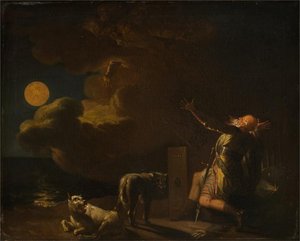
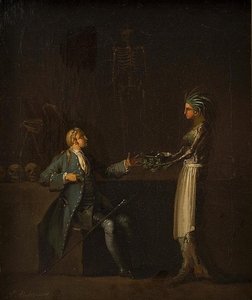
Портрет Ніколай Абільґор

100 найвідоміших картин Ніколай Абільґор: добірка галереї

Оновлено Жовтень 2026 · за рейтингом нашої популярності (кількість пошукових запитів, переглядів та замовлень для кожної роботи) · 106 робіт Ніколай Абільґор у нашому каталозі

Коротко кажучи

З усіх оригінальних робіт, які залишив Ніколай Абільґор, найвідомішою є The Greek Poet Sappho and the Girl from Mytilene (1809) із колекції Statens Museum For Kunst, Копенгаген. Слідом за ними йдуть Cupid Playing the Lyre. (1782) та Christian V Presents Danish Law 1683 (1784). Наш каталог містить 106 робіт Ніколай Абільґор; галерея зберегла 100 найвідоміших у світі творів, кожен із яких представлений із датою створення, назвою музею та своєю історією.

1743 – 1809, Копенгаген Neoclassicism Найбільше робіт: Statens Museum For Kunst

10 найкращих картин Ніколай Абільґор: вибір галереї

1
The Greek Poet Sappho and the Girl from Mytilene (1809) авторства Ніколай Абільґор

The Greek Poet Sappho and the Girl from Mytilene

1809 · Acrylic On Canvas · Statens Museum For Kunst, Копенгаген

Nicolai Abildgaard’s Sappho and Mytilene: A Vision of Romantic Idealism The painting “The Greek Poet Sappho and the Girl from Mytilene,” created by Nicolai Abraham Abildgaard in 1809, stands as a cornerstone of Danish neoclassical art and embodies the fervent spirit of Romantic idealism. More than just a depiction of two figures, it’s an exploration of beauty, longing, and the sublime—themes central to the artistic sensibilities of the era. Housed…

2
Cupid Playing the Lyre. (1782) авторства Ніколай Абільґор

Cupid Playing the Lyre.

1782 · Oil On Canvas · Музей Торвальдсена, Копенгаген

In the quiet stillness of a mythological moment, Cupid Playing the Lyre. emerges from the shadows. This oil on canvas work, created by Nicolai Abildgaard around 1782, captures a solitary figure caught in a private, celestial act. The scene centers on a youthful, winged Cupid, whose presence brings a sense of soft grace to the composition. He leans toward a lyre that rests upon a stone pedestal, his delicate form…

3
Christian V Presents Danish Law 1683 (1784) авторства Ніколай Абільґор

Christian V Presents Danish Law 1683

1784 · Oil On Canvas · Statens Museum For Kunst, Копенгаген

Christian V Presents Danish Law 1683 is an oil painting by Nicolai Abildgaard. Created in 1784, this work functions as a history scene depicting a specific real event. The subject matter focuses on a Danish king presenting a body of law, capturing a moment of official legal or political significance. The scene is rendered in a documentary style that emphasizes the gravity of the proceedings.

5
The Potuans are Surprised to see Niels Klim Genuflect in front of the Wise Prince. (1785) авторства Ніколай Абільґор

The Potuans are Surprised to see Niels Klim Genuflect in front of the Wise Prince.

1785 · Oil · Statens Museum For Kunst, Копенгаген

The canvas bears the title The Potuans are Surprised to see Niels Klim Genuflect in front of the Wise Prince. It is a work by Nicolai Abildgaard, a painter who emerged from the scholarly atmosphere of Copenhagen, Denmark. The oil on canvas captures a singular moment of protocol and tension, frozen in the year 1785.

6
Frederik II Builds Kronborg Castle at Elsinore (1782) авторства Ніколай Абільґор

Frederik II Builds Kronborg Castle at Elsinore

1782 · Oil On Canvas · Statens Museum For Kunst, Копенгаген

In this significant work of Danish history, Frederik II Builds Kronborg Castle at Elsinore, the artist Nicolai Abildgaard captures a moment of profound national construction. The painting centers on Frederick II of Denmark, depicted during the foundational stages of the Kronborg Castle at Elsinore. It is a scene that looks back at the 18th century through a lens of historical narrative, focusing on the architectural ambitions of the Danish monarchy.

7
Kulturens herredømme (1796) авторства Ніколай Абільґор

Kulturens herredømme

1796 · Oil · Statens Museum For Kunst, Копенгаген

The oil painting titled Kulturens herredømme, known in English as The supremacy of culture, was executed by the artist Nicolai Abildgaard. This work is identified by the accession number KMS1836. The composition features a monochromatic, black-and-white palette that emphasizes the play of light and shadow across the figures.

8
Christian VII Uniting the Ducal with the Royal Part of Holstein in 1767 (1790) авторства Ніколай Абільґор

Christian VII Uniting the Ducal with the Royal Part of Holstein in 1767

1790 · Oil On Canvas · Statens Museum For Kunst, Копенгаген

The composition centers on a seated male figure, identified as King Christian VII, positioned on the right side of the canvas. He is dressed in white and gold regalia, wearing a crown and holding a scepter. To his left, two female figures are positioned; one faces the viewer directly, while the other is seen in profile, gesturing toward the king. Above the central group, a dark eagle flies through a…

9
Magnus Stenbock Surrenders the Fortress of Tønningen to Frederik IV in 1714 (1785) авторства Ніколай Абільґор

Magnus Stenbock Surrenders the Fortress of Tønningen to Frederik IV in 1714

1785 · Oil On Canvas · Statens Museum For Kunst, Копенгаген

In the grand tapestry of European history, few moments capture the gravity of shifting power quite like the scene depicted in Nicolai Abraham Abildgaard’s 1785 masterpiece, Magnus Stenbock Surrenders the Fortress of Tønningen to Frederik IV in 1714. This evocative oil painting serves as a window into a pivotal era of military diplomacy and sovereign command. The composition is masterfully orchestrated, drawing the viewer into a crowded, dynamic tableau where…

10
The robber's housekeeper comforts the young girl by telling the myth of Amor and Psyche. Motif from Apulejus, The Golden Donkey (1808) авторства Ніколай Абільґор

The robber's housekeeper comforts the young girl by telling the myth of Amor and Psyche. Motif from Apulejus, The Golden Donkey

1808 · Oil On Canvas · Statens Museum For Kunst, Копенгаген

The robber's housekeeper comforts the young girl by telling the myth of Amor and Psyche. Motif from Apulejus, The Golden Donkey is an oil on canvas work created about 1808. This piece captures a quiet, narrative moment between two figures, framed by the presence of a donkey in the shadows. The scene draws its inspiration from the literary motifs found in Apuleius's writings.

Вибірка Ніколай Абільґор триває, від 11 до 100

11Apollo charging the Parcae to visit Ceres, who has fled from the Earth (1809) авторства Ніколай АбільґорApollo charging the Parcae to visit Ceres, who has fled from the Earth1809 · Statens Museum For Kunst 12Christian III Succouring Denmark (1780) авторства Ніколай АбільґорChristian III Succouring Denmark1780 · Statens Museum For Kunst 13Christian III Succouring Denmark (1780) авторства Ніколай АбільґорChristian III Succouring Denmark1780 · Statens Museum For Kunst 14The Construction of Copenhagen´s Dock in the Reign of Christian VI (1786) авторства Ніколай АбільґорThe Construction of Copenhagen´s Dock in the Reign of Christian VI1786 · Statens Museum For Kunst 15The Prayers of the Potuans at the Feast of the Unfathomable God (1785) авторства Ніколай АбільґорThe Prayers of the Potuans at the Feast of the Unfathomable God1785 · Statens Museum For Kunst 16A farewell scene (1783) авторства Ніколай АбільґорA farewell scene1783 · Nivaagaards Malerisamling 17Rome as Ruler of the World (1784) авторства Ніколай АбільґорRome as Ruler of the World1784 · Statens Museum For Kunst 18The Triumph of a Potuan, whose Reform Proposal has been Approved (1785) авторства Ніколай АбільґорThe Triumph of a Potuan, whose Reform Proposal has been Approved1785 · Statens Museum For Kunst 19Absolute Monarchy Assigned to Frederik III in 1660 (1783) авторства Ніколай АбільґорAbsolute Monarchy Assigned to Frederik III in 16601783 · Statens Museum For Kunst 20The Establishment of Schools (1781) авторства Ніколай АбільґорThe Establishment of Schools1781 · Statens Museum For Kunst 21Asiatic Trade (1782) авторства Ніколай АбільґорAsiatic Trade1782 · Statens Museum For Kunst 22Niels Klim thinks he hears the Deacon when he is awakened by a Bull (1785) авторства Ніколай АбільґорNiels Klim thinks he hears the Deacon when he is awakened by a Bull1785 · Statens Museum For Kunst 23Standardization of Weights and Measures in 1683 (1784) авторства Ніколай АбільґорStandardization of Weights and Measures in 16831784 · Statens Museum For Kunst 24The Foundation of the Royal Library (1783) авторства Ніколай АбільґорThe Foundation of the Royal Library1783 · Statens Museum For Kunst 25Richard III wakes up from his nightmare in his tent in Bosworth (1785) авторства Ніколай АбільґорRichard III wakes up from his nightmare in his tent in Bosworth1785 · Statens Museum For Kunst 26Alexander's messenger at the Persian philosopher (1785) авторства Ніколай АбільґорAlexander's messenger at the Persian philosopher1785 27Alexander the Great and an officer visit Diogenes. (1785) авторства Ніколай АбільґорAlexander the Great and an officer visit Diogenes.1785 28The Prince Royal Frederik awakens the sleeping Fama with the help of Clio. Study. (1783) авторства Ніколай АбільґорThe Prince Royal Frederik awakens the sleeping Fama with the help of Clio. Study.1783 · The Museum of National History at Frederiksborg Castle 29Richard III Before the Battle of Bosworth (1780) авторства Ніколай АбільґорRichard III Before the Battle of Bosworth1780 · Randers Kunstmuseum 30The Archangel Michael and Satan Disputing about the Body of Moses (1785) авторства Ніколай АбільґорThe Archangel Michael and Satan Disputing about the Body of Moses1785 · ARoS Aarhus Kunstmuseum 31Niels Klim Receives the Homage of the Quamites. (1787) авторства Ніколай АбільґорNiels Klim Receives the Homage of the Quamites.1787 · Statens Museum For Kunst 32King Priam Pleading with Achilles for the Corpse of Hector (1794) авторства Ніколай АбільґорKing Priam Pleading with Achilles for the Corpse of Hector1794 · Statens Museum For Kunst 33The Foundation of the Copenhagen Fire Insurance (1786) авторства Ніколай АбільґорThe Foundation of the Copenhagen Fire Insurance1786 · Statens Museum For Kunst 34Mercury by the Seashore (1794) авторства Ніколай АбільґорMercury by the Seashore1794 · Statens Museum For Kunst 35Richard III (1787) авторства Ніколай АбільґорRichard III1787 36Achilles and the Centaur Cheiron (1796) авторства Ніколай АбільґорAchilles and the Centaur Cheiron1796 · Statens Museum For Kunst 37Thetis Immersing her Infant Son Achilles in the River Styx to Make him Invulnerable (1796) авторства Ніколай АбільґорThetis Immersing her Infant Son Achilles in the River Styx to Make him Invulnerable1796 · Statens Museum For Kunst 38The Death of Achilles (1796) авторства Ніколай АбільґорThe Death of Achilles1796 · Statens Museum For Kunst 39Philosophy. Allegorical figure. (1800) авторства Ніколай АбільґорPhilosophy. Allegorical figure.1800 · Statens Museum For Kunst 40The Slave Davus and the Maid Mysis. From Terence´s Andria. (1804) авторства Ніколай АбільґорThe Slave Davus and the Maid Mysis. From Terence´s Andria.1804 · Statens Museum For Kunst 41Christian I Raising the Province of Holstein to the State of a Duchy in 1460 (1778) авторства Ніколай АбільґорChristian I Raising the Province of Holstein to the State of a Duchy in 14601778 · Statens Museum For Kunst 42Jurisprudence. Allegorical Figure (1800) авторства Ніколай АбільґорJurisprudence. Allegorical Figure1800 · Statens Museum For Kunst 43Achilles and the Daughters of Lycomedes (1796) авторства Ніколай АбільґорAchilles and the Daughters of Lycomedes1796 · Statens Museum For Kunst 44Theology. Allegorical figure (1800) авторства Ніколай АбільґорTheology. Allegorical figure1800 · Statens Museum For Kunst 45Simo and his former slave Sosia. From Terence´s Andria. (1803) авторства Ніколай АбільґорSimo and his former slave Sosia. From Terence´s Andria.1803 · Statens Museum For Kunst 46Julia and Fulvia (1800) авторства Ніколай АбільґорJulia and Fulvia1800 · Національний музей мистецтва, архітектури та дизайну 47Portrait of the artist's son Marcus Aurelius Abildgaard. (1797) авторства Ніколай АбільґорPortrait of the artist's son Marcus Aurelius Abildgaard.1797 48Fingal gives his weapons to Oscar. (1796) авторства Ніколай АбільґорFingal gives his weapons to Oscar.1796 · Kunsten Museum of Modern Art Aalborg 49Allegory of Philosophy (1800) авторства Ніколай АбільґорAllegory of Philosophy1800 50Allegory of Protestantism (1809) авторства Ніколай АбільґорAllegory of Protestantism1809 · Ribe Kunstmuseum 51The Catholic Worldview, Allegory (1809) авторства Ніколай АбільґорThe Catholic Worldview, Allegory1809 · Ribe Kunstmuseum 52The Oath of Fealty in 1660 (1806) авторства Ніколай АбільґорThe Oath of Fealty in 16601806 · Statens Museum For Kunst 53Odysseus Takes Counsel with Teiresias. From Homer´s Odyssey (1809) авторства Ніколай АбільґорOdysseus Takes Counsel with Teiresias. From Homer´s Odyssey1809 · Statens Museum For Kunst 54Fotis sees her Lover Lucius Transformed into an Ass. Motif from Apeleius' The Golden Ass (1809) авторства Ніколай АбільґорFotis sees her Lover Lucius Transformed into an Ass. Motif from Apeleius' The Golden Ass1809 · Statens Museum For Kunst 55Tarquin and the Sibyl (1809) авторства Ніколай АбільґорTarquin and the Sibyl1809 · Statens Museum For Kunst 56Hierarchy at its Peak at the time of the Crusades (1784) авторства Ніколай АбільґорHierarchy at its Peak at the time of the Crusades1784 · Statens Museum For Kunst 57The Revival of Learning, the Invention of Printing and Gunpowder and the Discovery of America (1784) авторства Ніколай АбільґорThe Revival of Learning, the Invention of Printing and Gunpowder and the Discovery of America1784 · Statens Museum For Kunst 58Papirius and his Mother (1809) авторства Ніколай АбільґорPapirius and his Mother1809 · Statens Museum For Kunst 59Alexander the Great and Diogenes. (1809) авторства Ніколай АбільґорAlexander the Great and Diogenes.1809 · Kunsten Museum of Modern Art Aalborg 60Fotis sees her Lover Lucius Transformed into an Ass. Motif from Apeleius' The Golden Ass (1809) авторства Ніколай АбільґорFotis sees her Lover Lucius Transformed into an Ass. Motif from Apeleius' The Golden Ass1809 · Statens Museum For Kunst 61Tibullus Lamenting outside the Door of his Beloved (1808) авторства Ніколай АбільґорTibullus Lamenting outside the Door of his Beloved1808 · Statens Museum For Kunst 62Christian IV Aboard his Flagship "The Trinity" (1782) авторства Ніколай АбільґорChristian IV Aboard his Flagship "The Trinity"1782 · Statens Museum For Kunst 63Two Young Men Confessing to Alexander the Great their Conspiracy against Him (1800) авторства Ніколай АбільґорTwo Young Men Confessing to Alexander the Great their Conspiracy against Him1800 · Statens Museum For Kunst 64Niels Klim Attends the Sentencing of the Deceased Potuan Prince. (1785) авторства Ніколай АбільґорNiels Klim Attends the Sentencing of the Deceased Potuan Prince.1785 · Statens Museum For Kunst 65The Abolition of Adscription in 1788 (1790) авторства Ніколай АбільґорThe Abolition of Adscription in 17881790 · Statens Museum For Kunst 66Frederik V as Patron of Science and Arts (1787) авторства Ніколай АбільґорFrederik V as Patron of Science and Arts1787 · Statens Museum For Kunst 67The Midwife Taking Leave of the Girl from Andros (from Terence's Andria ) (1801) авторства Ніколай АбільґорThe Midwife Taking Leave of the Girl from Andros (from Terence's Andria )1801 · Statens Museum For Kunst 68Nature Untamed (1784) авторства Ніколай АбільґорNature Untamed1784 · Statens Museum For Kunst 69Hamlet Delivering a Letter Written by Himself to the Queen of Scotland (1776) авторства Ніколай АбільґорHamlet Delivering a Letter Written by Himself to the Queen of Scotland1776 · Statens Museum For Kunst 70From Ludvig Holbergs´s The Journey of Niels Klim to The World Underground (1785) авторства Ніколай АбільґорFrom Ludvig Holbergs´s The Journey of Niels Klim to The World Underground1785 · Statens Museum For Kunst 71Frederik II Builds Kronberg Castle at Elsinore (1781) авторства Ніколай АбільґорFrederik II Builds Kronberg Castle at Elsinore1781 · Statens Museum For Kunst 72The Dying Messalina and Her Mother (1797) авторства Ніколай АбільґорThe Dying Messalina and Her Mother1797 · Statens Museum For Kunst 73The Greek Poet Anacreon and Bathyll (1808) авторства Ніколай АбільґорThe Greek Poet Anacreon and Bathyll1808 · Statens Museum For Kunst 74Christian I Elevates Holstein to a Duchy in 1474 (1778) авторства Ніколай АбільґорChristian I Elevates Holstein to a Duchy in 14741778 · Statens Museum For Kunst 75Socrates in Prison (1784) авторства Ніколай АбільґорSocrates in Prison1784 · Ню Карлсберг Гліптотек 76Niels Klim in Potu (1785) авторства Ніколай АбільґорNiels Klim in Potu1785 · Statens Museum For Kunst 77Allegory on the Right of Citizenship (1790) авторства Ніколай АбільґорAllegory on the Right of Citizenship1790 · Statens Museum For Kunst 78Fingal Sees the Ghosts of his Forefathers by Moonlight (1782) авторства Ніколай АбільґорFingal Sees the Ghosts of his Forefathers by Moonlight1782 · Statens Museum For Kunst 79Male Figure after Michelangelo's 'Last Judgement' in the Sistine Chapel (1774) авторства Ніколай АбільґорMale Figure after Michelangelo's 'Last Judgement' in the Sistine Chapel1774 · Statens Museum For Kunst 80Ismene and Antogone Plead with Theseus (1799) авторства Ніколай АбільґорIsmene and Antogone Plead with Theseus1799 · Statens Museum For Kunst 81Hamlet and His Mother (1778) авторства Ніколай АбільґорHamlet and His Mother1778 · Statens Museum For Kunst 82Richard III terrified by nightmarish visions. Shakespeare, Act 5, Scene 9 авторства Ніколай АбільґорRichard III terrified by nightmarish visions. Shakespeare, Act 5, Scene 9Nivaagaards Malerisamling 83Amor and Psyche embracing each other авторства Ніколай АбільґорAmor and Psyche embracing each otherNivaagaards Malerisamling 84Two Roman warriors watching a seated man embracing a child авторства Ніколай АбільґорTwo Roman warriors watching a seated man embracing a child 85Scenes from 'Niels Klim's Subterranean Journey' авторства Ніколай АбільґорScenes from 'Niels Klim's Subterranean Journey'Гамбургська художня галерея 86Audhumla авторства Ніколай АбільґорAudhumlaStatens Museum For Kunst 87The Doctor's Wife Reveals Her Husband's Intention of Anatomising Niels Klim (1787) авторства Ніколай АбільґорThe Doctor's Wife Reveals Her Husband's Intention of Anatomising Niels Klim1787 · Statens Museum For Kunst 88The Finding of the Infant Moses авторства Ніколай АбільґорThe Finding of the Infant MosesStatens Museum For Kunst 89Adam and Eve (1780) авторства Ніколай АбільґорAdam and Eve1780 · Національний музей Швеції 90Catullus, and Lesbia Seeking Comfort in his Arms for the Death of her Sparrow (1809) авторства Ніколай АбільґорCatullus, and Lesbia Seeking Comfort in his Arms for the Death of her Sparrow1809 · Nivaagaards Malerisamling 91A view of Schie Church in Sweden авторства Ніколай АбільґорA view of Schie Church in SwedenSorø Art Museum 92Adrastos Slays Himself on Atys' Tomb авторства Ніколай АбільґорAdrastos Slays Himself on Atys' TombARoS Aarhus Kunstmuseum 93Lover Pamfilus in conversation with his forslagne serve Davus авторства Ніколай АбільґорLover Pamfilus in conversation with his forslagne serve DavusStatens Museum For Kunst 94Portrait of Nicolai Abraham Abildgaard авторства Ніколай АбільґорPortrait of Nicolai Abraham Abildgaard 95Ossian's swansong авторства Ніколай АбільґорOssian's swansongStatens Museum For Kunst 96Hamlet Shows His Mother the Ghost of His Father авторства Ніколай АбільґорHamlet Shows His Mother the Ghost of His Father 97Fingal Sees the Ghosts of His Ancestors in the Moonlight авторства Ніколай АбільґорFingal Sees the Ghosts of His Ancestors in the Moonlight 98Jupiter Weighing the Fate of Man авторства Ніколай АбільґорJupiter Weighing the Fate of ManRibe Kunstmuseum 99Sitting male nude with the face partly covered by his raised arms авторства Ніколай АбільґорSitting male nude with the face partly covered by his raised arms 100The Wounded Philoctetes (1775) авторства Ніколай АбільґорThe Wounded Philoctetes1775 · Національна галерея Данії

Знамениті картини Ніколай Абільґор за періодами творчості

Теми, що привертали увагу Ніколай Абільґор

Чотири сюжети, які найчастіше зустрічаються в цих оригіналах, кожен із найкращим прикладом.

Музеї, у яких зберігаються оригінали Ніколай Абільґор

8 музеїв, у яких зберігається найбільша кількість картин із цього списку.

Музей Місто Твори Ніколай Абільґор Картини зі цього списку
Statens Museum For Kunst, КопенгагенStatens Museum For Kunst Копенгаген 70 The Greek Poet Sappho and the Girl from Mytilene, Christian V Presents Danish Law 1683, Julia and Fulvia
Nivaagaards Malerisamling, NibeNivaagaards Malerisamling Nibe 4 A farewell scene, Richard III terrified by nightmarish visions. Shakespeare, Act 5, Scene 9, Amor and Psyche embracing each other
Ribe Kunstmuseum, EsbjergRibe Kunstmuseum Esbjerg 3 Allegory of Protestantism, The Catholic Worldview, Allegory, Jupiter Weighing the Fate of Man
ARoS Aarhus Kunstmuseum, AarhusARoS Aarhus Kunstmuseum Aarhus 2 The Archangel Michael and Satan Disputing about the Body of Moses, Adrastos Slays Himself on Atys' Tomb
Kunsten Museum of Modern Art Aalborg, AalborgKunsten Museum of Modern Art Aalborg Aalborg 2 Fingal gives his weapons to Oscar., Alexander the Great and Diogenes.
The Museum of National History at Frederiksborg Castle, HillerødThe Museum of National History at Frederiksborg Castle Hillerød 2 The Prince Royal Frederik awakens the sleeping Fama with the help of Clio. Study.
Національний музей Швеції, СтокгольмНаціональний музей Швеції Стокгольм 2 Adam and Eve
Sorø Art Museum, SorøSorø Art Museum Sorø 2 A view of Schie Church in Sweden

Ніколай Абільґор десятиліття за десятиліттям: оригінали, що визначають кожне з них

Роботи за десятиліттями

Оберіть десятиліття, щоб побачити оригінальний твір, який його визначає.

Запитання колекціонерів про картини Ніколай Абільґор

Яка робота Ніколай Абільґор є найвідомішою?Дізнатися відповідь

The Greek Poet Sappho and the Girl from Mytilene (1809), Statens Museum For Kunst, Копенгаген. Далі йдуть Cupid Playing the Lyre. (1782) та Christian V Presents Danish Law 1683 (1784).

Скільки років було Ніколай Абільґор, коли було створено The Greek Poet Sappho and the Girl from Mytilene?Дізнатися відповідь

66 років: The Greek Poet Sappho and the Girl from Mytilene датована 1809 роком, а Ніколай Абільґор народився(-лася) у 1743.

Які десять найвідоміших картин Ніколай Абільґор?Дізнатися відповідь

The Greek Poet Sappho and the Girl from Mytilene, Cupid Playing the Lyre., Christian V Presents Danish Law 1683, Julia and Fulvia, The Potuans are Surprised to see Niels Klim Genuflect in front of the Wise Prince., Frederik II Builds Kronborg Castle at Elsinore, Kulturens herredømme, Christian VII Uniting the Ducal with the Royal Part of Holstein in 1767, Magnus Stenbock Surrenders the Fortress of Tønningen to Frederik IV in 1714 та The robber's housekeeper comforts the young girl by telling the myth of Amor and Psyche. Motif from Apulejus, The Golden Donkey. У рейтингу вище вказано рік створення та музей для кожної картини.

Скільки картин залишив Ніколай Абільґор?Дізнатися відповідь

Наш каталог містить 106 робіт Ніколай Абільґор, датованих періодом з 1774 по 1809.

У яких музеях виставляються шедеври Ніколай Абільґор?Дізнатися відповідь

Переважно в Statens Museum For Kunst (Копенгаген), Nivaagaards Malerisamling (Nibe) та Ribe Kunstmuseum (Esbjerg). У таблиці музеїв вище наведено їхній повний перелік.

У які роки Ніколай Абільґор створив свої найвідоміші роботи?Дізнатися відповідь

У 1780s: 40 із 100 робіт на цій сторінці були створені тоді, серед них Cupid Playing the Lyre..

Які перша та остання відомі оригінальні роботи Ніколай Абільґор?Дізнатися відповідь

На цій сторінці найдавніша робота датована Male Figure after Michelangelo's 'Last Judgement' in the Sistine Chapel (1774), а найновіша — The Greek Poet Sappho and the Girl from Mytilene (1809).

Які сюжети Ніколай Абільґор обирав найчастіше?Дізнатися відповідь

Woman (12), Drapery (10) та Shadows (9), у 100 роботах на цій сторінці.

Яку техніку найчастіше використовував(ла) Ніколай Абільґор?Дізнатися відповідь

Oil On Canvas, для 27 із 100 робіт на цій сторінці.

До якого художнього напряму належить Ніколай Абільґор?Дізнатися відповідь

Neoclassicism та Neoclassical romanticism, судячи з оригіналів на цій сторінці.

Які роботи Ніколай Абільґор виставлені в Statens Museum For Kunst?Дізнатися відповідь

The Greek Poet Sappho and the Girl from Mytilene, Christian V Presents Danish Law 1683 та Julia and Fulvia: Statens Museum For Kunst, Копенгаген зберігає 70 робіт із цієї сторінки.

Ніколай Абільґор: життя та творчість

Early Life and Artistic Foundations

Nicolai Abraham Abildgaard, born in Copenhagen on September 11th, 1743, emerged from a family deeply immersed in the world of art and scholarship. His father, Søren Abildgaard, was a respected antiquarian draughtsman, instilling in young Nicolai an early appreciation for classical forms and meticulous observation. This familial influence proved foundational as Abildgaard embarked on his artistic journey, receiving initial training with a local painting master before formally enrolling at the New Royal Danish Academy of Art in 1764. His talent quickly became apparent; from 1764 to 1767, he consistently earned accolades and medallions recognizing his burgeoning skill. These early successes culminated in a travel stipend awarded in 1767 – a pivotal opportunity that would shape the course of his artistic development, though it was five years before he could finally utilize it. During these formative years at the Academy, Abildgaard benefited from the tutelage of Johan Edvard Mandelberg and Johannes Wiedewelt, absorbing their techniques and perspectives while simultaneously forging his own unique path.

The Roman Awakening: A Shift in Perspective

In 1772, Nicolai Abildgaard finally realized his long-awaited dream of traveling to Rome. This five-year sojourn proved transformative, marking a crucial turning point in his artistic evolution. Immersed in the heart of classical antiquity, he dedicated himself to studying not only sculpture but also architecture, decoration, and the magnificent frescoes adorning Palazzo Farnese. A visit to Naples in 1776 with fellow artist Jens Juel further broadened his horizons. Rome wasn’t merely a place for technical study; it was an intellectual awakening. Abildgaard delved into history painting, seeking to master its complexities and narrative power. He drew inspiration from the masters – Annibale Carracci, Raphael, Titian, and Michelangelo – absorbing their compositional strategies, dramatic use of light, and profound understanding of human anatomy. However, his exposure wasn’t limited to strict classicism. The influence of artists like Johan Tobias Sergel and Johann Heinrich Füssli began to subtly shift his aesthetic sensibilities, introducing a nascent Romantic sensibility into his work. Simultaneously, Abildgaard cultivated a deep appreciation for literature, finding inspiration in the works of Shakespeare, Homer, and Ossian – narratives that would later permeate his canvases with layers of meaning and emotional resonance.

Royal Commissions and National Narratives

Returning to Copenhagen in December 1777, Abildgaard was immediately recognized as a rising star. He swiftly secured a professorship at the Academy in 1778 and soon after, around 1780, ascended to the prestigious position of royal historical painter. This appointment brought with it a monumental commission from the Danish government: to create a series of paintings depicting the history of Denmark for the Knights’ Room (Riddersal) at Christiansborg Palace. This project became the defining undertaking of his career. These weren’t simply historical illustrations; they were carefully constructed narratives designed to glorify the monarchy and instill a sense of national pride. Abildgaard masterfully combined accurate historical depictions with allegorical elements and mythological references, creating visually stunning and intellectually stimulating compositions. He also collaborated with Johan Edvard Mandelberg on decorative schemes for Fredensborg Palace, further solidifying his position as Denmark’s leading artistic figure.

A Synthesis of Styles: Neoclassicism and Romanticism

Nicolai Abildgaard's artistic style represents a fascinating synthesis of Neoclassical rigor and emerging Romantic sensibilities. While grounded in the principles of classical composition, clarity, and anatomical accuracy, his works are infused with dramatic lighting, rich color palettes, and meticulous attention to detail that hint at a deeper emotional undercurrent. Notable paintings such as “Christian I Elevates Holstein to a Duchy in 1474” exemplify this blend – a stately historical scene rendered with classical precision yet imbued with a sense of grandeur and theatricality. Other works, like the haunting “The Nightmare,” demonstrate his willingness to explore darker psychological themes, foreshadowing the full-blown Romanticism that would soon dominate European art. His exploration extended beyond history painting; "Culmin's Ghost Appears to his Mother" showcases his skill in portraying supernatural events with dramatic intensity, while pieces like “The Wounded Philoctetes” reveal a sensitivity to human suffering and vulnerability. He wasn’t merely replicating historical or mythological scenes; he was interpreting them through the lens of his own artistic vision, imbuing them with layers of symbolic meaning accessible to a refined audience. His pictorial allegory became a hallmark of his style, using symbols as visual shorthand for complex ideas and emotions.

Legacy and Enduring Influence

Abildgaard served as director of the Academy during 1789–1791 and again from 1801 until his death in Copenhagen on November 14th, 1809. Throughout his career, he nurtured a generation of talented artists, including Asmus Jacob Carstens, Bertel Thorvaldsen, J. L. Lund, and perhaps most significantly, Christoffer Wilhelm Eckersberg. Eckersberg, often hailed as the “father of Danish painting,” would lay the foundation for the Golden Age of Danish Painting, building upon the principles Abildgaard had instilled in him. Abildgaard’s influence extended beyond his direct students; he fundamentally shaped the artistic landscape of Denmark, bridging the gap between Neoclassicism and Romanticism. His work not only reflected the cultural values of his time but also anticipated future artistic trends, contributing significantly to the development of Nordic Romanticism and leaving an indelible mark on Danish art history. He remains a pivotal figure in understanding the transition from Enlightenment ideals to the emotional intensity of the 19th century.