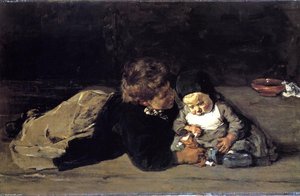
Portrait of Макс Ліберман

The 100 Most Famous Макс Ліберман Paintings, a Gallery Selection

Updated Жовтень 2026 · ranked by our popularity score (searches, visits and orders for each work) · 280 works by Макс Ліберман in our catalogue

In short

Of all the originals Макс Ліберман left, the most famous is Безгодинний відпочинок в амстердамському притулку для сиріт (1876). Close behind it come Self Portrait with Kitchen Still LIfe (1873) and Corner of a Dutch Village with Washing Hung up to Dry (1890). Our catalog holds 280 works by Макс Ліберман; the gallery has kept the 100 the world admires most, each shown with its date, its museum and its story.

1847 – 1935, Берлін Impressionist realism Most works: Alte Nationalgalerie

Макс Ліберман's top 10 paintings: the gallery's choice

1
Безгодинний відпочинок в амстердамському притулку для сиріт (1876) by Макс Ліберман

Безгодинний відпочинок в амстердамському притулку для сиріт

1876 · Олія на полотні

Max Liebermann’s “Free Hour at Amsterdam Orphanage,” painted in 1876, isn't merely a depiction of a scene; it’s an invitation. An invitation to step back into the bustling heart of 19th-century Amsterdam and witness a quiet moment of communal life – a snapshot of everyday existence captured with remarkable sensitivity and Impressionistic grace. This painting, brimming with warmth and social connection, offers viewers a glimpse into a world both familiar…

2
Self Portrait with Kitchen Still LIfe (1873) by Макс Ліберман

Self Portrait with Kitchen Still LIfe

1873 · Олія на полотні · Stadtisches Museum, Гельзенкірхен

To stand before Max Liebermann’s Self Portrait with Kitchen Still Life is not merely to observe a painting; it is to step directly into the vibrant, sun-drenched moments of late nineteenth-century Berlin. Created in 1873, this oil on canvas captures more than just a likeness; it encapsulates the artist's profound belief that true beauty resides within the quotidian—the humble objects and simple acts of daily life. Liebermann, a master whose…

3
Corner of a Dutch Village with Washing Hung up to Dry (1890) by Макс Ліберман

Corner of a Dutch Village with Washing Hung up to Dry

1890 · Олія на панелі · Harvard Art Museums, Кембридж

The air feels heavy with the scent of damp fabric and the salt of a nearby coast. In this corner of a Dutch village, time seems to pause, caught in the soft, overcast light of 1890. A white building dominates the immediate view, its red door and blue shutters providing the only sharp interruptions to the muted, earthy tones of the village. Above the doorway, laundry hangs from a line,…

4
Portrait of Richard Strauss (1918) by Макс Ліберман

Portrait of Richard Strauss

1918 · Oil · Alte Nationalgalerie, Берлін

This 1918 impressionist painting by Max Liebermann presents a black and white portrait of Richard Strauss. The subject is depicted sitting in a chair with his hands clasped together, wearing a suit and tie. He is shown with a mustache and appears to be looking directly at the viewer. To provide depth to the scene, the background features a curtain behind the seated man.

5
Restaurant De oude Vink (1905) by Макс Ліберман

Restaurant De oude Vink

1905 · Oil

There is a certain quietude found in the middle of a crowd, a feeling captured here in 1905. In Restaurant De oude Vink, we find ourselves seated among patrons enjoying a meal under the dappled shade of trees. The scene is one of casual, unhurried leisure. Green chairs are scattered around tables, some occupied by figures lost in conversation, others left empty as if the guests have only just stepped…

6
Self-portrait (1916) by Макс Ліберман

Self-portrait

1916 · Oil On Canvas · Kunsthalle Bremen, Бремен

An older man sits in a moment of quiet creation, his presence filling the space with a heavy, contemplative dignity. He faces the viewer directly, his gaze steady and unblinking, even as his hands remain occupied with the tools of his trade. In his right hand, he holds a palette, while his left hand brings a brush toward an easel, capturing a fragment of life in real-time. The light enters…

7
The Preserve Makers (1879) by Макс Ліберман

The Preserve Makers

1879 · Oil On Canvas · Museum der bildenden Künste, Лейпциг

The Preserve Makers is a somber and intimate realist painting that captures a group of women gathered within a dimly lit, rustic interior. The composition is dense and crowded, utilizing a shallow depth of field that brings the figures into the immediate foreground to create a sense of enclosure and shared labor. These women are engaged in the communal task of preparing vegetables, their presence evoking a sense of quiet…

The Макс Ліберман selection continues, 11 to 100

11The farrier (1874) by Макс ЛіберманThe farrier1874 · Staatliche Kunsthalle Karlsruhe 12Young Boys Bathing at Zandvoort (1896) by Макс ЛіберманYoung Boys Bathing at Zandvoort1896 13Albert Einstein (1879–1955) (1922) by Макс ЛіберманAlbert Einstein (1879–1955)1922 · Королівське товариство 14Portrait Study of Emil Rathenau (1908) by Макс ЛіберманPortrait Study of Emil Rathenau1908 · Alte Nationalgalerie 15Portrait Dr. Wilhelm Bode (1909) by Макс ЛіберманPortrait Dr. Wilhelm Bode1909 · Alte Nationalgalerie 16The Siblings (1876) by Макс ЛіберманThe Siblings1876 · Дрезденські державні художні збори 17Swimmers (1875) by Макс ЛіберманSwimmers1875 · Далласский музей искусств 18The Basketweavers (Die Korbflechter) (1872) by Макс ЛіберманThe Basketweavers (Die Korbflechter)1872 · Staatliche Kunsthalle Karlsruhe 19Infant school in Amsterdam (1880) by Макс ЛіберманInfant school in Amsterdam1880 · Alte Nationalgalerie 20Road in Dutch Village (1885) by Макс ЛіберманRoad in Dutch Village1885 21Girl from Laren Peeling Potatoes with Sleeping Child in a Basket (1887) by Макс ЛіберманGirl from Laren Peeling Potatoes with Sleeping Child in a Basket1887 · Museum Kunst der Westküste 22The Net Menders (1888) by Макс ЛіберманThe Net Menders1888 · Гамбургська художня галерея 23Dr. Max Linde (1897) by Макс ЛіберманDr. Max Linde1897 · Національна галерея Праги 24Going to School in Laren - Composition Study (1898) by Макс ЛіберманGoing to School in Laren - Composition Study1898 25Rider by the Sea Facing Left (1900) by Макс ЛіберманRider by the Sea Facing Left1900 26Samson and Delilah (1902) by Макс ЛіберманSamson and Delilah1902 · Музей Штадель 27Painting of the artist's mother (1900) by Макс ЛіберманPainting of the artist's mother1900 · Slovak National Gallery 28Two Riders on the Beach to the left (1901) by Макс ЛіберманTwo Riders on the Beach to the left1901 29Copy of the Bohémienne after Frans Hals (Young woman) (1870) by Макс ЛіберманCopy of the Bohémienne after Frans Hals (Young woman)1870 · Staatliche Kunsthalle Karlsruhe 30The Terrace at the Hotel Louis C. Jacob in Nienstedten on the Elbe (1902) by Макс ЛіберманThe Terrace at the Hotel Louis C. Jacob in Nienstedten on the Elbe1902 · Гамбургська художня галерея 31Two riders on the beach (1903) by Макс ЛіберманTwo riders on the beach1903 · Музей Вальраф-Рихарта 32Man with parrots (1900) by Макс ЛіберманMan with parrots1900 33Dutch Farmhouse with Woman (1882) by Макс ЛіберманDutch Farmhouse with Woman1882 · Frye Art Museum 34Rider on the Beach (1904) by Макс ЛіберманRider on the Beach1904 35On the Alster in Hamburg (1910) by Макс ЛіберманOn the Alster in Hamburg1910 · Staatliche Kunstsammlungen Dresden 36The Lifeguard's cart (1908) by Макс ЛіберманThe Lifeguard's cart1908 37Self-portrait (1908) by Макс ЛіберманSelf-portrait1908 · Музей Вальраф-Рихарта 38Self-Portrait with Panama Hat (1911) by Макс ЛіберманSelf-Portrait with Panama Hat1911 39Self-Portrait with Straw Hat (1914) by Макс ЛіберманSelf-Portrait with Straw Hat1914 · Dordrechts Museum 40Self-portrait, standing in three-quarter figure, both hands in trouser pockets (Selbstbildnis, stehend in Dreiviertelfigur, beide Hände in den Hosentaschen) (1915) by Макс ЛіберманSelf-portrait, standing in three-quarter figure, both hands in trouser pockets (Selbstbildnis, stehend in Dreiviertelfigur, beide Hände in den Hosentaschen)1915 · Alte Nationalgalerie 41Self-Portrait with Palette to the Left (1912) by Макс ЛіберманSelf-Portrait with Palette to the Left1912 · Berlinische Galerie 42Käthe Liebermann – The Artist's Daughter (1916) by Макс ЛіберманKäthe Liebermann – The Artist's Daughter1916 43The artist's daughter riding (1913) by Макс ЛіберманThe artist's daughter riding1913 · Музей Вальраф-Рихарта 44Study: Bust of a Man / Bust of a Woman – Two-sided Painting (1875) by Макс ЛіберманStudy: Bust of a Man / Bust of a Woman – Two-sided Painting1875 · Національний музей у Кракові 45Ulrich von Wilamowitz Moellendorff (1915) by Макс ЛіберманUlrich von Wilamowitz Moellendorff1915 46Sketches of Jozef Israëls (1912) by Макс ЛіберманSketches of Jozef Israëls1912 · Ben Uri Gallery and Museum 47Portrait of the Berlin Garden Director Albert Brodersen (1920) by Макс ЛіберманPortrait of the Berlin Garden Director Albert Brodersen1920 48Self portrait in painting smock (Selbstbildnis im Malkittel) (1922) by Макс ЛіберманSelf portrait in painting smock (Selbstbildnis im Malkittel)1922 · Баварські державні художні колекції 49Portrait of Jeanette Cornelia A. Onnes van Nijenrode-Cockuijt (1883-1936) (1918) by Макс ЛіберманPortrait of Jeanette Cornelia A. Onnes van Nijenrode-Cockuijt (1883-1936)1918 · Centraal Museum 50Portrait August Batschari (1918) by Макс ЛіберманPortrait August Batschari1918 · Westfälisches Landesmuseum 51Self-Portrait (1922) by Макс ЛіберманSelf-Portrait1922 52The Liebermann Family (1926) by Макс ЛіберманThe Liebermann Family1926 · Stiftung Stadtmuseum 53Self-Portrait with sports cap at the easel (1925) by Макс ЛіберманSelf-Portrait with sports cap at the easel1925 · Alte Nationalgalerie 54The Fisherman (1926) by Макс ЛіберманThe Fisherman1926 55A Dutch lacemaker (1881) by Макс ЛіберманA Dutch lacemaker1881 · Гамбургська художня галерея 56Gerhart Hauptmann (1912) by Макс ЛіберманGerhart Hauptmann1912 · Гамбургська художня галерея 57The Surgeon Dr. Ferdinand Sauerbruch (1932) by Макс ЛіберманThe Surgeon Dr. Ferdinand Sauerbruch1932 · Гамбургська художня галерея 58Digging for Potatoes in the Dunes at Zandvoort (1895) by Макс ЛіберманDigging for Potatoes in the Dunes at Zandvoort1895 · Germanisches Nationalmuseum 59Bust Selfportrait in Paiting Overall (1922) by Макс ЛіберманBust Selfportrait in Paiting Overall1922 · Stiftung Brandenburger Tor 60Study for Flax Barn in Laren (1886) by Макс ЛіберманStudy for Flax Barn in Laren1886 · Grohmann Museum 61On the Beach at Noordwijk (1908) by Макс ЛіберманOn the Beach at Noordwijk1908 62Children Bathing in the Sea (1899) by Макс ЛіберманChildren Bathing in the Sea1899 · Баварські державні художні колекції 63Landschaft mit schafherde by Макс ЛіберманLandschaft mit schafherde 64Albert einstein by Макс ЛіберманAlbert einstein 65Arbeiterin im rübenfeld by Макс ЛіберманArbeiterin im rübenfeld 66Flower Terrace in the Wannsee Garden, Facing East (1924) by Макс ЛіберманFlower Terrace in the Wannsee Garden, Facing East1924 67Recess in the Amsterdam Orphanage - View of the Inner Courtyard, Study (1876) by Макс ЛіберманRecess in the Amsterdam Orphanage - View of the Inner Courtyard, Study1876 · Alte Nationalgalerie 68Terrace in the Garden near the Wannsee toward Southwest (1919) by Макс ЛіберманTerrace in the Garden near the Wannsee toward Southwest1919 69Flowers at the Gardener's House toward the Northwest (sketch) (1921) by Макс ЛіберманFlowers at the Gardener's House toward the Northwest (sketch)1921 70The Flower Terrace in the Wannsee Garden, Facing Northwest (1923) by Макс ЛіберманThe Flower Terrace in the Wannsee Garden, Facing Northwest1923 · Stadtisches Museum 71Old Men's Home in Amsterdam, Study (1880) by Макс ЛіберманOld Men's Home in Amsterdam, Study1880 72Study Head of a Man (also known as Sephardic Jew with a Prayer Shawl, Facing Left) (1878) by Макс ЛіберманStudy Head of a Man (also known as Sephardic Jew with a Prayer Shawl, Facing Left)1878 · Художній музей Цюриха 73View of the Wannsee with sailing boats (1924) by Макс ЛіберманView of the Wannsee with sailing boats1924 · Alte Nationalgalerie 74View over the Tall Linden Hedge into the Cutting Garden toward the West (1929) by Макс ЛіберманView over the Tall Linden Hedge into the Cutting Garden toward the West1929 75The Terrace in the Wannsee Garden toward the Northwest (1926) by Макс ЛіберманThe Terrace in the Wannsee Garden toward the Northwest1926 76Parrot Avenue (1902) by Макс ЛіберманParrot Avenue1902 · Kunsthalle Bremen 77Table with Pieces of Meat (1877) by Макс ЛіберманTable with Pieces of Meat1877 · Нова Пінакотека 78Birch grow by Макс ЛіберманBirch grow 79A rider on the beach by Макс ЛіберманA rider on the beach 80Amsterdam Orphans in the Garden (1885) by Макс ЛіберманAmsterdam Orphans in the Garden1885 81The Surgeon, Ferdinand Sauerbruch (1932) by Макс ЛіберманThe Surgeon, Ferdinand Sauerbruch1932 82Outdoor Garden on the Havel, Nikolskoe (1916) by Макс ЛіберманOutdoor Garden on the Havel, Nikolskoe1916 83The Cutting Garden in Wannsee toward the West, with a Woman Gardener on the Path (1924) by Макс ЛіберманThe Cutting Garden in Wannsee toward the West, with a Woman Gardener on the Path1924 84Flowers at the Gardener's House (1927) by Макс ЛіберманFlowers at the Gardener's House1927 85Terrace in the Garden near the Wannsee toward Northwest (1916) by Макс ЛіберманTerrace in the Garden near the Wannsee toward Northwest1916 · Музей витончених мистецтв 86The Circular Bed in the Hedge Garden with a Woman Watering Flowers (1925) by Макс ЛіберманThe Circular Bed in the Hedge Garden with a Woman Watering Flowers1925 87Portrait of Felix Liebermann (1865) by Макс ЛіберманPortrait of Felix Liebermann1865 88Jewish Street in Amsterdam (1908) by Макс ЛіберманJewish Street in Amsterdam1908 · Музей Штадель 89Still life of meat (Fleischstillleben) (1878) by Макс ЛіберманStill life of meat (Fleischstillleben)1878 · Баварські державні художні колекції 90Hand of an officer of the Haarlem Guard (1876) by Макс ЛіберманHand of an officer of the Haarlem Guard1876 91Grain Harvest (1874) by Макс ЛіберманGrain Harvest1874 · Westfälisches Landesmuseum 92Amsterdam Orphanage (1876) by Макс ЛіберманAmsterdam Orphanage1876 · Arp Museum Bahnhof Rolandseck 93Terrace in the Garden near the Wannsee towards Northwest (1916) by Макс ЛіберманTerrace in the Garden near the Wannsee towards Northwest1916 · Музей витончених мистецтв 94Nets and Sails Spread over a Meadow: Study for the Net Menders (1884) by Макс ЛіберманNets and Sails Spread over a Meadow: Study for the Net Menders1884 · Ізраїльський музей 95Shoemaker (1881) by Макс ЛіберманShoemaker1881 · Alte Nationalgalerie 96Girl Sewing with Cat - Dutch Interior (1884) by Макс ЛіберманGirl Sewing with Cat - Dutch Interior1884 97Village Pond in Etzenhauser - Village Idyll (1879) by Макс ЛіберманVillage Pond in Etzenhauser - Village Idyll1879 98Village Street in MIlitsh - Landscape with Pond (1883) by Макс ЛіберманVillage Street in MIlitsh - Landscape with Pond1883 99Children's playground in Tiergarten park in Berlin (1885) by Макс ЛіберманChildren's playground in Tiergarten park in Berlin1885 100Privy Councilor Benjamin Liebermann (1887) by Макс ЛіберманPrivy Councilor Benjamin Liebermann1887

Макс Ліберман's famous paintings, period by period

The subjects that held Макс Ліберман's eye

The four subjects that come back most often in these originals, each with its finest example.

The museums that keep Макс Ліберман's originals

The 8 museums that hold the most of the paintings on this page.

Museum City Works by Макс Ліберман Paintings from this list
Alte Nationalgalerie, БерлінAlte Nationalgalerie Берлін 17 Portrait of Richard Strauss, Portrait Study of Emil Rathenau, Portrait Dr. Wilhelm Bode
Гамбургська художня галерея, ГамбургГамбургська художня галерея Гамбург 8 The Net Menders, The Terrace at the Hotel Louis C. Jacob in Nienstedten on the Elbe, A Dutch lacemaker
Баварські державні художні колекції, МюнхенБаварські державні художні колекції Мюнхен 7 Self portrait in painting smock (Selbstbildnis im Malkittel), Children Bathing in the Sea, Still life of meat (Fleischstillleben)
Музей Вальраф-Рихарта, KölnМузей Вальраф-Рихарта Köln 6 Two riders on the beach, Self-portrait, The artist's daughter riding
Staatliche Kunsthalle Karlsruhe, КарлсруеStaatliche Kunsthalle Karlsruhe Карлсруе 5 The farrier, The Basketweavers (Die Korbflechter), Copy of the Bohémienne after Frans Hals (Young woman)
Stadtisches Museum, ГельзенкірхенStadtisches Museum Гельзенкірхен 3 Self Portrait with Kitchen Still LIfe, The Flower Terrace in the Wannsee Garden, Facing Northwest
Kunsthalle Bremen, БременKunsthalle Bremen Бремен 3 Self-portrait, Parrot Avenue
Staatliche Kunstsammlungen Dresden, ДрезденStaatliche Kunstsammlungen Dresden Дрезден 3 Alfred von Berger, On the Alster in Hamburg

Макс Ліберман decade by decade: the original that defines each

Works per decade

Pick a decade to see the original that defines it.

Collectors' questions about Макс Ліберман's paintings

Which work is Макс Ліберман most famous for?Reveal the answer

Безгодинний відпочинок в амстердамському притулку для сиріт (1876). Self Portrait with Kitchen Still LIfe (1873) and Corner of a Dutch Village with Washing Hung up to Dry (1890) come next.

What age was Макс Ліберман when Безгодинний відпочинок в амстердамському притулку для сиріт was made?Reveal the answer

29 years old: Безгодинний відпочинок в амстердамському притулку для сиріт dates from 1876, and Макс Ліберман was born in 1847.

What are the ten most famous Макс Ліберман paintings?Reveal the answer

Безгодинний відпочинок в амстердамському притулку для сиріт, Self Portrait with Kitchen Still LIfe, Corner of a Dutch Village with Washing Hung up to Dry, Portrait of Richard Strauss, Restaurant De oude Vink, Self-portrait, The Preserve Makers, Schreitender Bauer, KIRCHGANG IN Laren and Alfred von Berger. The ranking above gives each one's year and museum.

How many paintings did Макс Ліберман leave?Reveal the answer

Our catalog holds 280 works by Макс Ліберман, dated from 1865 to 1932.

In which museums do Макс Ліберман's masterpieces hang?Reveal the answer

Mostly in Alte Nationalgalerie (Берлін), Гамбургська художня галерея (Гамбург) and Баварські державні художні колекції (Мюнхен). The museum table above lists them all.

In which years did Макс Ліберман paint the most famous works?Reveal the answer

In 1910s: 18 of the 100 works on this page were made then, Portrait of Richard Strauss among them.

What are the first and the last famous originals of Макс Ліберман?Reveal the answer

On this page, the earliest is Portrait of Felix Liebermann (1865) and the latest The Surgeon Dr. Ferdinand Sauerbruch (1932).

Which subjects did Макс Ліберман choose most often?Reveal the answer

Man (10), Portrait (6) and Suit (5), across the 100 works on this page.

Which technique did Макс Ліберман use most?Reveal the answer

Олія на полотні, for 16 of the 100 works on this page.

To which art movement does Макс Ліберман belong?Reveal the answer

Impressionist realism, judging by the originals on this page.

Which Макс Ліберман works hang at the Alte Nationalgalerie?Reveal the answer

Portrait of Richard Strauss, Portrait Study of Emil Rathenau and Portrait Dr. Wilhelm Bode: the Alte Nationalgalerie, Берлін holds 9 of the works on this page.

Can I commission a reproduction of a Макс Ліберман painting?Reveal the answer

Yes, as a reproduction: the original stays in its museum, but any painting on this page can be painted by hand for you, made to order one at a time, from the painting's own page.

Макс Ліберман: life and work

A Life Immersed in Light: The World of Max Liebermann

Max Liebermann, народжений 20 липня 1847 року у Берліні, не був запрограмований на те, щоб стати одним із провідних імпресіоністів Німеччини. Спочатку він був спрямований до респектабельних професій – юриспруденції та філософії – в Університеті Берліна, але його справжня пристрасть виявилася у полотнах, а не в залі суду. Цей ранній інтелектуальний досвід безсумнівно сформував його спостережливість і розважливий підхід до зображення світу навколо нього. Це був свідомий поворот – навчання у Відні, Парижі та Нідерландах – яке справді запалило його творчу іскру, познайомивши з різними стилями та заклавши фундамент для кар’єри, визнаної здатності вловити миттєві моменти з винятковою чутливістю до світла та кольору. Він не просто малював те, що бачив; він перетворював саму сутність досвіду на полотно. Ранні роботи Liebermann часто зображали сценки повсякденного життя, особливо тих, хто працює, представлені з натуралізмом, який кидав виклик пануючій романтизованій естетиці того часу. Ці картини не були створені як соціальний коментар, а радше як чесні відображення людського існування, сповнені гідності та поваги.

Впровадження Імпресіонізму в Німецькому Контексті

Мистецьке становлення Liebermann було глибоко вплинуте його експозицією до французького реалізму та, що важливо, до імпресіоністського руху. Дух Едуарда Мане – його сміливості, відкидання академічних умовностей, зосередження на сучасному житті – глибоко резонував з Liebermann. Однак він не просто копіював те, що бачив у Парижі; замість цього він адаптував ці принципи до німецької чутливості, створюючи імпресіонізм, який був унікальним для нього самого. Його палітра стала яскравіше, його мазки – більш розсіяними та спонтанними, а теми – перейшли до сцен буржуазного відпочинку та спокійної краси його саду біля озера Ванзее. Цей сад, особливо, став повторюваною мотивою протягом усієї його кар’єри, пропонуючи притулок від швидко змінюваного світу зовні та забезпечуючи нескінченне джерело натхнення для його досліджень світла та атмосфери. Він не просто малював квіти та листя; він вловлював саму відчуття літа, тепло сонця, ніжний вітер, що шелестить листям. Окрім пейзажів, Liebermann утвердився як високошанований портретист, створивши понад 200 замовних робіт, включаючи іконічні зображення таких постатей, як Альберт Ейнштейн та Пауль фон Гинденбург. Ці портрети не були просто збіговиськами; вони були проникливими дослідженнями характеру, які розкривали внутрішнє життя своїх суб’єктів через тонкі жести та вирази обличчя.

Чемпіон Мистецькій Свободі

Liebermann не був задоволений лише малюванням; він активно пропагував інновації та незалежність у мистецтві. Розпізнавши стримуючі обмеження, які накладала традиційна художня еліта, він став рушійною силою заснування Берлінської Сецезії в 1898 році, очоливши цю авангардну групу понад десятиліття. Сецезія кинула виклик звичайним нормам, надаючи платформу для художників, які працювали поза межами академічної традиції. Ця відданість мистецькій свободі не обмежувалася його власними роботами; Liebermann щиро вірив, що митці повинні бути вільні досліджувати своє бачення без будь-якого втручання з боку політичних або ідеологічних сил. Його вибір до Прусської академії мистецтв у 1909 році та його подальше головування в 1920 році були свідченнями зростаючого впливу на німецький художній світ, але ці посади також поставили його перед обличчям підйому антисемітизму та націоналізму, які зрештою загрожували його життєвим працям.

Тіні Змінюваного Світу: Наслідок і Стійкість

Підйом нацизму кинув темний відтінок на пізні роки життя Liebermann. Його принципова позиція проти дискримінації призвела до його відставки з Прусської академії в 1933 році, смілива дія, яка сигналізувала про його відмову поступатися своїми цінностями. Незважаючи на зростаюче переслідування, він продовжував малювати, знаходячи розраду та мету у своєму мистецтві. Він помер у Берліні в 1935 році, залишивши за собою багате спадщину картин, гравюр і глибоку відданість мистецькій свободі. Його дружина, Марта, трагічно покінчила життя самоубством у 1943 році, щоб уникнути депортації, жахлива пам’ять про Голокост. Протягом багатьох років після війни творчість Liebermann була частково проігнорована, але останні десятиліття спостерігали за відновленням інтересу до його внеску в німецький імпресіонізм та історію сучасного мистецтва. Сьогодні він запам’ятовується не лише як видатний художник, а й як сміливого захисника творчого самовираження і символ опору тиранії. Його картини продовжують захоплювати глядачів своєю сяючою красою, проникливими спостереженнями та вічною людяністю.

Ключові Досягнення та Наслідки

  • "Дев’ятнадцятирічний Ісус у Темнілі": Ця рання робота викликала значну дискусію через нетрадиційне зображення ісуса євреєм, кидаючи виклик традиційним релігійним іконографіям.
  • Лідерство Берлінської Сецезії: Його ключова роль у керівництві цією авангардною групою кинула виклик художнім нормам і заклала шлях для сучасного мистецтва в Німеччині.
  • Голосування на чолі Прусської академії мистецтв: Значне визнання його творчого таланту, хоча й умольне через підйом нацизму.
  • Майстерність портретної живопису: Його здатність вловити сутність своїх суб’єктів у понад 200 замовних портретах зміцнив його репутацію як провідного портретиста.
  • Вплив на німецький імпресіонізм: Liebermann успішно переніс принципи імпресіонізму в унікальний німецький контекст, надихаючи покоління митців.

All 280 works by Макс Ліберман →