Портрет Макс Клінгер

Картини Макс Клінгер: 100 найвідоміших у погляді галереї

Оновлено Жовтень 2026 · за рейтингом нашої популярності (кількість пошукових запитів, переглядів та замовлень для кожної роботи) · 281 робіт Макс Клінгер у нашому каталозі

Коротко кажучи

На думку експертів галереї, найвідоміший витвір Макс Клінгер — це The death peeing. The Isle of the Dead та Presa доповнюють тріо, яке впізнає кожне око. З 281 робіт Макс Клінгер у нашому каталозі галерея представляє 100 найвідоміших нижче — кожна з них є оригіналом із зазначенням року створення, музею та унікальних особливостей.

1857 – 1920, Лейпциг Symbolism Найбільше робіт: Баварські державні художні колекції

Топ 10 картин художника Макс Клінгер у галереї

1
The death peeing роботи Макс Клінгер

The death peeing

Painting

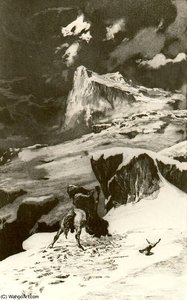
The air hangs heavy near the riverbank where a skeletal figure stands, stripped of the terrifying dignity often assigned to the Grim Reaper. This figure, a personification of death, occupies the shoreline with a startlingly mundane presence. He stands with legs apart, facing the water, engaged in the most basic of biological functions. The act of urination into the stream demystifies the specter, pulling the concept of mortality away from…

2
The Isle of the Dead роботи Макс Клінгер

The Isle of the Dead

Painting

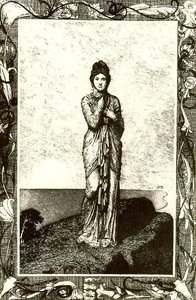
The Isle of the Dead emerges from the vision of Max Klinger, a German artist who leaves a profound mark on the landscape of late 19th-century thought. Born in Leipzig in 1857, Klinger moves through a world of shifting aesthetics, eventually passing away in 1920. In this specific work, titled The Isle of the Dead, he captures a moment that feels suspended in a quiet, heavy stillness.

3
Presa роботи Макс Клінгер

Presa

Lithograph

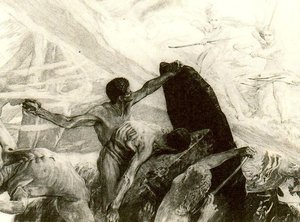
The artwork presents a monochrome scene rendered in grayscale, utilizing a range of black, white, and gray tones. At the bottom center of the frame, a reclining nude female figure is positioned as the primary focal point. Above her, a large group of men in formal attire occupies the upper portion of the composition. These figures are partially obscured by shadow, creating a sense of depth through overlapping forms. The…

4
Y sin embargo! роботи Макс Клінгер

Y sin embargo!

Graphite

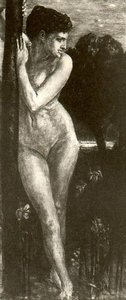
Max Klinger, born in Leipzig in 1857, produced Y sin embargo! as part of a career that bridged the transition from Realism to Symbolism. The artist, who died in 1920, was a significant figure in German art, known for his ability to move beyond mere visual representation to explore the psychological and the subconscious. This specific work reflects his interest in the intersection of the human form and the natural…

Картини художника Макс Клінгер, від 11 до 100 місця в рейтингу

11At the Beach (1890) роботи Макс КлінгерAt the Beach1890 · Баварські державні художні колекції 12Portrait of a Roman Woman on a Flat Roof in Rome (1891) роботи Макс КлінгерPortrait of a Roman Woman on a Flat Roof in Rome1891 · Музей Штадель 13Christ in Olympus (1897) роботи Макс КлінгерChrist in Olympus1897 14Female Nude (1910) роботи Макс КлінгерFemale Nude1910 15Bathing Women (1912) роботи Макс КлінгерBathing Women1912 16A legation роботи Макс КлінгерA legation 17Plague роботи Макс КлінгерPlague 18Workers at a House Construction (1889) роботи Макс КлінгерWorkers at a House Construction1889 19Seaside Idyl роботи Макс КлінгерSeaside IdylБаварські державні художні колекції 20Female Study Head роботи Макс КлінгерFemale Study Head 21Portrait of a Gentleman роботи Макс КлінгерPortrait of a Gentleman 22Cupid роботи Макс КлінгерCupid 23Salvation роботи Макс КлінгерSalvation 24The source роботи Макс КлінгерThe source 25An Max Klinger роботи Макс КлінгерAn Max Klinger 26untitled (336) роботи Макс Клінгерuntitled (336) 27untitled (1870) роботи Макс Клінгерuntitled (1870) 28untitled (5707) роботи Макс Клінгерuntitled (5707) 29untitled (7927) роботи Макс Клінгерuntitled (7927) 30untitled (4077) роботи Макс Клінгерuntitled (4077) 31untitled (5205) роботи Макс Клінгерuntitled (5205) 32untitled (4640) роботи Макс Клінгерuntitled (4640) 33untitled (1790) роботи Макс Клінгерuntitled (1790) 34untitled (7957) роботи Макс Клінгерuntitled (7957) 35untitled (1515) роботи Макс Клінгерuntitled (1515) 36untitled (1160) роботи Макс Клінгерuntitled (1160) 37untitled (5386) роботи Макс Клінгерuntitled (5386) 38untitled (5714) роботи Макс Клінгерuntitled (5714) 39untitled (9844) роботи Макс Клінгерuntitled (9844) 40untitled (3585) роботи Макс Клінгерuntitled (3585) 41untitled (5586) роботи Макс Клінгерuntitled (5586) 42untitled (3254) роботи Макс Клінгерuntitled (3254) 43untitled (4823) роботи Макс Клінгерuntitled (4823) 44untitled (5191) роботи Макс Клінгерuntitled (5191) 45untitled (1133) роботи Макс Клінгерuntitled (1133) 46Venus in the sea роботи Макс КлінгерVenus in the sea 47Cupido роботи Макс КлінгерCupido 48untitled (3590) роботи Макс Клінгерuntitled (3590) 49untitled (7159) роботи Макс Клінгерuntitled (7159) 50Angustias роботи Макс КлінгерAngustias 51Old love. initial stamps роботи Макс КлінгерOld love. initial stamps 52untitled (5140) роботи Макс Клінгерuntitled (5140) 53Scene роботи Макс КлінгерScene 54Venus and Mercury роботи Макс КлінгерVenus and Mercury 55psyche bathing роботи Макс Клінгерpsyche bathing 56Phriam And Thisbe I роботи Макс КлінгерPhriam And Thisbe I 57untitled (2692) роботи Макс Клінгерuntitled (2692) 58Abduction роботи Макс КлінгерAbduction 59Venus and Psyche роботи Макс КлінгерVenus and Psyche 60Zephyr carrying his sisters роботи Макс КлінгерZephyr carrying his sisters 61The wedding party of Psyche роботи Макс КлінгерThe wedding party of Psyche 62Sister jumping from a rock роботи Макс КлінгерSister jumping from a rock 63Psyche and Ceres роботи Макс КлінгерPsyche and Ceres 64Love, death and extramundos роботи Макс КлінгерLove, death and extramundos 65untitled (9745) роботи Макс Клінгерuntitled (9745) 66Mother I роботи Макс КлінгерMother I 67Pan comforting Psyche роботи Макс КлінгерPan comforting Psyche 68untitled (4174) роботи Макс Клінгерuntitled (4174) 69Psyche crossing the Acheron роботи Макс КлінгерPsyche crossing the Acheron 70Desire роботи Макс КлінгерDesire 71Psyche on a rock роботи Макс КлінгерPsyche on a rock 72Jupiter and Venus роботи Макс КлінгерJupiter and Venus 73Psyche and Arundo роботи Макс КлінгерPsyche and Arundo 74Farmer planting misery роботи Макс КлінгерFarmer planting misery 75The childhood of Amor роботи Макс КлінгерThe childhood of Amor 76Satire роботи Макс КлінгерSatire 77Intermezzo 1 роботи Макс КлінгерIntermezzo 1 78Phriam And Thisbe II роботи Макс КлінгерPhriam And Thisbe II 79Charon роботи Макс КлінгерCharon 80untitled (1999) роботи Макс Клінгерuntitled (1999) 81Time and glory роботи Макс КлінгерTime and glory 82Psyche on the road to Tartarus роботи Макс КлінгерPsyche on the road to Tartarus 83Venus presents Psyche the Love роботи Макс КлінгерVenus presents Psyche the Love 84Titan роботи Макс КлінгерTitan 85Psyche venerated by the people роботи Макс КлінгерPsyche venerated by the people 86Psyche and Venus роботи Макс КлінгерPsyche and Venus 87Parade роботи Макс КлінгерParade 88Death knight роботи Макс КлінгерDeath knight 89The priestesses of Venus роботи Макс КлінгерThe priestesses of Venus 90untitled (8812) роботи Макс Клінгерuntitled (8812) 91Rockfall роботи Макс КлінгерRockfall 92Naked woman under a tree роботи Макс КлінгерNaked woman under a tree 93Cold Hand роботи Макс КлінгерCold Hand 94Captive роботи Макс КлінгерCaptive 95violation роботи Макс Клінгерviolation 96The great goddess роботи Макс КлінгерThe great goddess 97untitled (547) роботи Макс Клінгерuntitled (547) 98Psyche and Juno роботи Макс КлінгерPsyche and Juno 99Night 1 роботи Макс КлінгерNight 1 100untitled (2269) роботи Макс Клінгерuntitled (2269)

Знамениті картини Макс Клінгер за періодами творчості

Теми, що привертали увагу Макс Клінгер

Чотири сюжети, які найчастіше зустрічаються в цих оригіналах, кожен із найкращим прикладом.

Музеї, у яких зберігаються оригінали Макс Клінгер

4 музеїв, у яких зберігається більшість картин із цього списку.

Музеї Місто Твори Макс Клінгер Картини з цього списку
Баварські державні художні колекції, МюнхенБаварські державні художні колекції Мюнхен 2 At the Beach, Seaside Idyl
Alte Nationalgalerie, БерлінAlte Nationalgalerie Берлін 3 Venus in the Shell Carriage. Part of the Wall Decoration of Villa Albers in Berlin-Steglitz
Національна галерея Праги, ПрагаНаціональна галерея Праги Прага 1 Evening
Музей Штадель, ФранкфуртМузей Штадель Франкфурт 1 Portrait of a Roman Woman on a Flat Roof in Rome

Макс Клінгер, одна фірмова картина за десятиліття

Роботи за десятиліття

Оберіть десятиліття, щоб побачити оригінальний твір, який його визначає.

Картини Макс Клінгер: відповіді галереї

Яка картина Макс Клінгер є найвідомішою серед усіх?Дізнатися відповідь

The death peeing. Далі йдуть The Isle of the Dead та Presa.

Які 10 найкращих картин Макс Клінгер?Дізнатися відповідь

The death peeing, The Isle of the Dead, Presa, Y sin embargo!, Rescue, Mermaid holding a shell up, the philosopher, Venus in the Shell Carriage. Part of the Wall Decoration of Villa Albers in Berlin-Steglitz, Evening та Play in the meadow. У рейтингу вище вказано рік створення та музей для кожної картини.

Скільки творів створив Макс Клінгер?Дізнатися відповідь

Наш каталог містить 281 робіт Макс Клінгер, датованих періодом з 1879 по 1912.

Де висять найвідоміші оригінали робіт Макс Клінгер?Дізнатися відповідь

Переважно в Баварські державні художні колекції (Мюнхен), Alte Nationalgalerie (Берлін) та Національна галерея Праги (Прага). У таблиці музеїв вище наведено їхній повний перелік.

Коли Макс Клінгер створив свої найвідоміші картини?Дізнатися відповідь

У 1880s: 3 із 100 робіт на цій сторінці були створені тоді, серед них Venus in the Shell Carriage. Part of the Wall Decoration of Villa Albers in Berlin-Steglitz.

Які найранніші та найпізніші відомі роботи Макс Клінгер?Дізнатися відповідь

На цій сторінці найдавніша робота датована Evening (1879), а найновіша — Bathing Women (1912).

До яких сюжетів Макс Клінгер звертався найчастіше?Дізнатися відповідь

Gods (7), Symbolic imagery (6) та Landscape (4), у 100 роботах на цій сторінці.

У якій техніці найчастіше працював Макс Клінгер?Дізнатися відповідь

Painting, для 2 із 100 робіт на цій сторінці.

З яким напрямом пов'язаний Макс Клінгер?Дізнатися відповідь

Symbolism, судячи з оригіналів на цій сторінці.

Які оригінальні роботи Макс Клінгер зберігаються в Баварські державні художні колекції?Дізнатися відповідь

At the Beach та Seaside Idyl: Баварські державні художні колекції, Мюнхен зберігає 2 робіт із цієї сторінки.

Чи можу я замовити ручну репродукцію картини Макс Клінгер?Дізнатися відповідь

Так, як репродукція: оригінал залишається в музеї, але будь-яку картину з цієї сторінки можна написати вручну спеціально для вас — індивідуальне замовлення можна оформити на сторінці самої картини.

Макс Клінгер: художник

The Shadowed World of Max Klinger: A Pioneer of Symbolism

Max Klinger, born in Leipzig in 1857, wasn’t simply an artist; he was a translator of the unseen—a chronicler of dreams and anxieties rendered in meticulous detail. His artistic journey began not with immediate acclaim but with a gradual, deliberate descent into the psychological depths, forging a unique vision that would profoundly influence the course of modern art. Initially trained at the Academy of Fine Arts in Karlsruhe under Karl Gussow, Klinger’s early work reflected the prevailing aesthetic of his time—detailed depictions of everyday life, imbued with a sense of realism. However, it was his profound fascination with the etchings of masters like Menzel and Goya – artists who possessed an uncanny ability to convey not just visual representation but also narrative complexity and raw emotion – that truly ignited his imagination. These figures demonstrated the power of printmaking to delve into the human condition, exploring themes of suffering, morality, and the darker corners of existence—qualities Klinger would masterfully employ throughout his career. He wasn’t content merely to mirror the world; he sought to unveil its hidden currents, its unspoken fears, and its elusive desires.

From Realism's Embrace to Symbolic Depths

Klinger’s artistic evolution was marked by a deliberate and transformative shift away from straightforward realism towards a more subjective and symbolic language. His early paintings, while technically proficient, felt somewhat constrained—mere stepping stones on a longer path. The pivotal moment arrived with the publication of *Paraphrase on the Finding of a Glove* (1881), an ambitious series comprising ten plates that transcended mere illustration. This wasn’t a literal depiction of an event; instead, it was a fragmented, dreamlike exploration of desire, loss, and the intricate complexities of human relationships—a carefully constructed narrative built upon layers of symbolism and psychological suggestion. The glove itself became a potent symbol – a relic imbued with memory, longing, and the ephemeral nature of connection. This series wasn’t just a success; it firmly established Klinger as a leading voice within the burgeoning Symbolist movement, demonstrating his extraordinary ability to transform ordinary objects into vehicles for profound psychological insight. He wasn't interested in simply *showing* what things looked like; he wanted to convey *what they meant*, what emotions and associations they evoked—a deeper understanding of their significance.

Sculpture, Printmaking, and the Exploration of Myth

Klinger’s artistic output was remarkably diverse, encompassing painting, sculpture, and printmaking – though it's arguably in the realm of graphic arts that he achieved his most enduring legacy. His prints are characterized by an astonishing level of technical skill, a dramatic use of light and shadow, and haunting imagery that lingers long after viewing. He wasn’t afraid to tackle challenging themes—mortality, sexuality, social injustice, and the darker aspects of the human psyche – often blending them in unsettling ways. Beyond *Paraphrase on the Finding of a Glove*, works like his depictions of Faustian bargains, exploring themes of ambition and damnation, and scenes from mythological narratives reveal a fascination with archetypal stories and universal human struggles. His sculptural work, though less prolific than his prints, was equally ambitious and often deliberately provocative. A prime example is his monumental installation in homage to Beethoven at the Vienna Secession in 1902 – a powerful and unsettling tribute to the composer’s genius, depicted as a Greek god presiding over a vast, desolate landscape. Klinger's sculptures weren't intended to be comforting; they were designed to challenge conventional notions of beauty and form, forcing viewers to confront uncomfortable truths about human nature.

Influences and Artistic Development

Klinger’s artistic development was shaped by a confluence of influences – from the meticulous realism of Menzel and Goya to the evocative symbolism of Japanese woodblock prints and the philosophical ideas of Arthur Schopenhauer and Friedrich Nietzsche. He deeply admired the works of French naturalists like Émile Zola, whose novels exposed the hypocrisy and moral decay of bourgeois society, and he was profoundly affected by their exploration of social issues. His early training at the Karlsruhe Academy instilled in him a solid foundation in traditional techniques, but it was his independent study and experimentation that truly allowed him to develop his unique style. He embraced printmaking not merely as a technical skill but as a means of expressing complex emotions and ideas—a way to bypass the limitations of language and communicate directly with the subconscious mind. Klinger’s artistic journey can be seen as a deliberate attempt to synthesize these diverse influences into a cohesive and profoundly personal vision.

Legacy and Influence: A Bridge to Modernity

Max Klinger's influence extended far beyond his own lifetime, shaping the work of generations of artists. He paved the way for Expressionism, Surrealism, and other avant-garde movements that sought to explore the inner world of human experience. His emphasis on symbolism, psychological depth, and subjective interpretation resonated with artists grappling with the anxieties and uncertainties of the modern age. The artist’s exploration of dreamlike states and subconscious desires anticipated the work of later Surrealists like Salvador Dalí and René Magritte. Even in more recent times, Klinger's ideas continue to inspire contemporary artists. In 1991, the Moscow art collective Inspection Medical Hermeneutics created “Klinger’s Boxes,” an installation directly inspired by his work—a testament to the enduring power of his vision. His art isn't merely historical; it remains strikingly relevant today. In an era defined by uncertainty and rapid change, Klinger’s exploration of psychological themes – anxiety, alienation, and the search for meaning – continues to resonate with audiences worldwide. His legacy is a reminder that true artistic innovation lies not in simply replicating reality but in revealing its hidden depths and challenging our preconceived notions about the world around us.

Усі 281 робіт Макс Клінгер →