Коротко кажучи
З усіх оригінальних робіт, які залишив Луї Ерсан, найвідомішою є Sophie Crouzet (1801) із колекції Клівлендський музей мистецтва, Клівленд. Слідом за ними йдуть Henri-Charles-Ferdinand of Artois Duke of Bordeaux and his Sister Louise-Marie-Therese of (1820) та Portrait of Madame Le Doyen (1825). Наш каталог містить 37 робіт Луї Ерсан; галерея зберегла 37 найвідоміших у світі творів, кожен із яких представлений із датою створення, назвою музею та своєю історією.
10 найкращих картин Луї Ерсан: вибір галереї
Вибірка Луї Ерсан триває, від 11 до 37
Теми, що привертали увагу Луї Ерсан
Чотири сюжети, які найчастіше зустрічаються в цих оригіналах, кожен із найкращим прикладом.
Portraiture 4 робіт
Royalty 3 робіт
Neoclassical style 2 робіт
Музеї, у яких зберігаються оригінали Луї Ерсан
8 музеїв, у яких зберігається найбільша кількість картин із цього списку.
| Музей | Місто | Твори Луї Ерсан | Картини зі цього списку |
|---|---|---|---|
| Париж | 3 | Portrait of Madame Arachequesne, Portrait of Romain de Bourge, General Louis Marie Turreau De Garambouville At The Gravieres Affair | |
| Versailles | 3 | Louise-Adélaïde Desnos, Queen Maria Amalia Of The French, Delphine De Girardin | |

| Клівленд | 1 | Sophie Crouzet | |
| Paris | 1 | Portrait of Madame Le Doyen | |
| Версаль | 1 | Portrait of Sophie Gay | |
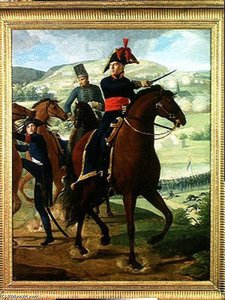
| Vizille | 1 | The Battle Of Landschut, 21st April | |

| Шантій | 1 | Marie-amelie De Bourbon - | |

| Стокгольм | 1 | Fénélon Returns A Stolen Cow To A Peasant |
Луї Ерсан десятиліття за десятиліттям: оригінали, що визначають кожне з них
Роботи за десятиліттями
Оберіть десятиліття, щоб побачити оригінальний твір, який його визначає.
Henri-Charles-Ferdinand of Artois Duke of Bordeaux and his Sister Louise-Marie-Therese of
Запитання колекціонерів про картини Луї Ерсан
Яка робота Луї Ерсан є найвідомішою?Дізнатися відповідь
Sophie Crouzet (1801), Клівлендський музей мистецтва, Клівленд. Далі йдуть Henri-Charles-Ferdinand of Artois Duke of Bordeaux and his Sister Louise-Marie-Therese of (1820) та Portrait of Madame Le Doyen (1825).
Скільки років було Луї Ерсан, коли було створено Sophie Crouzet?Дізнатися відповідь
24 років: Sophie Crouzet датована 1801 роком, а Луї Ерсан народився(-лася) у 1777.
Які десять найвідоміших картин Луї Ерсан?Дізнатися відповідь
Sophie Crouzet, Henri-Charles-Ferdinand of Artois Duke of Bordeaux and his Sister Louise-Marie-Therese of, Portrait of Madame Le Doyen, Portrait of Madame Arachequesne, Portrait of Sophie Gay, Portrait of Madame Demetz in a red sofa, Religieux de l'hospice du mont Saint Gothard, Portrait of Sophie Legrand, comtesse Walsh de Serrant, and her children, Self-portrait та Louise-Adélaïde Desnos. У рейтингу вище вказано рік створення та музей для кожної картини.
Скільки картин залишив Луї Ерсан?Дізнатися відповідь
Наш каталог містить 37 робіт Луї Ерсан, датованих періодом з 1801 по 1854.
У яких музеях виставляються шедеври Луї Ерсан?Дізнатися відповідь
Переважно в Музей Карнавале (Париж), Opera House (Versailles) та Клівлендський музей мистецтва (Клівленд). У таблиці музеїв вище наведено їхній повний перелік.
У які роки Луї Ерсан створив свої найвідоміші роботи?Дізнатися відповідь
У 1820s: 5 із 37 робіт на цій сторінці були створені тоді, серед них Henri-Charles-Ferdinand of Artois Duke of Bordeaux and his Sister Louise-Marie-Therese of.
Які перша та остання відомі оригінальні роботи Луї Ерсан?Дізнатися відповідь
На цій сторінці найдавніша робота датована Sophie Crouzet (1801), а найновіша — Self-portrait (1854).
Які сюжети Луї Ерсан обирав найчастіше?Дізнатися відповідь
Portraiture (4), Royalty (3) та Neoclassical style (2), у 37 роботах на цій сторінці.
До якого художнього напряму належить Луї Ерсан?Дізнатися відповідь
Neoclassicism, судячи з оригіналів на цій сторінці.
Які роботи Луї Ерсан виставлені в Музей Карнавале?Дізнатися відповідь
Portrait of Madame Arachequesne, Portrait of Romain de Bourge та General Louis Marie Turreau De Garambouville At The Gravieres Affair: Музей Карнавале, Париж зберігає 3 робіт із цієї сторінки.
Луї Ерсан: життя та творчість
A Legacy in Portraiture: The Life and Art of Louis Hersent
Louis Hersent, a name that echoes through the halls of 19th-century French art, was more than simply a painter; he was a meticulous recorder of his time, an observer of society’s elite, and a master craftsman who seamlessly blended classical ideals with subtle emotional depth. Born in Paris in 1777 amidst the turbulent aftermath of the Revolution, Hersent's artistic journey unfolded against a backdrop of profound social and political change, ultimately establishing him as a leading figure in Neoclassical portraiture and historical painting. His canvases aren’t merely representations of likenesses; they are carefully constructed narratives that offer glimpses into the personalities, aspirations, and societal currents of early 19th-century France – a period defined by both grandeur and uncertainty. From his formative years under the tutelage of Jacques-Louis David, the preeminent Neoclassical painter and official artist to Napoleon Bonaparte, Hersent absorbed a rigorous approach to draftsmanship, composition, and form, principles that would become the bedrock of his distinctive style. The prestigious Prix de Rome award in 1797 served as further validation of his artistic promise, providing him with invaluable exposure to the rich artistic heritage of Italy – an experience that profoundly shaped his aesthetic sensibilities.The Foundations of Neoclassicism and Artistic Development
Hersent’s oeuvre is fundamentally rooted in the core tenets of Neoclassicism: a profound reverence for antiquity, an unwavering emphasis on order and reason, and a commitment to technical precision. However, Hersent's artistic vision wasn’t simply a slavish imitation of the past; rather, he skillfully infused his paintings with a subtle psychological complexity, capturing not just the outward appearance but also the inner character of his subjects. His portraits are characterized by an arresting dignity – figures posed with carefully considered grace and bearing, their gazes conveying both strength and introspection. Meticulous attention to detail—particularly in fabrics, textures, and the rendering of light and shadow—elevates each painting to a level of exquisite realism. The restrained emotionality evident in his work speaks volumes, suggesting an understanding of human nature that transcends mere likeness. He excelled at portraying members of the French aristocracy and military leaders – figures who sought to project an image of stability, authority, and unwavering resolve in the face of societal upheaval. Paintings like *The Duc D'Orléans, Duke Of Chartres And Nemours*, exemplify this approach, presenting a commanding figure radiating both power and refinement—a testament to Hersent’s ability to capture not just physical appearance but also the essence of aristocratic presence. His historical paintings, such as *Marshal André Masséna, Duke of Rivoli*, similarly demonstrate his capacity for translating complex narratives into compelling visual representations, imbued with dramatic impact and a sense of heroic grandeur.Beyond Portraits: Historical Scenes and Artistic Recognition
While Louis Hersent is perhaps most celebrated for his portraits, his historical paintings reveal a broader range of interests and artistic capabilities. These works often depicted scenes of valor, sacrifice, or significant political events—reflecting the prevailing nationalistic sentiments that gripped France following the Revolution. His ability to capture the spirit of an era within a single canvas earned him considerable acclaim and solidified his position as a respected artist within the Parisian art world. The Salon exhibitions in Paris became crucial venues for showcasing his work, attracting attention from collectors, critics, and members of the royal court. Paintings like *Louis XVI relieving the Afflicted*, now housed at Versailles, stand as powerful testaments to this recognition—demonstrating Hersent’s ability to create works that resonated with the values and aspirations of the restored monarchy. The meticulous detail and carefully constructed compositions reflect a deep understanding of both historical accuracy and artistic technique. His work wasn't confined solely to grand historical narratives; he also produced smaller, more intimate scenes, often depicting everyday life or moments of quiet contemplation—a testament to his versatility as an artist.A Family of Artists and Enduring Legacy
Hersent’s personal life was inextricably linked to the world of art. In 1821, he married Louise Marie Jeanne Hersent-Mauduit, a talented painter in her own right – a woman who shared his passion for artistic expression and provided him with a supportive partnership. Louise specialized in portraits and history painting, demonstrating a remarkable artistic sensibility and contributing significantly to the family’s legacy of creative achievement. The couple's shared dedication to art fostered a stimulating environment that undoubtedly influenced both their individual artistic endeavors. Hersent’s influence extended beyond his immediate family; he served as a mentor to numerous aspiring artists, imparting his knowledge and techniques to generations of young painters. His pupils included figures such as Louis-Eugène Bertier, Auguste Bigand, and many others who went on to establish themselves as accomplished artists in their own right. Louis Hersent passed away peacefully in 1860, leaving behind a substantial body of work that continues to be studied and admired for its technical brilliance, artistic sensitivity, and profound insights into the social and cultural landscape of his time. His paintings remain not merely historical artifacts but windows into a bygone era—testaments to the enduring power of art to capture the human spirit and preserve the memory of those who shaped France’s history.Hersent's Place in Art History
- A Bridge Between Eras: Hersent's art represents a transition between the strict Neoclassicism of David and the emerging Romanticism of the 19th century, blending classical principles with a more nuanced emotionality.
- Documenting an Elite: His portraits provide invaluable documentation of the French aristocracy and political figures during a period of significant social and political change.
- Technical Mastery: Hersent’s skill in draftsmanship, composition, and color demonstrates a profound understanding of artistic technique and a commitment to excellence.
- Influence on Subsequent Generations: As a teacher and mentor, Hersent helped shape the careers of numerous artists, passing on his knowledge and aesthetic values to future generations.