Портрет Оноре Дом'є

100 найвідоміших картин Оноре Дом'є: добірка галереї

Оновлено Жовтень 2026 · за рейтингом нашої популярності (кількість пошукових запитів, переглядів та замовлень для кожної роботи) · 355 робіт Оноре Дом'є у нашому каталозі

Коротко кажучи

З усіх оригінальних робіт, які залишив Оноре Дом'є, найвідомішою є Ми жаждем Барбассу (1852) із колекції Музей Фолькванг, Ессен. Слідом за ними йдуть The Third-class Carriage (1860) та Unknown, maybe Hippolyte Lucien-Joseph Lucas (1807-1878), a Journalist, maybe P.Mendez de Vigo (1790-1860) a Spanish General, but Most Probably the Count Pelet de la Lozere (1785-1871), a Politician (1833). Наш каталог містить 355 робіт Оноре Дом'є; галерея зберегла 100 найвідоміших у світі творів, кожен із яких представлений із датою створення, назвою музею та своєю історією.

1808 – 1879, Марсель Realism Найбільше робіт: Музей д’Орсе

10 найкращих картин Оноре Дом'є: вибір галереї

1
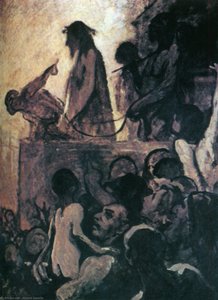
Ми жаждем Барбассу (1852) авторства Оноре Дом'є

Ми жаждем Барбассу

1852 · Олія на полотні · Музей Фолькванг, Ессен

Потужне зображення людських страждань та соціальної справедливості Цей захоплюючий твір закарбовує щемливу біблійну сцену, що глибоко резонує з темами співчуття, несправедливості та суспільної критики. Виконана у сирому, експресивному стилі, ця сцена запрошує глядача у момент колективної емоції та морального роздуму. Фігури, зображені з жестівною безпосередністю, викликають відчуття нагальності та людської вразливості, перетворюючи полотно на глибоке висловлювання про соціальну совість та духовну емпатію. Художній стиль та техніка Створений у 1852 році…

2
The Third-class Carriage (1860) авторства Оноре Дом'є

The Third-class Carriage

1860 · Oil On Canvas · Метрополітен-музей, Нью-Йорк

In the crowded, dimly lit confines of a mid-19th-century railway carriage, Honoré Daumier captures more than just a moment in transit; he captures the very essence of human endurance. The Third-class Carriage serves as a profound window into the burgeoning urban reality of France during the Second Empire. As the industrial revolution reshaped the landscape of Europe, Daumier turned his gaze away from the gilded salons of the aristocracy and…

3
Unknown, maybe Hippolyte Lucien-Joseph Lucas (1807-1878), a Journalist, maybe P.Mendez de Vigo (1790-1860) a Spanish General, but Most Probably the Count Pelet de la Lozere (1785-1871), a Politician (1833) авторства Оноре Дом'є

Unknown, maybe Hippolyte Lucien-Joseph Lucas (1807-1878), a Journalist, maybe P.Mendez de Vigo (1790-1860) a Spanish General, but Most Probably the Count Pelet de la Lozere (1785-1871), a Politician

1833 · Clay / Terracotta · Музей д’Орсе, Париж

This evocative portrait captures more than just the likeness of an elderly gentleman; it arrests a moment in time, freezing the very essence of 19th-century Parisian intellectual life. The subject, whose identity is suggested by the possibilities of a journalist or politician, possesses a gaze that seems to look past the viewer, into some distant, weighty contemplation. Rendered with the unmistakable hand of Honoré Daumier, the piece transcends mere portraiture;…

4
Ratapoil (front view) (1850) авторства Оноре Дом'є

Ratapoil (front view)

1850 · Bronze · Музей д’Орсе, Париж

Honoré Daumier's "Ratapoil (front view)," created around 1850, is more than just a bronze sculpture; it’s a potent distillation of 19th-century French social commentary and political critique. This arresting figure, rendered with remarkable dynamism and a touch of unsettling realism, offers a captivating window into the turbulent world of post-Revolutionary France – a world grappling with nascent democracy, imperial ambitions, and the pervasive inequalities of its society. The sculpture’s enduring…

5
Intermission at the Comédie Française (1858) авторства Оноре Дом'є

Intermission at the Comédie Française

1858 · Watercolor · Державний музей-заповідник «Ермітаж», Санкт-Петербург

Honoré Daumier's “Intermission at the Comédie Française,” painted in 1858, isn’t merely a depiction of an elderly gathering; it’s a meticulously crafted observation of a specific moment frozen in time – and brimming with unspoken commentary. The artwork immediately draws the viewer into a densely packed scene: rows upon rows of men, their faces etched with age and lined with contemplation, are absorbed in reading newspapers or pamphlets within the…

6
Ratapoil (1850) авторства Оноре Дом'є

Ratapoil

1850 · Bronze · Staatliche Kunsthalle Karlsruhe, Карлсруе

The photograph captures a pivotal moment – a frozen dance of energy and emotion rendered in the enduring medium of bronze. This exquisite reproduction offers an intimate encounter with "Ratapoil," a sculpture by the visionary artist Honoré Daumier, born in Marseille in 1808 and tragically lost in 1879. More than just a depiction of a figure, it’s a window into the social anxieties and artistic fervor that defined mid-19th century…

7
Ratapoil (rear view) (1850) авторства Оноре Дом'є

Ratapoil (rear view)

1850 · Sculpture · Музей д’Орсе, Париж

In this rear view of the sculpture Ratapoil, we encounter a figure that seems to embody the very essence of 19th-century Parisian character. The work, dating from 1850, presents a silhouette that is both dynamic and deeply human. There is a certain tension in the posture; the figure leans with one hand on a hip, a cane held in the other, suggesting a man caught in a moment of restless…

8
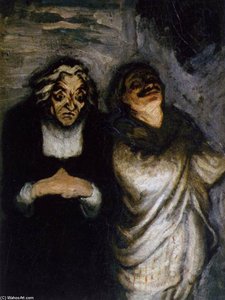
Scene from a Comedy (1858) авторства Оноре Дом'є

Scene from a Comedy

1858 · Олія на полотні · Музей д’Орсе, Париж

Honoré Daumier's "Scene from a Comedy," painted in 1858, isn’t merely a depiction of two figures; it’s a meticulously crafted snapshot of Parisian society and the biting social commentary that defined the artist’s career. Housed within the walls of the Musée d’Orsay, this oil on canvas offers a rare glimpse into Daumier's world – a world brimming with observation, critique, and an undeniable sense of humor laced with profound sadness.…

9
Ratapoil (1850) авторства Оноре Дом'є

Ratapoil

1850 · Acrylic On Canvas · Artizon Museum, Токіо

Honoré Daumier's "Ratapoil," created in 1850, isn’t merely a sculpture; it’s a distilled embodiment of the anxieties and frustrations simmering beneath the surface of mid-19th century France. This arresting figure, rendered in cast iron with a deliberate roughness that mirrors its subject matter, captures a moment of profound disillusionment – a silent indictment of societal hypocrisy and the precariousness of human existence. The sculpture’s power lies not just in its…

10
Family on the Barricades in 1848 (1854) авторства Оноре Дом'є

Family on the Barricades in 1848

In the heart of Honoré Daumier’s 1854 masterpiece, Family on the Barricades in 1848, we find a moment suspended in the amber of history. This is not merely a painting of a political uprising; it is a profound psychological study of human resilience. As the Second French Revolution tore through the streets of Paris, Daumier captured the very essence of the era's turbulent spirit. The scene presents a family huddled…

Вибірка Оноре Дом'є триває, від 11 до 100

11Збирач друку (1865) авторства Оноре Дом'єЗбирач друку1865 · Art Institute of Chicago 12The Republic (1848) авторства Оноре Дом'єThe Republic1848 · Музей д’Орсе 13Comedy scene (scene from Molière) (1862) авторства Оноре Дом'єComedy scene (scene from Molière)1862 · Музей д’Орсе 14On a Bridge at Night (1848) авторства Оноре Дом'єOn a Bridge at Night1848 · The Phillips Collection 15Les Gens de Justice: Vous m (1845) авторства Оноре Дом'єLes Gens de Justice: Vous m1845 16Burden (1850) авторства Оноре Дом'єBurden1850 · Державний музей-заповідник «Ермітаж» 17Street Musicians (1855) авторства Оноре Дом'єStreet Musicians1855 · Art Institute of Chicago 18Count Antoine-Maurice-Apollinaire d'Argout (1782-1858), Minister and Peer of France (1832) авторства Оноре Дом'єCount Antoine-Maurice-Apollinaire d'Argout (1782-1858), Minister and Peer of France1832 · Музей д’Орсе 19The Studio (1870) авторства Оноре Дом'єThe Studio1870 · Музей Дж. Пола Гетті 20Jean-Marie Fruchard (1788-1872), Deputy (1833) авторства Оноре Дом'єJean-Marie Fruchard (1788-1872), Deputy1833 · Музей д’Орсе 21Load (Washerwoman) (1853) авторства Оноре Дом'єLoad (Washerwoman)1853 · Національна галерея Праги 22Clément-François-Victor-Gabriel Prunelle (1774-1853), Doctor, Major of Lyon and Deputy (1832) авторства Оноре Дом'єClément-François-Victor-Gabriel Prunelle (1774-1853), Doctor, Major of Lyon and Deputy1832 · Музей д’Орсе 23The Intoxication of Silène (1850) авторства Оноре Дом'єThe Intoxication of Silène1850 24Two Lawyers (1860) авторства Оноре Дом'єTwo Lawyers1860 · Art Institute of Chicago 25Outside the Print–Seller's Shop (1860) авторства Оноре Дом'єOutside the Print–Seller's Shop1860 · Далласський музей мистецтв 26Exit from the Theater (1863) авторства Оноре Дом'єExit from the Theater1863 · Художній музей Нельсона-Аткінса 27Felix Barthe авторства Оноре Дом'єFelix Barthe 28The Uprising (L (1848) авторства Оноре Дом'єThe Uprising (L1848 · The Phillips Collection 29Le Peintre (The Painter) (1865) авторства Оноре Дом'єLe Peintre (The Painter)1865 · Шотландська національна галерея 30The Defender (1865) авторства Оноре Дом'єThe Defender1865 · Музей д’Орсе 31The Good Samaritan (1855) авторства Оноре Дом'єThe Good Samaritan1855 · Burrell Collection 32The Loge (In the Theatre Boxes) (1856) авторства Оноре Дом'єThe Loge (In the Theatre Boxes)1856 · Walters Art Museum 33Susannah and the Elders (1853) авторства Оноре Дом'єSusannah and the Elders1853 · Burrell Collection 34Penelopa's Dream (1842) авторства Оноре Дом'єPenelopa's Dream1842 · Бібліотека Національна Франції 35Jean-Auguste Chevandier de Valdrome, Parliamentarian (The Fool) (1832) авторства Оноре Дом'єJean-Auguste Chevandier de Valdrome, Parliamentarian (The Fool)1832 · Музей д’Орсе 36The Washerwoman (1863) авторства Оноре Дом'єThe Washerwoman1863 · Музей д’Орсе 37Masks of 1831 (1832) авторства Оноре Дом'єMasks of 18311832 · Minneapolis Institute of Art 38Remembrances of St. Pelagie. (Souvenir de ste Pélagie) (1834) авторства Оноре Дом'єRemembrances of St. Pelagie. (Souvenir de ste Pélagie)1834 39Mr. Joliv (Adolphe Joliv) (1833) авторства Оноре Дом'єMr. Joliv (Adolphe Joliv)1833 · Musée d'art et d'histoire Paul Eluard 40Celebrités du Juste Milieu (1835) авторства Оноре Дом'єCelebrités du Juste Milieu1835 · Zimmerli Art Museum at Rutgers University 41Grand Staircase of the Palace of Justice (1848) авторства Оноре Дом'єGrand Staircase of the Palace of Justice1848 42The Conclusion of a Speech à la Demosthene (1848) авторства Оноре Дом'єThe Conclusion of a Speech à la Demosthene1848 43Neighbourhood gossip (1855) авторства Оноре Дом'єNeighbourhood gossip1855 · The Mesdag Collection 44Une salle d'attente (The Waiting Room) (1851) авторства Оноре Дом'єUne salle d'attente (The Waiting Room)1851 · Buffalo AKG Art Museum 45Second-Class Carriage (1849) авторства Оноре Дом'єSecond-Class Carriage1849 · Rhode Island School of Design Museum of Art 46Mme Pipelet, the Concierge (1849) авторства Оноре Дом'єMme Pipelet, the Concierge1849 · Rhode Island School of Design Museum of Art 47Hunters by the fireside (1850) авторства Оноре Дом'єHunters by the fireside1850 48Head of a Man (1855) авторства Оноре Дом'єHead of a Man1855 · National Museum Cardiff 49The Miller, His Son and the Donkey (1849) авторства Оноре Дом'єThe Miller, His Son and the Donkey1849 · Burrell Collection 50Bathers (1853) авторства Оноре Дом'єBathers1853 51On the Shore (1853) авторства Оноре Дом'єOn the Shore1853 52Return from the Market (1856) авторства Оноре Дом'єReturn from the Market1856 · Museum collection Am Römerholz 53The Confidence or The Kiss of Judas (1859) авторства Оноре Дом'єThe Confidence or The Kiss of Judas1859 · Petit Palais 54Four Heads (1857) авторства Оноре Дом'єFour Heads1857 · Burrell Collection 55Head of an Old Woman (1858) авторства Оноре Дом'єHead of an Old Woman1858 56Painting by Honoré Daumier (1862) авторства Оноре Дом'єPainting by Honoré Daumier1862 57Scapin (1861) авторства Оноре Дом'єScapin1861 · Harvard Art Museums 58Count Auguste-Hilarion de Kératry (1769-1859), Deputy, Peer of France (1832) авторства Оноре Дом'єCount Auguste-Hilarion de Kératry (1769-1859), Deputy, Peer of France1832 · Музей д’Орсе 59The Beautiful Narcissus (1842) авторства Оноре Дом'єThe Beautiful Narcissus1842 · Бібліотека Національна Франції 60Sancho Panza, Resting Under a Tree (1865) авторства Оноре Дом'єSancho Panza, Resting Under a Tree1865 61The Painter (1867) авторства Оноре Дом'єThe Painter1867 · Musée des Beaux-Arts 62Au Palais de Justice (At the Law Courts) (1865) авторства Оноре Дом'єAu Palais de Justice (At the Law Courts)1865 · Rhode Island School of Design Museum of Art 63The Two Colleagues (Lawyers) (1867) авторства Оноре Дом'єThe Two Colleagues (Lawyers)1867 · Бруклінський музей 64A Third Class Carriage (1865) авторства Оноре Дом'єA Third Class Carriage1865 · National Museum Cardiff 65François-Pierre-Guillaume Guizot (1787-1874), Deputy, Minister and Historian (1833) авторства Оноре Дом'єFrançois-Pierre-Guillaume Guizot (1787-1874), Deputy, Minister and Historian1833 · Музей д’Орсе 66Two Singers авторства Оноре Дом'єTwo SingersHarvard Art Museums 67Jean-Claude Fulchiron (1774-1859), Deputy, Peer of France, and Poet (1832) авторства Оноре Дом'єJean-Claude Fulchiron (1774-1859), Deputy, Peer of France, and Poet1832 · Музей д’Орсе 68Don Quixote and the Windmills (1850) авторства Оноре Дом'єDon Quixote and the Windmills1850 · Art Institute of Chicago 69The Serenade (1858) авторства Оноре Дом'єThe Serenade1858 · Шотландська національна галерея 70The Print Amateur (1855) авторства Оноре Дом'єThe Print Amateur1855 · Harvard Art Museums 71Le Wagon de troisième classe, huile sur toile The Coach of third class, oil on fabric авторства Оноре Дом'єLe Wagon de troisième classe, huile sur toile The Coach of third class, oil on fabric 72Jacques Lefévre (1777-1856), Banker and Deputy (1833) авторства Оноре Дом'єJacques Lefévre (1777-1856), Banker and Deputy1833 · Музей д’Орсе 73The Print Collector (1862) авторства Оноре Дом'єThe Print Collector1862 · Burrell Collection 74Don Quixote and the Dead Mule (1860) авторства Оноре Дом'єDon Quixote and the Dead Mule1860 · Метрополітен-музей 75The Strong Man (1865) авторства Оноре Дом'єThe Strong Man1865 · The Phillips Collection 76Head of Pasquin (1863) авторства Оноре Дом'єHead of Pasquin1863 · Далласський музей мистецтв 77Baron Joseph de Podenas (1782-1851), Deputy (1833) авторства Оноре Дом'єBaron Joseph de Podenas (1782-1851), Deputy1833 · Музей д’Орсе 78Charles Philipon (1800-1861), Journalist and Director of the Magazines Caricature and Charivari (1833) авторства Оноре Дом'єCharles Philipon (1800-1861), Journalist and Director of the Magazines Caricature and Charivari1833 · Музей д’Орсе 79Rue Transnonain, April 15, 1834 (1834) авторства Оноре Дом'єRue Transnonain, April 15, 18341834 · Бібліотека Національна Франції 80Theater Audience (1856) авторства Оноре Дом'єTheater Audience1856 · Національний музей західноєвропейського мистецтва 81Don Quixote Reading (1866) авторства Оноре Дом'єDon Quixote Reading1866 · National Museum Cardiff 82Les Avocats et Les Plaideurs: Enfin! Nous avons obtenu la séparation de biens (1851) авторства Оноре Дом'єLes Avocats et Les Plaideurs: Enfin! Nous avons obtenu la séparation de biens1851 83Le Ventre Legislatif (1834) авторства Оноре Дом'єLe Ventre Legislatif1834 84Avant l (1865) авторства Оноре Дом'єAvant l1865 85Two Drinkers (Les Deux buveurs) авторства Оноре Дом'єTwo Drinkers (Les Deux buveurs)Фонд Барнса 86Two Lawyers авторства Оноре Дом'єTwo Lawyers 87Crispin et Scapin ou Scapin et Sylvestre, huile sur toile Crispin and Scapin or Scapin and Sylvestre, oil on fabric авторства Оноре Дом'єCrispin et Scapin ou Scapin et Sylvestre, huile sur toile Crispin and Scapin or Scapin and Sylvestre, oil on fabric 88Une cause célèbre, crayon et aquarelle A famous cause, pencil and watercolour авторства Оноре Дом'єUne cause célèbre, crayon et aquarelle A famous cause, pencil and watercolour 89Don Quixote and Sancho Panza (1864) авторства Оноре Дом'єDon Quixote and Sancho Panza1864 · Burrell Collection 90Don Quixote and Sancho Panza (1870) авторства Оноре Дом'єDon Quixote and Sancho Panza1870 · Галерея Куртолада 91The Reader авторства Оноре Дом'єThe Reader 92Street Scene (1864) авторства Оноре Дом'єStreet Scene1864 · Музей Бойманса-ван-Бёнінгена 93Charles-Léonard Gallois (1774-1851), Publicist and Historian, Republican (1833) авторства Оноре Дом'єCharles-Léonard Gallois (1774-1851), Publicist and Historian, Republican1833 · Музей д’Орсе 94André-Marie-Jean-Jacques Dupin, Also Called Dupin the Elder авторства Оноре Дом'єAndré-Marie-Jean-Jacques Dupin, Also Called Dupin the Elder 95Le Drame, huile sur toile The Drama, oils on fabric авторства Оноре Дом'єLe Drame, huile sur toile The Drama, oils on fabric 96The Hypochondriac (Le Malade imaginaire) авторства Оноре Дом'єThe Hypochondriac (Le Malade imaginaire)Фонд Барнса 97To the Street (1850) авторства Оноре Дом'єTo the Street1850 · The Phillips Collection 98Three Lawyers (1857) авторства Оноре Дом'єThree Lawyers1857 · The Phillips Collection 99Honoré Daumier Le Martyre de saint Sébastien, esquisse, huile sur panneau The Martyrdom of Sebastien saint, draft, oil on panel (1850) авторства Оноре Дом'єHonoré Daumier Le Martyre de saint Sébastien, esquisse, huile sur panneau The Martyrdom of Sebastien saint, draft, oil on panel1850 100Mother (1855) авторства Оноре Дом'єMother1855 · Народний музей Сербії

Знамениті картини Оноре Дом'є за періодами творчості

Теми, що привертали увагу Оноре Дом'є

Чотири сюжети, які найчастіше зустрічаються в цих оригіналах, кожен із найкращим прикладом.

Музеї, у яких зберігаються оригінали Оноре Дом'є

8 музеїв, у яких зберігається найбільша кількість картин із цього списку.

Музей Місто Твори Оноре Дом'є Картини зі цього списку
Музей д’Орсе, ПарижМузей д’Орсе Париж 33 Unknown, maybe Hippolyte Lucien-Joseph Lucas (1807-1878), a Journalist, maybe P.Mendez de Vigo (1790-1860) a Spanish General, but Most Probably the Count Pelet de la Lozere (1785-1871), a Politician, Ratapoil (front view), Ratapoil (rear view)
Burrell Collection, ГлазгоBurrell Collection Глазго 9 The Good Samaritan, Susannah and the Elders, The Miller, His Son and the Donkey
The Phillips Collection, Вашингтон, округ КолумбіяThe Phillips Collection Вашингтон, округ Колумбія 8 On a Bridge at Night, The Uprising (L, The Strong Man
Art Institute of Chicago, ЧикагоArt Institute of Chicago Чикаго 4 Збирач друку, Street Musicians, Two Lawyers
National Museum Cardiff, КардіффNational Museum Cardiff Кардіфф 8 Head of a Man, A Third Class Carriage, Don Quixote Reading
Rhode Island School of Design Museum of Art, ProvidenceRhode Island School of Design Museum of Art Providence 4 Second-Class Carriage, Mme Pipelet, the Concierge, Au Palais de Justice (At the Law Courts)
Бібліотека Національна Франції, ПарижБібліотека Національна Франції Париж 3 Penelopa's Dream, The Beautiful Narcissus, Rue Transnonain, April 15, 1834
Harvard Art Museums, КембриджHarvard Art Museums Кембридж 3 Scapin, Two Singers, The Print Amateur

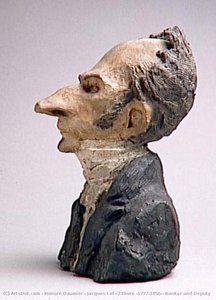
Оноре Дом'є десятиліття за десятиліттям: оригінали, що визначають кожне з них

Роботи за десятиліттями

Оберіть десятиліття, щоб побачити оригінальний твір, який його визначає.

Запитання колекціонерів про картини Оноре Дом'є

Яка робота Оноре Дом'є є найвідомішою?Дізнатися відповідь

Ми жаждем Барбассу (1852), Музей Фолькванг, Ессен. Далі йдуть The Third-class Carriage (1860) та Unknown, maybe Hippolyte Lucien-Joseph Lucas (1807-1878), a Journalist, maybe P.Mendez de Vigo (1790-1860) a Spanish General, but Most Probably the Count Pelet de la Lozere (1785-1871), a Politician (1833).

Скільки років було Оноре Дом'є, коли було створено Ми жаждем Барбассу?Дізнатися відповідь

44 років: Ми жаждем Барбассу датована 1852 роком, а Оноре Дом'є народився(-лася) у 1808.

Які десять найвідоміших картин Оноре Дом'є?Дізнатися відповідь

Ми жаждем Барбассу, The Third-class Carriage, Unknown, maybe Hippolyte Lucien-Joseph Lucas (1807-1878), a Journalist, maybe P.Mendez de Vigo (1790-1860) a Spanish General, but Most Probably the Count Pelet de la Lozere (1785-1871), a Politician, Ratapoil (front view), Intermission at the Comédie Française, Ratapoil, Ratapoil (rear view), Scene from a Comedy, Ratapoil та Family on the Barricades in 1848. У рейтингу вище вказано рік створення та музей для кожної картини.

Скільки картин залишив Оноре Дом'є?Дізнатися відповідь

Наш каталог містить 355 робіт Оноре Дом'є, датованих періодом з 1832 по 1870.

У яких музеях виставляються шедеври Оноре Дом'є?Дізнатися відповідь

Переважно в Музей д’Орсе (Париж), Burrell Collection (Глазго) та The Phillips Collection (Вашингтон, округ Колумбія). У таблиці музеїв вище наведено їхній повний перелік.

У які роки Оноре Дом'є створив свої найвідоміші роботи?Дізнатися відповідь

У 1850s: 34 із 100 робіт на цій сторінці були створені тоді, серед них Ми жаждем Барбассу.

Які перша та остання відомі оригінальні роботи Оноре Дом'є?Дізнатися відповідь

На цій сторінці найдавніша робота датована Count Antoine-Maurice-Apollinaire d'Argout (1782-1858), Minister and Peer of France (1832), а найновіша — The Studio (1870).

Які сюжети Оноре Дом'є обирав найчастіше?Дізнатися відповідь

People (19), Satire (14) та Man (14), у 100 роботах на цій сторінці.

Яку техніку найчастіше використовував(ла) Оноре Дом'є?Дізнатися відповідь

Oil On Canvas, для 14 із 100 робіт на цій сторінці.

До якого художнього напряму належить Оноре Дом'є?Дізнатися відповідь

Realism, судячи з оригіналів на цій сторінці.

Які роботи Оноре Дом'є виставлені в Музей д’Орсе?Дізнатися відповідь

Unknown, maybe Hippolyte Lucien-Joseph Lucas (1807-1878), a Journalist, maybe P.Mendez de Vigo (1790-1860) a Spanish General, but Most Probably the Count Pelet de la Lozere (1785-1871), a Politician, Ratapoil (front view) та Ratapoil (rear view): Музей д’Орсе, Париж зберігає 19 робіт із цієї сторінки.

Оноре Дом'є: життя та творчість

A Life Etched in Satire: The World of Honoré Daumier

Honoré-Victorin Daumier, a name synonymous with biting satire and unflinching social commentary, was born in Marseille in 1808. His early life, shaped by his father’s aspirations as a poet – a dream tragically cut short – and the subsequent relocation to Paris in 1814, immersed him in a city already pulsating with artistic fervor. Initially destined for a career in law, Daumier's true calling emerged not from legal texts but from charcoal and stone, a passion ignited by his apprenticeship under Alexandre Lenoir, a student of Jacques-Louis David. This formative period instilled within him both the classical foundations of technique and an appreciation for the dramatic chiaroscuro favored by Rubens – elements that would later coalesce into his uniquely powerful style. However, Daumier’s art wasn't merely about mastering brushstrokes; it was fundamentally rooted in a profound empathy for the marginalized and a burning desire to expose the hypocrisy he witnessed within French society.

The Sharpened Pen: Caricature and Social Commentary

Daumier’s career truly blossomed following the tumultuous events of 1830, the July Revolution that irrevocably altered the course of France. This seismic shift provided fertile ground for his burgeoning satirical talent, and he quickly established himself as a master lithographer. Initially working anonymously for publications like *Le Charivari*, founded by Charles Philipon, Daumier’s genius rapidly gained recognition. It was within these pages that his caricatures transcended mere humor; they became searing indictments of the bourgeoisie, the legal system, and the political establishment. His unflinching depictions of King Louis-Philippe, for instance, earned him a six-month imprisonment in 1832 – an experience that, rather than silencing him, fueled his commitment to challenging authority through art. His lithographs became visual manifestos, capturing the spirit of dissent and offering a critical perspective on the societal injustices prevalent at the time. The sheer volume of his output during this period is staggering—thousands of images documenting daily life, political machinations, and the struggles of ordinary people. These weren’t simply drawings; they were potent weapons in the fight for social awareness.

Beyond Caricature: Painting and Sculptural Visions

While Daumier's legacy is most firmly established through his lithographs, to limit him solely to caricature would be a profound oversight. He was also a dedicated painter and sculptor, though recognition for these works came later in his life. His paintings, often depicting scenes of everyday Parisian existence – the cramped third-class carriages, the weary laundresses, the pompous lawyers – are imbued with an extraordinary sense of realism and empathy. He eschewed idealized representations, instead presenting a starkly honest portrayal of hardship and struggle. Daumier’s technique was characterized by loose brushwork and dramatic lighting, anticipating some of the techniques later embraced by the Impressionists. His sculptural work, largely created in clay – many pieces remaining unbaked during his lifetime – reveals a similar commitment to capturing the human form with remarkable sensitivity and psychological depth. These sculptures, rediscovered after his death, stand as testament to his extraordinary modeling skills and his ability to convey complex emotions through physical gesture.

A Lasting Legacy: Influence and Historical Significance

Honoré Daumier’s impact on art history is undeniable. He bridged the gap between Romanticism and Realism, laying the groundwork for future generations of artists who sought to depict the world with unflinching honesty. His unwavering social commentary profoundly influenced figures like Gustave Courbet and Édouard Manet, while his innovative use of lithography revolutionized printmaking itself. Daumier’s work continues to resonate powerfully today, serving as a potent reminder of the enduring power of art to challenge authority, expose injustice, and bear witness to the human condition. The Musée d'Orsay in Paris houses an extensive collection of his paintings and sculptures, offering visitors a valuable opportunity to immerse themselves in the world he so vividly portrayed. Furthermore, his lithographs remain widely accessible through collections such as those found on OriginalUniqueArt, ensuring that his satirical genius continues to provoke thought and inspire dialogue across generations. Daumier wasn’t merely an artist; he was a chronicler of his time – a visual poet who used his talent to give voice to the voiceless and hold power accountable. His legacy endures as a testament to the enduring relevance of art as a force for social change.

Daumier's Artistic Techniques & Influences

  • Lithography: Daumier’s mastery of lithography was central to his artistic practice. He skillfully utilized this printing technique to create intricate and powerful images, often working directly on the stone with a sharp pencil.
  • Realism & Observation: His work is deeply rooted in meticulous observation of everyday life – from the bustling streets of Paris to the faces of ordinary people. This realism was not merely descriptive; it aimed to reveal underlying social and political truths.
  • Influence of Rubens & Lenoir: Daumier’s early training under Alexandre Lenoir, a student of Jacques-Louis David, exposed him to classical techniques and the dramatic chiaroscuro favored by Peter Paul Rubens. These influences shaped his understanding of composition, light, and shadow.
  • Satirical Style: Daumier's caricatures are characterized by their sharp wit, biting satire, and often grotesque depictions of figures in positions of power. He used exaggeration and distortion to expose hypocrisy and challenge societal norms.

Key Works

  • Rue Transnonain (1836): Perhaps his most famous work, this lithograph depicts the brutal suppression of a Parisian street protest by government troops. It’s a powerful indictment of state violence and social injustice.
  • Les Gens de Justice (1832): A satirical depiction of French judges, highlighting their corruption and indifference to the plight of ordinary citizens.
  • Ecce Homo (1839): Daumier’s interpretation of the biblical story of Jesus Christ, presented as a self-portrait reflecting on his own life and struggles.

Daumier's Place in Art History

  • Bridge between Romanticism & Realism: Daumier’s work represents a crucial transition between the emotional intensity of Romanticism and the objective observation of Realism.
  • Influence on Later Artists: His unflinching social commentary and innovative use of printmaking profoundly influenced artists such as Gustave Courbet, Édouard Manet, and later, Impressionists like Degas and Toulouse-Lautrec.
  • Social Documentary: Daumier’s work can be considered a form of early social documentary, providing valuable insights into the lives and conditions of ordinary people in 19th-century France.