Портрет Геда Стерн

20 найвідоміших картин Геда Стерн: добірка галереї

Оновлено Листопад 2026 · за рейтингом нашої популярності (кількість пошукових запитів, переглядів та замовлень для кожної роботи) · 21 робіт Геда Стерн у нашому каталозі

Коротко кажучи

З усіх оригінальних робіт, які залишив Геда Стерн, найвідомішою є Untitled (1941). Слідом за ними йдуть Katsonarock (Portrait of V.X.) (1941) та Untitled (August 13, 2001) (2001). Наш каталог містить 21 робіт Геда Стерн; галерея зберегла 20 найвідоміших у світі творів, кожен із яких представлений із датою створення, назвою музею та своєю історією.

1910 – 2011, Бухарест Abstract expressionism Найбільше робіт: Музей сучасного мистецтва (MoMA)

10 найкращих картин Геда Стерн: вибір галереї

4
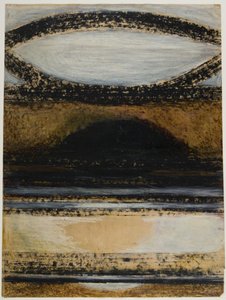
Signs III (1981) авторства Геда Стерн

Signs III

1981 · Graphite Pencil · Музей сучасного мистецтва (MoMA), Нью-Йорк

Hedda Sterne’s “Signs III,” created in 1981, stands as a striking testament to the enduring power of abstraction and its ability to convey profound emotional resonance. More than just a depiction of snow or sand—though those elements dominate the canvas—the artwork embodies a complex interplay of visual language and philosophical contemplation.

5
Untitled from Metaphores and Metamorphoses (1967) авторства Геда Стерн

Untitled from Metaphores and Metamorphoses

1967 · Ink On Paper · Музей сучасного мистецтва (MoMA), Нью-Йорк

In this work, titled Untitled from Metaphores and Metamorphoses, we encounter the precise, meditative language of Hedda Sterne. Created in 1967, the piece belongs to the Abstract Expressionism movement, a period where the artist explored the boundaries between form and the internal landscape. Sterne, who lived from 1910 to 2011, brought a unique perspective to the New York School, often navigating the space between different artistic philosophies.

6
Untitled (D2WW32) (1953) авторства Геда Стерн

Untitled (D2WW32)

1953 · Oil On Canvas · Метрополітен-музей, Нью-Йорк

Hedda Sterne’s 1953 painting, “Untitled (D2WW32),” isn’t merely a depiction of a room; it’s an immersion. It’s a carefully constructed echo of memory and emotion, rendered in the rich, earthy palette of a bygone era. The canvas breathes with a quiet intensity, inviting the viewer to lose themselves within its layered complexity. This work, born from the heart of the New York School of painters, stands as a testament to…

Вибірка Геда Стерн триває, від 11 до 20

Теми, що привертали увагу Геда Стерн

Чотири сюжети, які найчастіше зустрічаються в цих оригіналах, кожен із найкращим прикладом.

Музеї, у яких зберігаються оригінали Геда Стерн

8 музеїв, у яких зберігається найбільша кількість картин із цього списку.

Музей Місто Твори Геда Стерн Картини зі цього списку
Музей сучасного мистецтва (MoMA), Нью-ЙоркМузей сучасного мистецтва (MoMA) Нью-Йорк 2 Signs III, Untitled from Metaphores and Metamorphoses
Метрополітен-музей, Нью-ЙоркМетрополітен-музей Нью-Йорк 1 Untitled (D2WW32)
Krannert Art Museum, ChampaignKrannert Art Museum Champaign 1 N.Y. 1 (Road #4)
Смитсонівський музей американського мистецтва, Вашингтон, округ КолумбіяСмитсонівський музей американського мистецтва Вашингтон, округ Колумбія 1 Cauliflower
Art Institute of Chicago, ЧикагоArt Institute of Chicago Чикаго 1 New York
Harvard Art Museums, КембриджHarvard Art Museums Кембридж 1 Untitled
Bonnefanten Museum, МаастрихтBonnefanten Museum Маастрихт 1 New York, VIII
Музей американського мистецтва Уітні, Нью-ЙоркМузей американського мистецтва Уітні Нью-Йорк 1 New York, N.Y., 1955

Геда Стерн десятиліття за десятиліттям: оригінали, що визначають кожне з них

Роботи за десятиліттями

Оберіть десятиліття, щоб побачити оригінальний твір, який його визначає.

Запитання колекціонерів про картини Геда Стерн

Яка робота Геда Стерн є найвідомішою?Дізнатися відповідь

Untitled (1941). Далі йдуть Katsonarock (Portrait of V.X.) (1941) та Untitled (August 13, 2001) (2001).

Скільки років було Геда Стерн, коли було створено Untitled?Дізнатися відповідь

31 років: Untitled датована 1941 роком, а Геда Стерн народився(-лася) у 1910.

Які десять найвідоміших картин Геда Стерн?Дізнатися відповідь

Untitled, Katsonarock (Portrait of V.X.), Untitled (August 13, 2001), Signs III, Untitled from Metaphores and Metamorphoses, Untitled (D2WW32), Composition, The Ballerina, Figure and Black Mantle та Third Avenue El. У рейтингу вище вказано рік створення та музей для кожної картини.

Скільки картин залишив Геда Стерн?Дізнатися відповідь

Наш каталог містить 21 робіт Геда Стерн, датованих періодом з 1941 по 2001.

У яких музеях виставляються шедеври Геда Стерн?Дізнатися відповідь

Переважно в Музей сучасного мистецтва (MoMA) (Нью-Йорк), Метрополітен-музей (Нью-Йорк) та Krannert Art Museum (Champaign). У таблиці музеїв вище наведено їхній повний перелік.

У які роки Геда Стерн створив свої найвідоміші роботи?Дізнатися відповідь

У 1950s: 6 із 20 робіт на цій сторінці були створені тоді, серед них Untitled (D2WW32).

Які перша та остання відомі оригінальні роботи Геда Стерн?Дізнатися відповідь

На цій сторінці найдавніша робота датована Untitled (1941), а найновіша — Untitled (August 13, 2001) (2001).

Які сюжети Геда Стерн обирав найчастіше?Дізнатися відповідь

Geometric forms (3) та Urban chaos (2), у 20 роботах на цій сторінці.

Яку техніку найчастіше використовував(ла) Геда Стерн?Дізнатися відповідь

Oil On Canvas, для 3 із 20 робіт на цій сторінці.

До якого художнього напряму належить Геда Стерн?Дізнатися відповідь

Abstract expressionism та Surrealism, судячи з оригіналів на цій сторінці.

Які роботи Геда Стерн виставлені в Музей сучасного мистецтва (MoMA)?Дізнатися відповідь

Signs III та Untitled from Metaphores and Metamorphoses: Музей сучасного мистецтва (MoMA), Нью-Йорк зберігає 2 робіт із цієї сторінки.

Геда Стерн: життя та творчість

Hedda Sterne (1910-2011) – A Life Bridging Worlds: The Artistic Journey of Hedda Sterne

Hedda Sterne, born Hedwig Lindenberg in Bucharest, Romania, in 1910, was an artist whose life and work embodied a fascinating intersection of cultures, movements, and personal philosophies. Her journey from the vibrant avant-garde scene of pre-war Europe to the heart of the New York School is a testament to her resilience, intellectual curiosity, and unwavering dedication to artistic exploration. Growing up in a household that valued both music and languages – her brother became a renowned conductor – Sterne received a broad education that fostered an appreciation for nuance and expression. This early exposure, coupled with a burgeoning interest in art history and German philosophical texts, laid the groundwork for a deeply thoughtful and conceptually driven practice. Initially encouraged towards a musical path, she skillfully navigated familial expectations to pursue her true calling: painting. Her formal training began in 1918 under the tutelage of Frederic Storck, a sculptor who had taught her instructor Max Hermann Maxy, setting her on a course that would see her engage with some of the most pivotal artistic currents of the twentieth century.

Early Influences and Artistic Formation

Hedwig Lindenberg’s formative years were steeped in intellectual stimulation. Her family instilled in her a love for learning and encouraged exploration beyond conventional boundaries. Notably, her brother's career as a conductor exposed her to musical sophistication—a sensibility that would later permeate her artistic vision. Simultaneously, Sterne devoured German philosophical texts, grappling with existential questions and embracing the modernist preoccupation with subjectivity. This intellectual grounding profoundly shaped her approach to artmaking, informing her understanding of form, color, and symbolism. Encouraged by Storck’s guidance, Sterne honed her sculptural skills alongside Max Hermann Maxy, gaining invaluable experience in manipulating materials and achieving expressive effects—skills that would prove crucial in her subsequent artistic endeavors. Her initial inclination toward music ultimately yielded to the irresistible allure of painting, marking a pivotal moment in her personal trajectory.

Surrealism and European Avant-Garde

The artistic landscape of Bucharest in the 1920s pulsed with revolutionary energy, attracting artists who dared to challenge established conventions. Sterne became captivated by Surrealism—a movement she described as “something I grew up with”—influenced by figures like Marcel Janco and Victor Brauner. Dada’s rebellious spirit resonated deeply within her artistic sensibilities, fostering a desire to disrupt traditional hierarchies and explore the subconscious realm. Frequent travels to Vienna provided opportunities to immerse herself in ceramic artistry and engage with European Modernism's latest innovations—particularly Léger’s geometric abstraction and Lhote’s exploration of architectural forms. These experiences weren’t merely technical exercises; they were transformative encounters that broadened Sterne’s artistic horizons and instilled a profound appreciation for diverse aesthetic approaches. Her fascination with Surrealist principles like automatism—a technique she would later champion in her collages—demonstrated her commitment to liberating creativity from rational constraints.

From Bucharest to New York: Embracing American Modernism

The looming shadow of war forced Sterne’s family to relocate to the United States in 1939, marking a dramatic shift in her life and artistic circumstances. She reunited with Fritz Stern (later Frederick Stafford), establishing a studio on East 50th Street and forging connections with fellow expatriates—including Peggy Guggenheim and Max Ernst—who shared her passion for avant-garde experimentation. These relationships proved invaluable, introducing Sterne to influential artists from across Europe and fostering collaborative dialogues that enriched her artistic vision. Her friendship with André Breton solidified her allegiance to Surrealism’s core tenets—challenging perception and embracing irrationality as pathways to creative insight. Sterne actively participated in the First Papers of Surrealism exhibition at Whitelaw Reid Mansion, New York (October 14 - November 7), curated by Marcel Duchamp and André Breton as a benefit for the Coordinating Council of French Relief Societies—a testament to her unwavering commitment to artistic activism and intellectual engagement. During this period, Sterne began exploring new techniques and mediums, embracing industrial materials like aerosol spray paint to capture the dynamism of urban life and experimenting with collage to create layered compositions that conveyed complex emotional states.

Legacy and Artistic Significance

Hedda Sterne’s enduring legacy rests on her pioneering role in shaping American Abstract Expressionism—a movement she embraced wholeheartedly during her time in New York. Her participation in “The Irascibles”—a group of artists who defied institutional norms and championed artistic freedom—represented a courageous assertion of individuality against prevailing societal pressures. Sterne's distinctive visual diary—characterized by abstracted landscapes, architectural motifs, and enigmatic figures—continues to inspire artists and scholars alike. Her unwavering dedication to conceptual exploration and her masterful manipulation of form and color cemented her place as one of the most important voices in twentieth-century art—an artist who fearlessly navigated a world undergoing profound transformation, transforming personal experience into enduring visual poetry. She remains an exemplar of artistic integrity and intellectual curiosity, demonstrating that true creativity thrives on questioning assumptions and embracing unconventional perspectives.