Портрет П'Єтро Берніні

5 найвідоміших картин П'Єтро Берніні, кожна з яких є унікальною

Оновлено Листопад 2026 · за рейтингом нашої популярності (кількість пошукових запитів, переглядів та замовлень для кожної роботи) · 5 робіт П'Єтро Берніні у нашому каталозі

Коротко кажучи

The Assumption (1607) — це картина П'Єтро Берніні, яка привертає найбільше уваги; оригінал зберігається в Санта-Марія-Маджоре, Рим. Після цього погляд переходить на Bust of Antonio Coppola (1612) та The Charity of St Martin (1610). Серед 5 робіт П'Єтро Берніні у нашому каталозі ці 5 є найвідомішими: кожна з них — унікальний оригінал із зазначенням року створення, музею та причини її безсмертя.

1562 – 1629 Baroque Найбільше робіт: Санта-Марія-Маджоре

Топ-10 картин П'Єтро Берніні крізь призму галереї

1
The Assumption (1607) авторства П'Єтро Берніні

The Assumption

1607 · Marble · Санта-Марія-Маджоре, Рим

In the heart of Rome, within the sacred walls of the Santa Maria Maggiore Basilica, a marble relief titled The Assumption unfolds. Created by the sculptor Pietro Bernini, this work captures a moment of celestial movement. The sculpture resides in the baptistery of the basilica, having been commissioned specifically for the sacristy of this historic site. It exists as a physical manifestation of devotion, carved into stone to occupy a…

3
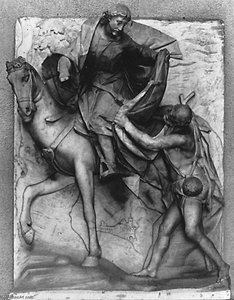
The Charity of St Martin (1610) авторства П'Єтро Берніні

The Charity of St Martin

1610 · Marble · Certosa di San Martino, Неаполь

The sculpture is titled The Charity of St Martin. It was created by the Italian sculptor Pietro Bernini, a figure whose work helped define the transition into the Baroque style. This particular piece is a significant example of that era's emphasis on movement and emotional expression. You can find it today within the Certosa di San Martino in Naples, Italy.

4
St John the Baptist (1612) авторства П'Єтро Берніні

St John the Baptist

1612 · Marble · Sant'Andrea della Valle, Рим

The marble figure of St John the Baptist emerges from the shadows, a silent presence carved by the hands of the Italian sculptor Pietro Bernini. Created about 1612, this work captures the saint in a moment of profound stillness. The sculpture carries the weight of a man who has lived a life of devotion, his form rendered with a precision that makes the stone feel alive under the gaze of…

5
Satyr with Panther (1615) авторства П'Єтро Берніні

Satyr with Panther

1615 · Marble

The sculpture titled Satyr with Panther is a work by the artist Pietro Bernini. It emerged from the stone about 1615. This figure captures a moment of primal hunger, a frozen gesture of desire caught in marble. The subject is a mythological creature, a satyr, defined by his pointed ears and short tail.

Теми, що привертали увагу П'Єтро Берніні

Чотири сюжети, які найчастіше зустрічаються в цих оригіналах, кожен із найкращим прикладом.

Музеї, у яких зберігаються оригінали П'Єтро Берніні

4 музеїв, у яких зберігається більшість картин із цього списку.

Музей Місто Твори П'Єтро Берніні Картини зі цього списку
Санта-Марія-Маджоре, РимСанта-Марія-Маджоре Рим 1 The Assumption
San Giovannini dei Fiorentini, RomeSan Giovannini dei Fiorentini Rome 1 Bust of Antonio Coppola
Certosa di San Martino, НеапольCertosa di San Martino Неаполь 1 The Charity of St Martin
Sant'Andrea della Valle, РимSant'Andrea della Valle Рим 1 St John the Baptist

П'Єтро Берніні крізь роки: унікальні оригінали кожного твору

Оригінали П'Єтро Берніні, датовані в межах приблизно десяти років, з 1607 по 1615, представлені тут дозволяють простежити еволюцію стилю рік за роком.

Роботи за роками

Оберіть рік, щоб переглянути оригінали.

Картини П'Єтро Берніні: запитання до галереї

Яка найвідоміша робота П'Єтро Берніні?Дізнатися відповідь

The Assumption (1607), Санта-Марія-Маджоре, Рим. Далі йдуть Bust of Antonio Coppola (1612) та The Charity of St Martin (1610).

У якому віці П'Єтро Берніні створив(ла) The Assumption?Дізнатися відповідь

45 років: The Assumption датована 1607 роком, а П'Єтро Берніні народився(-лася) у 1562.

Скільки відомих робіт належить П'Єтро Берніні?Дізнатися відповідь

Наш каталог містить 5 робіт П'Єтро Берніні, датованих періодом з 1607 по 1615.

Де можна побачити найвідоміші оригінали П'Єтро Берніні?Дізнатися відповідь

Переважно в Санта-Марія-Маджоре (Рим), San Giovannini dei Fiorentini (Rome) та Certosa di San Martino (Неаполь). У таблиці музеїв вище наведено їхній повний перелік.

У який період П'Єтро Берніні створив свої найвідоміші картини?Дізнатися відповідь

У 1612: 2 із 5 робіт на цій сторінці були створені тоді, серед них Bust of Antonio Coppola.

Яка з найвідоміших картин П'Єтро Берніні була написана найраніше, а яка — найпізніше?Дізнатися відповідь

На цій сторінці найдавніша робота датована The Assumption (1607), а найновіша — Satyr with Panther (1615).

Яким сюжетам віддавав перевагу П'Єтро Берніні?Дізнатися відповідь

Man (4), Marble (4) та Sculpture (2), у 5 роботах на цій сторінці.

Якими матеріалами найчастіше користувався П'Єтро Берніні?Дізнатися відповідь

Marble, для 5 із 5 робіт на цій сторінці.

До якого напряму належить творчість П'Єтро Берніні?Дізнатися відповідь

Baroque, судячи з оригіналів на цій сторінці.

П'Єтро Берніні: портрет художника

Pietro Bernini: Life and Legacy

Early Life and Training

  • Born: Sesto Fiorentino, Tuscany, Italy in 1562.
  • Pietro Bernini emerged during the late Mannerist period, a time of stylistic transition in Italian art. His early training likely involved exposure to the prevailing artistic trends of Florence, characterized by elegance and refinement.
  • Details regarding his initial apprenticeship remain somewhat scarce, but it’s understood he developed foundational skills in sculpture before relocating to Naples.

Naples and Family Beginnings

  • Bernini moved to Naples to contribute to the artistic embellishment of the Certosa di San Martino, a significant religious complex.
  • Significant Event: It was in Naples that he met and married Domenica Pizzuti, and their son, the future Baroque master Gian Lorenzo Bernini, was born in 1598.
  • This period marked a crucial turning point, laying the groundwork for a family dynasty of artists.

Rome and Papal Patronage

  • Relocation: In 1605, the Bernini family relocated to Rome under the protection of Cardinal Scipione Borghese, a powerful figure in the Roman art world.
  • Pietro quickly secured commissions from Pope Paul V (also a Borghese), contributing to projects such as the Pauline Chapel within the Basilica of Santa Maria Maggiore. This marked his entry into the heart of Roman artistic activity.
  • Influence: The patronage of the Borghese family proved instrumental in establishing Pietro’s career and providing opportunities for both him and, eventually, his son.

Major Works and Artistic Style

  • Fontana della Barcaccia: Perhaps his most celebrated work, the Fontana della Barcaccia (Fountain of the Old Boat) at the foot of the Spanish Steps in Rome. Completed in 1627, it’s a striking example of Baroque ingenuity, resembling a beached ship.
  • Other Notable Works: Contributions to the Fountain of Neptune in Naples (completed between 1600-1601), and sculptural work within Santa Maria Maggiore.
  • Artistic Style: Pietro’s style blended Mannerist elegance with emerging Baroque dynamism. His sculptures often exhibit a sense of movement, emotional intensity, and dramatic flair.

Collaboration and Legacy

  • Early Collaboration with Gian Lorenzo: Pietro initially collaborated with his son on projects like the Boy with a Dragon (1617), showcasing early signs of Gian Lorenzo’s exceptional talent.
  • Shift in Roles: As Gian Lorenzo's abilities surpassed his own, Pietro willingly transitioned into a supportive role, often acting as an assistant to his son. This demonstrates a remarkable level of artistic maturity and familial dedication.
  • Historical Significance: While overshadowed by his son’s immense fame, Pietro Bernini played a vital role in shaping the Roman Baroque landscape. His work paved the way for Gian Lorenzo's groundbreaking achievements and contributed to the flourishing of art during this period.
  • Death: Pietro Bernini died in Rome in 1629 at the age of 67, leaving behind a legacy as both a skilled sculptor and the father of one of history’s greatest artists.