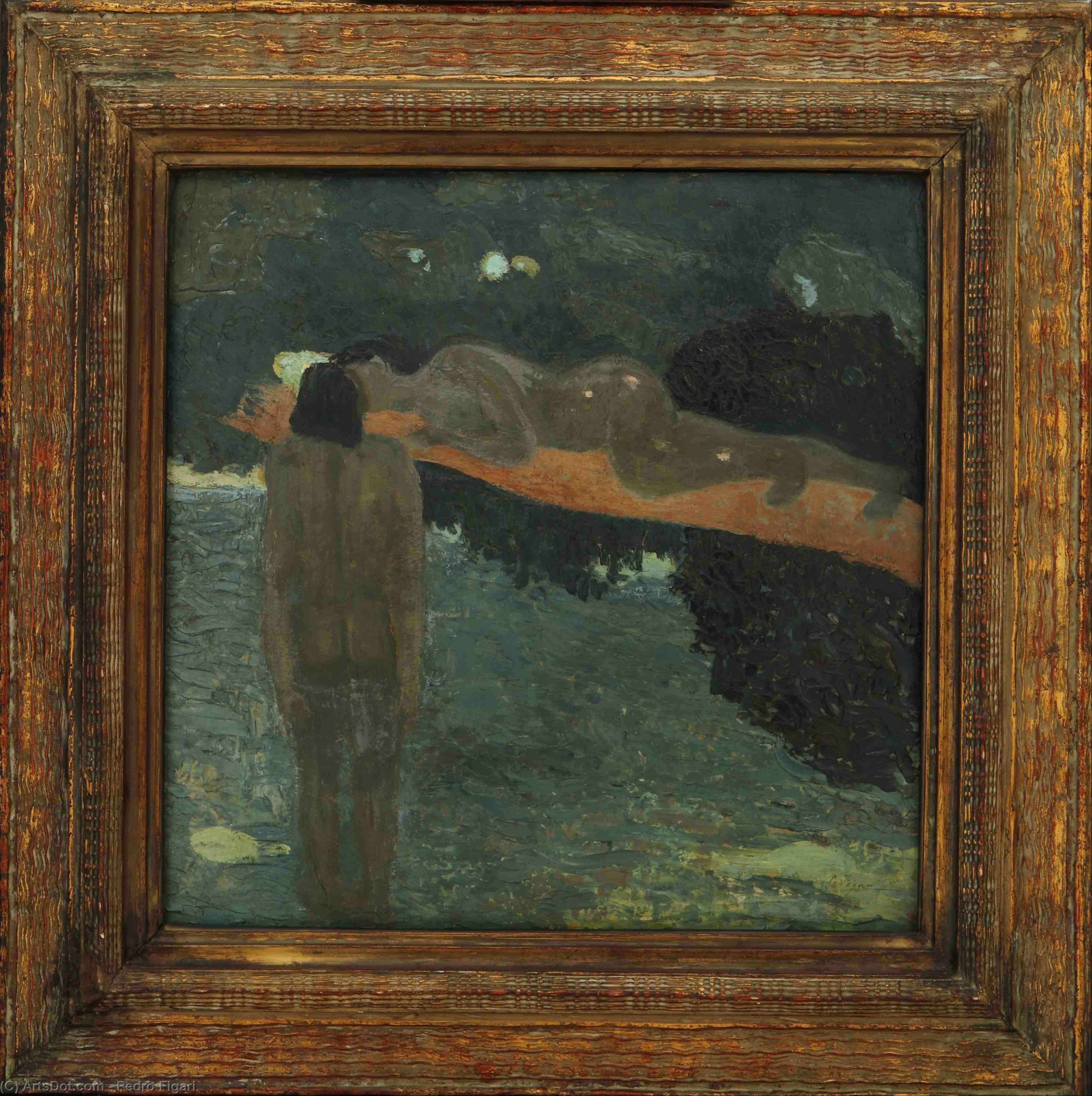
Портрет Педро Фігарі

56 найвідоміших картин Педро Фігарі, кожна з яких є унікальною

Оновлено Жовтень 2026 · за рейтингом нашої популярності (кількість пошукових запитів, переглядів та замовлень для кожної роботи) · 56 робіт Педро Фігарі у нашому каталозі

Коротко кажучи

Tertulia at the inn before eating. The inn (1919) — це картина Педро Фігарі, яка привертає найбільше уваги; оригінал зберігається в Національний музей образотворчого мистецтва, Буенос-Айрес. Після цього погляд переходить на Candombe carnival (1932) та Lavanderas En Los Medanos O Los Amigos. Серед 56 робіт Педро Фігарі у нашому каталозі ці 56 є найвідомішими: кожна з них — унікальний оригінал із зазначенням року створення, музею та причини її безсмертя.

1861 – 1938, Монтевідео Impressionism Найбільше робіт: Національний музей образотворчого мистецтва

Топ-10 картин Педро Фігарі крізь призму галереї

4
El Beso авторства Педро Фігарі

El Beso

El Beso is an oil painting on canvas by Pedro Figari. Born in Montevideo in 1861, the artist lived until 1938, a period that saw him transition from a career in law and politics to a dedicated practice in the visual arts. His later years were defined by a shift toward a unique, intuitive approach to painting, often reconstructing scenes from memory rather than direct observation.

Знамениті картини Педро Фігарі, з 11 по 56

11La Vida авторства Педро ФігаріLa Vida 12El Requiebro авторства Педро ФігаріEl Requiebro 13El Patio O Patio Unitario авторства Педро ФігаріEl Patio O Patio UnitarioНаціональний музей образотворчого мистецтва 14El Gaucho Candioti авторства Педро ФігаріEl Gaucho CandiotiНаціональний музей образотворчого мистецтва 15Negras En La Puerta O Negras En Zaguán авторства Педро ФігаріNegras En La Puerta O Negras En ZaguánНаціональний музей образотворчого мистецтва 16The Dance (Bailongo) (1925) авторства Педро ФігаріThe Dance (Bailongo)1925 17Creole Dance (1925) авторства Педро ФігаріCreole Dance1925 18Peeling the pava (1925) авторства Педро ФігаріPeeling the pava1925 · Національний музей образотворчого мистецтва 19Off for the Honeymoon (1925) авторства Педро ФігаріOff for the Honeymoon1925 20Double Wedding (1930) авторства Педро ФігаріDouble Wedding1930 21Idilio campero (1935) авторства Педро ФігаріIdilio campero1935 · Inter-American Development Bank 22Ноктюрн (1918) авторства Педро ФігаріНоктюрн1918 · Colección de Arte Amalia Lacroze de Fortabat 23A Request to Rosas авторства Педро ФігаріA Request to Rosas 24Mass departure авторства Педро ФігаріMass departureНаціональний музей образотворчого мистецтва 25The pampas or return of the dance авторства Педро ФігаріThe pampas or return of the danceНаціональний музей образотворчого мистецтва 26Injuria авторства Педро ФігаріInjuria 27La Diligancia авторства Педро ФігаріLa Diligancia 28Damas Antiguas авторства Педро ФігаріDamas Antiguas 29Rincón De Negros авторства Педро ФігаріRincón De Negros 30Las Visitas авторства Педро ФігаріLas Visitas 31La Media Caña авторства Педро ФігаріLa Media Caña 32Pericón - авторства Педро ФігаріPericón -Національний музей образотворчого мистецтва 33Jardín Bajo La Luna O Quietud En La Quinta авторства Педро ФігаріJardín Bajo La Luna O Quietud En La QuintaНаціональний музей образотворчого мистецтва 34El Pericón авторства Педро ФігаріEl Pericón 35Negros Y Mulatas авторства Педро ФігаріNegros Y Mulatas 36Patio авторства Педро ФігаріPatioНаціональний музей образотворчого мистецтва 37Cuestión De Razas авторства Педро ФігаріCuestión De Razas 38Alevosía авторства Педро ФігаріAlevosía 39Works Of Pedro Figari авторства Педро ФігаріWorks Of Pedro Figari 40Los miriñaques авторства Педро ФігаріLos miriñaques 41Reunión Colonial авторства Педро ФігаріReunión Colonial 42Pampa авторства Педро ФігаріPampaНаціональний музей образотворчого мистецтва 43Deliberando авторства Педро ФігаріDeliberando 44Hacia La Fiesta авторства Педро ФігаріHacia La Fiesta 45Cuarteleras авторства Педро ФігаріCuartelerasНаціональний музей образотворчого мистецтва 46Confidencia авторства Педро ФігаріConfidenciaНаціональний музей образотворчого мистецтва 47Camelias Blancas авторства Педро ФігаріCamelias Blancas 48Las Vecinas авторства Педро ФігаріLas VecinasНаціональний музей образотворчого мистецтва 49Candombe авторства Педро ФігаріCandombeНаціональний музей образотворчого мистецтва 50Candombe O Candombe Bajo La Luna авторства Педро ФігаріCandombe O Candombe Bajo La LunaНаціональний музей образотворчого мистецтва 51Lamento авторства Педро ФігаріLamentoНаціональний музей образотворчого мистецтва 52Cancha De Bochas авторства Педро ФігаріCancha De BochasНаціональний музей образотворчого мистецтва 53Pericón авторства Педро ФігаріPericónНаціональний музей образотворчого мистецтва 54Baile En El Rancho авторства Педро ФігаріBaile En El RanchoНаціональний музей образотворчого мистецтва 55Una Diligencia авторства Педро ФігаріUna DiligenciaНаціональний музей образотворчого мистецтва 56Tertulia авторства Педро ФігаріTertuliaНаціональний музей образотворчого мистецтва

Знамениті картини Педро Фігарі за періодами творчості

Modern

3 робіт у цьому списку

Теми, що привертали увагу Педро Фігарі

Чотири сюжети, які найчастіше зустрічаються в цих оригіналах, кожен із найкращим прикладом.

Музеї, у яких зберігаються оригінали Педро Фігарі

3 музеїв, у яких зберігається більшість картин із цього списку.

Музей Місто Твори Педро Фігарі Картини зі цього списку
Національний музей образотворчого мистецтва, Буенос-АйресНаціональний музей образотворчого мистецтва Буенос-Айрес 25 Tertulia at the inn before eating. The inn, Candombe carnival, Lavanderas En Los Medanos O Los Amigos
Inter-American Development Bank, Вашингтон, округ КолумбіяInter-American Development Bank Вашингтон, округ Колумбія 1 Idilio campero
Colección de Arte Amalia Lacroze de Fortabat, Буенос-АйресColección de Arte Amalia Lacroze de Fortabat Буенос-Айрес 1 Ноктюрн

Педро Фігарі крізь десятиліття: одна унікальна оригінальна робота для кожного

Роботи за десятиліттями

Оберіть десятиліття, щоб побачити оригінальний твір, який його визначає.

Картини Педро Фігарі: запитання до галереї

Яка найвідоміша робота Педро Фігарі?Дізнатися відповідь

Tertulia at the inn before eating. The inn (1919), Національний музей образотворчого мистецтва, Буенос-Айрес. Далі йдуть Candombe carnival (1932) та Lavanderas En Los Medanos O Los Amigos.

У якому віці Педро Фігарі створив(ла) Tertulia at the inn before eating. The inn?Дізнатися відповідь

58 років: Tertulia at the inn before eating. The inn датована 1919 роком, а Педро Фігарі народився(-лася) у 1861.

Які десять найвідоміших картин Педро Фігарі?Дізнатися відповідь

Tertulia at the inn before eating. The inn, Candombe carnival, Lavanderas En Los Medanos O Los Amigos, El Beso, While the Ball Rolls, El Maturrango, Encuentro En El Camino, Carreta, La Amita та Preparando El Candombe. У рейтингу вище вказано рік створення та музей для кожної картини.

Скільки відомих робіт належить Педро Фігарі?Дізнатися відповідь

Наш каталог містить 56 робіт Педро Фігарі, датованих періодом з 1918 по 1935.

Де можна побачити найвідоміші оригінали Педро Фігарі?Дізнатися відповідь

Переважно в Національний музей образотворчого мистецтва (Буенос-Айрес), Inter-American Development Bank (Вашингтон, округ Колумбія) та Colección de Arte Amalia Lacroze de Fortabat (Буенос-Айрес). У таблиці музеїв вище наведено їхній повний перелік.

У який період Педро Фігарі створив свої найвідоміші картини?Дізнатися відповідь

У 1920s: 4 із 56 робіт на цій сторінці були створені тоді, серед них The Dance (Bailongo).

Яка з найвідоміших картин Педро Фігарі була написана найраніше, а яка — найпізніше?Дізнатися відповідь

На цій сторінці найдавніша робота датована Ноктюрн (1918), а найновіша — Idilio campero (1935).

Яким сюжетам віддавав перевагу Педро Фігарі?Дізнатися відповідь

Social gathering (4), Uruguayan culture (3) та Uruguayan art (3), у 56 роботах на цій сторінці.

До якого напряму належить творчість Педро Фігарі?Дізнатися відповідь

Impressionism та Modernism, судячи з оригіналів на цій сторінці.

Які оригінальні роботи Педро Фігарі можна побачити в Національний музей образотворчого мистецтва?Дізнатися відповідь

Tertulia at the inn before eating. The inn, Candombe carnival та Lavanderas En Los Medanos O Los Amigos: Національний музей образотворчого мистецтва, Буенос-Айрес зберігає 25 робіт із цієї сторінки.

Педро Фігарі: портрет художника

A Life Imbued with Uruguayan Essence

Pedro Figari, a name now inextricably linked to the vibrant heart of Latin American modernism, was far more than simply a painter; he was a complex and deeply felt embodiment of his nation’s soul. Born in Montevideo in 1861, his journey wasn't one of immediate artistic declaration but rather a gradual unfolding, shaped by a life steeped in law, politics, and the raw realities of Uruguayan society. Initially drawn to the precision and structure of the legal profession – earning his degree in 1886 – Figari’s early career as a defense attorney exposed him to the struggles of the marginalized, fostering within him a profound empathy and an acute awareness of social injustice. These experiences, simmering beneath the surface of his professional life, would eventually find their most potent expression through his art. A marriage in 1886 led to travels in France, a pivotal moment that introduced him to the revolutionary currents of post-impressionism – artists like Van Gogh and Gauguin were beginning to challenge traditional notions of representation, paving the way for Figari’s own distinctive approach. However, it wasn't until 1921, at the remarkable age of sixty, that he fully embraced painting as his primary vocation, unleashing a torrent of creativity that would forever alter the landscape of Latin American art.

From Legal Chambers to Artistic Visions

For decades prior to this transformative shift, Figari had maintained a carefully balanced existence, juggling his legal commitments with intermittent artistic endeavors. He was deeply involved in Uruguayan public life, serving as a respected member of Parliament, diligently contributing to debates on social reform and justice. Simultaneously, he directed the Escuela Nacional de Artes y Oficios – the National School of Arts and Crafts – nurturing a new generation of artists and advocating for a more accessible and relevant approach to art education. His literary pursuits were equally significant; Figari was a prolific writer, exploring themes ranging from legal philosophy and aesthetics to utopian ideals and social commentary. These diverse intellectual interests weren’t distractions from his artistic aspirations but rather enriched them, providing him with a sophisticated understanding of human behavior, societal dynamics, and the power of ideas. The move to Buenos Aires in 1921 proved to be a catalyst for this final transformation. It was there, amidst the bustling energy of Argentina's cultural scene, that he shed the constraints of earlier, academically-influenced styles and began to forge a truly unique artistic voice – one rooted firmly in his Uruguayan identity. He deliberately abandoned meticulous realism, opting instead for a more intuitive approach—painting not what he *saw*, but what he *remembered*. This reliance on memory wasn’t simply a technical choice; it allowed him to distill the essence of his experiences, imbuing his work with a deeply personal and nostalgic quality.

A Pioneer's Palette: Style and Subject Matter

Figari’s artistic style is immediately recognizable for its vibrant color palettes, bold brushstrokes, and seemingly naïve simplicity. He wasn’t interested in creating illusions of depth or photographic accuracy; instead, he treated his canvases as studies in color and form, reconstructing Uruguayan scenes from the fragments of his memory. His subjects were drawn almost exclusively from the world he knew intimately—the gauchos roaming the pampas, lively carnival celebrations, the rituals and daily life of Montevideo’s black community, and the quiet intimacy of colonial patios. These weren't merely picturesque depictions; they were poignant reflections on Uruguayan identity, social customs, and a disappearing way of life. He captured fleeting moments—a dance, a gathering, a street scene—with an immediacy that felt both timeless and deeply rooted in place. His technique, often employing impasto with visible brushwork, further emphasized the expressive power of color and texture, creating paintings that pulsated with energy and emotion. The influence of post-impressionism is evident in his use of color and emotional intensity, but he ultimately developed a style uniquely his own—one characterized by its directness, sincerity, and profound connection to Uruguayan culture.

Breaking with Tradition: A Latin American Voice

Pedro Figari emerged during a crucial period in Latin American art history – a time when artists were actively seeking to break free from European artistic dominance and define their own unique aesthetic identities. Traditional academic painting often focused on historical or religious subjects, prioritizing technical skill over genuine expression. Figari challenged this convention by embracing a more direct, unpretentious style that allowed him to subtly critique social norms and celebrate the vibrancy of Uruguayan culture. He believed in the power of art to connect with the everyday experiences of ordinary people, rejecting elitism in favor of authenticity. His work resonated with a growing sense of national pride and a desire to reclaim indigenous roots. He wasn’t alone in this endeavor—artists like Diego Rivera and Tarsila do Amaral were also forging new paths—but Figari's unique blend of memory, color, and social commentary established him as a pivotal figure in the development of Latin American modernism. He anticipated later modernist developments with his expressive brushwork and rejection of mechanistic representation. His paintings weren’t simply representations of Uruguayan life; they *were* Uruguay – its colors, its rhythms, its soul – preserved on canvas for generations to come.

Legacy and Enduring Influence

Pedro Figari's legacy extends far beyond his individual artistic achievements. He is remembered as one of the first Latin American painters to successfully forge a distinctly regional style, prioritizing feeling and essence over strict realism. His work continues to inspire artists and art lovers alike with its vibrant energy, emotional depth, and unwavering commitment to capturing the spirit of Uruguay. He demonstrated that true modernity wasn’t about imitating European trends but about finding one's own voice—a lesson that resonated throughout Latin America and beyond. He died in 1938, leaving behind a body of work that stands as a testament to his artistic vision, intellectual curiosity, and enduring love for his homeland.