Портрет Naddo Ceccarelli

16 найвідоміших картин Naddo Ceccarelli: добірка галереї

Оновлено Листопад 2026 · за рейтингом нашої популярності (кількість пошукових запитів, переглядів та замовлень для кожної роботи) · 16 робіт Naddo Ceccarelli у нашому каталозі

Коротко кажучи

З усіх оригінальних робіт, які залишив Naddo Ceccarelli, найвідомішою є Madonna and Child (1347) із колекції Ashmolean Museum, Оксфорд. Слідом за ними йдуть Madonna and Child (1347) та Madonna and Child Flanked by Four Saints (1347). Наш каталог містить 16 робіт Naddo Ceccarelli; галерея зберегла 16 найвідоміших у світі творів, кожен із яких представлений із датою створення, назвою музею та своєю історією.

1320 – 1347, Siena Найбільше робіт: Ashmolean Museum

10 найкращих картин Naddo Ceccarelli: вибір галереї

1
Madonna and Child (1347) авторства Naddo Ceccarelli

Madonna and Child

1347 · Tempera On Panel · Ashmolean Museum, Оксфорд

Madonna and Child is a religious panel painting by Naddo Ceccarelli, executed in 1347. The artist, born in Siena, Italy, in 1320, was a prominent figure in the Sienese school during the mid-14th century. This work is a representative example of the International Gothic style, characterized by its lyrical lines and decorative emphasis.

2
Madonna and Child (1347) авторства Naddo Ceccarelli

Madonna and Child

1347 · Tempera On Panel

The painting presents a vertical, centered composition of the Virgin Mary holding the Christ Child. The figures are positioned against a background of gold leaf, which creates a flat, non-directional light that emanates from the surface rather than a natural source. The Madonna is draped in a dark blue or black mantle, which contrasts with the pale pink tunic worn by the Child. Their faces are rendered in oval shapes…

3
Madonna and Child Flanked by Four Saints (1347) авторства Naddo Ceccarelli

Madonna and Child Flanked by Four Saints

1347 · Tempera On Panel · Chrysler Museum of Art, Норфолк

In the quiet intimacy of a private chapel or a refined domestic space, certain works of art possess the power to transcend time, acting as windows into a more spiritual era. Madonna and Child Flanked by Four Saints is precisely such a masterpiece. Created in 1347 by the Sienese master Naddo Ceccarelli, this delicate three-part altarpiece functions like a gilded Gothic dollhouse, inviting the viewer into a sacred, enclosed world.…

4
The Crucifixion авторства Naddo Ceccarelli

The Crucifixion

Tempera On Panel · Fitzwilliam Museum

Naddo Ceccarelli, a gifted pupil of the leading Sienese painter Simone Martini, executed The Crucifixion as a significant religious panel painting. This work belongs to the Sienese School and reflects the stylistic developments of the Late Gothic period. Ceccarelli’s training under Martini is evident in the execution of this piece, which emerged from a workshop tradition defined by both spiritual intensity and technical precision.

5
Saints Blaise, Catherine of Alexandria, and Lawrence авторства Naddo Ceccarelli

Saints Blaise, Catherine of Alexandria, and Lawrence

Tempera On Panel · Harvard Art Museums, Кембридж

In this religious panel, Naddo Ceccarelli presents Saints Blaise, Catherine of Alexandria, and Lawrence. The three figures emerge from a gold ground, standing in a silent row. They occupy a shallow space, their upright postures creating a rhythmic verticality. This Sienese work reflects the devotional focus of the mid-fourteenth century, a period when the artist was active between about 1330 and 1360.

6
Pietà with Saints авторства Naddo Ceccarelli

Pietà with Saints

Tempera On Panel

Pietà with Saints is a religious composition by Naddo Ceccarelli. The artist, born in Siena, Italy, in 1320, was a 14th-century Italian painter. This work likely served as an altarpiece, a sacred object intended for a place of worship. It captures a moment of profound stillness through its specific arrangement of figures.

Вибірка Naddo Ceccarelli триває, від 11 до 16

Теми, що привертали увагу Naddo Ceccarelli

Чотири сюжети, які найчастіше зустрічаються в цих оригіналах, кожен із найкращим прикладом.

Музеї, у яких зберігаються оригінали Naddo Ceccarelli

5 музеїв, у яких зберігається найбільша кількість картин із цього списку.

Музей Місто Твори Naddo Ceccarelli Картини зі цього списку
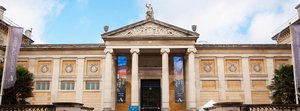
Ashmolean Museum, ОксфордAshmolean Museum Оксфорд 1 Madonna and Child
Chrysler Museum of Art, НорфолкChrysler Museum of Art Норфолк 1 Madonna and Child Flanked by Four Saints
Fitzwilliam MuseumFitzwilliam Museum 1 The Crucifixion
Harvard Art Museums, КембриджHarvard Art Museums Кембридж 1 Saints Blaise, Catherine of Alexandria, and Lawrence
Музей образотв мистецтв, БостонМузей образотв мистецтв Бостон 1 Crucified Christ with the Virgin and Saint John the Evangelist

Naddo Ceccarelli рік за роком: оригінали, що визначають кожен період

1347 — це рік кожної датованої роботи Naddo Ceccarelli у цій добірці: ось вони, відсортовані за популярністю.

Роботи за роками

Оберіть рік, щоб переглянути оригінали.

Запитання колекціонерів про картини Naddo Ceccarelli

Яка робота Naddo Ceccarelli є найвідомішою?Дізнатися відповідь

Madonna and Child (1347), Ashmolean Museum, Оксфорд. Далі йдуть Madonna and Child (1347) та Madonna and Child Flanked by Four Saints (1347).

Скільки років було Naddo Ceccarelli, коли було створено Madonna and Child?Дізнатися відповідь

27 років: Madonna and Child датована 1347 роком, а Naddo Ceccarelli народився(-лася) у 1320.

Які десять найвідоміших картин Naddo Ceccarelli?Дізнатися відповідь

Madonna and Child, Madonna and Child, Madonna and Child Flanked by Four Saints, The Crucifixion, Saints Blaise, Catherine of Alexandria, and Lawrence, Pietà with Saints, The Virgin Annunciate, Virgin And Child, The Virgin and Child та The Virgin Annunciate -. У рейтингу вище вказано рік створення та музей для кожної картини.

Скільки картин залишив Naddo Ceccarelli?Дізнатися відповідь

Наш каталог містить 16 робіт художника Naddo Ceccarelli.

У яких музеях виставляються шедеври Naddo Ceccarelli?Дізнатися відповідь

Переважно в Ashmolean Museum (Оксфорд), Chrysler Museum of Art (Норфолк) та Fitzwilliam Museum. У таблиці музеїв вище наведено їхній повний перелік.

У які роки Naddo Ceccarelli створив свої найвідоміші роботи?Дізнатися відповідь

У 1347: 3 із 16 робіт на цій сторінці були створені тоді, серед них Madonna and Child.

Які сюжети Naddo Ceccarelli обирав найчастіше?Дізнатися відповідь

Gold background (5), Virgin (4) та Child (3), у 16 роботах на цій сторінці.

Яку техніку найчастіше використовував(ла) Naddo Ceccarelli?Дізнатися відповідь

Tempera On Panel, для 8 із 16 робіт на цій сторінці.

Naddo Ceccarelli: життя та творчість

Early Life and Artistic Training

Naddo Ceccarelli emerged onto the artistic landscape of Siena in the mid-14th century, a period marked by fervent religious devotion and burgeoning urban sophistication. Precise biographical details remain elusive, shrouded in the mists of medieval documentation—information about his birth year is uncertain, estimated to be around 1320. However, what we know with relative confidence is that he received his formative artistic education under the tutelage of Simone Martini (ca. 1284–1344), arguably Siena’s most celebrated painter of the era. Martini's workshop was a crucible for innovation and stylistic refinement, attracting ambitious young artists eager to absorb his mastery. Ceccarelli’s association with Martini extended beyond mere instruction; he traveled alongside Martini to Avignon in 1330, immersing himself in the papal court’s artistic milieu—a pivotal experience that undoubtedly broadened his horizons and influenced his subsequent oeuvre.Simone Martini's influence is palpable in Ceccarelli's stylistic choices, particularly evident in his predilection for delicate color palettes and meticulous attention to detail.

Style and Technique

Ceccarelli’s artistic style can be characterized as a harmonious blend of Martini’s expressive grandeur and the more restrained elegance of the master of Palazzo Venezia and Memmi. He excelled in capturing the luminous quality of tempera paint, skillfully layering translucent glazes over gold leaf to achieve breathtaking effects of shimmering brilliance—a technique that mirrored the advancements occurring in goldsmithing at the time. This masterful manipulation of light was particularly evident in depictions of chain mail and other metallic embellishments, demonstrating a keen understanding of how to convey texture and materiality through pigment alone.His compositions are often characterized by serene stillness, reflecting the spiritual ethos of his era. Ceccarelli’s paintings frequently portray Madonna and Child figures—a motif deeply rooted in Marian devotion—often accompanied by saints. These small-scale panels stand apart from Martini's monumental works, suggesting a stylistic divergence driven by individual artistic sensibilities.
    Notable features include:
  • Precise delineation of drapery folds
  • Subtle gradations of color
  • Delicate rendering of facial expressions
  • Major Works and Patronage

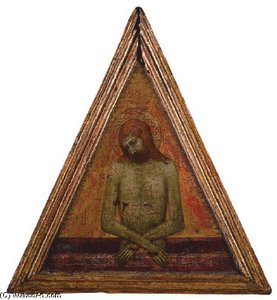
    Two signed paintings by Ceccarelli’s hand—the Madonna and Child (formerly in the Cook Collection in Richmond, Surrey) dated to 1347 and Christ The Man Of Sorrows (Liechtenstein Collection, Vaduz)—provide invaluable insight into his artistic output. These masterpieces exemplify Ceccarelli's stylistic prowess and underscore his position as one of Martini’s workshop’s most accomplished pupils.
      The Madonna and Child,
  • displays a masterful use of color and texture, capturing the ethereal beauty of Mary and Jesus with remarkable sensitivity.
  • Christ The Man Of Sorrows
  • is distinguished by its solemn expression and evocative depiction of sorrow—a testament to Ceccarelli’s ability to convey profound emotion through visual imagery.
      Ceccarelli's work was commissioned primarily by ecclesiastical patrons,
    reflecting the pervasive influence of religious faith on artistic production during the fourteenth century. The Madonna and Child with Saints (Pinacoteca Nazionale Siena) represents a larger-scale altarpiece, showcasing Ceccarelli’s ambition to undertake ambitious projects that would elevate his reputation.
  • Historical Significance

    Naddo Ceccarelli's contribution to Sienese art is significant not only for its stylistic refinement but also for its embodiment of a broader cultural trend—the fusion of painting and goldsmithing. Like Martini and Memmi, Ceccarelli pioneered the innovative practice of incorporating gold leaf into panel paintings, transforming them into objects of devotional splendor.This approach reflects a shift away from traditional sculptural representations of saints, prioritizing visual narratives that conveyed spiritual meaning through luminous color and intricate ornamentation. Ceccarelli’s legacy endures as an exemplar of medieval artistic excellence—a painter who skillfully navigated the stylistic currents of his time while forging a distinctive artistic voice.His work serves as a reminder of Siena's role as a center for artistic innovation during the High Gothic period, securing its place in art history.